
2027 Most Affordable Online MSN Pediatric Nurse Practitioner Programs

Co-Founder and Chief Data Scientist
Choosing an online MSN pediatric nurse practitioner program is not just a tuition decision. It affects your certification eligibility, clinical placement experience, state licensure path, work schedule, and long-term return on investment. For registered nurses who want to move into advanced pediatric practice, the right program can open the door to primary care, acute care, school-based health, specialty clinics, and leadership roles serving infants, children, adolescents, and families.
The need for pediatric expertise remains steady because children frequently require care for common illnesses, developmental concerns, injuries, chronic conditions, preventive visits, and behavioral health needs. Most children experience illness eight to 12 times per year (Ellis, 2024), and while many cases are routine, pediatric providers must know when symptoms require closer monitoring, escalation, or coordinated follow-up.
This guide explains how affordable online MSN pediatric nurse practitioner programs work, what they cost, which schools offer lower-cost options, what admissions committees look for, how online and campus formats compare, and how to evaluate whether this path fits your nursing career goals.
Quick Answer: Is an Online MSN Pediatric Nurse Practitioner Program Worth It?
An online MSN pediatric nurse practitioner program can be worth it for licensed RNs who want to become advanced practice providers specializing in child and adolescent health while continuing to work during school. These programs usually prepare graduates for pediatric nurse practitioner certification exams, require supervised clinical hours, and may lead to roles in pediatric primary care, acute care, specialty practices, hospitals, outpatient centers, and community health settings.
The best value usually comes from accredited programs that combine reasonable tuition, strong clinical placement support, transparent graduate outcomes, and a track that matches your intended certification area. Affordability matters, but the cheapest program is not always the best choice if it lacks placement assistance, has limited pediatric preceptors, or does not align with your state’s licensure requirements.
What are the main benefits of an online MSN pediatric nurse practitioner program?
- Flexible graduate study: Online delivery can make it easier for working RNs to complete advanced coursework while managing employment, family responsibilities, and clinical hours.
- Preparation for pediatric NP certification: Programs are typically designed to help graduates meet educational requirements for pediatric nurse practitioner certification exams, depending on the track and accreditor.
- Specialized pediatric clinical training: Students learn to assess development, manage common and chronic pediatric conditions, promote wellness, support families, and coordinate care across childhood stages.
- Strong advanced practice earning potential: Pediatric NPs can earn more than $100,000 annually, although compensation varies by setting, state, certification, experience, and employer.
- Long-term career mobility: Graduates may work in primary care, acute care, specialty pediatrics, school health, telehealth, leadership, informatics, education, or research.
What can I expect from an affordable online MSN pediatric nurse practitioner program?
An MSN pediatric nurse practitioner program is a graduate nursing pathway for RNs who want to diagnose, treat, and manage pediatric patients as advanced practice nurses. Depending on the track, students prepare for either primary care roles, acute care roles, or another pediatric-focused pathway.
Although coursework may be delivered online, these are not “online-only” degrees in the casual sense. Pediatric NP students must complete supervised clinical experiences with approved preceptors and may need to attend campus intensives, skills sessions, simulations, or clinical checkoffs.
| Program Feature | What It Means for Students | Why It Matters |
| Accredited MSN curriculum | Graduate nursing courses combine advanced assessment, pathophysiology, pharmacology, pediatric care, leadership, and evidence-based practice. | Accreditation is often required for certification, licensure, employer recognition, and financial aid eligibility. |
| Online didactic coursework | Classes may be asynchronous, synchronous, or hybrid, depending on the school. | Working nurses should confirm whether live attendance is required before enrolling. |
| Required clinical practice | Students complete supervised pediatric clinical hours at approved sites. | Clinical placement quality directly affects readiness for certification and practice. |
| Possible campus visits | Some programs require intensives for skills assessment, simulation, or orientation. | Travel costs and time away from work should be included in the total cost estimate. |
| Certification preparation | Programs usually align coursework with pediatric NP certification expectations. | Students should verify that the track matches the exam and role they plan to pursue. |
Affordable programs often come from public universities, nonprofit institutions, or schools that offer lower online tuition rates. However, total affordability depends on more than the posted credit price. Students should also review fees, clinical travel, technology charges, books, supplies, immunizations, background checks, and required campus visits.
Where can I work with an MSN in pediatric nurse practitioner?
Graduates of online MSN pediatric nurse practitioner programs can work in settings that serve infants, children, adolescents, and young adults. The exact work environment depends on the graduate’s certification, state scope of practice, prior RN background, and whether the program emphasized primary care or acute care.
| Work Setting | Typical Pediatric NP Responsibilities | Best Fit For |
| Physician offices and pediatric clinics | Well-child visits, immunizations, developmental screenings, common illness care, medication management, family education, and referrals. | Primary care-focused PNPs who want continuity with patients and families. |
| Hospitals and children’s hospitals | Assessment, care planning, treatment coordination, discharge planning, and collaboration with physicians and interdisciplinary teams. | PNPs interested in inpatient pediatrics, specialty care, or higher-acuity populations. |
| Outpatient and ambulatory care centers | Urgent visits, follow-up care, minor injuries, behavioral health screening, chronic disease monitoring, and post-discharge management. | Nurses who want a fast-paced environment without overnight hospitalization care. |
| Critical care and trauma settings | Rapid assessment, stabilization support, complex care coordination, and work with intensivists and specialists. | Acute care PNPs with strong emergency, ICU, or high-acuity nursing experience. |
| Long-term pediatric care and rehabilitation | Medication management, therapy coordination, chronic condition monitoring, family support, and quality-of-life planning. | PNPs interested in children with complex medical or developmental needs. |
| School-based and community health centers | Screenings, preventive care, health education, chronic condition support, and connection to community resources. | PNPs who want to improve access for children in underserved communities. |
How much can I make with an MSN in pediatric nurse practitioner?
The U.S. Bureau of Labor Statistics (BLS) reports that nurse practitioners earn an average annual salary of $132,000, with earnings ranging from $97,960 in the 10th percentile to $169,950 in the 90th percentile. These figures cover nurse practitioners overall, not only pediatric NPs.
ZipRecruiter reports that pediatric NPs earn around $135,161 per year. Entry-level pediatric NPs may earn around $95,000 to $100,000, while experienced nurses may earn upwards of $140,000.
Location can significantly affect pay. Many NPs in California earn the highest wages, at $173,190. Metropolitan areas in the state, including San Jose-Sunnyvale-Santa Clara, can offer wages beyond $200,000 annually.
Industry also matters. Nurse practitioners in Residential Intellectual and Developmental Disability, Mental Health, and Substance Abuse Facilities earn top dollar, at $163,000, while those in Ambulatory and Outpatient Care Centers earn around $144,000.
Experience, certification, education, employer type, shift expectations, specialty area, and local demand can all influence salary. Entry-level NPs often earn around $90,000 yearly. With experience, many earn upwards of $100,000, and seasoned professionals earn more than $120,000.
Certification may also support stronger career mobility. Pediatric certification signals specialized knowledge and may help candidates compete for pediatric-specific roles, especially in regions where employers prefer advanced practice nurses with focused child health preparation.
| Salary Factor | How It Can Affect Earnings |
| State and metro area | High-cost and high-demand regions may pay more, but living expenses can also be higher. |
| Practice setting | Hospitals, specialty units, mental health facilities, and outpatient centers may offer different compensation structures. |
| Certification area | Primary care and acute care roles may lead to different employer expectations and salary ranges. |
| Experience level | Prior pediatric RN experience and years as an NP can improve competitiveness for higher-paying roles. |
| Additional skills | Telehealth, bilingual care, behavioral health screening, specialty pediatric experience, and leadership skills may strengthen job prospects. |
- Most affordable online MSN pediatric nurse practitioner programs
- How long does an affordable online MSN pediatric nurse practitioner program take?
- Online vs. on-campus MSN pediatric nurse practitioner programs
- Average cost of an affordable online MSN pediatric nurse practitioner program
- Financial aid options for online MSN pediatric nurse practitioner students
- Admissions requirements for online MSN pediatric nurse practitioner programs
- Common courses in affordable online MSN pediatric nurse practitioner programs
- Pediatric nurse practitioner specialization options
- Accreditation and quality checks for pediatric NP programs
- Challenges to expect in an online MSN pediatric NP program
- Becoming a pediatric nurse practitioner without a BSN
- Pediatric NP vs. women’s health NP programs
- Using your RN experience to succeed in graduate pediatric nursing
- How to choose the best affordable online MSN pediatric nurse practitioner program
- Career paths for online MSN pediatric nurse practitioner graduates
- Job market outlook for MSN pediatric nurse practitioner graduates
Most Affordable Online MSN Pediatric Nurse Practitioner Programs
How do we rank schools?
Graduate nursing tuition can vary widely, so affordability should be evaluated alongside accreditation, program structure, clinical expectations, and student outcomes. Research.com identifies affordable programs using a structured ranking methodology designed to compare programs with consistency and transparency.
The analysis draws from the Integrated Postsecondary Education Data System, Peterson’s database and its Distance Learning Licensed Data Set, College Scorecard, and the National Center for Education Statistics (NCES). Students should still verify tuition, fees, clinical requirements, and licensure alignment directly with each university before applying.
1. University of Nevada-Reno Online
The University of Nevada-Reno Online offers an online MSN pathway for nurses who want to care for children with complex, serious, or chronic health needs in hospitals and specialty care environments. The curriculum combines nursing science with public health, genetics, and healthcare systems content to prepare students for advanced pediatric acute care practice.
Students strengthen diagnostic reasoning, clinical decision-making, and technology-supported care management skills. Graduates are prepared to pursue the CPNP-AC certification exam and move into advanced pediatric healthcare roles.
- Program Length: 2–3 years
- Tracks/Concentrations: Pediatric Acute Care
- Cost per Credit: $344.25
- Required Credits to Graduate: 44–46
- Accreditation: Commission on Collegiate Nursing Education (CCNE)
2. Northwestern State University of Louisiana
Northwestern State University of Louisiana provides an online pediatric primary care MSN option with graduate core courses, clinical experiences, and advanced pediatric content. Students study topics such as assessment, pharmacotherapeutics, and family dynamics while engaging through recorded lectures, webinars, discussion boards, blogs, and group projects.
The program prepares nurses to provide primary care for children from infancy through adolescence in varied healthcare settings. Instead of a thesis, students complete a professional paper to demonstrate graduate-level synthesis and application.
- Program Length: 2–3 years
- Tracks/Concentrations: Pediatric Primary Care
- Cost per Credit: $475
- Required Credits to Graduate: 42
- Accreditation: CCNE
3. Old Dominion University
Old Dominion University offers an online Pediatric Nurse Practitioner program focused on comprehensive primary care for children, including preventive services, chronic condition management, and routine pediatric visits. Clinical placements occur in primary care settings, and a Clinical Services Coordinator helps students identify approved sites.
Courses may include online materials, live virtual meetings, and occasional in-person requirements. Each semester begins with an orientation that clarifies expected live participation and course logistics.
- Program Length: 2–3 years
- Tracks/Concentrations: Pediatric Primary Care
- Cost per Credit: $486 (in-state); $1,334.50 (out-of-state)
- Required Credits to Graduate: 47
- Accreditation: CCNE
4. University of South Alabama
The University of South Alabama delivers an online MSN program that prepares nurses for advanced practice and can also support future doctoral study. Students complete graduate coursework in theory, research, and advanced practice topics online, while most clinical experiences can be arranged locally with approved preceptors.
The program includes a required one-time Clinical Skills Intensive, where students practice pediatric procedures and hands-on competencies through the university’s simulation resources.
- Program Length: 2–3 years
- Tracks/Concentrations: Pediatric Primary Care
- Cost per Credit: $594
- Required Credits to Graduate: 45
- Accreditation: CCNE
5. University of Texas-Arlington
The University of Texas-Arlington offers hybrid and fully online accelerated MSN options for future pediatric nurse practitioners. The Pediatric Primary Care NP track prepares students to manage pediatric patients in outpatient clinics, community health settings, acute care environments, and long-term care facilities.
The Acute Care NP track focuses on children with complex, high-acuity medical needs. Both options emphasize research-based practice, theoretical foundations, recovery-focused treatment, complication prevention, and support for healthy childhood growth and development.
- Program Length: 21–33 months
- Tracks/Concentrations: Pediatric Primary Care, Pediatric Acute Care
- Cost per Credit: $654
- Required Credits to Graduate: 41–45
- Accreditation: CCNE
6. University of Missouri, Columbia
The University of Missouri, Columbia offers a Pediatric Nurse Practitioner program designed to prepare students to care for children from birth through young adulthood. The curriculum emphasizes wellness promotion, disease prevention, and chronic condition management.
The program also includes attention to rural and underserved populations. Most coursework is online, but students must participate in an annual on-campus session and attend Level I on-campus days each June.
- Program Length: 2–3 years
- Tracks/Concentrations: Pediatric Primary Care
- Cost per Credit: $689.80
- Required Credits to Graduate: 51
- Accreditation: CCNE
7. University of Alabama at Birmingham
The University of Alabama at Birmingham offers an MSN Pediatric Nurse Practitioner program for nurses seeking advanced practice preparation with infants, children, and adolescents. Students learn to assess, diagnose, manage, and promote health across common acute and chronic pediatric conditions.
The part-time format blends live online courses with campus intensives, allowing students to build clinical skills while maintaining employment. The program includes 35 credits of coursework and 10 credits of clinical practica supervised by pediatric care professionals.
- Program Length: 2–3 years
- Tracks/Concentrations: Pediatric Primary Care
- Cost per Credit: $702
- Required Credits to Graduate: 45
- Accreditation: CCNE
8. Walden University
Walden University offers Pediatric Nurse Practitioner pathways for both BSN-MSN and RN-MSN students. Its virtual skills lab provides training resources, instructional videos, and practice guidance to help students prepare for clinical experiences.
The program uses a collaborative practicum placement process intended to help students identify appropriate clinical sites in a timely way. Graduates develop advanced skills for direct pediatric care and expanded clinical responsibility.
- Program Length: 2–3 years
- Tracks/Concentrations: Pediatric Primary Care
- Cost per Quarter Hour: $775
- Required Quarter Credits to Graduate: 63–89
- Accreditation: CCNE
9. Maryville University of St. Louis
Maryville University of St. Louis offers a Pediatric Nurse Practitioner program that integrates theory, research, and evidence-based practice. Coursework covers areas such as counseling, disease prevention, health education, and clinical decision-making for pediatric patients.
The program uses fully online courses and flexible scheduling options for part-time and full-time students. The pediatric specialty prepares students to support children’s health from birth through early adulthood.
- Program Length: 20–32 months
- Tracks/Concentrations: Pediatric Primary Care
- Cost per Credit: $863
- Required Credits to Graduate: 47
- Accreditation: CCNE
10. Texas Tech University Health Sciences Center
Texas Tech University Health Sciences Center offers a Pediatric Nurse Practitioner program for nurses who want to care for children with serious, complex, and chronic health concerns. The program emphasizes clinical judgment, urgent condition management, and acute pediatric care.
Students study evidence-based practice, care coordination, family engagement, and culturally responsive care. Graduates are prepared to provide advanced pediatric care in demanding clinical environments.
- Program Length: 2–3 years
- Tracks/Concentrations: Pediatric Acute Care
- Cost per Credit: $1,003.69 (in-state); $1,413.69 (out-of-state)
- Required Credits to Graduate: 51
- Accreditation: CCNE
How long does it take to complete an affordable online MSN pediatric nurse practitioner program?
Most full-time online MSN pediatric nurse practitioner students finish in two to three years. Part-time students may need four or five years, depending on course load, clinical scheduling, work hours, and program sequencing.
The American Association of Nurse Practitioners (AANP) reports that becoming a nurse practitioner takes an average of six years of undergraduate and graduate nursing education.
Accelerated programs may shorten the timeline to 18 to 24 months by using year-round coursework and condensed clinical scheduling. However, accelerated does not mean reduced rigor. Students must still complete the required courses, supervised clinical hours, and certification preparation.
RNs without a BSN may consider bridge pathways such as RN to NP programs online. These programs can combine bachelor’s and master’s-level nursing study into one sequence, often helping students avoid earning a separate BSN first. Depending on enrollment status and school structure, completion may take around three to four years.
Students should also account for certification and licensure steps after graduation. Since only 20.6% of RNs hold a master’s degree and 47.8% hold a BSN, moving into an MSN program is a significant professional step that requires academic planning, financial preparation, and realistic scheduling (Smiley et al., 2025).
This chart displays the educational level of registered nurses.
How does an online MSN pediatric nurse practitioner program compare to an on-campus program?
Online and on-campus MSN pediatric nurse practitioner programs can lead to the same type of advanced practice credential, but the student experience is different. The best format depends on how you learn, where you live, how much flexibility you need, and how much help you require with clinical placement.
| Comparison Point | Online MSN Pediatric NP Program | On-Campus MSN Pediatric NP Program |
| Schedule flexibility | Often better for working RNs because coursework may be asynchronous, hybrid, or scheduled around professional responsibilities. | Usually follows a fixed class schedule with required in-person attendance. |
| Faculty and peer interaction | Uses discussion boards, live virtual classes, email, video meetings, and learning platforms. | Offers face-to-face discussion, campus events, labs, and informal networking. |
| Clinical placement | Students may complete clinical hours near home, though the level of school support varies. | Students may benefit from established local clinical partnerships but may need to commute or relocate. |
| Learning pace | Some programs offer flexible or accelerated options, similar to how an RN to BSN online fast track can help nurses progress more quickly. | Course progression may be more standardized and cohort-based. |
| Best for | Self-directed students who need flexibility and can manage online deadlines, technology, and clinical coordination. | Students who prefer in-person instruction, campus resources, and structured classroom routines. |
Before choosing online study, ask how clinical placements are approved, whether the school finds preceptors or expects students to secure them, how often campus travel is required, and whether the program is authorized in your state.
What is the average cost of an affordable online MSN pediatric nurse practitioner program?
Online MSN pediatric nurse practitioner costs vary by institution type, credit requirements, residency status, fees, and program length. The average cost of a master of science degree is $61,380, and tuition and fees reach around $9,560 in public institutions and $31,930 or more in private institutions (Hanson, 2024; Ma et al., 2024).
Online programs can reduce some campus-related expenses, such as housing, commuting, parking, and meal costs. Students comparing options like the cheapest MSN to EdD programs online often use the same strategy: compare total cost, not just sticker tuition.
Some online nursing programs charge a flat tuition rate regardless of residency, while others charge separate in-state and out-of-state rates. Students may also pay technology fees, distance learning fees, background check costs, health screening expenses, immunization fees, liability insurance, lab supply costs, uniform expenses, exam fees, and travel for clinical rotations or campus intensives.
| Cost Category | What to Check Before Enrolling |
| Tuition | Confirm cost per credit or quarter hour and total credits required for graduation. |
| Fees | Ask about technology, online learning, clinical, simulation, graduation, and program-specific fees. |
| Clinical costs | Budget for travel, parking, health documentation, background checks, drug screening, and immunizations. |
| Campus visits | Calculate airfare, lodging, meals, and lost work time if intensives are required. |
| Certification and licensure | Set aside funds for certification exams, state application fees, and continuing education. |
| Lost income | Consider whether clinical hours or accelerated coursework will require reduced work hours. |
The most affordable program is usually the one that balances low total cost with strong clinical support, accreditation, certification alignment, and realistic completion time.
What are the financial aid options for students enrolling in an online MSN pediatric nurse practitioner program?
Many graduate nursing students combine multiple funding sources to reduce out-of-pocket costs. The most useful strategy is to start early, complete required financial aid forms, contact each school’s financial aid office, and apply for scholarships with pediatric, nursing, healthcare, or service-based eligibility.
- Pediatric Nursing Certification Board Scholarships: In partnership with the National Association of Pediatric Nurse Practitioners (NAPNAP), the PNCB awards a $3,500 scholarship to an eligible PNP student with a 3.0 GPA.
- TYLENOL Future Care Scholarship: This scholarship program awards $5,000 and $10,000 to students pursuing healthcare degrees, including nursing.
- Students for Healthcare Equity Scholarship: GoodRX Helps provides $5,000 in financial support for students from underrepresented groups pursuing healthcare education.
- CEUFast Graduate Nursing Scholarship: This $5,000 scholarship is available to MSN students who have completed at least one semester. Recipients also receive a complimentary one-year subscription to nursing continuing education courses.
- Employer tuition reimbursement: Hospitals, clinics, and health systems may help pay for graduate nursing education, particularly when the degree supports workforce needs. Some benefits require a post-graduation work commitment.
- University scholarships and grants: Nursing schools may offer merit-based, need-based, specialty-specific, or graduate nursing awards that do not require repayment.
- Local, state, and federal aid: Professional associations, workforce programs, state nursing initiatives, and federal programs such as the Nurse Corps Scholarship may support students who plan to serve in high-need areas.
Students planning long-term academic progression can also compare future pathways, including the cheapest online MSN to PhD programs, before committing to a master’s program. If doctoral study may be part of your career plan, ask whether MSN credits can transfer or apply toward future graduate work.
What are the prerequisites for enrolling in an online MSN pediatric nurse practitioner program?
Admissions requirements vary by school, but most online MSN pediatric nurse practitioner programs expect applicants to demonstrate academic readiness, active RN licensure, relevant clinical experience, and a clear reason for pursuing pediatric advanced practice. Some students strengthen their academic preparation with broader science coursework, including options such as affordable online natural science programs, when relevant to their goals.
- Minimum GPA: Many programs expect a cumulative GPA of 3.0 on a 4.0 scale. Some may request GRE scores or allow conditional admission for applicants below the preferred GPA.
- Nursing degree: A BSN is the standard entry requirement, although some schools offer RN-MSN or bridge pathways for associate degree-prepared nurses. Official transcripts are usually required from institutions accredited by CCNE or ACEN.
- Active RN license: Applicants typically need a current, unencumbered RN license. Some schools may also require Basic Life Support (BLS) or Pediatric Advanced Life Support (PALS) certification.
- Clinical experience: Many programs prefer one to two years of pediatric or general nursing experience. Pediatric experience can strengthen an application, especially for competitive tracks.
- Resume or curriculum vitae: Applicants should document nursing roles, patient populations served, leadership experience, certifications, and relevant pediatric exposure.
- Letters of recommendation: Programs often request two to three references from supervisors, faculty members, advanced practice nurses, or colleagues who can speak to clinical judgment and graduate readiness.
- Personal statement: The essay should explain career goals, commitment to pediatric care, readiness for graduate work, and fit with the program’s mission.
- Prerequisite coursework: Schools may require statistics, nursing research, health assessment, lifespan development, or foundational health sciences coursework before admission or early in the program.
Applicants comparing pediatric NP tracks with other advanced nursing specialties, such as the cheapest PMHNP programs, should review whether their experience, references, and career goals match the patient population and certification pathway.
The selectivity of these programs reflects the responsibility of pediatric advanced practice. According to the PNCB, 4,842 pediatric nurse practitioners work in private primary care practices and 896 acute care PNPs serve in free-standing inpatient children’s hospitals (PNCB, 2022).
What courses are typically in an affordable online MSN pediatric nurse practitioner program?
Online MSN pediatric nurse practitioner students complete advanced nursing core courses, pediatric specialty courses, and supervised clinical practica. The structure may resemble other population-focused NP pathways, such as online AGNP programs, but the clinical content centers on children, adolescents, families, growth, development, and pediatric disease management.
| Course | What Students Learn |
| Advanced Health Assessment | Comprehensive physical assessment, developmental screening, pediatric exam techniques, diagnostic reasoning, and age-appropriate evaluation. |
| Advanced Pathophysiology | Cellular, genetic, developmental, and systemic disease processes affecting pediatric patients. |
| Advanced Pharmacology | Medication selection, dosing, safety, interactions, prescribing considerations, and pediatric pharmacotherapeutics. |
| Health Care Policies and Social Justice | How policy, socioeconomic conditions, access barriers, and cultural factors shape pediatric health outcomes. |
| Primary Care Approaches for Children | Preventive care, immunizations, developmental monitoring, wellness visits, early diagnosis, and management of common conditions. |
| Management of Acute Pediatric Conditions | Assessment and treatment of urgent illnesses and injuries using case-based clinical reasoning. |
| Pediatric Clinical Practicum | Supervised direct patient care in approved pediatric settings aligned with the student’s certification track. |
This training matters because pediatric providers must be prepared for both routine and complex care. The Centers for Disease Control and Prevention (CDC) reports that 1.4% of infants and kids aged 1 to 4 and 1.9% of children aged 5 to 11 are in fair or poor health.
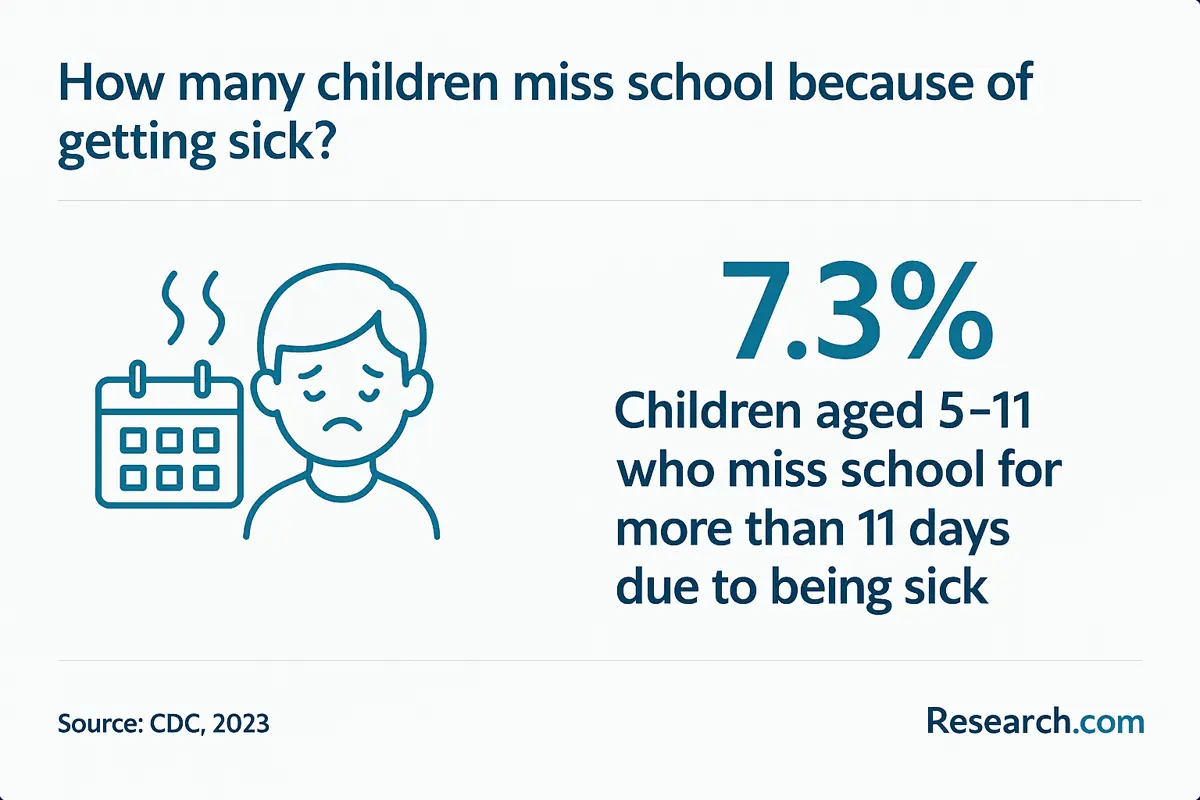
The CDC also reports that 7.3% of children between the ages of 5 and 11 missed over 11 school days in the past year because of illness, injury, or disability. Pediatric NPs help address these needs through prevention, care coordination, family education, and timely treatment.
What types of specializations are available in online MSN pediatric nurse practitioner programs?
Pediatric nurse practitioner programs commonly separate students by care focus. Choosing the right track is important because it can determine certification eligibility, clinical placement requirements, and future job settings.
| Specialization | Primary Focus | Common Work Settings |
| Primary Pediatric Care | Long-term child health, prevention, developmental monitoring, wellness visits, and management of common pediatric illnesses. | Pediatric clinics, primary care offices, community health centers, school-based clinics, and outpatient practices. |
| Acute Pediatric Care | Care for seriously ill, injured, medically complex, or unstable pediatric patients. | Children’s hospitals, pediatric ICUs, emergency departments, trauma centers, and specialty inpatient units. |
| Pediatric Mental Health Care | Screening, support, and care coordination for children and adolescents with behavioral or emotional health needs. | Integrated primary care, mental health clinics, school-based health centers, and community programs. |
Primary pediatric care is the most common PNP pathway, with around 20,254 certified professionals in 2022, according to the PNCB.
Acute pediatric care is a better fit for nurses who want high-acuity work with critically ill or injured children. Nurses researching what is a critical care nurse may find that pediatric acute care NP roles build on similar skills but focus specifically on children.
PNPs may also develop subspecialty expertise in pediatric cardiology, oncology, endocrinology, neurology, orthopedics, hematology, or other clinical areas. For example, a pediatric endocrinology NP may help manage juvenile diabetes and growth-related hormone conditions, while a pediatric neurology NP may support children with epilepsy, cerebral palsy, or developmental delays.
Subspecialty roles may require additional training, employer-based competency development, or certifications. They can also lead to more focused clinical practice, higher responsibility, and potential salary growth depending on employer and region.
This chart displays the certifications held by PNPs.
What accreditation and quality assurance measures should I look for?
Accreditation should be one of the first items you verify. A pediatric NP program should hold recognized nursing accreditation from an agency such as the Commission on Collegiate Nursing Education (CCNE) or the Accreditation Commission for Education in Nursing (ACEN). Accreditation helps confirm that the curriculum, faculty qualifications, clinical expectations, and program oversight meet accepted nursing education standards.
Students should also check whether the program’s pediatric track meets certification and licensure requirements in their state. This is especially important for online students because state authorization and clinical approval rules can vary.
- Confirm nursing accreditation: Look for CCNE or ACEN accreditation and verify it through the accreditor’s official directory.
- Review certification alignment: Ask which pediatric NP certification exam the track is designed to support.
- Check state authorization: Make sure the school can enroll students from your state and approve clinical placements there.
- Ask about clinical partnerships: Strong programs provide clear expectations for preceptors, site approval, documentation, and faculty oversight.
- Evaluate student support: Advising, technical assistance, exam preparation, library access, and clinical coordination matter in an online format.
- Request outcomes data: Ask for certification pass rates, graduation rates, attrition rates, and job placement information when available.
Students exploring other entry routes can compare structure and requirements with direct entry MSN programs online, but pediatric NP applicants should be especially careful to verify advanced practice eligibility.
What are the potential challenges in online MSN pediatric nurse practitioner programs?
Online pediatric NP programs can be flexible, but they are demanding. Students must master graduate-level content, complete clinical hours, manage technology, coordinate schedules with preceptors, and often continue working as RNs.
| Common Challenge | Why It Matters | How to Reduce the Risk |
| Finding pediatric clinical placements | Pediatric preceptors can be limited in some regions, especially for acute care or specialty settings. | Ask whether the school places students, assists students, or expects students to find preceptors independently. |
| Balancing work and clinical hours | Clinical rotations may occur during weekday business hours, which can conflict with RN shifts. | Speak with your employer early about scheduling flexibility before clinical semesters begin. |
| Technology demands | Online programs rely on learning platforms, video meetings, testing software, and virtual simulation tools. | Confirm technical requirements and support availability before the first term. |
| State licensure complexity | Online enrollment does not automatically mean the program meets every state’s requirements. | Contact both the school and your state board of nursing before applying. |
| Hidden costs | Fees, travel, clinical onboarding, and campus intensives can raise the total cost. | Request a full cost estimate and build a semester-by-semester budget. |
Some students compare pediatric NP programs with adjacent specialties, including the cheapest psychiatric nurse practitioner graduate certificate program, particularly if they are drawn to child and adolescent behavioral health. The right choice depends on the patient population and scope of practice you want long term.
Can I become a Pediatric Nurse Practitioner without a BSN?
Yes, some nurses can pursue pediatric NP preparation without holding a BSN first, but the path depends on prior education and licensure status. RN-MSN bridge programs may accept associate degree-prepared RNs and incorporate bachelor’s-level bridge coursework before graduate NP study. Direct-entry MSN pathways may serve students from non-nursing backgrounds, but students must review whether those programs lead to RN licensure, advanced practice eligibility, and pediatric NP certification preparation.
Students seeking a more direct transition can compare options such as NP programs without BSN. Before enrolling, verify the program sequence, clinical hour requirements, state authorization, RN licensure steps, and whether the pediatric specialty is available in the pathway.
What distinguishes pediatric nurse practitioner programs from women's health nurse practitioner programs?
Pediatric nurse practitioner programs prepare nurses to care for infants, children, adolescents, and young adults. The curriculum emphasizes growth and development, pediatric assessment, immunizations, family-centered care, common childhood illnesses, chronic pediatric conditions, and pediatric acute or primary care.
Women’s health nurse practitioner programs focus on care for women across the lifespan, including reproductive health, pregnancy-related care, gynecologic concerns, menopause, and preventive services. Both specialties require advanced clinical judgment, but they differ in patient population, clinical protocols, certification pathway, and typical practice settings.
RNs deciding between these specialties should review curriculum and clinical requirements carefully. Comparing pediatric options with affordable WHNP programs online can clarify which patient population, certification exam, and career path best match your goals.
How can I leverage my RN background to succeed in an online MSN pediatric nurse practitioner program?
Your RN experience can be a major advantage if you use it intentionally. Pediatric NP programs expect students to move beyond task-based nursing into advanced assessment, diagnosis, prescribing considerations, family education, and care management. Strong bedside experience helps, but graduate success also requires academic discipline, technology readiness, and professional communication.
- Identify clinical gaps early: If your RN background is not pediatric-focused, seek pediatric exposure through work, shadowing, continuing education, or volunteer opportunities when appropriate.
- Refresh core sciences: Review pathophysiology, pharmacology, growth and development, and health assessment before starting advanced courses.
- Build academic routines: Set weekly study blocks, plan around shift work, and avoid waiting until clinical semesters to reduce employment hours.
- Find pediatric mentors: Experienced PNPs, pediatricians, nurse educators, and clinical leaders can help you understand role expectations.
- Strengthen online learning skills: Be comfortable with virtual meetings, digital libraries, online testing, discussion boards, and electronic clinical documentation.
RNs still building their academic foundation may also review online RN to BSN without clinicals to understand bridge options and how prior nursing preparation can support graduate readiness.
How to choose the best affordable online MSN pediatric nurse practitioner programs?
The best affordable program is not simply the one with the lowest tuition. It is the accredited program that prepares you for the right certification, supports your clinical placement needs, fits your schedule, meets your state’s requirements, and offers a realistic total cost. Students comparing nursing career pathways, including affordable MSN nursing education online programs, should use the same decision framework: match the program to the role you actually want.
| Factor to Compare | Questions to Ask |
| Accreditation | Is the program accredited by CCNE or ACEN? Is the specific pediatric track included in the accredited offering? |
| Certification alignment | Which pediatric NP certification exam does the curriculum prepare graduates to pursue? |
| State authorization | Can the school enroll students from your state, and can clinicals be completed there? |
| Clinical placement support | Does the school secure sites, assist with placement, or require students to find their own preceptors? |
| Total cost | What is the full cost including tuition, fees, travel, supplies, certification exams, and campus visits? |
| Format | Are classes asynchronous, synchronous, hybrid, full-time, part-time, or accelerated? |
| Faculty expertise | Do faculty members have pediatric NP experience, current practice involvement, or specialty expertise? |
| Graduate outcomes | Does the school publish certification pass rates, graduation rates, and employment outcomes? |
Common mistakes to avoid when choosing a program
- Choosing based on tuition alone: Low tuition can be offset by poor clinical support, high fees, or delayed graduation.
- Ignoring accreditation: Non-accredited programs may create problems for certification, licensure, employment, or financial aid.
- Assuming online means no travel: Many programs require campus intensives, simulations, or in-person clinical activities.
- Overlooking state rules: A program may be reputable but still not authorized for your state or licensure goals.
- Waiting too long to plan clinicals: Pediatric placements can be competitive, so start conversations early.
- Choosing the wrong track: Primary care and acute care pediatric NP roles are different. Match the track to the setting where you want to practice.
- Relying only on rankings: Rankings are useful starting points, but your final choice should reflect certification fit, clinical access, cost, and state eligibility.
What career paths are available for graduates of online MSN pediatric nurse practitioner programs?
Online MSN pediatric nurse practitioner graduates may pursue advanced clinical practice after completing required certification and licensure steps. Certification may be available through the Pediatric Nursing Certification Board (PNCB) or the American Nurses Credentialing Center (ANCC), depending on the graduate’s focus area and eligibility.
Many graduates become pediatric primary care NPs, pediatric acute care NPs, or pediatric-focused providers with behavioral health, specialty, telehealth, or community care responsibilities. Some also move into leadership, education, informatics, research, or adjacent NP roles.
| Career Path | Average Income Listed | Role Overview |
| Health Education Specialists | $71,700 | Design and deliver wellness, prevention, and health behavior programs in schools, public health agencies, and community settings. |
| Nursing Educators | $87,090 | Teach pediatric nursing, develop curricula, mentor nurses, and contribute to continuing education or academic programs. |
| Telehealth Nurse Practitioners | $91,375 | Provide virtual assessment, follow-up care, chronic condition monitoring, and care coordination. |
| Nurse Informaticists | $98,409 | Use clinical knowledge and information systems to improve documentation, safety, workflow, and healthcare data use. |
| Pediatric Nurse Managers | $102,684 | Lead pediatric nursing teams, manage schedules, oversee care quality, support staff development, and coordinate unit operations. |
| Family Nurse Practitioners | $107,245 | Provide lifespan primary care, including preventive services, chronic disease care, and family education. Nurses considering broader primary care may compare pediatric NP training with a 12-month FNP program online. |
| Neonatal Nurse Practitioners | $120,062 | Care for newborns with complex or critical medical needs, often in NICU settings. |
| Psychiatric-Mental Health Nurse Practitioners | $124,113 | Assess, diagnose, and treat mental health conditions across the lifespan, often using therapy, medication management, and integrated care models. |
| School Nurse Practitioners | $130,295 | Provide school-based health services, screenings, student health management, and wellness education in K-12 settings. |
| Clinical Research Nurses | $151,807 | Support pediatric clinical trials, treatment studies, medication research, and healthcare research projects. |
Career fit depends on certification, clinical background, state scope of practice, and preferred patient population. Pediatric NP graduates who want direct child health practice should prioritize roles that use their pediatric assessment, developmental, and family-centered care training.
This chart displays the average incomes of various nurses.
What is the job market for graduates with an MSN in pediatric nurse practitioner?
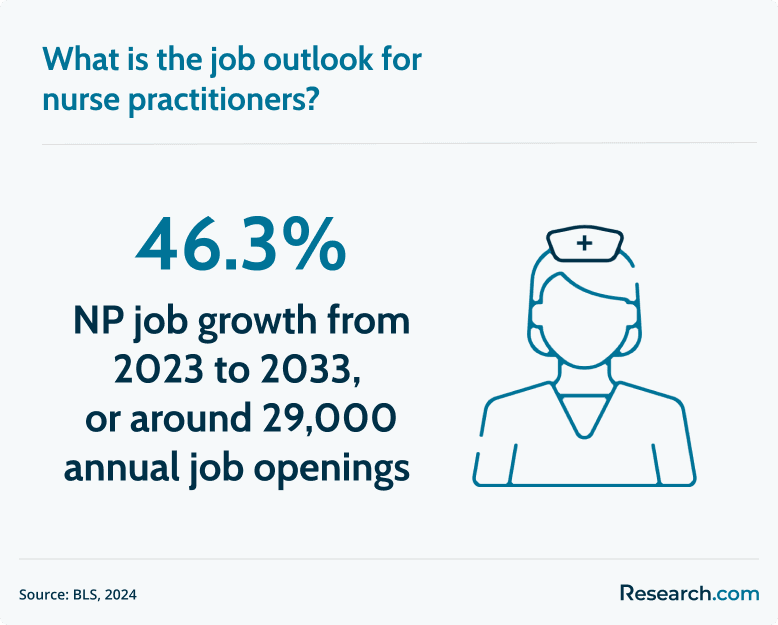
The BLS projects nurse practitioner roles overall to grow by 46.3% between 2023 and 2033, much faster than the average for all occupations. This projection represents around 29,000 annual job openings throughout the decade.
Pediatric nurse practitioners represent a smaller specialty within the broader NP workforce, but demand is supported by pediatric physician shortages, chronic pediatric health needs, preventive care priorities, behavioral health needs, and access gaps in underserved communities.
Graduates may find opportunities in pediatric clinics, community health centers, children’s hospitals, school-based health centers, outpatient practices, specialty clinics, and medically underserved regions. Additional opportunities may exist in subspecialties such as oncology, hematology, endocrinology, neurology, or critical care.
Behavioral health is an especially important area to watch. America’s Health Rankings’ Health of Women and Children Report (2024) found that mental health conditions among children aged 6–17 increased to 19.9% in 2023 from 17.7% in 2020. Pediatric NPs with mental health training can help expand screening, early intervention, referral coordination, and ongoing support for children and adolescents.
References
- Centers for Disease Control and Prevention. (n.d.). Child Health. Retrieved June 4, 2025, from https://www.cdc.gov/nchs/fastats/child-health.htm
- Ellis, E. (2024, March 27). When to Take Your Sick Child to the Pediatrician. Duke Health. https://www.dukehealth.org/blog/when-take-your-sick-child-pediatrician
- Hanson, M. (2024, November 23). Average Cost of a Master’s Degree. Education Data Initiative. https://educationdata.org/average-cost-of-a-masters-degree
- Ma, J., Pender, M., & Oster, M. (2024). Trends in College Pricing and Student Aid 2024. https://research.collegeboard.org/media/pdf/Trends-in-College-Pricing-and-Student-Aid-2024-ADA.pdf
- PayScale. (2025, April 13). Average Pediatrics Nurse Practitioner (NP) Salary. Retrieved June 4, 2025, from https://www.payscale.com/research/US/Job=Pediatrics_Nurse_Practitioner_(NP)/Salary
- Pediatric Nursing Certification Board. (2022). Pediatric Nursing Workforce Report 2022: A Demographic Profile of 53,000 PNCB-Certified Nursing Professionals. https://pncb.org/sites/default/files/resources/PNCB_2022_Pediatric_Nursing_Workforce_Demographic_Report.pdf
- U.S. Bureau of Labor Statistics. (2024). Nurse Practitioners [Interactive data]. May 2024 OEWS Profiles, Occupational Employment and Wage Statistics (OEWS) Profiles. Retrieved June 4, 2025, from https://data.bls.gov/oesprofile
- U.S. Bureau of Labor Statistics. (2025b, April 18). Occupational projections, 2023–33, and worker characteristics, 2023 (Numbers in thousands). Employment Projections. https://www.bls.gov/emp/tables/occupational-projections-and-characteristics.htm
- ZipRecruiter. (2025, May 28). Pediatric Nurse Practitioner Salary. Retrieved June 4, 2025, from https://www.ziprecruiter.com/Salaries/Pediatric-Nurse-Practitioner-Salary
Key Insights
- An online MSN pediatric nurse practitioner program is best for licensed RNs who want advanced practice responsibility with infants, children, adolescents, and families while maintaining some scheduling flexibility.
- Accreditation is non-negotiable. Look for CCNE or ACEN accreditation, certification alignment, and state authorization before comparing tuition.
- Affordability should be measured by total cost, not only cost per credit. Include fees, clinical travel, health requirements, technology, campus intensives, and certification expenses.
- Primary pediatric care and acute pediatric care lead to different clinical roles. Choose the track that matches your intended work setting and certification goal.
- Clinical placement support can make or break the online student experience. Ask whether the school secures sites, helps identify preceptors, or leaves placement mostly to students.
- Nurse practitioners earn an average annual salary of $132,000 according to the BLS, while ZipRecruiter reports pediatric NPs earn around $135,161 yearly; actual pay depends on location, experience, setting, and credentials.
- The BLS projects nurse practitioner roles overall to grow by 46.3% between 2023 and 2033, creating strong long-term opportunity for qualified advanced practice nurses.
- Before enrolling, confirm that the program fits your state licensure rules, work schedule, clinical access, budget, and long-term pediatric career goals.
Other Things You Should Know About Affordable Online MSN Pediatric Nurse Practitioner Programs
Yes. Most programs require an active, unencumbered RN license before admission, and many require a BSN from an accredited school. Some also expect one year of pediatric or broader RN experience and proof of immunizations, CPR certification, and background screening before clinical placement.
Clinical practicum requirements for 2027's affordable online MSN Pediatric Nurse Practitioner programs typically include 500–700 supervised clinical hours. These hours must be completed in a pediatric setting, and may vary based on the program and state regulations.


