# 1 position


Audited and Verified:
Our Editorial and Data Verification Process
Research.com uses government datasets, official education statistics and primary institutional information to support its career and degree guides. Our review process checks factual accuracy, occupational definitions, source dates and the requirements associated with the credentials discussed.
How This Article Was Fact-Checked
Our editorial team verifies salary estimates, employment projections, education requirements and program information against original data providers and official organizations. Salary figures are checked against the relevant occupational definitions and reporting periods. Information about licensure, accreditation and required in-person training is reviewed separately.
Fact-checked and verified on:

Co-Founder and Chief Data Scientist

Reviewed by Karolina Broda
Fact-Checker and Data Verification
Choosing an affordable dental assistant program in Brooklyn Park means looking beyond tuition: the training must also prepare you for hands-on work and the Minnesota duties you want to perform. The U.S. Bureau of Labor Statistics projects 7.4% national employment growth for dental assistants from 2025 to 2035. This guide explains costs, credentials, training formats, and career prospects. It also features a Most Affordable Dental Assistant Trade Schools in Brooklyn Park for 2027 ranking, created by the Research.com team of data scientists to help students identify programs worth considering.
Expect instruction in chairside assistance, instrument processing, infection control, dental materials, radiography principles, patient communication, and office procedures, followed by supervised practice. A program's value depends partly on what students actually do in labs and clinical settings - not merely the name of the certificate. Ask how many supervised patient-care hours are included, where they occur, and whether the school arranges placements.
A public technical-college program can suit someone seeking structured preparation for Minnesota licensure. Shorter career-school training may suit someone aiming first for duties allowed without a license, but its credential may not lead to the same expanded functions. Employer training can reduce upfront cost while limiting instruction to a practice's needs. When comparing online certificates that pay well, remember that dental assisting also requires demonstrated in-person clinical skills and may involve state-specific licensing steps.
Dental offices are the primary workplace for dental assistants nationally (U.S. Bureau of Labor Statistics). For a Brooklyn Park resident, a practical job search can include practices throughout the Minneapolis-St. Paul area, including general dentistry and specialty practices such as orthodontics or oral surgery. A wider commuting radius may expand placement and hiring options, but it can also raise the real cost of training and work.
Work varies by employer and credential. Front-desk coordination and chairside support are different from Minnesota's licensed expanded functions. Before accepting a placement or job, compare its duties with the scope permitted by the Minnesota Board of Dentistry and ask whether supervision, training, or a license is required.
The U.S. Bureau of Labor Statistics reports a $48,070 national median annual wage for dental assistants in May 2025. That is a midpoint across workers with different experience, schedules, and responsibilities - not a Brooklyn Park wage quote or a likely starting offer. Use current Minneapolis-St. Paul-area wage data from the Bureau of Labor Statistics or Minnesota's labor-market agency when evaluating local offers, and compare hourly pay alongside benefits, hours, and commuting costs.
For return on investment, compare the expected change from your own current earnings with total training cost, aid, borrowing, time out of work, and the probability of finishing. A program is harder to justify financially if it adds debt without qualifying you for the duties you intend to perform.
There is no single Brooklyn Park program length. Short entry-level courses, longer certificate or diploma programs, and associate-degree programs differ in coursework, clinical scheduling, and credential awarded. Part-time attendance can extend the calendar time even when the required instruction is unchanged. Obtain each provider's published credit or clock hours, lab hours, clinical hours, and next available placement date before comparing completion dates.
Speed is useful only if the training supports your intended duties. A search for the fastest associates degree online will not establish whether a dental-assisting program provides supervised clinical practice or meets Minnesota licensing prerequisites. Ask whether prior coursework can transfer, whether clinical placements create a wait, and when graduates can apply for any required examinations.
Online delivery can make lectures and some assignments easier to schedule around work. It cannot replace practicing infection control, handling instruments, assisting at the chair, or completing required supervised clinical work. A hybrid option is useful only if its in-person components and clinical sites are reachable from Brooklyn Park.
The distinctions below show what to verify before treating two similarly named programs as interchangeable.
| Format | Potential advantage | Essential check |
| Campus-based | Scheduled access to labs and instructors | Clinical placement location and required travel |
| Hybrid | Remote theory with scheduled practical sessions | Frequency of campus visits and supervised patient care |
| Online coursework | Flexible study of theory | Who supplies hands-on training and whether the complete pathway supports the intended Minnesota credential |
Unlike the format implied by a top online associate's degree in 6 months search, dental-assisting preparation cannot be judged by online speed alone. Confirm practical requirements directly with the provider and the Minnesota Board of Dentistry.
A reliable Brooklyn Park average cannot be established from a single provider's advertised tuition, and prices vary with program length, residency rules, and included supplies. Instead, request an itemized total cost to become job-ready from each program. Include tuition, mandatory fees, books, uniforms, protective equipment, examination and licensing charges, any required health checks, and transportation to labs or clinical sites.
Then subtract confirmed grants, scholarships, and employer assistance; keep loans separate because they must be repaid. Ask Hennepin Technical College about current program charges and aid eligibility, and check Minnesota workforce-training assistance if you qualify. Employer-sponsored training may reduce tuition but may not offer the same licensing pathway. An accredited schools that offer free online applications search can help avoid an application fee, but a waived fee says little about dental-assisting program cost or eligibility.
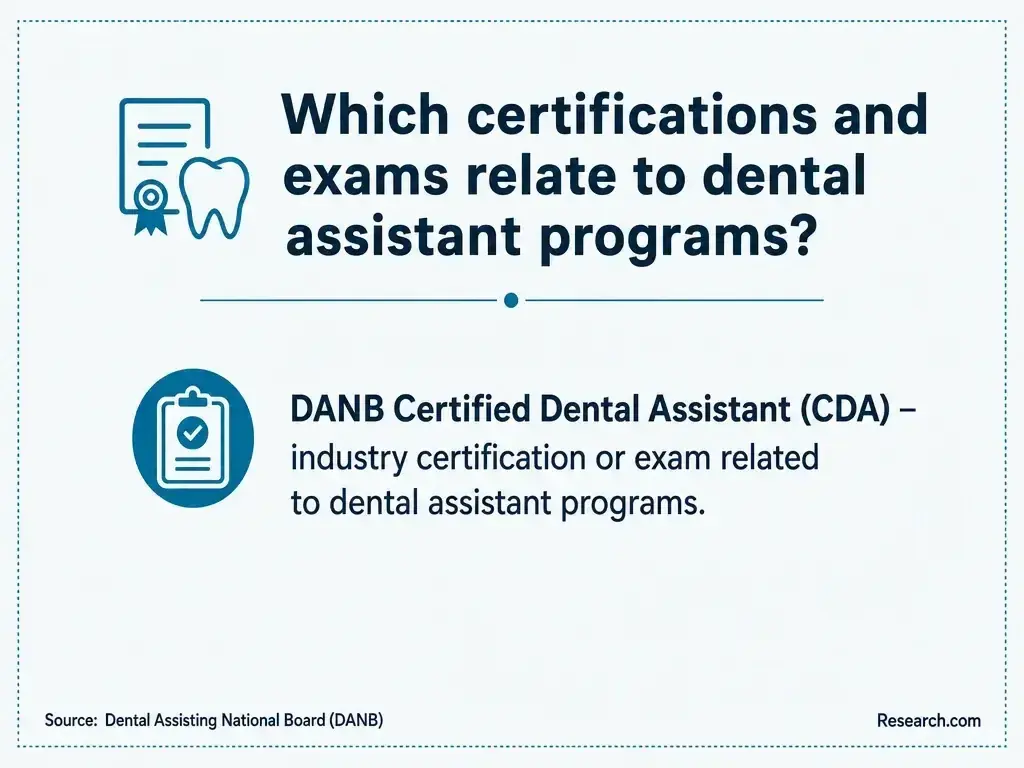
The award depends on the provider: it may be a certificate, diploma, or associate degree. An employer may instead document workplace training without awarding a college credential. These are educational awards; none should be confused with Minnesota's licensed dental assistant status or a professional certification from the Dental Assisting National Board.
For a student planning expanded functions, the crucial question is whether the specific program satisfies the Minnesota Board of Dentistry's current education pathway and prepares students for the applicable examinations. The Commission on Dental Accreditation (CODA) accredits dental-assisting programs; institutional accreditation concerns the school as a whole. Confirm each separately. Also ask whether credits can transfer or count toward further dental-assisting training, since transfer is not automatic.
Providers set their own admission rules. Common requirements to check include proof of secondary-school completion, an application, prerequisite coursework or assessments, and health or background documentation before clinical placement. A school can admit you before you are cleared for its clinical component; ask what happens, financially and academically, if a placement requirement cannot be met.
Minnesota licensing requirements are a separate question from admission. Before enrolling, obtain the program's written explanation of the license pathway it supports and verify it with the Minnesota Board of Dentistry. If your aim is employer-trained, entry-level work instead, ask a prospective practice which duties it trains new hires to perform and which require additional credentials.
Students typically learn dental terminology and anatomy, chairside workflow, instrument identification and sterilization, infection-prevention procedures, dental materials, radiography concepts, recordkeeping, and patient communication. Labs let students rehearse techniques before applying them in supervised clinical settings. The U.S. Bureau of Labor Statistics describes both clinical and administrative tasks in the occupation, but a school's curriculum determines which skills it teaches and assesses.
Ask to see the course sequence and clinical evaluation criteria. In particular, check whether students practice the functions relevant to Minnesota licensure, receive enough supervised opportunities to demonstrate competence, and learn the digital records and imaging workflows used by potential employers. A course description alone is weaker evidence than a documented skills assessment and arranged clinical experience.
Not for every dental-assisting duty. Minnesota distinguishes duties that may be performed by an unlicensed assistant from expanded functions reserved for appropriately licensed dental assistants, subject to state supervision and practice rules (Minnesota Board of Dentistry). Do not assume an entry-level course, a nationally marketed certificate, or experience in another state authorizes expanded functions in Minnesota.
If you want to become a Minnesota licensed dental assistant, check the Board's current application, qualifying education, and examination requirements before choosing a program. CODA program accreditation, school accreditation, Dental Assisting National Board certification or examinations, and state licensure serve different purposes; one does not automatically substitute for another. Ask the Board how a proposed training route applies to your circumstances, particularly if the program is online or outside Minnesota.
Start with the work you want to do. If Minnesota licensed expanded functions are the goal, eliminate programs that cannot document a qualifying route; if you want to test the occupation first, compare shorter training with supervised employer entry. Then compare the remaining options on total net cost, clinical experience, schedule, completion support, and travel - not ranking position alone.
Use these questions when speaking with admissions staff; request written answers so programs can be compared on the same terms.
A red flag is a promise of licensure or employment without explaining examinations, clinical training, and Board eligibility. Avoid treating an affordability ranking as a substitute for those checks.
A common starting point is supervised chairside or administrative assistance; additional qualifying education, examinations, and a Minnesota license can open duties reserved for licensed dental assistants. With experience, an assistant may pursue responsibilities in a specialty practice, patient coordination, or team supervision. Job titles alone do not establish permission to perform a regulated function - check the Minnesota Board of Dentistry's scope rules.
Dental assisting is a focused route into patient-facing dental work, not a shortcut to every occupation in a dental practice. Someone weighing it against a search for the easiest doctorate degree to obtain is considering a fundamentally different goal: this decision turns on practical training, entry costs, and the duties available under Minnesota rules.
The U.S. Bureau of Labor Statistics projects 7.4% national growth in dental assistant employment from 2025 to 2035. This supports considering the occupation, but it is not a forecast of vacancies in Brooklyn Park. The usable labor market extends across the Minneapolis-St. Paul area, so placement location, commute, and willingness to work in different types of practices can matter as much as the city named in a program search.
To test demand before enrolling, review current local postings for the duties and credentials they specify. Distinguish openings willing to train an unlicensed entrant from those requiring Minnesota licensure; that difference tells you whether a shorter route or a qualifying licensed-assistant program better matches your target jobs.
Investing in training is a consequential decision, so the Research.com team built this ranking to help readers compare affordable options against other dental assistant programs in the same location. Only programs with completions reported to IPEDS are eligible. The most affordable ranking scores tuition, cost of attendance, median student debt, and federal loan default rate; an entropy-based method gives more weight to measures that differ more across programs. Accreditation and other quality indicators are not part of this affordability score.
To check the quality, credibility, and accuracy of the underlying information, the team used the following sources. Some also provide context for occupational recognition or alternative training routes; they should not be mistaken for dental-assisting accreditors.
The ranking is a starting point, not proof that a program meets Minnesota licensing requirements or offers the lowest personal net cost. IPEDS does not cover every employer-training or career-school option. Readers can use the ranking to narrow their search, then confirm program accreditation, practical training, aid eligibility, and a written total-cost estimate. More detail appears on Research.com's methodology page.
# 1 position
# 2 position
Employer training may have less upfront tuition, but compare wages during training and the duties you can perform afterward. For a school program, compare itemized net cost after confirmed aid rather than advertised tuition.
Do not assume so. Verify the specific program's qualifying education and in-person clinical components against current Minnesota Board of Dentistry requirements before enrolling.
No. CODA accredits dental-assisting programs; the Minnesota Board of Dentistry determines state licensing eligibility and grants licenses.
Not necessarily for duties Minnesota permits unlicensed assistants to perform. Ask employers about supervised training, and check whether your intended duties require a licensed pathway.
Ask who secures it, where it may be located, how many supervised hours are required, whether you need health or background clearance, and whether travel adds to your costs.