# 1 position

Audited and Verified:
Our Editorial and Data Verification Process
Research.com uses government datasets, official education statistics and primary institutional information to support its career and degree guides. Our review process checks factual accuracy, occupational definitions, source dates and the requirements associated with the credentials discussed.
How This Article Was Fact-Checked
Our editorial team verifies salary estimates, employment projections, education requirements and program information against original data providers and official organizations. Salary figures are checked against the relevant occupational definitions and reporting periods. Information about licensure, accreditation and required in-person training is reviewed separately.
Fact-checked and verified on:

Co-Founder and Chief Data Scientist

Reviewed by Karolina Broda
Fact-Checker and Data Verification
Choosing an affordable dental assistant program near North Mankato means comparing more than tuition: hands-on training and eligibility for Minnesota's licensed duties can change the value of a credential. The U.S. Bureau of Labor Statistics projects 7.4% national employment growth for dental assistants from 2025 to 2035. This guide explains local training routes, costs, career prospects, and licensing questions. It also features a Most Affordable Dental Assistant Trade Schools in North Mankato for 2027 ranking created by the Research.com team of data scientists to help students identify programs worth considering.
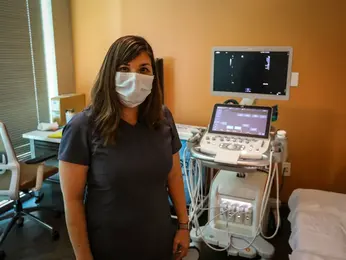
Expect instruction in chairside procedures, infection prevention, patient communication, and dental-office workflow, followed by supervised practice. South Central College is a local provider to investigate; confirm its current dental assisting credential, campus schedule, clinical arrangements, and 2027 availability directly before applying.
The central choice is between a structured program that may support Minnesota licensed dental assistant eligibility and a shorter route aimed at duties permitted for an unlicensed assistant. Employer-sponsored training can reduce upfront expense and put you in a practice sooner, but its duties and advancement options may be narrower. A short course marketed among quick courses that pay well is worth considering only if its practical training and resulting eligibility match your goal.
Ask each provider for its current curriculum, required contact and clinical hours, placement policy, credential awarded, and written explanation of which Minnesota requirements its graduates can pursue. A certificate, diploma, and associate degree are different academic awards; their names alone do not establish different permitted duties (Minnesota Board of Dentistry; Commission on Dental Accreditation).
Dental offices are the principal employment setting for dental assistants nationally (U.S. Bureau of Labor Statistics). In and around North Mankato, that makes nearby practices and their clinical-placement relationships more relevant than a school's general employment claims. Some assistants also work in specialty practices, where tasks may differ from those in general dentistry.
Before enrolling, ask whether clinical training takes place within a commute you can manage and whether local employers hire for the specific Minnesota role the training prepares you to pursue. A placement in a dental office provides experience, but it is not an employment offer.
A reliable North Mankato-specific wage figure is not established here. The national median annual wage was $48,070 in May 2025 for dental assistants (U.S. Bureau of Labor Statistics, Occupational Outlook Handbook). That figure spans experienced and newer workers across the United States; it should not be used as an expected first-year wage in a local practice.
For an investment decision, compare actual nearby job postings by required credential, duties, hours, and benefits. Then weigh plausible take-home earnings against program debt and any income you would forgo while attending clinics. A higher advertised hourly rate may not offset fewer available hours or a longer unpaid commute.
There is no single completion time: a school-based certificate, diploma, or associate degree follows its own calendar, while employer training depends on the practice and the duties taught. Request the current program map rather than assuming an accelerated schedule includes the same supervised experience as a longer one.
Find out how many weeks are spent in class, lab, and clinical settings; whether those hours are daytime-only; and whether a missed clinical placement can delay completion. For working adults comparing accelerated online degree programs, the key distinction is that speeding up academic coursework does not remove dental assisting's in-person competency and Minnesota eligibility requirements.
Online delivery can help with terminology, office procedures, and some coursework. It cannot by itself demonstrate chairside technique, instrument handling, or patient-facing clinical skills. For a North Mankato student, a hybrid option is useful only if its lab and clinical sites, schedules, and travel costs are workable.
The comparison below separates delivery convenience from the practical experience a prospective assistant should verify.
| Format | Potential advantage | Check before enrolling |
| On-campus | Scheduled access to instructors and equipment | Commute, lab hours, and clinical-site availability |
| Hybrid | Less travel for coursework | Required in-person sessions and placement location |
| Fully online coursework | Flexible study schedule | Whether separate, supervised hands-on training meets the intended pathway's requirements |
General online college courses for seniors may illustrate flexible learning, but flexibility is not evidence that a dental assisting course qualifies a learner for Minnesota licensed duties. Confirm that point with the Minnesota Board of Dentistry before paying.
No verified average price for North Mankato dental assisting programs is available here, and a 2027 price should not be inferred from an older tuition listing. Ask South Central College or any training provider for a current, itemized estimate for your residency and enrollment status. A comparison of most affordable online bachelor's degree options cannot substitute for the cost of this occupational pathway.
Build a job-ready budget from the following items so an inexpensive tuition quote does not hide required expenses:
Federal aid depends on both the student and program meeting eligibility rules (Federal Student Aid). Compare the net amount you would pay and borrow, not just a sticker price; a paid position may cost less upfront but offer a different route to licensed duties.
The award depends on the provider and pathway: it may be a certificate, diploma, or associate degree, while employer training may not award a college credential. Ask for the exact award shown on the transcript and whether the program holds current Commission on Dental Accreditation accreditation. Institutional accreditation, program accreditation, professional certification, and a Minnesota occupational license are separate forms of recognition (Commission on Dental Accreditation; Minnesota Board of Dentistry).
Do not assume that a similarly named credential from another provider carries the same supervised experience or qualifies you for the same application route. If you may continue training later, ask whether credits transfer and obtain that answer from the receiving program, not only the program awarding them.
Admission rules vary by program and are different from Minnesota's requirements for performing particular dental assisting duties. A provider may ask for proof of prior schooling and impose health, immunization, screening, or other conditions before clinical placement; verify its current checklist and deadlines rather than assuming admission guarantees a placement.
If you are considering employer training instead, ask what experience the practice expects, which tasks you may perform while learning, who supervises you, and whether training costs are paid. These answers help distinguish a genuine entry-level opportunity from a course or job offer that leaves essential clinical training unresolved.
Dental assisting instruction commonly covers dental anatomy and terminology, infection control, instrument preparation, chairside assistance, patient records, and communication; supervised labs and clinical work turn those topics into observable skills (U.S. Bureau of Labor Statistics; Commission on Dental Accreditation). Radiography and expanded functions require particular attention because Minnesota regulates who may perform them (Minnesota Board of Dentistry).
Ask to see the skills checklist and how instructors assess competency in a clinic, not merely a course catalog. Training on digital records and imaging may be valuable in a prospective workplace, but access to software alone is no substitute for supervised patient-care practice.
Not every dental assisting role requires the same credential in Minnesota. The Minnesota Board of Dentistry distinguishes unlicensed dental assistants from licensed dental assistants and regulates which duties each may perform. If you want licensed duties, verify the Board's current education, examination, application, and other requirements for the route you intend to use. Radiography and expanded functions warrant an explicit eligibility check before enrollment (Minnesota Board of Dentistry).
Dental Assisting National Board certification is a professional credential, not automatically a Minnesota license; completing a school program is not automatically either one (Dental Assisting National Board; Minnesota Board of Dentistry). Ask the school to identify its accreditation status and the precise Board pathway it supports, then confirm that claim with the Board. That check matters more than a program's "license-ready" marketing language.
Start with the role you want to hold, then compare programs on evidence that affects your ability to enter it. The affordability ranking is a useful shortlist, but it does not score clinical quality or establish Minnesota licensure eligibility. Use this sequence when speaking with admissions staff and potential employers:
Two red flags are an online-only promise of hands-on competency and a low tuition figure that excludes clinical travel or required supplies. Either can make an apparently affordable choice more costly - or unsuitable for the intended role.
An entry-level assistant may begin with duties permitted for an unlicensed worker or pursue the training and requirements for Minnesota licensed dental assistant duties. With experience, assistants may develop expertise in a specialty practice or take on coordination and office responsibilities, subject to employer needs and the Board's scope-of-practice rules (Minnesota Board of Dentistry; U.S. Bureau of Labor Statistics).
For someone weighing best majors for making money, dental assisting is a more specific investment question: does the available credential open the duties you want at a cost and schedule you can sustain? Training for a different dental occupation should not be treated as an automatic next step from an assisting credential.
The U.S. Bureau of Labor Statistics projects 7.4% growth nationally from 2025 to 2035 for dental assistants. That is an occupation-wide forecast, not a North Mankato hiring projection or a guarantee of an opening after graduation.
For a local decision, check current openings across the North Mankato-Mankato commuting area and note whether employers request licensed duties, experience, or particular hours. A small number of nearby practices can make clinical connections and commuting flexibility especially consequential, even when the national outlook is favorable.
Education is a significant investment. To help readers compare relevant local options, Research.com evaluates dental assisting programs against programs in the same occupation and location. Only programs with completions reported to IPEDS enter the ranking; an unlisted employer training route or provider should not be assumed nonexistent or unsuitable.
The most affordable ranking scores tuition, cost of attendance, median student debt, and federal loan default rates. An entropy-based method assigns more weight to measures that vary more across included programs. Unlike Research.com's best-program rankings, affordability scores do not include accreditation or other quality indicators. Readers should therefore check clinical training and Minnesota eligibility separately before treating a low-cost option as a good fit.
The Research.com team uses the following sources to examine costs, outcomes, recognition, and training pathways. Some cover broader trade education rather than dental assisting specifically; their inclusion does not imply that every source accredits or evaluates dental assisting programs.
The ranking can narrow a cost-conscious search, not establish licensure eligibility or a guaranteed return. More detail about the ranking approach is available on Research.com's methodology page.
# 1 position
# 2 position
Not necessarily. Compare total cost, supervised clinical training, completion prospects, and whether the program supports the Minnesota duties you want. The affordability ranking measures cost and debt, not those other factors.
Employer training may be an option for duties allowed to unlicensed assistants. Ask the practice what it will teach and verify Minnesota's rules before assuming that experience leads to licensed duties (Minnesota Board of Dentistry).
Coursework may be online, but chairside and other clinical competencies require in-person practice. Confirm the location and supervision of required labs and clinical work before enrolling.
No. Graduation and licensure are separate. Check the Minnesota Board of Dentistry's current requirements for your intended application route and confirm how the program meets them.
Ask who arranges it, where it takes place, when you must attend, what costs you bear, and what happens if a placement is delayed. Those details can change both completion time and total cost.