# 1 position
Pima Medical Institute-Denver - Dental Assisting/Assistant.
certificate or diploma

Audited and Verified:
Our Editorial and Data Verification Process
Research.com uses government datasets, official education statistics and primary institutional information to support its career and degree guides. Our review process checks factual accuracy, occupational definitions, source dates and the requirements associated with the credentials discussed.
How This Article Was Fact-Checked
Our editorial team verifies salary estimates, employment projections, education requirements and program information against original data providers and official organizations. Salary figures are checked against the relevant occupational definitions and reporting periods. Information about licensure, accreditation and required in-person training is reviewed separately.
Fact-checked and verified on:

Co-Founder and Chief Data Scientist

Reviewed by Karolina Broda
Fact-Checker and Data Verification
Choosing an affordable dental assistant program means looking beyond tuition: a short course is a poor bargain if it lacks the clinical practice you need. The U.S. Bureau of Labor Statistics reports a $48,070 national median annual wage for dental assistants in May 2025, making training cost worth examining closely. This guide compares Denver-area pathways, credentials, hands-on training, and career-entry requirements. It also accompanies the Most Affordable Dental Assistant Trade Schools in Denver for 2027 ranking, created by the Research.com team of data scientists to help students decide which programs are worth considering.
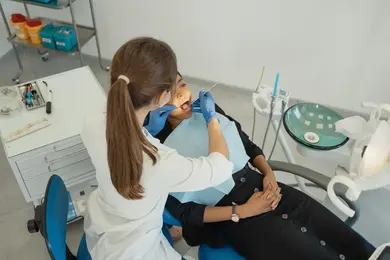
Expect instruction in patient preparation, infection control, instruments, chairside procedures, records, and office workflow, followed by practice with dental equipment and patients under appropriate supervision. A program's value depends on what you can actually do safely at completion - not just the name on its certificate. Ask how much practice occurs in a lab and how much takes place in a dental office.
These pathways differ in cost, structure, and the evidence of competence an employer receives. Availability and details vary by provider.
| Pathway | Typical credential or outcome | Best fit and principal trade-off |
| Technical or career-school program | Certificate or diploma; sometimes an associate degree in a longer occupational program | Structured instruction and supervised practice; compare total charges and clinical placement. |
| Employer-sponsored, on-the-job training | Work experience; any school or certification credential must be earned separately | Can reduce upfront tuition and allow earnings while learning; instruction and access to duties may depend on the employer. |
| Registered apprenticeship, if available | Paid work-based training and a completion credential from the sponsor | Combines employment and instruction; verify current local availability and how its training meets your goals. |
For a structured program, consider Emily Griffith Technical College or Pima Medical Institute-Denver as providers to investigate, not as interchangeable choices or guaranteed admissions options. Request each provider's current curriculum, clinical arrangement, and complete price. An advertised cheap online associates degree is not a substitute for dental assisting practice unless a specific occupational program also arranges the necessary in-person training.
Dental offices are the primary workplace for dental assistants, according to the U.S. Bureau of Labor Statistics. In the Denver area, a student can compare general dentistry with specialty practices such as orthodontics or oral surgery; the latter may require office-specific training even after graduation. Some assistants also work in community dental clinics. Because office schedules, patient populations, and assigned duties differ, ask clinical-placement staff whether their local partner offices resemble the setting where you hope to work.
A school placement is useful experience, not a job offer. If you plan to commute across the metro area, confirm the actual clinical site and schedule before enrolling; a low tuition quote may be less attractive if required travel prevents you from maintaining paid work.
The U.S. Bureau of Labor Statistics reports a $48,070 national median annual wage for dental assistants in May 2025. A median describes workers across experience levels and employers; it is neither a Denver-specific wage nor an expected starting salary. Before using earnings in a training-budget calculation, check current Denver-area dental assistant postings for hourly pay, benefits, schedules, and whether the duties require additional preparation.
For return on investment, compare likely earnings after training with what you could earn without enrolling. Account for tuition, aid, borrowing, the chance of completing the program, time away from work, and how long you expect to stay in the occupation. A higher-priced program could be worthwhile if its training materially improves your job options, but neither a wage median nor a school ranking proves that it will.
There is no single Denver-wide program length or universal clock-hour requirement for entry-level dental assisting. A short certificate, a longer diploma, and an occupational associate-degree pathway can have different schedules, lab time, and clinical requirements. Employer training proceeds at the practice's pace. Compare the published calendar and required contact hours, then ask whether the stated completion time includes clinical placement, breaks, and any prerequisites.
Be wary of judging speed by a generic 6 month associate online degree label. Even if a remote academic pathway is accelerated, it does not establish how quickly someone can acquire supervised chairside skills or meet rules for particular dental duties. The faster option is worthwhile only if its schedule still provides sufficient practice and lets you finish without taking on unmanageable debt.
Online coursework can cover terminology, anatomy, infection-control concepts, and records. Instrument handling, chairside assisting, equipment use, and patient-facing competencies require in-person practice and assessment. A hybrid program may work well for someone employed during the day, provided it has accessible labs and arranged clinical experience; a campus-based schedule may offer a simpler path to regular supervised practice.
An online colleges open enrollment policy addresses admission, not whether a dental assisting program provides clinical training or meets Colorado rules for particular duties. Ask exactly where practical sessions occur, who arranges a clinical site, and what happens if a placement is delayed. Avoid any claim that online coursework alone qualifies you for every dental assistant task.
A defensible current Denver-wide average is not available from a single consistently defined set of dental assistant programs: school offerings, billing periods, included supplies, and employer-paid routes differ. Rather than treating an unsupported average as your budget, obtain an itemized, current quote for each option. The cost to become job-ready may include tuition, mandatory fees, textbooks, scrubs and protective equipment, exam charges, background-check or health-screening costs when required, and travel to clinical sites. Lost wages during training matter too.
Compare the amount you must pay or borrow after grants and scholarships, not just the advertised tuition. Ask the school whether its specific program and your enrollment status qualify for federal aid; the availability of a school on a list of cheapest online schools that accept fafsa does not establish eligibility for a particular dental assistant program. Also ask about Colorado workforce-training assistance and employer-paid training, which may reduce upfront cost but come with different schedules or obligations.
The award depends on the pathway: a school may offer a certificate, diploma, or occupational associate degree, while an employer-training route may provide experience without a school credential. A registered apprenticeship, if available, has its own sponsor-issued completion credential. Ask to see the exact award named in the catalog rather than assuming all "dental assistant programs" lead to the same result.
School completion, institutional accreditation, dental-assisting programmatic accreditation, professional certification, and permission to perform a regulated duty are distinct. The Commission on Dental Accreditation identifies programs it accredits; the Dental Assisting National Board sets requirements for its certifications. Neither a similarly named credential nor institutional accreditation alone proves certification eligibility or authorization to perform every duty in Colorado. Check the requirements for the credential and duties you actually want.
Requirements vary by provider. A school may ask for evidence of secondary-school completion, an application, and documentation needed for patient-facing training. A clinical site may impose separate health, background, or scheduling conditions. An employer-training position instead requires a practice willing to hire and train you; admission to a school is not required for that route.
Before paying a deposit, request the current admissions checklist and ask whether any prerequisite, screening result, or clinical-site condition could keep you from finishing. If you have prior healthcare training, ask whether the provider evaluates it for credit or advanced standing and whether any waived coursework would affect hands-on preparation or certification eligibility.
Core training typically addresses dental terminology, tooth anatomy, infection prevention, patient communication, instrument setup, chairside support, documentation, and practice operations, consistent with duties described by the U.S. Bureau of Labor Statistics. Programs may also teach radiography concepts and other skills subject to Colorado's rules and supervision requirements. A classroom description alone cannot show whether students become comfortable with instruments and patient care.
Compare syllabi and practical assessments: Are students observed setting up and breaking down a treatment room? Do they practice infection-control procedures repeatedly? Who supervises work with patients, and how is competence documented? Those answers are more useful than a long course-title list when deciding whether a program prepares you for an entry-level office.
Colorado does not issue a general occupational license that every dental assistant must obtain before working, according to the Colorado Dental Board. That does not mean every assistant may perform every procedure. The Board's rules govern particular duties, supervision, and preparation; verify current radiography and expanded-duty requirements before choosing training for those tasks.
Professional certification from the Dental Assisting National Board is separate from state permission to perform a duty. If a school advertises certification preparation, ask which examination it means, whether your exact program and experience satisfy that examination's eligibility rules, and whether exam fees are included. Likewise, confirm any state-specific duty requirements with the Colorado Dental Board rather than relying on a school's general claim that graduates are "certification-ready."
Start with the job and duties you want, then test whether each program supplies the training, practical experience, credential, and regulatory preparation needed to reach them. A lower price is valuable only if you can complete the program and use what it teaches. Ask providers for written answers to these questions before committing:
Check institutional accreditation with the accreditor, any claimed dental-assisting program accreditation with the Commission on Dental Accreditation, and career-school authorization with the appropriate Colorado regulator. These are different checks. A common mistake is choosing solely from a ranking or advertised tuition while overlooking an unarranged clinical placement, required travel, or a credential that does not match the intended duties.
An entry-level assistant can build experience in general practice and then seek office-specific training in specialties, radiography, expanded duties, or patient coordination, subject to Colorado rules and employer requirements. Experienced assistants may move into lead-assistant or practice-operations responsibilities; those roles are not automatic outcomes of a certificate. Ask prospective employers which additional competencies they support and whether they pay for training or examination fees.
If chairside patient work is not your goal, compare other occupations before enrolling rather than assuming dental assisting is the right fit because its course looks short. A guide to easy trades to learn that pay well can help generate alternatives, but assess each option's actual training demands, local openings, and entry pay. Someone who needs earnings immediately might also compare paid office training with school attendance.
The U.S. Bureau of Labor Statistics projects 7.4% growth nationally from 2025 to 2035 for dental assistants. This supports considering the occupation, but it is not a Denver job-opening count or a guarantee of placement. Local demand depends on practices' hiring needs, schedules, and the duties applicants can perform.
For a more useful local test, review current Denver-area openings alongside each school's clinical partners: note requested experience, radiography skills, hours, and commute. If employers regularly seek skills absent from a short program, factor in the time and cost of obtaining them. Conversely, a practice offering supervised training may make an expensive school route unnecessary for your entry-level goal.
Investing in training is an important decision, so Research.com designed this ranking to compare dental assistant programs with other options in the same occupation and location. Only programs with completions reported to IPEDS are eligible. That makes the comparison consistent, but it also means the ranking may omit legitimate employer training or providers outside IPEDS reporting.
The most affordable ranking scores tuition, cost of attendance, median student debt, and federal loan default rate. Weights are assigned through an entropy-based method, which gives more weight to measures that vary more across eligible programs. Unlike Research.com's separate best-program rankings, this affordability score does not include accreditation or other quality measures. Readers should therefore check practical training, credential fit, and regulatory requirements independently. Research.com's ranking methodology provides more detail.
The team used the following data sources to develop and check its trade-program rankings. Some are broader cross-occupation references; their inclusion does not mean, for example, that a construction credential accredits dental assisting.
Use the ranking to narrow a shortlist, not as proof that the lowest-scoring cost option is the best investment. Compare each program's current written price, supervised practice, completion prospects, and fit with the duties you want to perform.
# 1 position
# 2 position
Not necessarily. Compare the full amount you will pay or borrow, supervised practice, clinical placement, schedule, and credential fit. The lowest tuition can become costly if you need additional training to do the work you want.
Employer-provided training can be an entry route. Confirm which duties the employer will teach and supervise, and check Colorado Dental Board rules before assuming that experience alone qualifies you for radiography or expanded duties.
Online classes can cover theory, but chairside skills and patient-facing practice require in-person training. Ask a hybrid provider where those sessions occur and who arranges them.
No. A school award and professional certification are different. Check the Dental Assisting National Board's requirements for the particular certification and ask whether your program meets them.
Choose based on the duties and credential you need, the amount of supervised practice, total cost, and time away from work. A longer program is not automatically better for an entry-level chairside role; ask what its additional coursework adds to your goal.