# 1 position
Most Affordable Dental Assistant Schools & Training in Chattanooga for 2027
Audited and Verified:
Our Editorial and Data Verification Process
Research.com uses government datasets, official education statistics and primary institutional information to support its career and degree guides. Our review process checks factual accuracy, occupational definitions, source dates and the requirements associated with the credentials discussed.
How This Article Was Fact-Checked
Our editorial team verifies salary estimates, employment projections, education requirements and program information against original data providers and official organizations. Salary figures are checked against the relevant occupational definitions and reporting periods. Information about licensure, accreditation and required in-person training is reviewed separately.
Fact-checked and verified on:

Co-Founder and Chief Data Scientist

Reviewed by Karolina Broda
Fact-Checker and Data Verification
Choosing the cheapest dental assistant training in Chattanooga means looking beyond tuition: a low-priced program may leave you paying separately for clinical training or the preparation needed for permitted duties. The U.S. Bureau of Labor Statistics projects 7.4% national growth in dental assistant employment from 2025 to 2035. For career changers and first-time students, this guide explains costs, credentials, Tennessee rules, and local career prospects. It accompanies the Most Affordable Dental Assistant Trade Schools in Chattanooga for 2027 ranking, created by the Research.com team of data scientists to help you identify programs worth considering.
Key findings about dental assistant degrees in Chattanooga
- The lowest-ranked cost is not necessarily the lowest job-ready cost: compare required fees, supplies, clinical travel, and any additional training needed for Tennessee-permitted duties.
- The national median annual wage for dental assistants was $48,070 in May 2025, according to the U.S. Bureau of Labor Statistics; it is not a Chattanooga starting-wage estimate.
- Dental assisting programs commonly lead to a certificate or diploma, while some lead to an associate degree; confirm hands-on training and Tennessee Board of Dentistry requirements before paying a deposit.
Table of Contents
- Most Affordable Dental Assistant Schools & Training in Chattanooga for 2027
- What can I expect from a dental assistant trade school program in Chattanooga?
- Where can I work with a dental assistant trade school training in Chattanooga?
What can I expect from a dental assistant trade school program in Chattanooga?
Expect instruction in chairside assisting, infection control, instruments, dental materials, patient communication, and office records, followed by practice in a lab or dental setting. A credential describes what the school awards; it does not, by itself, establish which duties Tennessee permits you to perform. The U.S. Bureau of Labor Statistics describes certificate or diploma training as a common route, alongside associate degree programs and on-the-job learning where state rules allow it.
Compare the current dental assisting offerings, if available, at Chattanooga State Community College, Chattanooga College Medical Dental and & Technical Careers, and Miller-Motte College-Chattanooga. Ask each provider for its current catalog, credential, clinical-site arrangements, and itemized price rather than assuming that similarly named programs teach the same skills. A school for trade skills online may offer flexible theory coursework, but dental assisting still requires a credible plan for in-person skills practice.
Where can I work with a dental assistant trade school training in Chattanooga?
Most dental assistants work in dentists' offices, according to the U.S. Bureau of Labor Statistics. In Chattanooga, that makes general and specialty practices the most relevant places to seek clinical experience and entry-level openings. Orthodontic, pediatric, and oral-surgery offices may use different instruments, workflows, and patient-support skills; ask whether a program's placement exposes you to the setting you want.
An employer may also train someone for permitted entry-level duties. That route can reduce upfront school costs and let you earn while learning, but its training may be narrower than a structured program. Confirm who supervises you, what you will learn, and whether any additional course or examination is needed before performing a particular duty under Tennessee rules.
A verified Chattanooga-specific wage figure is needed to estimate local pay; the national median should not be substituted for it. The U.S. Bureau of Labor Statistics reports a $48,070 national median annual wage in May 2025 for dental assistants. Half of employed dental assistants earned less than that amount, and half earned more. It includes experienced workers and is not a promise of pay after training.
For a local decision, compare current Chattanooga-area postings for the duties you would be eligible to perform, then ask practices about pay during training, scheduled hours, benefits, and any premium for additional permitted duties. Those details matter more to an entry-level budget than a national midpoint alone.
The U.S. Bureau of Labor Statistics says dental assisting programs typically take about a year to complete, while associate degree programs generally take longer. A school's calendar can differ because of part-time scheduling, lab availability, and clinical placement. Ask for the actual start-to-finish schedule, required contact hours, and any separate time needed for a Tennessee-approved course tied to the duties you want.
An accelerated certificate may get you into a practice sooner, but speed is a poor bargain if it reduces supervised practice or leaves required preparation outside the advertised schedule. An associate degree takes more time and may suit someone seeking broader coursework; what are the fastest online associate degrees available? is a separate question from whether dental assisting skills can be completed remotely.
Online coursework can cover terminology, records, and some foundational safety concepts. Chairside positioning, instrument handling, sterilization procedures, and other practical competencies call for supervised in-person training. A hybrid program can work well for a Chattanooga student with a job if its lab and clinical sites are reachable on the required days.
Before enrolling, get written answers about where skills are assessed, who secures clinical placements, and whether commuting to a site outside Chattanooga is required. Do not assume an online completion certificate meets Tennessee requirements for a specific duty or qualifies you for Dental Assisting National Board certification; those are separate checks with the relevant authority.
There is no reliable single Chattanooga average here that covers every dental assisting route, including employer training. Request a current, itemized cost-of-attendance estimate from each school. The ranking's affordability measures help compare eligible programs, but an advertised tuition price may exclude expenses needed to become job-ready.
Build your comparison around tuition and mandatory fees; books, uniforms, protective equipment, and supplies; any required screening; travel to labs or clinical sites; certification or application costs where applicable; and earnings you give up while attending. Subtract confirmed grants, scholarships, or employer contributions. Ask the financial-aid office whether the specific program qualifies for federal aid: attending a school listed among best affordable online universities that accept fafsa would not, on its own, establish eligibility for a particular training program. Federal Student Aid makes program eligibility a distinct consideration.
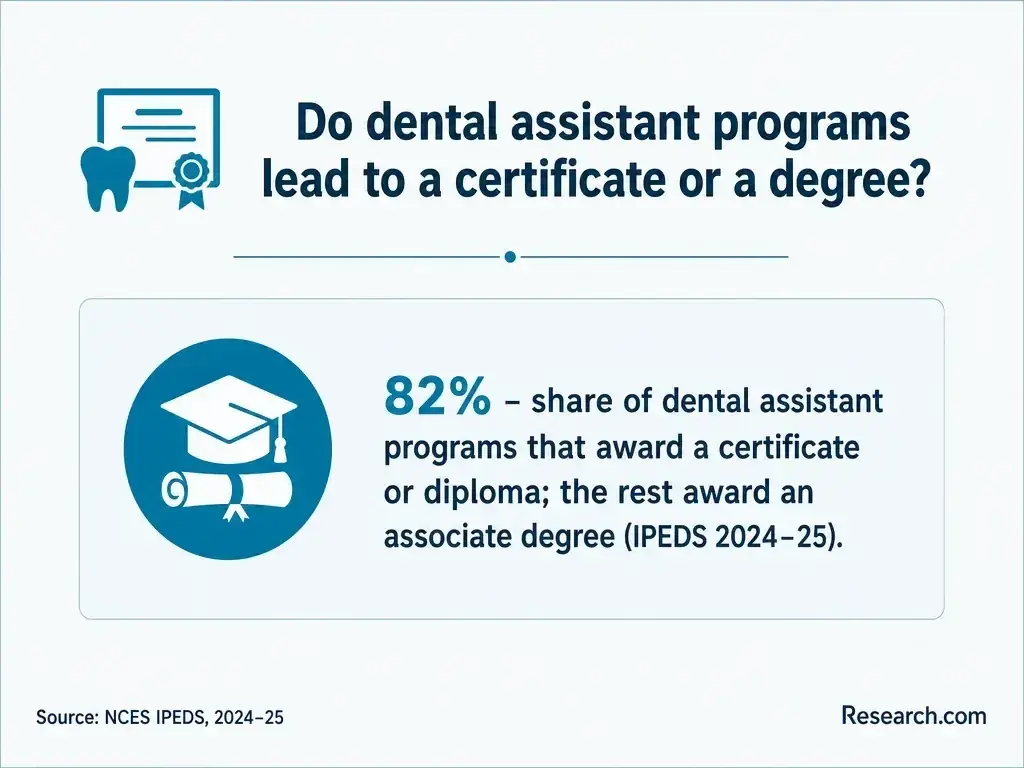
A school may award a certificate, diploma, or associate degree, depending on its program. That school-issued credential differs from institutional accreditation, Commission on Dental Accreditation (CODA) programmatic accreditation, Dental Assisting National Board (DANB) certification, and any authorization or qualification Tennessee requires for particular duties. None should be presented as a substitute for another.
Ask the school to name the exact credential on the transcript, verify any accreditation claim with the accreditor, and explain which DANB pathway - if any - its curriculum supports. DANB establishes its own examination and eligibility requirements. If your goal is an academic credential beyond occupational entry, compare that goal separately rather than assuming a dental assisting certificate supplies it.
Admissions rules vary by provider. Request the current program checklist for prior education, application deadlines, placement assessments, immunizations or screening, and any conditions for entering a clinical site. A program can admit you before all clinical-placement conditions are met, so ask which requirements could delay completion and whether they carry additional costs.
For an employer-training route, ask about hiring prerequisites and the availability of supervised practice. For a school route, ask whether prior relevant coursework can count toward the program, but obtain a written evaluation before treating transfer credit or advanced standing as a time or cost saving.
Dental assistants prepare treatment areas, support dentists during procedures, explain post-treatment instructions, maintain records, and help prevent infection, according to the U.S. Bureau of Labor Statistics. Training should let you practice those tasks, not merely recognize them on a quiz. Ask to see how the program assesses instrument transfer, cleaning and sterilization, dental materials, and patient communication in a lab or clinical setting.
Radiography and other additional duties deserve a separate curriculum check because Tennessee rules govern who may perform them and under what conditions. A course that mentions a technique is not necessarily the board-recognized training needed to use it at work. This distinction is particularly important when comparing a short program with a longer one.
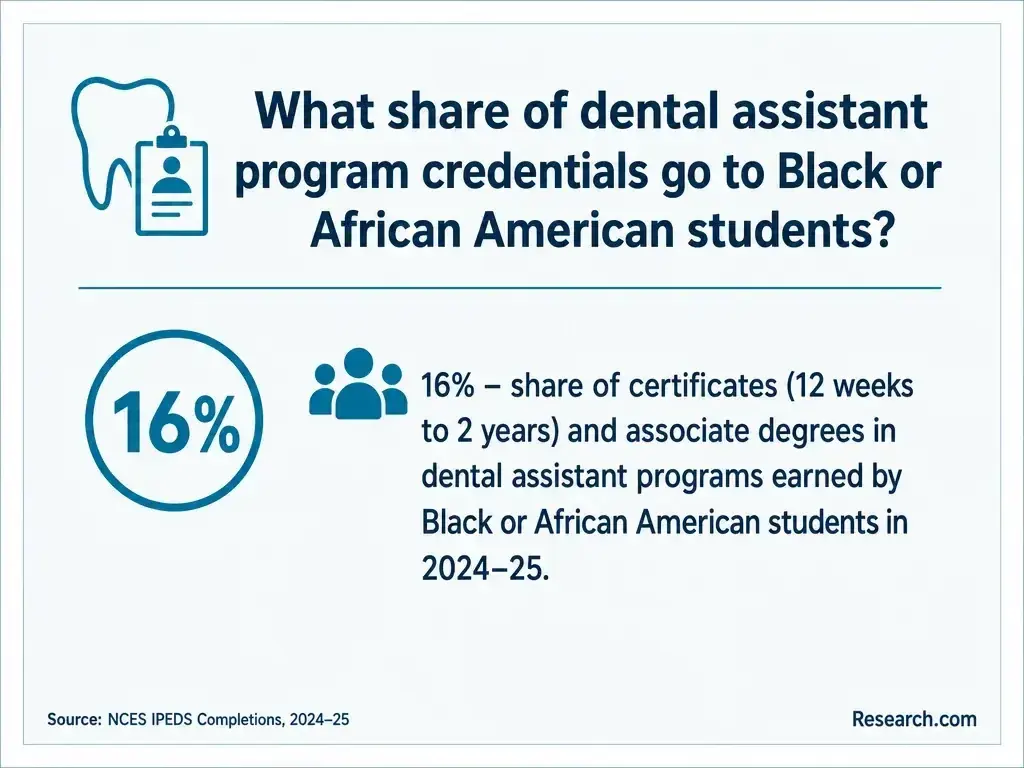
Do not assume that every dental assisting task has the same entry rule. The Tennessee Board of Dentistry governs permitted duties, supervision, and qualifications for additional functions, including radiography-related requirements. DANB certification is a separate professional credential; school graduation or institutional accreditation does not automatically grant it or authorize a Tennessee-regulated duty.
Before choosing a program, identify the duties in the jobs you want and check the Tennessee Board of Dentistry's current requirements for each one. Then ask the school to show, in writing, where its course, practical training, and any examination preparation fit those requirements. This is more useful than asking only whether the program is "approved."
Start with your intended job, then compare the total cost to become eligible and ready to perform it. An affordability ranking is a shortlist, not a verdict on clinical quality or employment outcomes. Ask each provider for the same documents so that price and training claims are comparable.
Use this sequence before paying an enrollment deposit:
- Request the current catalog, full price breakdown, completion schedule, and written list of clinical or lab requirements.
- Verify institutional and any claimed CODA accreditation with the named accreditor; separately check Tennessee requirements for your intended duties.
- Ask who arranges clinical practice, where it occurs, and what happens if a placement is delayed.
- Compare your out-of-pocket cost and lost work time with an employer-training option, accounting for aid, likely debt, and the chance of completing each route.
A useful return-on-investment estimate considers your current earnings, plausible post-training pay, program duration, aid, debt, completion risk, and how long you expect to work in the field - not just tuition divided by a national median wage. If your actual goal is quick bachelor degrees, dental assisting trade training is not a substitute for that different educational path.
Training can lead to entry-level chairside work and, with appropriate experience and Tennessee-recognized preparation, consideration for additional permitted duties. Dental assistants may also develop stronger scheduling, records, and patient-coordination skills that support office responsibilities. Advancement depends on the employer, demonstrated skills, and applicable state rules; a new title does not itself expand legal duties.
If you want hands-on patient care in a dental practice, a focused certificate or supervised employer route may fit better than a longer credential. If you are primarily looking for an easy bachelor's degree online, this occupation-specific trade pathway answers a different need. Avoid paying for extra coursework until you know which credential and practical experience your target role actually requires.
The U.S. Bureau of Labor Statistics projects 7.4% national employment growth from 2025 to 2035 for dental assistants. That points to continuing demand nationally, but it does not predict the number of Chattanooga openings or guarantee a job for a local graduate. Hiring will also depend on practice needs, scheduling, and which duties an applicant is qualified to perform.
Use the national projection as background, then test the local market: review recent postings in the commuting area, note their required skills, and ask clinical-site staff what they expect from new hires. If listings regularly call for a duty your proposed program does not prepare you to perform, a cheaper tuition price may not make it the better investment.
Most Affordable Dental Assistant Schools & Training in Chattanooga for 2027
Education is a consequential investment, so Research.com designed this ranking to compare programs against other dental assisting options in the same location, rather than against unrelated trades. Only programs reporting completions to the Integrated Postsecondary Education Data System (IPEDS) are eligible. The most affordable ranking scores tuition, cost of attendance, median student debt, and federal loan default rate; an entropy-based method assigns more weight to measures that differ more across eligible programs. Accreditation and other quality indicators are not part of this affordability score.
The Research.com team drew on the following sources to check costs, outcomes, institutional information, and occupation-relevant context. Inclusion as a source does not mean every organization accredits dental assisting programs.
- IPEDS database - reported completions and institutional data.
- National Center for Education Statistics - federal education data and definitions.
- College Scorecard database - federal cost, debt, and outcome measures where available.
- Peterson's database - supplementary institutional information.
- Commission on Accreditation of Allied Health Education Programs - allied-health accreditation context.
- Accrediting Bureau of Health Education Schools - institutional and health-education accreditation information.
- Commission on Dental Accreditation - dental assisting program accreditation information.
- Dental Assisting National Board - certification pathways and requirements.
- National Center for Construction Education and Research - broader trade-training reference information, not dental assisting approval.
- Apprenticeship.gov Partner Finder - registered-apprenticeship reference information.
The ranking helps narrow a cost-conscious shortlist; it does not establish that a program offers the clinical experience or Tennessee eligibility you need. Employer training and programs without IPEDS-reported completions may be absent. For more on the ranking process, see Research.com's methodology.
# 2 position
Chattanooga State Community College - Dental Assisting/Assistant.
certificate or diploma# 3 position
# 4 position
# 5 position
Miller-Motte College-Chattanooga - Dental Assisting/Assistant.
certificate or diploma Frequently asked questions about dental assistant programs in Chattanooga
Is the cheapest dental assistant program the best choice?
Not necessarily. Compare total job-ready cost, supervised practice, schedule, and preparation for the Tennessee-permitted duties you want. The affordability ranking does not score clinical quality.
Can I become a dental assistant without attending trade school?
On-the-job learning may be an option for some duties. Ask a prospective employer what supervision and training it provides, and check Tennessee Board of Dentistry rules before assuming that route covers additional functions.
Can I complete dental assistant training entirely online?
Some theory may be taught online, but practical skills require in-person assessment or practice. Confirm the location and scheduling of labs and clinical experience before enrolling.
Does a certificate automatically make me DANB-certified?
No. A school credential and DANB certification are separate. Check DANB's current eligibility and examination requirements for the certification you want.
What should I ask a Chattanooga program about clinical placements?
Ask who finds the site, where it is, when you must attend, what tasks you can practice, and whether a placement delay changes your completion date or costs.
- U.S. Bureau of Labor Statistics - Dental Assistants
Used to verify salary, employment outlook, and typical education requirements.
https://www.bls.gov/ooh/healthcare/dental-assistants.htm - CODA - Find a Dental Program
Used to verify programmatic accreditation or industry recognition of programs.
https://coda.ada.org/find-a-program - DANB - Certified Dental Assistant (CDA) exam
Professional certification reference for graduates of this occupation.
https://www.danb.org/exams/exam/cda-exam - Chattanooga State Community College - official website
Official school website (programs, tuition, admissions).
https://www.chattanoogastate.edu/ - Chattanooga College Medical Dental and & Technical Careers - official website
Official school website (programs, tuition, admissions).
https://www.chattanoogacollege.edu/ - Miller-Motte College-Chattanooga - official website
Official school website (programs, tuition, admissions).
https://www.miller-motte.edu/