# 1 position


Audited and Verified:
Our Editorial and Data Verification Process
Research.com uses government datasets, official education statistics and primary institutional information to support its career and degree guides. Our review process checks factual accuracy, occupational definitions, source dates and the requirements associated with the credentials discussed.
How This Article Was Fact-Checked
Our editorial team verifies salary estimates, employment projections, education requirements and program information against original data providers and official organizations. Salary figures are checked against the relevant occupational definitions and reporting periods. Information about licensure, accreditation and required in-person training is reviewed separately.
Fact-checked and verified on:

Co-Founder and Chief Data Scientist

Reviewed by Karolina Broda
Fact-Checker and Data Verification
Choosing dental assistant training in Maine means comparing more than tuition: hands-on practice, radiography preparation, and the credential you can actually use matter. The U.S. Bureau of Labor Statistics projects 7.4% national employment growth for dental assistants from 2025 to 2035, making training choices timely without guaranteeing a local job. This guide helps new students and career changers compare pathways, costs, and Maine requirements. It also features a Best Dental Assistant Trade Schools in Maine for 2027 ranking created by the Research.com team of data scientists to help students identify programs worth considering.
Expect instruction in chairside procedures, infection control, dental materials, patient communication, records, and the safe handling of instruments. A useful program lets you practice these tasks in a lab and, where offered, a supervised dental-office placement. Ask how many hours are spent performing skills rather than watching demonstrations; a credential name alone does not establish practical readiness.
The main pathways differ in time, cost, and the evidence of training you can show an employer. These are pathway descriptions, not promises that every provider offers the same curriculum.
| Pathway | Typical credential or result | Best fit and key limitation |
| Career-school or community-college certificate or diploma | School-awarded certificate or diploma | Fits students seeking structured entry training; compare clinical access and exam eligibility. |
| Associate-degree program in dental assisting | Academic associate degree | Fits students who want a longer curriculum; additional study is not automatically required for basic assisting. |
| Dental-office training | Employer training record; possibly no school credential | Fits people who can secure a supervised entry role; training and advancement options depend on the office and Maine rules. |
A dental-office training position is not automatically a registered apprenticeship. If a provider advertises an apprenticeship, ask who sponsors it, whether it is registered, what wages and supervised instruction it includes, and which credential it awards (U.S. Department of Labor, Apprenticeship.gov).
Dental assistants primarily support dentists in private practices, including general and specialty offices; other possibilities include community dental clinics and larger group practices (U.S. Bureau of Labor Statistics). The workplace affects the skills worth prioritizing: a small practice may need an assistant comfortable with scheduling and sterilization as well as chairside care, while a specialty office may train for its procedures.
For students outside southern Maine, the location of a clinical placement can matter as much as the classroom location. Ask whether the school arranges placements near home, whether you need your own transportation, and whether placement schedules can coexist with paid work. Training in one community does not guarantee an opening there.
Pay varies by employer, duties, experience, and location. The U.S. Bureau of Labor Statistics reports a May 2025 national median annual wage of $48,070 for dental assistants. That figure covers workers at different career stages and should not be treated as a Maine wage or an expected first offer. For a local decision, compare current Maine dental-assistant wage estimates from the state labor-market agency with actual job postings in the area where you intend to work.
When judging an offer, consider hours, benefits, commuting costs, and whether the employer will pay for additional training. A position that supports supervised skill development may have a different long-term value from one with a higher initial rate but limited progression.
Short certificate programs may be completed in months; diploma and associate-degree routes generally require more time. The actual schedule depends on course load, lab availability, and whether a supervised placement is required. There is no single program length or clock-hour total that applies to every Maine entry-level dental assistant pathway. Request the school's current calendar and a breakdown of classroom, lab, and office hours before comparing completion dates.
An accelerated schedule can reduce time away from work but compresses practice and may make travel to clinical sites harder to manage. Part-time study can preserve earnings while extending the period before you can seek the roles you want. If a school offers credit for prior learning, ask which courses it replaces and whether any practical requirements must still be completed.
Online delivery can work for terminology, records, and some infection-control theory. Chairside assisting, instrument handling, radiography practice, and assessment of patient-facing skills require appropriate in-person instruction or supervised experience. A hybrid program is only convenient if its labs and placement sites are reachable; an entirely online course should not be assumed to establish Maine radiography authorization or eligibility for a certification exam.
Compare formats by asking where each hands-on skill is taught and assessed, who secures the placement, and what happens if no nearby office can host you. For an older career changer testing whether remote study suits their schedule, top online college courses for seniors may offer general format context, but they do not replace dental-assisting practical training.
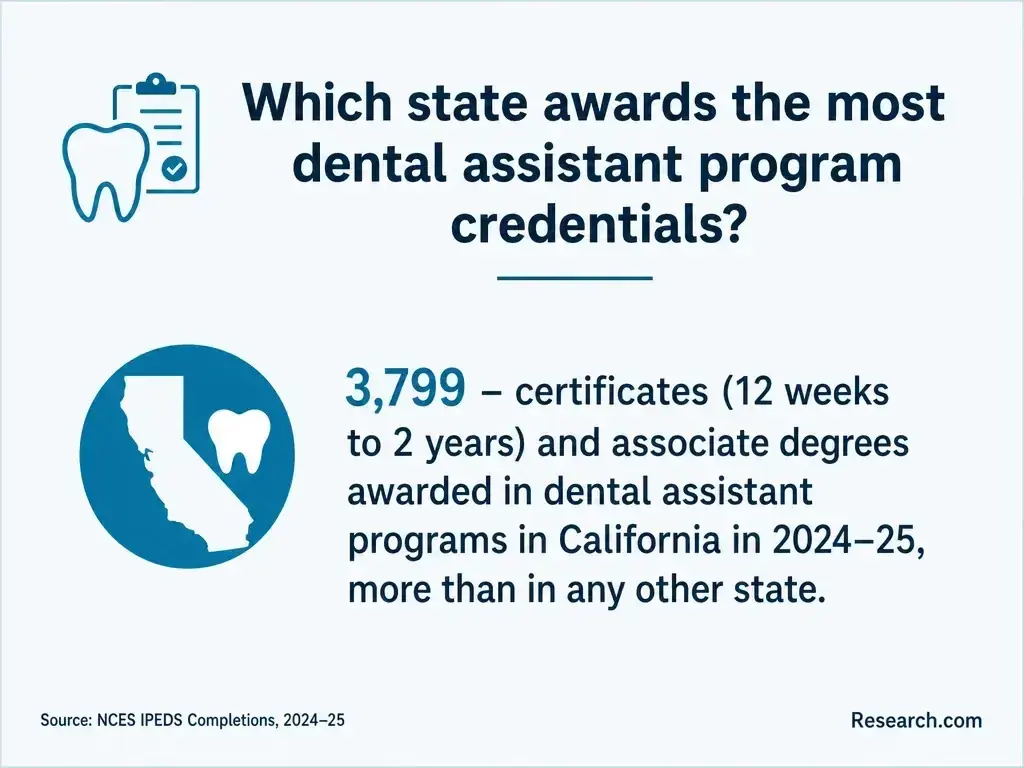
There is no defensible single Maine average that covers short career-school courses, public-college programs, and employer training on the same basis. Published tuition may omit mandatory fees or clinical expenses, while an employer may pay for instruction but offer a different wage during training. Ask each provider for a current, itemized cost of becoming job-ready rather than comparing advertised tuition alone.
Build your comparison around the expenses most likely to change the decision:
Check federal aid eligibility with the school and Federal Student Aid; not every short course qualifies. Also ask about Maine workforce-training assistance and whether residency affects public-college charges. Most affordable online universities that accept financial aid can explain broader aid comparisons, but their listed costs are not dental-assisting program prices. Likewise, a cheapest bachelors degree comparison uses a different credential and time horizon; it should not determine whether this trade program is affordable.
The award depends on the pathway: a certificate, diploma, or, if you enroll in a qualifying longer program, an associate degree. These are school credentials, not occupational licenses. An employer-trained assistant may receive no academic award. Before enrolling, get the exact award title in writing and ask whether the program is accredited by the Commission on Dental Accreditation (CODA), if that distinction matters to your certification goal.
The Dental Assisting National Board's Certified Dental Assistant credential is a separate professional certification with its own eligibility routes and examinations; completing a similarly named school program does not automatically confer it (Dental Assisting National Board). If a short, clearly recognized credential is your priority, easy certifications that pay well offers broader context, but verify dental-assisting eligibility against DANB's current rules.
Admissions requirements vary by provider and should be checked on the current program application. Schools may ask for evidence of secondary-school completion, an application, and prerequisites for courses or clinical placement. A placement site may have separate health, safety, or screening requirements. Ask when each condition must be met: an unexpected placement requirement can delay completion even after classroom admission.
Entry to basic dental-assisting work is a separate question from school admission. Before assuming you must buy a certificate, compare local openings that provide supervised training with school-based programs. If your goal includes radiography or expanded duties, check the Maine Board of Dental Practice's current rules for those specific tasks rather than relying on a general admissions adviser's description.
A substantive curriculum connects anatomy and dental terminology with chairside workflow: preparing treatment areas, passing instruments, maintaining infection-control procedures, documenting care, and communicating with patients. Programs may also cover dental materials, impressions, office software, and radiography theory or practice. The U.S. Bureau of Labor Statistics identifies clinical support and administrative tasks as parts of the occupation; the precise duties permitted in Maine depend on the task and applicable board rules.
Ask to see a skills checklist and how each competency is assessed. Digital imaging and electronic records are useful to learn, but software exposure should not come at the expense of supervised infection-control and chairside practice. A school that cannot explain its lab equipment, placement arrangements, or radiography instruction merits closer scrutiny.
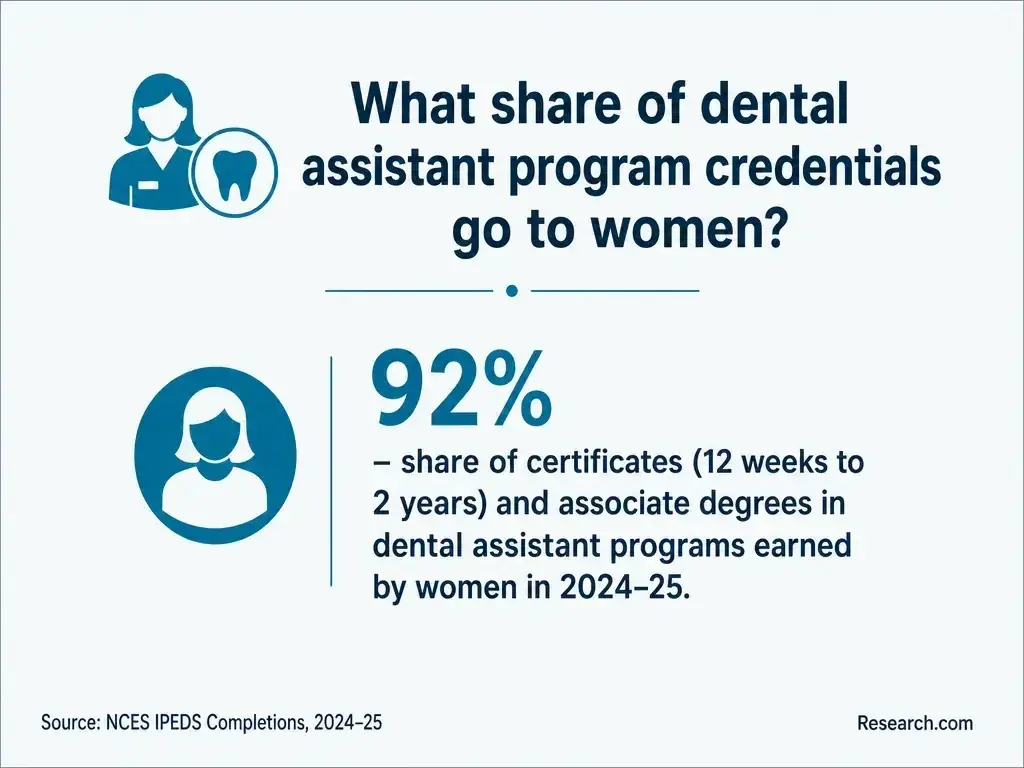
Do not treat "dental assistant" as a single permission covering every procedure. Maine distinguishes basic assisting from duties that require additional qualifications or authorization, including dental radiography and expanded functions (Maine Board of Dental Practice). Confirm the board's current requirements for the exact tasks you want to perform before selecting a program. A school certificate, CODA programmatic accreditation, DANB certification, and state authorization are different things; none should be assumed to substitute for another.
Ask the board and prospective employer which examinations, documented training, applications, or supervision apply to your intended role. Then ask the school to identify precisely which requirements its curriculum addresses. This is especially important if the program advertises radiography preparation or expanded-function opportunities without explaining what a graduate must do next.
The best choice is the pathway that gets you to your intended duties at a manageable total cost - not necessarily the fastest program or the highest-ranked institution. A school-based program can make sense when you want structured labs, an arranged placement, or a defined certification route. Employer training may make more sense if you can secure a supervised position and avoid substantial upfront expense. Neither route is automatically better.
Use these checks when narrowing a shortlist; request written answers so similarly named credentials are not mistaken for equivalent training:
To judge return on investment, weigh completion probability, debt, time out of paid work, expected changes from your current earnings, and the period over which those changes might matter. Discounting future earnings and accounting for uncertainty gives a sounder comparison than dividing tuition by a national median wage. Rankings can help build a shortlist, but they cannot verify an individual student's eligibility or local placement access.
Most students seek an entry-level chairside or combined clinical-and-office role. With experience and any task-specific qualifications Maine requires, an assistant may pursue radiography duties, expanded functions, specialty-office work, or responsibility for coordinating an assisting team. These are possible progressions, not automatic outcomes of a certificate (Maine Board of Dental Practice; U.S. Bureau of Labor Statistics).
If your main objective is a much higher salary immediately after training, compare actual local job offers and training costs before enrolling. Highest paying jobs master's degree lists describe a different career and education level; their salaries are not a useful estimate of what a new dental assistant can earn.
The U.S. Bureau of Labor Statistics projects 7.4% national growth in dental-assistant employment from 2025 to 2035. This indicates demand across the country, not a forecast of openings in a particular Maine town. State labor-market projections and current vacancies are better checks on whether your preferred commuting area offers enough opportunities.
Look beyond vacancy counts: note whether postings seek entry-level assistants, prior chairside experience, radiography qualifications, or particular schedules. That distinction helps you decide whether a short program, a more practice-intensive route, or direct employer training is the strongest match for the jobs actually available near you.
Investing in training is an important decision, so Research.com evaluates dental assistant programs against other programs serving the same occupation and location. The ranking is designed to help readers compare measurable outcomes, costs, and relevant recognition - not to replace a check of each program's clinical training or Maine regulatory fit. Only programs with completions reported to IPEDS are eligible; a provider's absence does not mean its training is unavailable or inadequate.
Best-program rankings assess completion and full- and part-time retention; median earnings one year after completion and earnings relative to annual attendance cost; tuition, attendance cost, student debt including debt held by students who withdrew, and federal loan default rates; and accreditation, occupation-relevant recognition, and student support. Programmatic accreditation or industry recognition carries 20% of the score, institutional accreditation 10%, and student support 10%. The remaining 60% covers outcomes, earnings, and costs, with weights distributed through an entropy-based method that gives more weight to indicators that vary more across programs. Most-affordable-program rankings instead score only costs and debt using entropy-based weights; accreditation and other quality indicators are not part of that score.
The team uses the following sources to check institutional data, outcomes, recognition, and training context:
Not every source establishes dental-assisting quality: for example, a construction credential is not a dental credential. Readers can review the broader scoring approach in Research.com's methodology, then use the ranking as a shortlist rather than a substitute for verifying current program details.
# 1 position
# 2 position
An employer-trained route may be possible for basic assisting. Check the Maine Board of Dental Practice's rules before taking on radiography or expanded duties, and compare the supervision offered by an employer with a school's practical training.
No. A school awards its certificate; the Dental Assisting National Board sets separate eligibility and examination requirements for its professional certifications.
Theory may be taught remotely, but practical chairside and other hands-on competencies need appropriate in-person instruction or supervision. Verify where a program delivers and assesses them.
Do not assume that it is required for basic entry work. CODA accreditation can matter for a chosen certification pathway; check current DANB eligibility and Maine rules for your intended duties.
Ask who arranges the placement, where it may be located, what skills you will practice, whether hours fit your schedule, and what happens if a site becomes unavailable.