# 1 position
Umpqua Community College - Dental Assisting/Assistant.
certificate or diploma

Audited and Verified:
Our Editorial and Data Verification Process
Research.com uses government datasets, official education statistics and primary institutional information to support its career and degree guides. Our review process checks factual accuracy, occupational definitions, source dates and the requirements associated with the credentials discussed.
How This Article Was Fact-Checked
Our editorial team verifies salary estimates, employment projections, education requirements and program information against original data providers and official organizations. Salary figures are checked against the relevant occupational definitions and reporting periods. Information about licensure, accreditation and required in-person training is reviewed separately.
Fact-checked and verified on:

Co-Founder and Chief Data Scientist

Reviewed by Karolina Broda
Fact-Checker and Data Verification
Choosing dental assistant training in Oregon means comparing more than tuition: the right program must teach hands-on skills and support the state credentials your intended duties require. The U.S. Bureau of Labor Statistics projects 7.4% national growth in dental assistant employment from 2025 to 2035, making career preparation worth examining carefully. This guide explains Oregon training routes, costs, credentials, and career prospects. It also features a Best Dental Assistant Trade Schools in Oregon for 2027 ranking created by the Research.com team of data scientists to help students make an informed choice about programs worth considering.
Expect a mix of classroom instruction, practice on dental equipment, and supervised patient-care experience where the program offers a clinical placement. Dental assistants prepare treatment areas, support dentists during procedures, maintain infection-control protocols, and may handle records or scheduling. The exact duties a graduate may perform depend on Oregon Board of Dentistry rules and any additional credentials held, not simply on the program's name (sources: U.S. Bureau of Labor Statistics; Oregon Board of Dentistry).
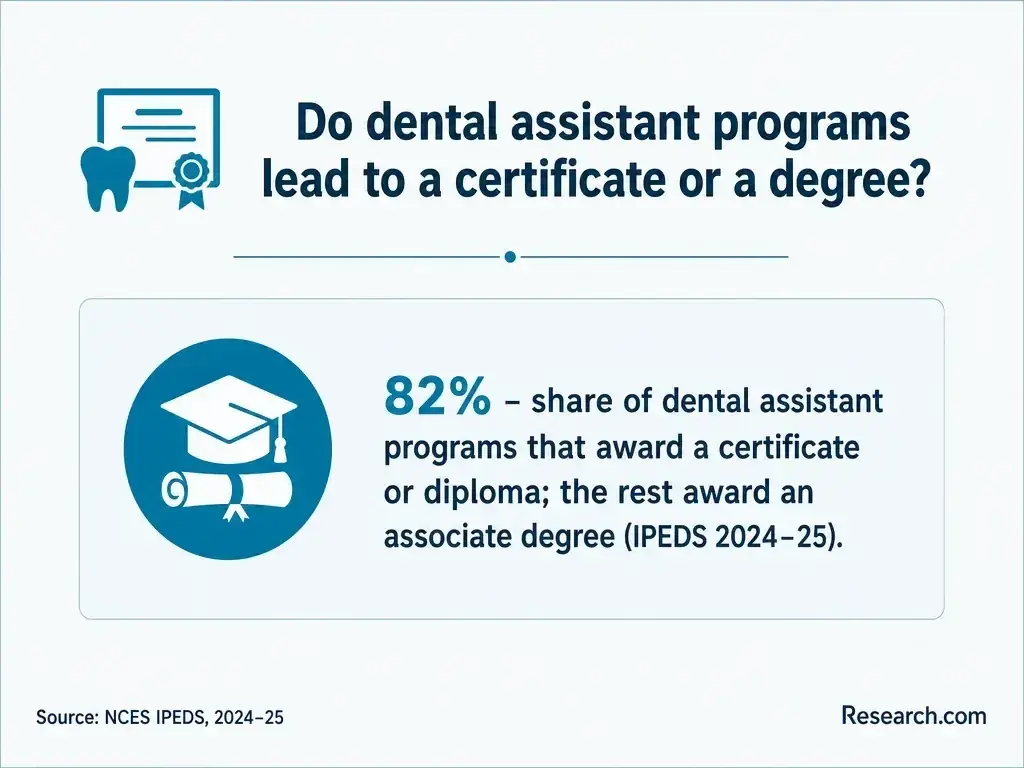
The main choice is between a structured certificate or diploma program, a longer associate-degree pathway where offered, and training provided by a dental employer. A school program may offer organized lab time and credential preparation; direct-entry employment can reduce upfront school costs and provide wages sooner but may leave the worker to arrange additional coursework or examinations for expanded duties. Ask each provider how much supervised practice is included and whether it helps you meet the requirements for the specific tasks you want to perform.
Dental offices are the principal workplace for dental assistants, including general and specialty practices. Duties may also be available in community clinics or other dental-care settings, depending on the employer and the assistant's credentials (source: U.S. Bureau of Labor Statistics). Oregon's geography affects the practical value of a program: a placement near a Portland-area practice may not help a student who needs to work near home in another part of the state.
Before enrolling, ask where students complete clinical experience and whether the school has relationships with practices within a reasonable commute. Also check local job postings for the Oregon credentials employers request. That comparison tells you more about job readiness in your intended community than a statewide employment figure alone.
Oregon pay depends on location, experience, employer, schedule, and the duties an assistant is qualified to perform. For a consistent national benchmark, the U.S. Bureau of Labor Statistics reports a $48,070 median annual wage for dental assistants in May 2025. Half of employed dental assistants earned more and half earned less; this is neither an Oregon-specific figure nor a likely first-job offer.
For a local decision, compare current Oregon Employment Department wage information and actual postings in the area where you expect to work. When estimating whether training will pay off, use a plausible entry-level offer rather than the national median, and account for the time spent training before you can earn that wage.
Program length varies by credential and schedule. Certificate or diploma routes are generally shorter than associate-degree routes, while employer training may begin with on-the-job instruction and continue as the assistant takes on additional duties. There is no single school attendance period that automatically qualifies someone for every dental assisting function in Oregon; verify any required coursework, examination, and supervised practice for your intended Oregon Board of Dentistry credential.
A shorter program can reduce time away from paid work, but only if it includes enough lab and clinical practice for your goals. If considering accelerated associates, compare the actual dental assisting curriculum and clinical schedule with a shorter certificate - not just the advertised completion date. Ask how missed clinical days are made up before choosing an accelerated or part-time format.
Online coursework can be useful for subjects such as terminology, dental anatomy, and office procedures. It cannot by itself demonstrate chairside technique, instrument handling, infection control, or supervised patient interaction. A hybrid program can work well if its in-person labs and clinical placement are accessible; a campus-based program may be simpler for students who need regular equipment practice.
Ask a hybrid provider where practical sessions take place, who arranges clinical placements, and what travel is required. An "online dental assistant certificate" should not be assumed to meet Oregon's requirements for radiography or expanded functions. Confirm credential eligibility with the Oregon Board of Dentistry before paying for remote training (source: Oregon Board of Dentistry).
There is no single reliable price for all Oregon dental assisting routes: community college, career-school, and employer-provided training can have different tuition structures and out-of-pocket requirements. A quoted tuition amount also omits costs that can change which option is affordable. Request a current, itemized cost sheet rather than relying on an advertised starting price.
For an apples-to-apples comparison, include mandatory fees, textbooks, uniforms or protective equipment, supplies, required health checks, examination and credential applications, and travel to labs or clinical sites. Add lost earnings if the schedule limits paid work. Then subtract only aid or employer support you are actually eligible to receive. Eligible students can ask colleges about federal aid and Oregon programs such as the Oregon Opportunity Grant or Oregon Promise; eligibility and program coverage must be checked with the school and Oregon's Higher Education Coordinating Commission (sources: Federal Student Aid; Oregon Higher Education Coordinating Commission).
A provider may award a certificate, diploma, or associate degree; an employer-trained assistant may receive no school credential. These awards are different from a professional certification or an Oregon Board of Dentistry credential. CODA accredits qualifying dental assisting programs, while DANB administers dental assisting examinations and certification. Neither a school award nor institutional accreditation alone authorizes every expanded duty (sources: CODA; DANB; Oregon Board of Dentistry).
Match the credential to the work you want. If a school promotes preparation for radiography or expanded functions, ask it to identify the specific Oregon application route, examinations, and documentation its graduates can complete. Lists of top paying certifications may help you explore occupations, but they cannot establish whether a dental assisting program meets Oregon's task-specific rules.
Admissions requirements vary by provider. Schools may request prior education records and impose separate conditions for clinical participation, such as immunization documentation, a background check, or a practice-site orientation. Employer-trained entry routes use the employer's hiring standards instead. Obtain the current requirements and deadlines directly from each provider before assuming you can start on a particular date.
Distinguish admission from occupational eligibility: being accepted into a program does not establish that you qualify for an Oregon radiologic-proficiency or expanded-function credential. Ask admissions staff which requirements must be completed before clinical placement and which are addressed during training. Searches about an easiest phd degree do not answer these trade-program entry questions; the relevant documents are the provider's requirements and Oregon Board of Dentistry rules.
Typical instruction covers dental terminology and anatomy, chairside assistance, instrument preparation, sterilization, infection prevention, patient communication, and office records. Depending on the program, students may also prepare for radiography and expanded-function requirements. Compare course descriptions with the Oregon duties you hope to perform, because similarly named certificates may provide different amounts of lab and clinical experience (sources: U.S. Bureau of Labor Statistics; Oregon Board of Dentistry).
Ask to see the skills checklist and learn how instructors assess safe performance with patients. A search for a one year doctorate degree is unrelated to that decision: for this trade, demonstrated chairside competence and the applicable Oregon credentials matter more than a program's impressive-sounding title.
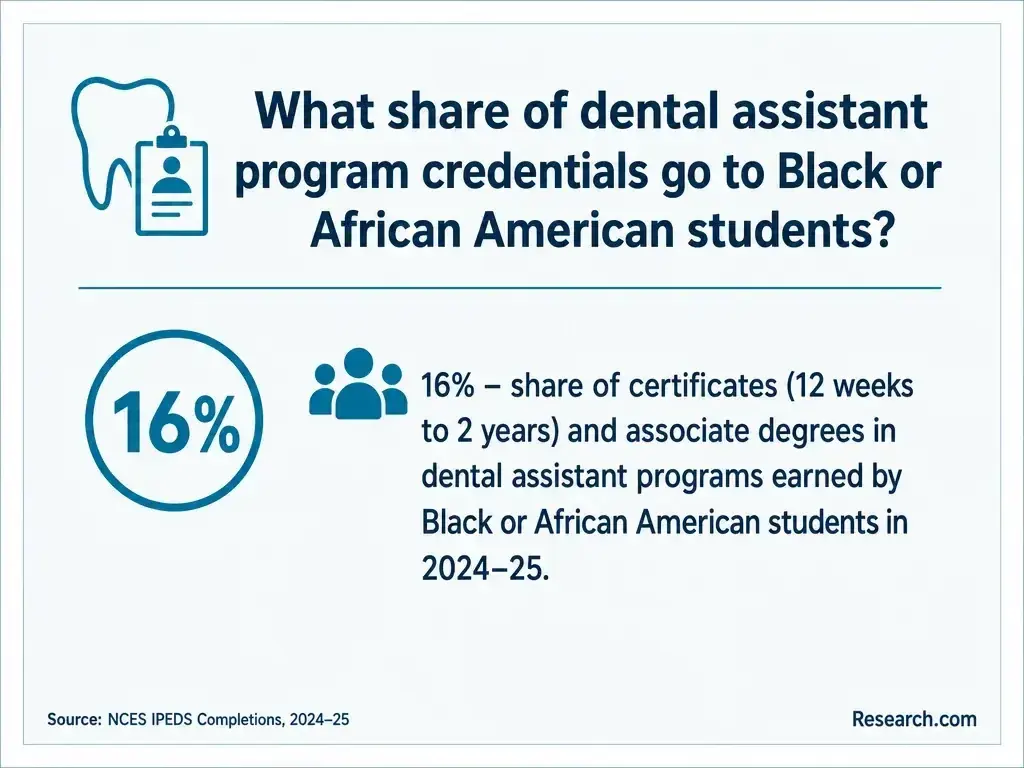
Oregon does not treat every dental assisting task as requiring the same credential. Assistants may enter through training and work under a dentist's supervision, but the Oregon Board of Dentistry sets additional requirements for regulated duties. In particular, taking dental radiographs requires the appropriate Oregon radiologic-proficiency credential; expanded functions have their own eligibility rules. Check the board's current duty descriptions before assuming an entry-level job or school certificate permits a particular procedure (source: Oregon Board of Dentistry).
Do not confuse DANB certification, CODA program accreditation, school authorization, and a state-issued dental assisting credential. Each answers a different question: professional examination or certification, program quality recognition, permission for a school to operate, and permission to perform regulated Oregon duties. A provider should explain which, if any, of its courses and examinations support the board application you intend to make (sources: DANB; CODA; Oregon Board of Dentistry).
Start with the duties and community you want to work in, then compare programs on verified Oregon credential alignment, hands-on instruction, clinical access, total cost, and completion support. A ranking can narrow the field, but an inexpensive program is poor value if it cannot provide practical experience or the preparation your intended job requires. Conversely, a longer program may be unnecessary if a local employer offers suitable paid training.
Use the following questions to test claims before you enroll:
Verify institutional accreditation and any claimed CODA accreditation with the relevant accreditor, and confirm Oregon credential rules with the board. Avoid using a school's ranking position, a promised salary, or an unrelated search for a easiest phd degree as a substitute for those checks.
Training can lead to an entry-level chairside role, followed by additional responsibilities where the assistant meets Oregon's requirements for radiography or expanded functions. With experience, some assistants move toward specialty-practice work, patient coordination, or office supervision. These are possible paths, not automatic promotions; employers may weigh experience, demonstrated skills, and applicable credentials differently (sources: U.S. Bureau of Labor Statistics; Oregon Board of Dentistry).
For someone deciding what jobs can you get with a vocational education, dental assisting offers a relatively direct route into patient-facing dental work. It is less suitable if your goal is to perform procedures reserved for a different dental occupation: choose training for the actual job you want rather than expecting a dental assisting certificate to confer a broader scope of practice.
The U.S. Bureau of Labor Statistics projects 7.4% national employment growth for dental assistants from 2025 to 2035. That supports investigating the occupation, but it is not an Oregon hiring forecast or a guarantee of work after graduation. Local opportunities depend on practices' staffing needs, the duties you are qualified to perform, and where you can commute or relocate.
For a more useful Oregon outlook, review Oregon Employment Department projections alongside current postings in your intended area. Note whether employers seek radiographic or expanded-function credentials, then ask prospective programs how students gain the preparation to pursue them. This connects a broad growth projection to the qualifications employers near you actually request.
Investing in training is an important decision, so the Research.com team designed the ranking to help readers compare dental assisting programs against other programs serving the same occupation and location - not against unrelated trades. Only programs with completions reported to IPEDS are included. That makes the ranking a useful comparison of eligible programs, not a complete directory of Oregon training providers or employer-sponsored options.
The best-programs ranking considers student outcomes; earnings and return on investment; costs and debt; and quality and recognition. Programmatic accreditation or relevant industry recognition accounts for 20% of the score, institutional accreditation for 10%, and student support services for 10%. The remaining 60% covers completion and full- and part-time retention, earnings one year after completion, earnings relative to annual attendance cost, tuition, attendance cost, median debt - including debt held by students who withdrew - and federal loan default rates. An entropy-based method gives more weight to indicators that distinguish programs more strongly. The separate most-affordable-programs ranking scores only tuition, attendance cost, median debt, and loan default rates; accreditation and other quality indicators are not part of that score.
The team used the following sources to check education data and occupation-relevant recognition. Some sources cover the broader trade-school landscape and should not be mistaken for dental assisting accreditors or Oregon credentialing authorities:
Readers can use the ranking to narrow their options, then confirm current program details directly with providers and the Oregon Board of Dentistry. For further detail on the scoring approach, see Research.com's methodology.
# 1 position
# 2 position

# 3 position

# 4 position
# 5 position

# 6 position
# 7 position
# 8 position

# 9 position
# 10 position

# 11 position

Employer-provided training can be an entry route. Check which duties the employer will train you for and whether additional coursework, examinations, or Oregon Board of Dentistry credentials will be needed for your goals.
Do not assume every Oregon dental assisting role requires graduation from a CODA-accredited program. CODA accreditation is a program-quality distinction, while Oregon's rules govern specific duties and credentials. Check the board pathway relevant to your intended work.
Online study may cover academic subjects, but chairside skills require in-person practice. Confirm where a hybrid program conducts labs and clinical experience, and verify its Oregon credential claims before enrolling.
Choose based on curriculum, clinical access, cost, and career goal - not credential length alone. A shorter certificate may get you working sooner; a longer route makes sense only if its added training and cost serve a goal you value.
Not automatically. Oregon requires the appropriate radiologic-proficiency credential for dental radiography. Ask the school and the Oregon Board of Dentistry what steps apply after training.