# 1 position
Pima Community College - Dental Assisting/Assistant.
certificate or diploma

Audited and Verified:
Our Editorial and Data Verification Process
Research.com uses government datasets, official education statistics and primary institutional information to support its career and degree guides. Our review process checks factual accuracy, occupational definitions, source dates and the requirements associated with the credentials discussed.
How This Article Was Fact-Checked
Our editorial team verifies salary estimates, employment projections, education requirements and program information against original data providers and official organizations. Salary figures are checked against the relevant occupational definitions and reporting periods. Information about licensure, accreditation and required in-person training is reviewed separately.
Fact-checked and verified on:

Co-Founder and Chief Data Scientist

Reviewed by Karolina Broda
Fact-Checker and Data Verification
Choosing a dental assistant program in Arizona means comparing more than tuition: you need training you can complete, hands-on practice, and a clear path to the duties you want to perform. The Research.com team of data scientists created the Best Dental Assistant Trade Schools in Arizona for 2027 ranking to help students identify programs worth considering. With U.S. dental assistant employment projected to grow 7.4% from 2025 to 2035, this guide helps you compare credentials, costs, state requirements, and career prospects before enrolling.
Expect instruction in infection prevention, chairside procedures, instrument handling, patient communication, records, and dental-office workflow, followed by supervised practice. A useful program explains which skills you perform on classmates or simulations, which you practice with patients, and whether it arranges an externship. Confirm the actual lab and externship hours with each provider; a similarly named credential does not ensure equivalent clinical experience.
The main pathways serve different needs. This comparison describes their structure, not a guarantee that every provider offers every option.
| Pathway | Credential or outcome | Best fit and principal trade-off |
| Career-school certificate or diploma | School-issued occupational credential | Students seeking focused entry training; compare clinical access, fees, and certification alignment. |
| Community-college certificate or associate degree | College certificate or, where offered, associate degree | Students who want a college-based schedule or broader coursework; check the time required and whether additional courses advance the intended dental role. |
| Employer-sponsored training | Work experience, possibly supplemented by courses or certification | Students able to secure supervised entry work; earning while learning can reduce costs, but training breadth and access to advanced duties may vary. |
Arizona applicants can compare offerings from providers such as Pima Community College, Phoenix College, Carrington College-Phoenix North, Arizona College-Mesa, and Pima Medical Institute-Mesa. Verify the specific campus, credential, current curriculum, and clinical placement directly before treating any two options as interchangeable.
Most dental assistants work in dentists' offices, where chairside support, sterilization, scheduling, and patient preparation may be combined differently from practice to practice (U.S. Bureau of Labor Statistics). Possible settings also include specialty dental practices and community dental clinics. Ask employers which duties an entry-level assistant actually performs; a front-desk-heavy job may not build the clinical experience you want.
Location affects the search. A student near Phoenix or Tucson may be able to compare more practices and externship sites, while someone in a smaller community should confirm placement travel and local vacancies before paying for training. A school's Arizona location alone does not establish that it can place you near home.
For a benchmark, the U.S. median annual wage for dental assistants was $48,070 in May 2025 (U.S. Bureau of Labor Statistics, Occupational Outlook Handbook). That is a national midpoint across workers with varied experience - not an Arizona wage or a likely first offer. Do not use it as a projected starting salary when calculating whether tuition is affordable.
For an Arizona decision, compare current local job postings with the Arizona Office of Economic Opportunity's occupation-specific wage estimates, checking that you are looking at dental assistants rather than dental hygienists. Consider the offered hours and benefits alongside pay: a higher hourly rate with fewer hours may not improve your annual income.
Length depends on the credential, attendance schedule, and externship. Focused certificate or diploma training is generally shorter than an associate pathway; employer training follows the practice's supervised-work schedule rather than a school calendar. Do not assume there is one statewide clock-hour requirement for every entry-level dental assistant program. Ask for total scheduled hours, in-person lab hours, externship hours, and the expected completion date for your chosen schedule.
If you are comparing a short certificate with an associate option, a general guide to what is the easiest 2 year degree to get? cannot tell you which dental pathway supplies the chairside practice you need. Compare clinical time and the credential's purpose instead of choosing by duration alone.
Online instruction can cover terminology, anatomy, records, and some infection-control concepts. Instrument transfer, sterilization technique, patient positioning, and other clinical competencies need supervised in-person practice. A hybrid program can work well if its lab location and externship schedule fit your commute; an online-only course should not be assumed to meet an employer's practical expectations or Arizona requirements for a particular duty.
Confirm where every hands-on session occurs and who arranges patient-facing practice. Search results about unrelated options, such as online doctoral degrees without dissertation, offer no evidence that dental assisting can be learned entirely remotely.
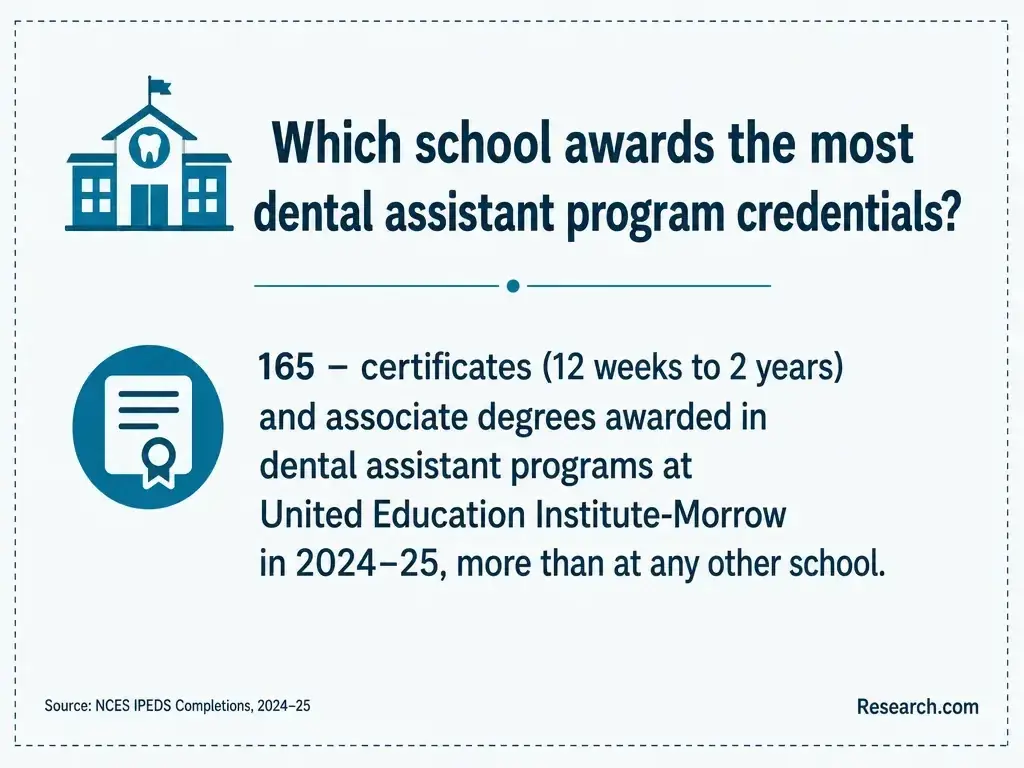
There is no single quoted Arizona average that reliably describes community-college, private career-school, and employer-based routes alike. Request a written total cost to become job-ready from each provider rather than comparing advertised tuition. Public-college resident tuition, nonresident charges, private-school pricing, and what each program includes can differ materially.
Use the same cost categories for every offer so a shorter program does not appear cheaper merely because it omits required expenses:
Ask the financial-aid office whether the specific program qualifies for federal aid; institutional eligibility alone is not enough (Federal Student Aid). Arizona workforce-service funding may be another possibility, subject to individual and program eligibility. To judge value, compare out-of-pocket cost and likely debt against your current earnings, realistic entry pay, completion prospects, and the time it would take to recover your investment - not just the school's advertised price.
A school may award a certificate, diploma, or associate degree, depending on its program. These are education credentials, not automatically professional certifications or permission to perform every dental duty. The Dental Assisting National Board (DANB) administers professional certification and examinations; the Commission on Dental Accreditation (CODA) accredits qualifying dental programs. Check each separately from the school's institutional accreditation and Arizona school authorization.
Even a directory of best colleges cannot verify a dental program's CODA status or clinical arrangements. Ask the provider for its exact credential title, current accreditation status, and which DANB eligibility route - if any - its graduates can use. Confirm claims with the relevant accreditor and certifying body before enrolling.
Entry requirements are set by the provider, not by one universal Arizona trade-school rule. A program may request proof of secondary-school completion or equivalency, an application, and readiness for clinical coursework. Externship sites may impose additional health, safety, or background-screening conditions. Ask whether those conditions must be met before enrollment or only before placement - and what happens to tuition if you cannot meet them.
Employer-sponsored entry is different: a practice may hire and supervise a beginner without a school-issued dental assisting credential, depending on the duties assigned (Arizona State Board of Dental Examiners). If that is your preferred route, ask how the employer teaches infection control and documents training for duties with separate requirements.
Core training typically covers dental terminology and anatomy, infection control, operatory setup, instrument processing, chairside assistance, patient communication, and recordkeeping (U.S. Bureau of Labor Statistics). Programs may also teach radiography concepts and prepare students for examinations, but classroom exposure alone does not establish eligibility to perform radiographs under Arizona rules.
Compare how students demonstrate each skill. Simulation is useful for initial practice; supervised clinical experience shows how students work with patients, dentists, and a real appointment schedule. Ask for the skills checklist and whether the externship includes observation only or supervised participation.
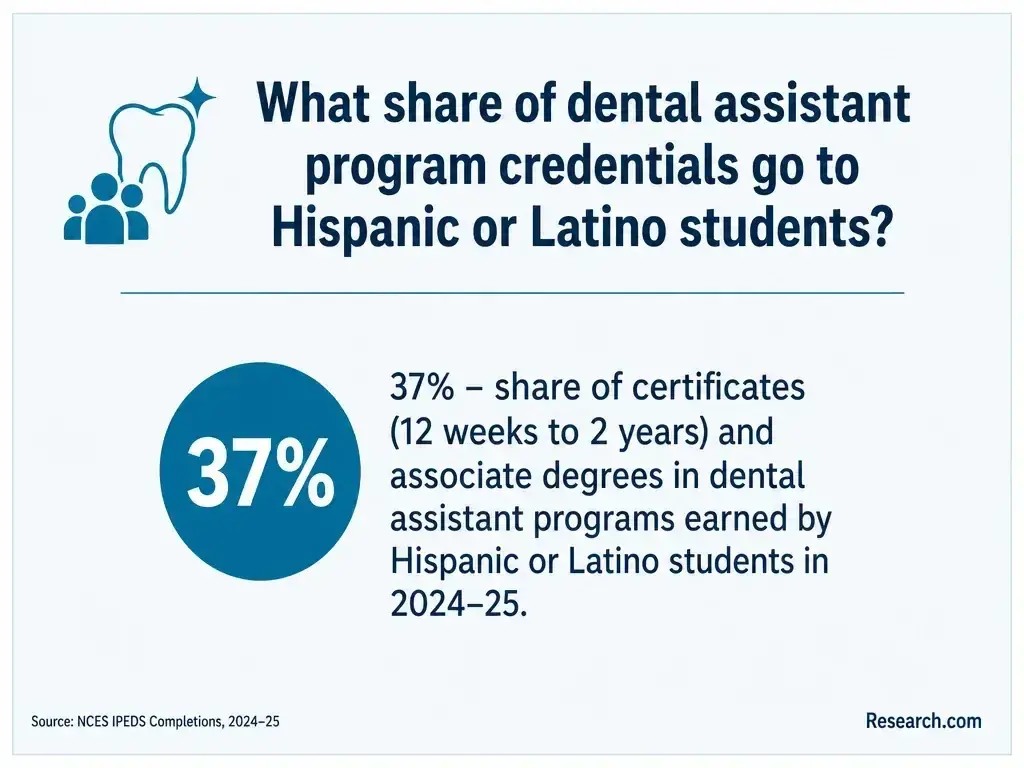
Arizona does not require a general occupational license to begin basic dental assisting under a dentist's supervision. Certain duties, including dental radiography, have separate qualification rules; additional expanded duties can have their own requirements (Arizona State Board of Dental Examiners). The distinction matters when choosing a program: eligibility for basic chairside work is not the same as eligibility to perform every task listed in a course catalog.
DANB certification is a professional credential with its own eligibility and examination rules, not a substitute for checking Arizona's requirements for a specific duty (Dental Assisting National Board; Arizona State Board of Dental Examiners). Before paying for training marketed as radiography or expanded-functions preparation, identify the exact duty, ask the school to explain the applicable Arizona route, and verify it with the board. Graduation alone should not be treated as approval.
Start with the work you want to do, then compare programs against that goal. A ranking helps narrow choices, but it cannot tell you whether an externship is reachable from your home or whether a particular curriculum supports the duties you want.
Use these checks before signing an enrollment agreement:
Be wary of guaranteed-job claims, an unexplained "fully online" clinical curriculum, or a school that cannot document placement arrangements. Lists of most popular college majors answer a different question: popularity does not establish whether a dental assistant program is the right investment for your intended role.
Training can lead to entry-level chairside or combined clinical-and-administrative dental assistant roles. With experience and any applicable qualifications, an assistant may take on permitted additional duties, move into specialty-practice support, coordinate office workflows, or help train new staff. Each step depends on the employer's needs and Arizona's rules for the tasks involved; advancement is not automatic (Arizona State Board of Dental Examiners).
If your main goal is maximizing pay across trades, compare dental assisting with other good paying trade jobs before committing. If you value patient contact and dental-office work, weigh those preferences alongside expected pay, training cost, and the scope of the role you can realistically enter.
The U.S. Bureau of Labor Statistics projects 7.4% growth in dental assistant employment from 2025 to 2035. This national projection indicates ongoing demand for the occupation, but it is not an Arizona-specific forecast and does not measure openings near a particular school.
Use Arizona Office of Economic Opportunity projections and current local postings to test the market you intend to enter. Compare the duties employers request with your program's clinical training and any radiography qualifications they expect. That check is especially important if relocating or commuting for an externship would be difficult.
Investing in training is an important decision, so the Research.com team evaluates dental assistant programs against other programs serving the same occupation and location. Only programs reporting completions to IPEDS are eligible for the ranking; a provider's absence does not mean its training is unavailable or poor quality.
Best-program rankings consider student outcomes; earnings and return on investment; costs and debt; and quality and recognition. Programmatic accreditation or relevant industry recognition accounts for 20%, institutional accreditation for 10%, and student support for 10%. The remaining 60% covers outcomes, earnings, and costs, with weights assigned through an entropy-based method that gives more weight to indicators that vary more across programs. Most-affordable rankings instead score tuition, attendance cost, debt, and federal loan default rates using that method; accreditation and other quality measures are not part of the affordability score.
The team uses the following sources to check program, institutional, credential, and comparison data. Some cover trades beyond dental assisting and should not be read as evidence that a particular dental program holds a particular approval.
The ranking provides a consistent starting point, not a substitute for confirming a program's current price, clinical arrangements, and fit with Arizona's scope-of-practice rules. Readers can find more detail on Research.com's methodology.
# 1 position
# 2 position
# 3 position
# 4 position
# 5 position

# 6 position
# 7 position
# 8 position

# 9 position

# 10 position
# 11 position
# 12 position

# 13 position

# 14 position

# 15 position
# 16 position

# 17 position

Basic assisting may be learned through supervised employment; Arizona does not impose a general license for that entry role. School can provide structured practice, but check separate rules before performing duties such as dental radiography (Arizona State Board of Dental Examiners).
No. CODA accreditation identifies a program's accreditation status; it is not a universal requirement for basic Arizona dental assistant employment. It may matter for a particular certification route, so verify your intended credential's rules (Commission on Dental Accreditation; Dental Assisting National Board).
Online coursework may cover theory, but clinical skills require supervised in-person practice. Ask where labs and externships take place before enrolling.
Only if its clinical practice, schedule, total cost, and preparation for your intended duties fit your goal. Compare the itemized training and placement arrangements, not just the advertised completion date.
Not automatically. Check Arizona's current radiography requirements and ask the school exactly how its training supports the applicable qualification route (Arizona State Board of Dental Examiners).