# 1 position
Salish Kootenai College - Dental Assisting/Assistant.
certificate or diploma

Audited and Verified:
Our Editorial and Data Verification Process
Research.com uses government datasets, official education statistics and primary institutional information to support its career and degree guides. Our review process checks factual accuracy, occupational definitions, source dates and the requirements associated with the credentials discussed.
How This Article Was Fact-Checked
Our editorial team verifies salary estimates, employment projections, education requirements and program information against original data providers and official organizations. Salary figures are checked against the relevant occupational definitions and reporting periods. Information about licensure, accreditation and required in-person training is reviewed separately.
Fact-checked and verified on:

Co-Founder and Chief Data Scientist

Reviewed by Karolina Broda
Fact-Checker and Data Verification
Choosing dental assistant training in Montana means comparing more than program names: you need a route to hands-on skills, an affordable credential, and preparation for the duties employers expect. The U.S. Bureau of Labor Statistics projects 7.4% national job growth for dental assistants from 2025 to 2035, making the decision timely without guaranteeing local openings. This guide explains Montana training pathways, costs, work requirements, and career prospects. It also features a Best Dental Assistant Trade Schools in Montana for 2027 ranking created by the Research.com team of data scientists to help students make an informed choice about programs worth considering.
Expect instruction that connects infection control, dental materials, patient care, and office workflow to supervised chairside practice. A substantial program should let students rehearse instrument transfer, operatory setup, sterilization, and patient communication before they perform appropriate tasks in a dental office. Ask for actual lab, clinical, or externship hours: there is no single program-length or practical-hours figure that describes every Montana training route.
For students comparing Salish Kootenai College and Great Falls College Montana State University, the decisive question is not simply which offers a credential. Confirm each program's current availability, award, schedule, clinical placement arrangements, and preparation for the duties you intend to perform. An employer-trained route can reduce upfront school costs and provide workplace experience, but its instruction and portability depend on what the employer provides. A registered apprenticeship, where one is actually available, is a distinct paid, structured work-and-instruction pathway - not a label for any entry-level job.
Dental assistants primarily work in dental offices, including general and specialty practices; some roles emphasize reception, scheduling, and records alongside clinical work (U.S. Bureau of Labor Statistics, Occupational Outlook Handbook). A student interested in orthodontic or oral-surgery work should ask whether a program offers relevant observation or placement rather than assuming general chairside training covers every specialty workflow.
Location matters in a large, sparsely populated state. A placement or job in another community may require substantial travel, and a nearby office may offer fewer specialty opportunities than a larger service area. Before committing, ask where externships take place, whether students must find their own sites, and whether the schedule fits the area in which you hope to work.
A current Montana wage should come from the U.S. Bureau of Labor Statistics' state occupational wage estimates or Montana's labor-market agency, using the dental assistants occupation and its stated reference year. The national median was $48,070 in May 2025 (U.S. Bureau of Labor Statistics). It describes workers across experience levels and locations, so it should not be used as a Montana graduate's expected first offer.
For a useful local comparison, inspect advertised pay in the communities where you could work and ask whether the role includes paid training, benefits, travel, or duties requiring additional preparation. Compare those offers with your present earnings - not just the national median - when deciding how much tuition or unpaid training time is reasonable.
Length depends on the credential, enrollment pace, and required practical work. A focused certificate can be shorter than a more extensive diploma or associate-degree route, while an employer may train a new assistant alongside paid work. These routes are not interchangeable merely because all can lead toward an assistant position.
Request the published calendar and clock or contact hours for classroom instruction, lab work, and any externship. Ask when clinical placements actually begin and whether prerequisite courses or limited placement availability could delay completion. Readers considering 6 month online certificate programs for high paying jobs should be especially careful not to apply a generic completion timeline to dental assisting's hands-on requirements.
Online coursework may suit dental terminology, records, or introductory concepts. Instrument handling, infection-control routines, chairside assistance, and clinical experience require in-person practice and assessment. A fully online course should not be treated as equivalent to a program with supervised practical training or assumed to satisfy any applicable radiography requirements.
The comparison below focuses on what each format can realistically deliver. A hybrid option is useful only if its in-person sites and schedule are accessible to you.
| Format | Potential advantage | What to verify |
| On-campus | Regular access to labs, equipment, and instructor feedback | Clinical hours, placement location, and commuting cost |
| Hybrid | Less travel for suitable academic coursework | Required campus days, supervised practice, and clinical-site access |
| Online-only coursework | Flexible study of theory | How - or whether - hands-on competencies will be obtained and documented |
Flexible admissions and flexible delivery answer different questions. If you are comparing college open enrollment options, still ask separately whether you can attend required dental labs and secure a practical placement.
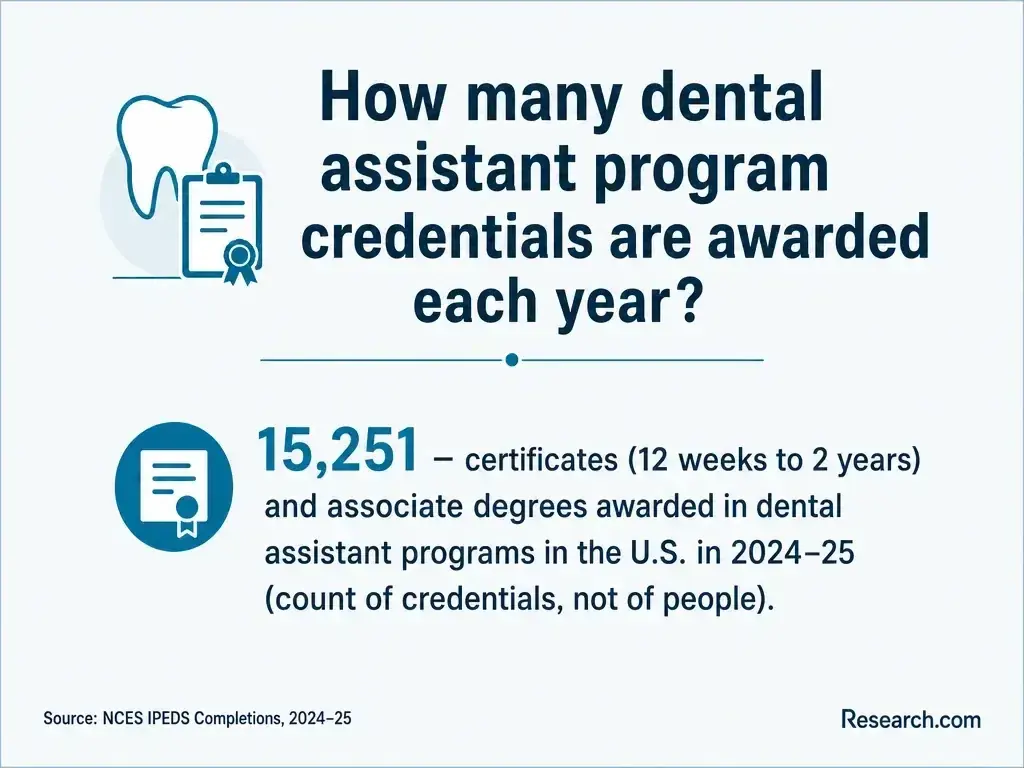
There is no defensible single statewide price for every dental-assisting route: program length, residency-based tuition where applicable, fees, supplies, and whether training occurs through an employer change the total. Compare written, current cost-of-attendance estimates for the same enrollment period rather than treating an advertised tuition figure as the full price.
Build a job-ready budget from the charges below, then subtract only aid or paid-training income you are actually eligible to receive.
Ask each provider whether its program and your enrollment status qualify for federal aid, and check current Montana workforce-training assistance with the administering agency; neither should be assumed available. To assess return on investment, compare likely debt and completion risk with your present earnings and plausible local job offers over several years. Low tuition alone is not a good deal if required clinical travel makes attendance impractical. A search for accredited online colleges with no application cost may help identify application-fee considerations, but it cannot replace a dental program's complete cost and practical-training estimate.
The award depends on the provider: it may be an occupational certificate, diploma, or associate degree. Employer training may instead yield documented work experience without a school award. Check the exact credential on the current program page and ask what its graduates have practiced and how that practice is recorded.
Keep four distinctions clear. Institutional accreditation concerns the school; Commission on Dental Accreditation (CODA) accreditation concerns a specific dental program; Dental Assisting National Board (DANB) certification is a professional credential with its own eligibility rules; and permission to perform particular duties is governed by applicable Montana law and board rules. None automatically substitutes for another (CODA; DANB; Montana Board of Dentistry). If you may seek DANB certification, verify your intended examination's current eligibility pathway before enrolling.
Schools set their own entry rules, which may include an application, proof of prior schooling, prerequisite coursework, and requirements tied to clinical placement. An employer-trained position instead depends on the practice's hiring and supervision arrangements. Ask for requirements in writing before paying an enrollment deposit, especially if a placement requires health documentation or screening.
Do not confuse admission with career eligibility. Being accepted into a program does not establish that you qualify for a particular DANB examination or may perform every dental procedure in Montana (DANB; Montana Board of Dentistry). Likewise, a search for a dual degree university addresses a different educational goal; for this occupation, the immediate issue is whether the selected training leads to usable chairside skills and the intended work duties.
A dental-assisting curriculum commonly covers oral anatomy and terminology, infection prevention, instrument processing, dental materials, chairside procedures, patient communication, and records or scheduling (U.S. Bureau of Labor Statistics, Occupational Outlook Handbook). Radiography may also be taught, but students should confirm both the extent of instruction and its relevance to current Montana requirements before relying on it for that work.
Practice matters as much as the course list. Ask to see how instructors assess sterilization, operatory preparation, instrument transfer, and safe patient interaction, and how a supervisor evaluates externship performance. Digital records and imaging are worth asking about because familiarity with the equipment used by a prospective employer can ease the transition into a working practice; a course title alone does not show how much supervised practice students receive.
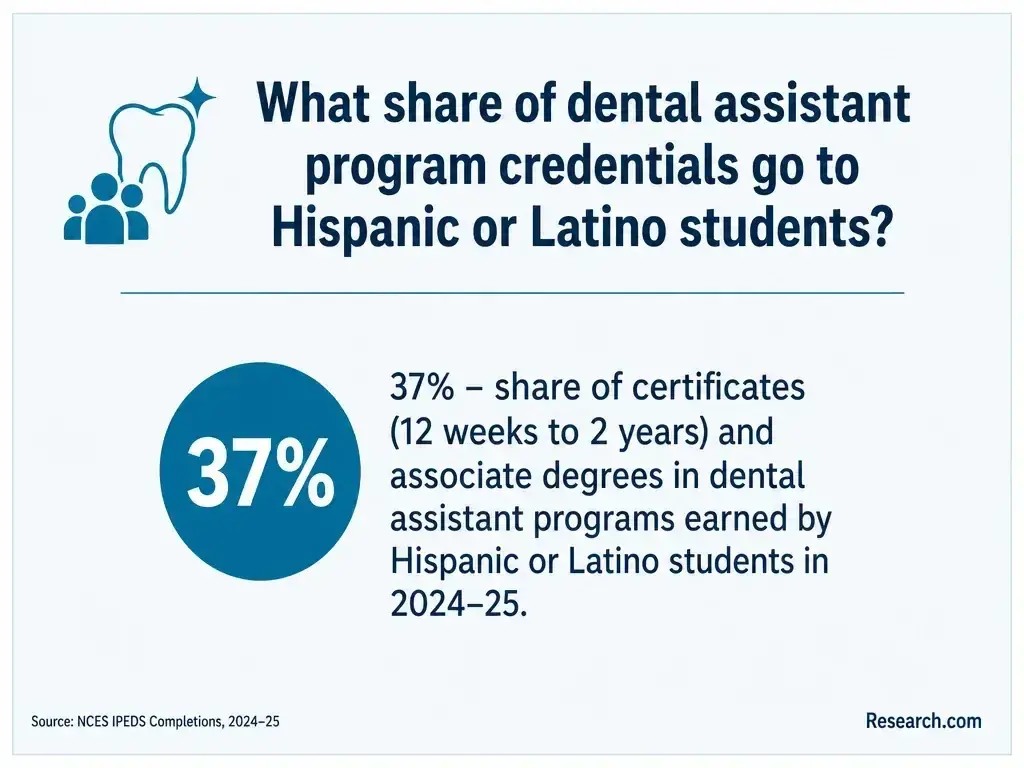
Do not assume that a general dental-assistant position requires a standalone occupational license, or that every task is open to an untrained entrant. Montana regulates dental practice and the duties that dental auxiliaries may perform. Requirements can differ by function, particularly when radiography or other specifically regulated duties are involved (Montana Board of Dentistry). Check the board's current rules for your intended duties and ask a prospective employer how it documents required training and supervision.
DANB certification is separate from state permission to perform duties, and CODA program accreditation is separate from both (DANB; CODA; Montana Board of Dentistry). Before enrolling, give the school a concrete goal - such as qualifying for a role that includes dental radiographs - and request a written explanation of the training provided, any examination eligibility it supports, and what additional steps remain. Avoid any claim that a certificate by itself authorizes all chairside functions.
Start with the job you want and the community where you can work, then compare programs on the evidence that affects entry into that job. A ranking can identify options for further review; it cannot tell you whether a clinical site is reachable or whether a particular curriculum fits your intended duties.
Use these checks with each provider before making a commitment:
Be wary of vague clinical-hour claims, promises of certification or employment, and costs that omit required supplies. Someone who needs structured practice and a documented credential may favor a campus-based program; someone with a strong paid training offer may find employer training a better investment. Searches for a highest paid masters degree address a different career calculation: judge this trade-school choice against the dental-assisting work you can realistically enter.
The direct path is an entry-level chairside or combined clinical-and-administrative assistant role. With experience and appropriate preparation, an assistant may take on responsibilities in a specialty practice, concentrate on office coordination, or pursue eligible professional certifications. Whether particular clinical duties are permitted still depends on Montana's rules and the individual's training (Montana Board of Dentistry; DANB).
Choose training for the first job you actually want, not an assumed automatic promotion. If a prospective specialty practice values experience with its equipment or procedures, ask whether the program offers relevant clinical exposure. If your aim is primarily scheduling and billing, compare the cost of a broad clinical program with the training an employer will provide for that office-focused role.
The U.S. Bureau of Labor Statistics projects 7.4% growth in dental-assistant employment nationally from 2025 to 2035. That signals continuing national demand, but it is not a Montana forecast and cannot predict openings in a particular town (U.S. Bureau of Labor Statistics, Employment Projections).
For a local decision, pair Montana's latest official occupational projections with current postings in the areas where you can commute or relocate. Look at required skills, schedules, and whether employers offer paid training. In a smaller labor market, one workable placement connection may matter more to your first job search than a broad national growth figure.
Education is a consequential investment. To help readers compare realistic local options, the Research.com team evaluates dental assisting programs against other programs in the same occupation and location, checks multiple data sources, and considers both educational quality and financial outcomes. Only programs with completions reported to the Integrated Postsecondary Education Data System (IPEDS) are eligible; absence from the ranking does not mean another training provider is unapproved or ineffective.
Best-program rankings assess student completion and full-time and part-time retention; earnings one year after completion and earnings relative to annual attendance cost; tuition, attendance cost, debt - including debt held by students who withdrew - and federal loan default rates; and accreditation, relevant recognition, and student support. Programmatic accreditation or occupation-relevant recognition accounts for 20% of the score, institutional accreditation for 10%, and student support for 10%. The remaining 60% covers outcomes, earnings, and costs, with weights distributed using an entropy-based method that gives more weight to indicators that distinguish programs. Most-affordable rankings instead score only tuition, attendance cost, median debt, and federal loan default rates using entropy-based weights; accreditation and other quality measures are not part of that affordability score.
The team used the following sources to build and check the ranking. Some cover college outcomes; others help assess occupational recognition or alternative training routes and should not be mistaken for dental-assisting accreditors.
These measures can narrow a shortlist, but they cannot establish whether a particular student can afford to attend, reach a clinical site, or qualify for an intended duty. See Research.com's ranking methodology for more on how the rankings are created, then verify current program details directly before enrolling.
# 1 position
# 2 position

Not necessarily. Supervised employer training may be a route into an assistant position, but the duties you can perform depend on applicable Montana rules. A school program may offer more structured practice and a documented credential (Montana Board of Dentistry).
You may study some theory online, but chairside skills require in-person practice. Confirm how any online program arranges and assesses labs and clinical training before enrolling.
No. A school award and DANB certification are separate. Check the current eligibility requirements for the specific DANB credential you want (Dental Assisting National Board).
Choose based on practical training, time, total cost, and your target job - not the award's name alone. Ask employers whether the additional coursework would matter for the roles you seek.
Ask what instruction and supervised practice are included, what the school documents, and whether further steps are needed under current Montana rules before you perform radiography duties (Montana Board of Dentistry).