# 1 position
Concorde Career College-Aurora - Dental Assisting/Assistant.
certificate or diploma

Audited and Verified:
Our Editorial and Data Verification Process
Research.com uses government datasets, official education statistics and primary institutional information to support its career and degree guides. Our review process checks factual accuracy, occupational definitions, source dates and the requirements associated with the credentials discussed.
How This Article Was Fact-Checked
Our editorial team verifies salary estimates, employment projections, education requirements and program information against original data providers and official organizations. Salary figures are checked against the relevant occupational definitions and reporting periods. Information about licensure, accreditation and required in-person training is reviewed separately.
Fact-checked and verified on:

Co-Founder and Chief Data Scientist

Reviewed by Karolina Broda
Fact-Checker and Data Verification
Choosing dental assistant training in Aurora means comparing more than tuition: you need a program that fits your budget, teaches chairside skills, and supports the duties you want to perform in Colorado. The U.S. Bureau of Labor Statistics projects national dental assistant employment to grow 7.4% from 2025 to 2035, making training decisions timely. This guide accompanies the Most Affordable Dental Assistant Trade Schools in Aurora for 2027 ranking, created by the Research.com team of data scientists to help students identify programs worth considering. It explains costs, credentials, practical training, and career-entry requirements.
Expect instruction in chairside assistance, infection control, dental terminology, instruments, patient communication, and office workflow, followed by supervised practice where the program provides it. Radiography and expanded functions deserve particular scrutiny: ask whether you will practice them, under what supervision, and how the instruction aligns with current Colorado Dental Board rules. A classroom-only curriculum is not equivalent to one with substantial laboratory and clinical experience.
A short certificate may suit someone seeking quick entry; a longer diploma or associate-degree pathway may offer more extensive general and clinical instruction but carries greater time and opportunity costs. Employer-sponsored, on-the-job training can be a lower-upfront-cost alternative when a dental practice is willing to train a new assistant. If speed is your priority, compare actual schedules and clinical placements rather than assuming every option advertised among best 6-month certificate programs that pay well covers the same competencies.
Dental offices are the principal workplace for dental assistants, according to the U.S. Bureau of Labor Statistics. In Aurora, compare opportunities across general practices and specialty offices, including orthodontic and oral-surgery practices; duties and employer training expectations can differ. A clinical placement can let you test the commute and workplace fit before accepting a position, but placement is not a job guarantee.
A verified Aurora-specific wage figure is not available here, so the appropriate benchmark is the $48,070 national median annual wage for dental assistants in May 2025, reported by the U.S. Bureau of Labor Statistics. A median describes workers across experience levels and locations, not what a newly trained Aurora assistant should expect to earn.
For an investment decision, compare actual local job postings by required duties, schedule, benefits, and experience. Ask prospective employers whether they pay for radiography training or certification preparation. Compare those offers with your current earnings and the full time you would spend training, not just the certificate's sticker price.
Duration depends on the credential, course schedule, and clinical requirements. Short certificate programs may take months; more extensive diploma or associate-degree programs take longer. Employer training follows the practice's schedule rather than a school calendar. No single clock-hour requirement describes every Aurora dental assistant program or every duty permitted under Colorado rules.
Request each school's published total clock or credit hours, laboratory hours, supervised clinical hours, start dates, and time-to-completion policy. If you must keep working, ask whether evening instruction also includes evening clinical placements; a flexible classroom timetable does not guarantee a flexible externship.
Online coursework can cover terminology, anatomy, and administrative concepts. Instrument handling, infection-control procedures, chairside technique, and clinical work require in-person instruction or supervised workplace practice. A program marketed as online should specify exactly where an Aurora student completes those components; remote coursework alone should not be assumed to satisfy an employer's expectations or certification requirements.
The distinction below helps you compare format without mistaking convenience for equivalent preparation.
| Format | Potential advantage | Question to resolve |
| Campus-based | Scheduled access to equipment and instructors | Are clinical hours included, and where? |
| Hybrid | Less travel for theory coursework | How often must you attend labs and clinical sites? |
| Online coursework with separate practice | Flexible academic study | Who arranges and supervises hands-on training? |
Listings of the most popular trade colleges online can help generate questions, but confirm local lab access and clinical arrangements directly with each provider before paying a deposit.
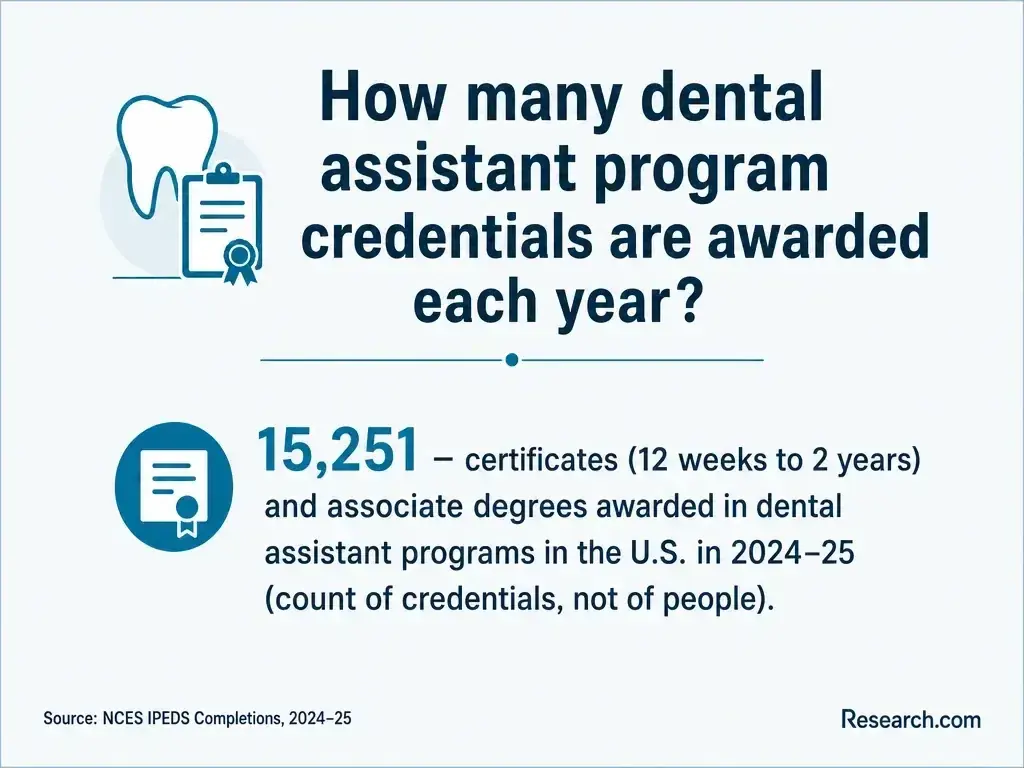
There is no verified, comparable Aurora-wide average cost to report here. Published tuition may omit mandatory fees and expenses that determine whether a program is affordable for you. Get a written, itemized estimate from each school, and compare the same period of attendance.
These cost categories belong in that estimate, even when a school advertises a low tuition price.
Ask whether the specific program is eligible for federal aid before relying on it; institutional eligibility does not establish eligibility for every short course. A list of an online college that accepts fafsa cannot verify aid for an Aurora dental assistant program. Federal Student Aid advises students to confirm school and program eligibility and review their actual aid offer.
Depending on the provider and pathway, completion may yield a certificate, diploma, or associate degree; employer training may instead document skills without awarding a school credential. Ask for the exact credential name before enrolling. A school-issued credential is different from professional certification, and neither automatically authorizes every clinical duty.
CODA accredits eligible dental-assisting programs, while DANB administers dental-assisting certifications with their own eligibility and examination requirements (Commission on Dental Accreditation; Dental Assisting National Board). Institutional accreditation concerns the school; Colorado authorization concerns its permission to operate; programmatic accreditation concerns the particular program. Verify each claim separately rather than treating the terms as interchangeable.
Requirements vary by provider. Ask whether admission calls for a high school diploma or equivalent, an assessment, immunization or health documentation, a background check, or other conditions before clinical placement. Confirm deadlines and any associated costs in writing. Entry to a training program is not the same as qualification for every dental-assisting duty after completion.
Returning learners should pay particular attention to attendance and clinical schedules. Resources about online degree programs for seniors address a different kind of study; for dental assisting, the decisive question is whether you can attend required hands-on sessions and meet the program's clinical-entry conditions.
Training typically combines dental anatomy and terminology with sterilization, instrument setup, chairside assistance, recordkeeping, and patient interaction, consistent with duties described by the U.S. Bureau of Labor Statistics. Programs may also teach radiography and other functions, but the scope and supervised practice can differ substantially. Ask to see the course outline and identify which skills you will perform in a lab or clinic, rather than only study for a written test.
In a practice using digital records and imaging, accuracy and patient privacy matter alongside manual skills. If you hope to work in a specialty office, ask whether clinical placements expose students to that setting; a general dental curriculum does not automatically provide specialty experience.
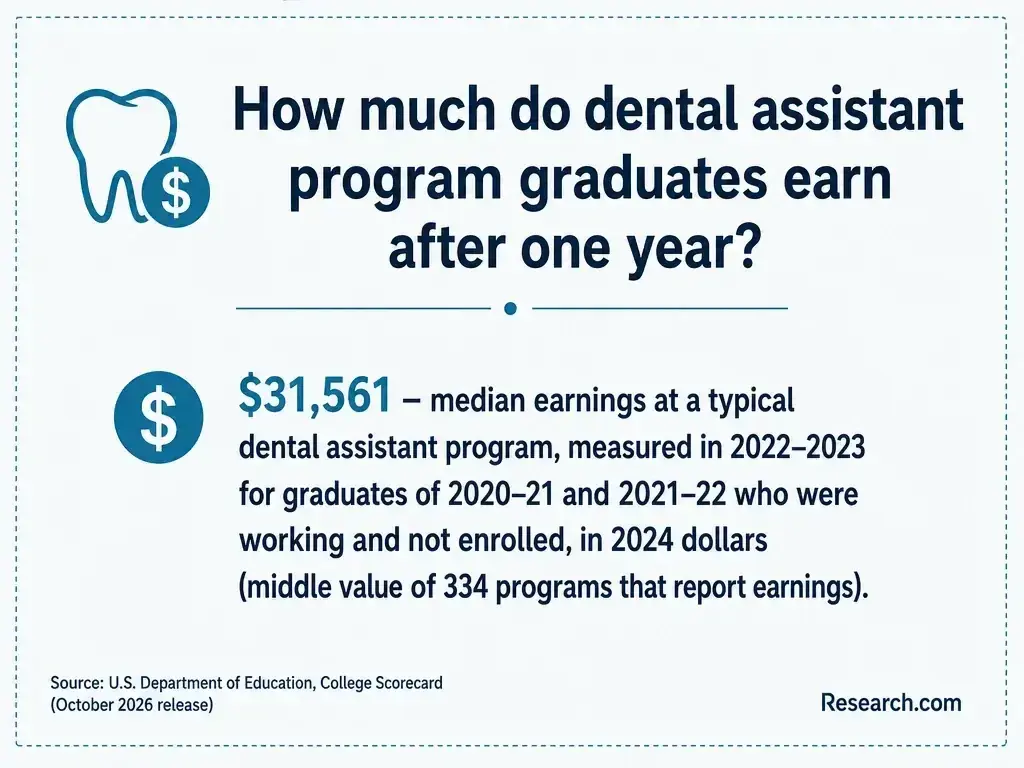
Do not assume there is one credential that covers every dental-assisting task. Colorado Dental Board rules govern what dental assistants may do and under what conditions; training and supervision requirements can differ by function. Before enrolling, check the board's current guidance for the duties you want - particularly radiography or expanded duties - and ask the program to show how its instruction addresses those requirements. Graduation alone is not proof of eligibility for a particular duty.
Professional certification through the Dental Assisting National Board is a separate credential with its own eligibility and examination rules. Ask employers whether they require or prefer it, then confirm your chosen training pathway meets the relevant DANB requirements. Neither a school's institutional accreditation nor its authorization to operate substitutes for that check.
Start with the job you want, then compare programs against that goal. For each option, request the full price, credential awarded, lab and clinical hours, placement arrangements, completion information, and any published certification-exam outcomes. Verify accreditation claims with the named accreditor, school authorization with the appropriate Colorado regulator, and duty requirements with the Colorado Dental Board. A low rank-order price is useful only if the training prepares you for the work you intend to do.
For a realistic return-on-investment comparison, consider program length, earnings forgone while training, aid, likely borrowing, your chance of completing, your present earnings, and plausible post-training offers over the time you expect to work. Discount future earnings rather than treating them as immediate cash. An employer willing to train you may offer better value than a school program; a structured program may be worth its cost if you need supervised practice and a particular credential.
A common search mistake is comparing unrelated education by price alone. Listings of affordable doctoral programs, for example, do not answer whether a dental assistant course provides chairside practice. Compare occupation-specific training and regulatory fit first.
The direct path is an entry-level role in a general dental practice. With experience and any training required for additional duties, an assistant may seek work in orthodontic, oral-surgery, or other specialty practices, or take on scheduling and treatment-coordination responsibilities. Employers set their own hiring expectations, and advanced tasks remain subject to applicable Colorado rules.
Ask a prospective employer what training and experience it provides after hire. That answer can reveal whether a shorter entry program plus paid workplace learning makes more sense for you than paying upfront for a broader curriculum. Dental assisting is not, by itself, a credential for a different licensed dental occupation.
The U.S. Bureau of Labor Statistics projects 7.4% national employment growth for dental assistants from 2025 to 2035. That indicates growth in the occupation nationally, not a forecast of openings in Aurora or a guarantee of placement for any graduate.
Use current Aurora-area postings to test the local market before enrolling: note which duties, schedules, experience levels, and credentials recur. If postings seek skills absent from a program's clinical training, ask how students obtain them. This check matters more to an immediate job search than applying a national growth figure to one city.
Investing in education is a consequential decision. To make this affordability ranking useful and credible, the Research.com team compares dental assistant programs with other programs in the same occupation and location, using reported data and checking relevant education and occupational sources. Only programs with completions reported to IPEDS are eligible; an unlisted employer-training option or school should not be assumed to be poor quality.
The most affordable ranking scores tuition, cost of attendance, median student debt, and federal loan default rate. Weights are assigned through an entropy-based method, which gives more weight to measures that vary more across eligible programs. Accreditation and other quality measures are not part of this affordability score. Research.com's separate best programs rankings also assess student outcomes, earnings, support, and recognition. Readers should therefore use this ranking to shortlist lower-cost options, then independently check clinical training, regulatory fit, and outcomes. More detail is available on the Research.com methodology page.
The ranking draws on the following sources. Occupation-specific relevance varies: for example, CODA and DANB are directly relevant to dental assisting, while NCCER concerns other trades and is not a dental-assisting approval body.
# 1 position
# 2 position
# 3 position
The answer depends on your total cost after required supplies, clinical travel, and confirmed aid - not advertised tuition alone. Request itemized estimates from the programs you are considering and use the affordability ranking as a shortlist.
An employer may offer on-the-job training. Ask what duties you can learn, who supervises you, whether training is paid, and how the route addresses any Colorado requirements for the tasks you want to perform.
Online theory can reduce campus time, but chairside and clinical competencies require in-person practice. Confirm who provides and supervises that practice before enrolling.
No. A school certificate documents program completion; DANB certification has separate eligibility and examination requirements. Verify both with the program and the Dental Assisting National Board.
It may be if it covers the skills your intended employer expects and gives you adequate practical training. Compare its full cost and clinical access with a longer program or paid employer training before deciding.