# 1 position


Audited and Verified:
Our Editorial and Data Verification Process
Research.com uses government datasets, official education statistics and primary institutional information to support its career and degree guides. Our review process checks factual accuracy, occupational definitions, source dates and the requirements associated with the credentials discussed.
How This Article Was Fact-Checked
Our editorial team verifies salary estimates, employment projections, education requirements and program information against original data providers and official organizations. Salary figures are checked against the relevant occupational definitions and reporting periods. Information about licensure, accreditation and required in-person training is reviewed separately.
Fact-checked and verified on:

Co-Founder and Chief Data Scientist

Reviewed by Karolina Broda
Fact-Checker and Data Verification
Choosing dental assistant training near Kentfield means looking beyond the certificate: Will you practice chairside skills, and will your training support the California duties you want to perform? The U.S. Bureau of Labor Statistics projects 7.4% national employment growth for dental assistants from 2025 to 2035. This guide compares training routes, costs, credentials, and career prospects. It also features a Best Dental Assistant Trade Schools in Kentfield for 2027 ranking created by the Research.com team of data scientists to help students make an informed choice about which programs are worth considering.
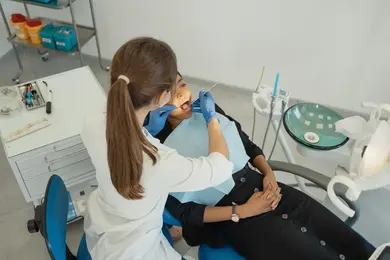
Expect instruction that connects dental-office knowledge to supervised practice: preparing treatment rooms, following infection-control procedures, assisting during patient care, handling instruments, and communicating with patients. Dental assistants work under dentists' direction, and permissible duties depend on California rules and the worker's qualifications (U.S. Bureau of Labor Statistics; Dental Board of California). A course that teaches terminology but provides no way to practice chairside procedures is not equivalent to one with substantial laboratory and clinical experience.
Kentfield students should check the current College of Marin catalog and ask whether dental-assisting instruction is being offered, where its practical components take place, and whether commuting to another campus or clinical site is necessary. If a local course is unavailable or does not match the desired credential, compare accessible programs elsewhere with supervised employment in a dental office. Confirm any work-based placement with the provider rather than assuming it is included.
Most dental assistants work in dentists' offices; other potential settings include specialty practices and public-health or community clinics (U.S. Bureau of Labor Statistics). A Kentfield resident can search across Marin County and the broader Bay Area, but a placement across the Bay may add substantial travel costs and make an otherwise short program harder to attend.
Match the work setting to the training. A general practice may value dependable chairside assistance and scheduling skills, while an orthodontic or oral-surgery office may require additional, role-specific preparation. Ask prospective employers which California-permitted duties they expect on day one and which training they provide after hiring.
The U.S. Bureau of Labor Statistics reports a $48,070 national median annual wage for dental assistants in May 2025. That is the midpoint for workers across experience levels and locations - not an offer a new graduate should expect in Kentfield. For a local comparison, consult the latest BLS occupational wage estimate for the San Francisco-Oakland-Fremont metropolitan area and compare it with actual Marin-area job postings for the duties you are qualified to perform.
Evaluate pay alongside the offer's hours, benefits, commute, and any employer-paid training. When judging a program's return, compare expected earnings after training with what you could earn without it; do not treat the occupational median as the increase caused by completing a certificate.
There is no single duration for dental assistant training. A short entry-level course, a longer certificate or diploma with clinical practice, an associate degree, and supervised training arranged by an employer have different schedules and outcomes. Ask each provider for its current total clock hours, lab hours, clinical hours, weekly schedule, and the time between finishing coursework and completing any required practice. Do not infer California Registered Dental Assistant eligibility from a program's length alone; check the route with the Dental Board of California.
An accelerated schedule may shorten time away from paid work but compresses practice and can be difficult to combine with a job. Accelerated associate degree programs offer a useful reminder to compare calendars with actual hands-on requirements: faster online coursework cannot replace required dental clinical practice.
Online study can cover topics such as terminology, anatomy, records, and office procedures. Chairside assisting, instrument handling, infection-control demonstrations, and any required clinical experience need supervised in-person practice. For a Kentfield student, a hybrid program is only convenient if its lab and clinical locations, schedules, and travel costs are workable.
The comparison below separates delivery format from occupational readiness. Neither an online label nor a campus address establishes California registration eligibility.
| Format | Potential advantage | Question to resolve before enrolling |
| On-campus | Scheduled access to instructors, equipment, and practice | Where and when do clinical placements occur? |
| Hybrid | Some theory completed remotely | How often must you travel for labs and supervised practice? |
| Online coursework only | Flexible study of nonclinical subjects | Who provides the missing hands-on training, and does the full route meet your goal? |
A list of online colleges that accept FAFSA can help with a broader aid search, but online delivery and federal-aid participation do not establish that a particular dental-assisting program provides suitable clinical training.
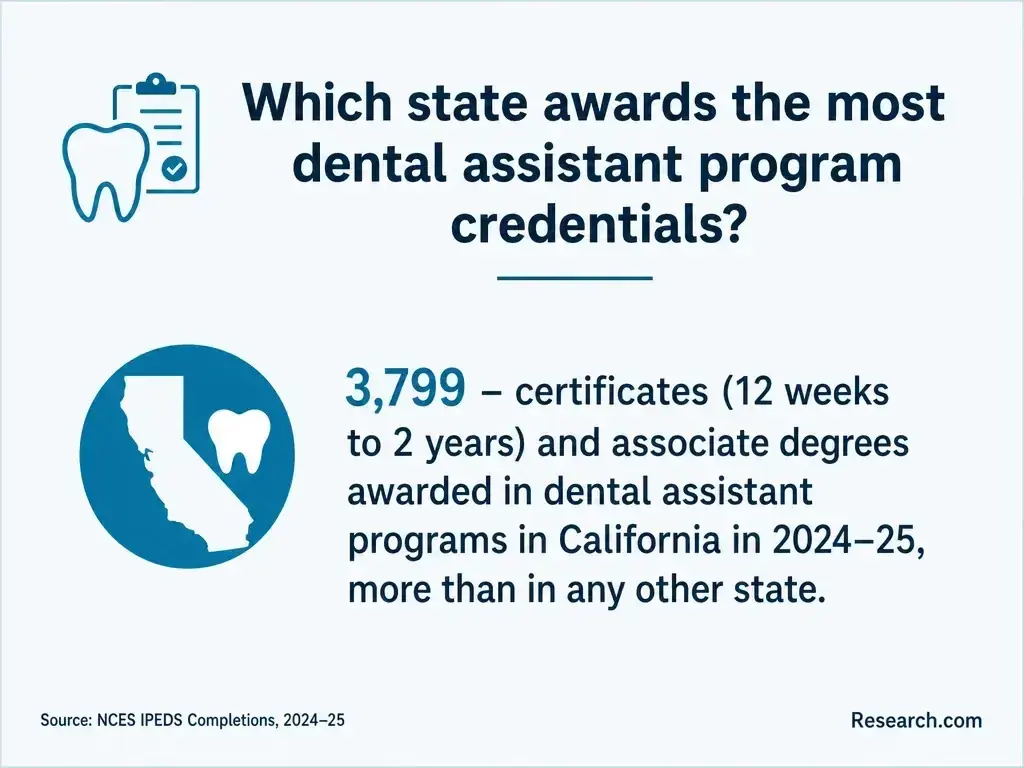
There is no reliable single Kentfield average covering college programs, career schools, and employer training. Published tuition can also omit much of the cost of becoming job-ready. Request an itemized, current quote from every provider and compare it with any paid entry-level position you could realistically obtain.
These cost categories matter because two programs with similar tuition may leave students with very different expenses.
| Cost category | What to verify |
| School charges | Tuition, mandatory fees, books, supplies, and any charges for labs or clinical placement |
| Career-entry expenses | Uniforms, protective equipment, health or background requirements where applicable, examinations, and registration fees |
| Time and travel | Trips to campus and clinical sites, parking or transit, and wages forgone while training |
| Offsets | Grants, scholarships, eligible federal or California aid, and wages or training costs covered by an employer |
Ask the school's aid office whether the specific program qualifies for federal aid and what eligibility conditions apply (Federal Student Aid). California Student Aid Commission programs may also be worth checking, but eligibility is not automatic. The lowest-cost route is not necessarily the best investment if it lacks the practice or regulatory alignment needed for the job you want.
The award depends on the provider: it might be a completion certificate, diploma, or associate degree. An employer may instead document supervised training without awarding an academic credential. These are evidence of different learning experiences, not interchangeable permissions to perform regulated duties.
Keep four checks separate: an institution's accreditation, a dental-assisting program's accreditation by the Commission on Dental Accreditation when applicable, California Dental Board requirements for particular duties or registration, and optional professional certification through the Dental Assisting National Board. One does not automatically substitute for another. If you are exploring what certificate programs pay well, verify the actual dental-assisting award and the work it prepares you to do rather than relying on its title.
Requirements vary by provider. Ask about prior education, placement assessments, immunization or health documentation, background checks for clinical sites, and any course prerequisites before applying. A work-based route instead depends on an employer willing to hire and supervise an entrant. Admission to a school is separate from eligibility for a clinical placement or California registration.
Returning learners should ask whether documented prior coursework can reduce required classes and whether the provider accepts prior-learning credit; never assume it waives practical or Board-required components. Even if you are also reviewing best degree programs for seniors online, check that a dental-assisting schedule accommodates the in-person practice you will need.
A useful curriculum links dental anatomy and terminology to chairside workflow, instrument transfer, sterilization and infection prevention, patient communication, charting, and office procedures. Radiography and other expanded functions require particular attention because California restricts who may perform certain duties and what preparation they need (Dental Board of California). Ask to see a current course outline showing which skills students demonstrate in a lab, which they practice with patients under supervision, and which are discussed only in class.
Digital records and imaging make technology skills useful, but software familiarity cannot compensate for weak clinical supervision. A program is a better fit when its practical assessments resemble the tasks in the jobs you intend to seek.
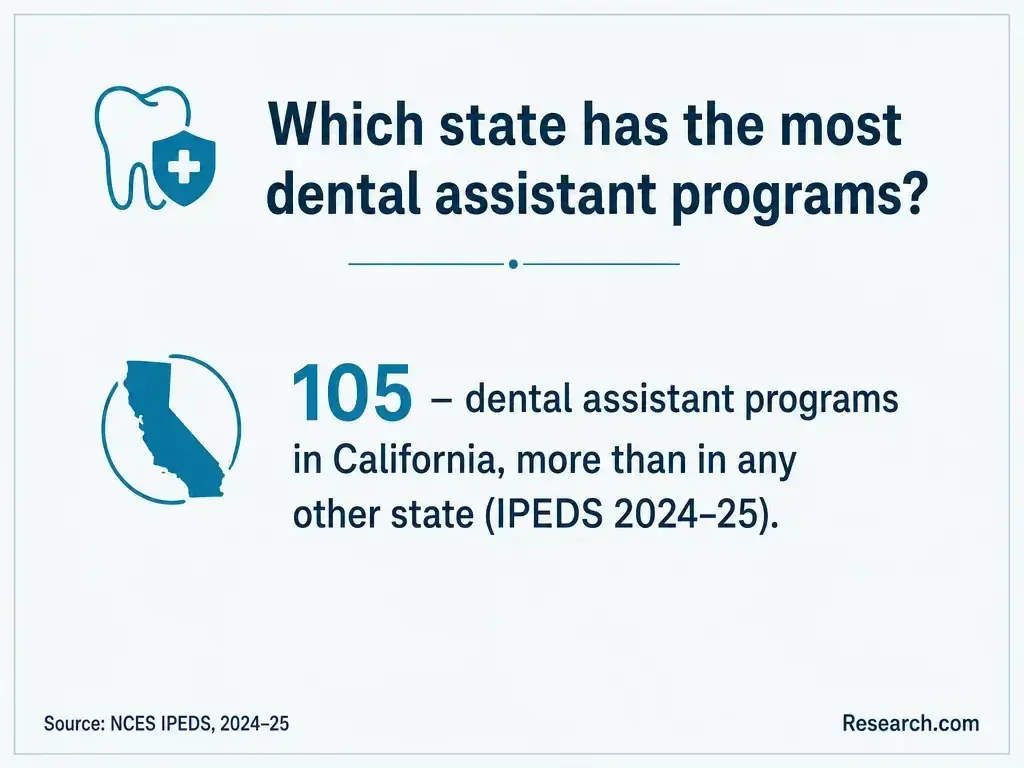
California permits entry into certain basic dental-assisting work without first holding Registered Dental Assistant status, but permitted duties and required preparation depend on the task. Registered Dental Assistant is a separate California registration with Board-established eligibility, education or qualifying experience routes, and examination requirements. Radiography and other specified functions have their own rules (Dental Board of California). A school certificate by itself does not grant registration or unrestricted practice.
Before enrolling, identify the exact role you want and ask the Dental Board of California to confirm the current requirements for that route. Then request a written explanation from the provider of how its coursework, supervised practice, and any required courses or examinations fit those requirements. Dental Assisting National Board certification is a professional credential; do not assume it replaces California authorization for a particular duty.
Choose for the job and duties you want, not the ranking position or shortest advertised schedule. A structured program can be worthwhile when it offers substantial supervised practice, a workable clinical placement, and a credential an employer values. Direct entry into a dental office may make more sense if an employer will provide suitable training and you need to earn while learning. Be cautious of a low-priced course that leaves you to arrange all practical experience yourself.
Use these checks before paying a deposit; obtain answers for the specific program and start date, not just the institution generally.
A warning sign is a promise that an entirely online certificate automatically qualifies you for California registration. Searches for doctorate degrees that don't require a dissertation concern a different educational goal; they cannot answer whether dental-assisting training supplies the practical experience and state eligibility this occupation requires.
Basic chairside work can lead to greater responsibility as an assistant gains experience and meets California requirements for additional duties. Registered Dental Assistant is a distinct advancement route, not an automatic promotion after a certificate. With experience, an assistant might pursue a specialty practice, office coordination, or staff training; each employer sets its own hiring expectations, while regulated clinical duties remain subject to Dental Board rules.
Set a first-job goal before choosing a course. If immediate paid entry matters most, ask employers about supervised hiring. If broader clinical duties are the goal, compare training against the Board's current route to those duties. Neither path guarantees advancement, but the distinction prevents paying for preparation that does not serve your intended role.
The U.S. Bureau of Labor Statistics projects 7.4% national growth in dental assistant employment from 2025 to 2035. That indicates demand across the occupation, not a forecast of openings in Kentfield or a guarantee of a job after training. For a local decision, review current Marin-area postings and the latest available metropolitan labor-market information, then note which employers request experience, specific clinical skills, or Registered Dental Assistant status.
Geography matters here: expanding a job search beyond Kentfield may increase options, but commuting expenses can reduce the value of an offer. Compare those costs before choosing a distant clinical placement or accepting a position.
Investing in training is a consequential decision, so the Research.com team evaluates programs against other programs in the same occupation and geographic area. The ranking is designed to help readers compare relevant options, not to replace a check of current admissions terms, clinical training, or California registration eligibility. Only programs with completions reported to IPEDS are included; an employer-training route or another provider may be absent without being unsuitable or unapproved.
Best-program rankings assess student outcomes, earnings and return on investment, costs and debt, and quality and recognition. Program-relevant accreditation or industry recognition receives 20% of the score, institutional accreditation 10%, and student support services 10%. The remaining 60% covers completion, full- and part-time retention, earnings one year after completion, earnings relative to annual cost, tuition, attendance cost, debt - including debt held by students who withdrew - and federal loan default rates. An entropy-based method gives more weight to indicators that vary more across programs. Most-affordable rankings use only tuition, attendance cost, debt, and default rates, weighted by the same method; they do not score accreditation or other quality measures.
The team draws on the following sources to check education data and relevant recognition. Some cover multiple trades and should not be mistaken for dental-assisting approval; the Commission on Dental Accreditation and California's Dental Board serve different purposes.
Readers can use the ranking to narrow a search, then verify each program's current price, practical instruction, and fit with California rules. More detail about the approach appears in Research.com's methodology.
# 1 position
# 2 position
For some basic duties in California, employer-supervised entry is possible. Check the Dental Board of California's current task-specific rules and ask the employer what training it provides; Registered Dental Assistant status is a separate route.
Check its current catalog and ask directly about dental-assisting availability, award, clinical location, and alignment with your intended California duties. Do not rely on an older listing or assume every nearby college offers the same training.
You may study some theory remotely, but chairside competencies and any required supervised clinical practice need an in-person arrangement. Verify that arrangement before enrolling.
No. A school award documents completion of its program; California's Registered Dental Assistant designation has separate Dental Board requirements.
Compare total cost, lab and clinical experience, travel, likely lost wages, and whether each route prepares you for the same duties. Request the details in writing before treating either quoted tuition as the full price.