# 1 position

Audited and Verified:
Our Editorial and Data Verification Process
Research.com uses government datasets, official education statistics and primary institutional information to support its career and degree guides. Our review process checks factual accuracy, occupational definitions, source dates and the requirements associated with the credentials discussed.
How This Article Was Fact-Checked
Our editorial team verifies salary estimates, employment projections, education requirements and program information against original data providers and official organizations. Salary figures are checked against the relevant occupational definitions and reporting periods. Information about licensure, accreditation and required in-person training is reviewed separately.
Fact-checked and verified on:

Co-Founder and Chief Data Scientist

Reviewed by Karolina Broda
Fact-Checker and Data Verification
Choosing dental assistant training in San Jose means looking beyond the fastest program: California rules determine which clinical tasks you can perform, and a low tuition quote may leave out substantial costs. National employment of dental assistants is projected to grow 7.4% from 2025 to 2035, according to the U.S. Bureau of Labor Statistics. This guide explains local training pathways, credentials, costs and career prospects. It accompanies the Research.com team of data scientists' Best Dental Assistant Trade Schools in San Jose for 2027 ranking, created to help students identify programs worth considering and make an informed choice.
Expect training in chairside assistance, instrument preparation, infection control, dental materials, patient communication and office workflow. A credible program also gives students opportunities to practice clinical tasks under supervision - not just watch demonstrations. According to the U.S. Bureau of Labor Statistics, dental assistants commonly learn through a program or on the job; California's Dental Board sets separate rules for duties that require registration or specific coursework.
The main pathways have different benefits. Program titles alone do not establish how much lab or clinical experience a student receives.
| Pathway | Typical credential or result | Best fit and principal trade-off |
| Career-school certificate or diploma | School-issued occupational credential | Fits students seeking focused training; verify clinical access and California RDA eligibility before paying. |
| Community-college certificate or associate degree | Certificate or academic associate degree, depending on the program | Fits students who want a broader course sequence; compare the longer schedule and total cost with the added coursework. |
| Dental-office training | Employer-taught skills; no school credential unless separately earned | Fits someone able to secure an entry-level position; training quality and access to advanced duties depend on supervision and additional requirements. |
A student considering an accelerated associates degree online should distinguish general online coursework from dental assisting: clinical competencies still require appropriate in-person practice, and an associate degree is not itself an RDA registration.
Dental assistants principally work in dental offices, supporting dentists during appointments and helping keep treatment rooms ready, according to the U.S. Bureau of Labor Statistics. In San Jose, a student can also consider practices elsewhere in Santa Clara County when comparing commutes to clinical placements and eventual jobs. General, pediatric, orthodontic and oral-surgery practices may emphasize different procedures; ask whether a program's placement experience matches the practice setting you want.
Some graduates pursue dental-office coordination as they gain experience, while others build the clinical experience and meet the additional requirements for registration. For a wider view of what jobs can you get with a vocational education, compare occupations by their actual entry requirements rather than assuming one trade credential transfers to another.
The U.S. Bureau of Labor Statistics reports a $48,070 national median annual wage for dental assistants in May 2025. Half of employed dental assistants nationally earned more and half earned less. This figure is useful for judging the occupation's broad earning potential, but it does not describe entry-level pay or isolate San Jose; ask local employers for current offers before projecting a return on training.
To assess whether a program is worth its cost, compare likely post-training pay with what you could earn without enrolling. Include aid, borrowing costs, the chance of completing, time away from paid work and how long you expect to remain in the field. A higher tuition price is not automatically a worse investment if a program provides substantially better practical preparation - but a school should be able to show evidence for any outcomes it advertises.
Program length depends on the credential and schedule. The U.S. Bureau of Labor Statistics describes dental-assisting programs as typically taking about a year, while on-the-job training length varies. An associate degree generally involves a broader course sequence than a focused certificate. Neither a short calendar duration nor a long one establishes eligibility for California's RDA pathway.
Ask each provider for its current total clock or credit hours, hours spent in a dental lab and hours in a supervised practice setting. Then confirm which courses or experience the Dental Board of California will accept for your intended registration route. Part-time attendance can preserve earnings but extend the time before completion; employer training can provide income sooner but may leave you to arrange required courses separately.
Online instruction can work for subjects such as terminology, records and some dental science. Chairside procedures, instrument handling and other clinical competencies require in-person practice and assessment. A hybrid program can therefore reduce some campus trips, but it cannot be judged by its online coursework alone.
For a San Jose student, the decisive questions are where labs take place, who arranges supervised practice, how often attendance is required and whether the schedule accommodates commuting and work. Guides to most affordable online colleges can help frame a general cost comparison, but an online price is not a complete dental-assisting price if local clinical training must be purchased or arranged separately. Do not assume that an entirely online certificate meets California requirements for a particular duty or RDA registration.
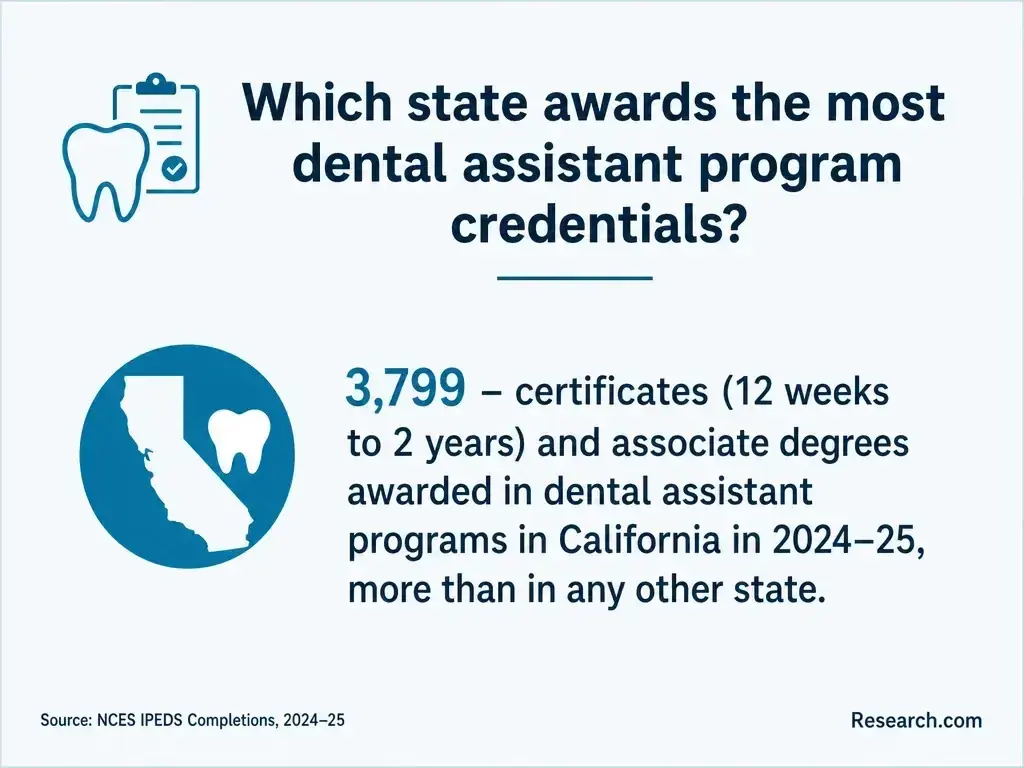
There is no single reliable average price for all San Jose dental assistant pathways: a college certificate, a private career-school program and employer training have different charges and earnings implications. Request a current, itemized price for the exact program and schedule you would attend rather than treating advertised tuition as the cost of becoming job-ready.
A useful estimate accounts for these costs and offsets before you compare offers:
Ask each school which items are included, what is refundable if you withdraw and whether the specific program qualifies for federal aid. Federal Student Aid eligibility depends on the institution and program; availability at one school does not establish it at another. Compare payment obligations alongside expected earnings, not just the monthly installment a school quotes.
A trade-school program may award a certificate or diploma; a community-college option may award a certificate or associate degree. Those are education credentials, not interchangeable with California RDA registration. CODA programmatic accreditation, institutional accreditation, state school authorization, professional certification and occupational registration also answer different questions. Confirm each separately for the school and occupation you intend to enter.
General searches for easy master degrees do not answer the relevant dental-assisting question: whether this specific training provides the practical preparation and California eligibility needed for the duties you want. Ask the program to identify its awarding credential and document how its curriculum relates to the Dental Board of California's current requirements.
Entry requirements vary by provider. A school may ask for evidence of secondary-school completion, an application and placement steps; clinical participation may bring health, immunization or background-check requirements set by the school or placement site. Employer-training positions instead depend on the hiring practice's qualifications. Get the current written admissions and clinical-placement policies before committing, particularly if a delay could change your completion date or cost.
Ask whether prior coursework can transfer, whether relevant work experience can receive credit and whether any credit actually shortens the required clinical sequence. Credit accepted toward a school credential does not necessarily satisfy a Dental Board requirement; verify that distinction with the provider and the board.
Dental assistant training connects clinical technique with patient safety. Students should learn infection-control routines, instrument processing, chairside setup, dental anatomy, materials, documentation and communication with patients and the dental team. Radiography instruction and other expanded tasks require particular attention because California restricts who may perform certain duties and under what conditions, according to the Dental Board of California.
When comparing curricula, look for supervised practice with equipment and procedures used in a dental office. Ask how instructors assess clinical competence, whether students work with patients or simulations, and what happens if a placement is unavailable. A similarly named certificate with little hands-on experience may be a poor substitute for a program with documented clinical preparation.
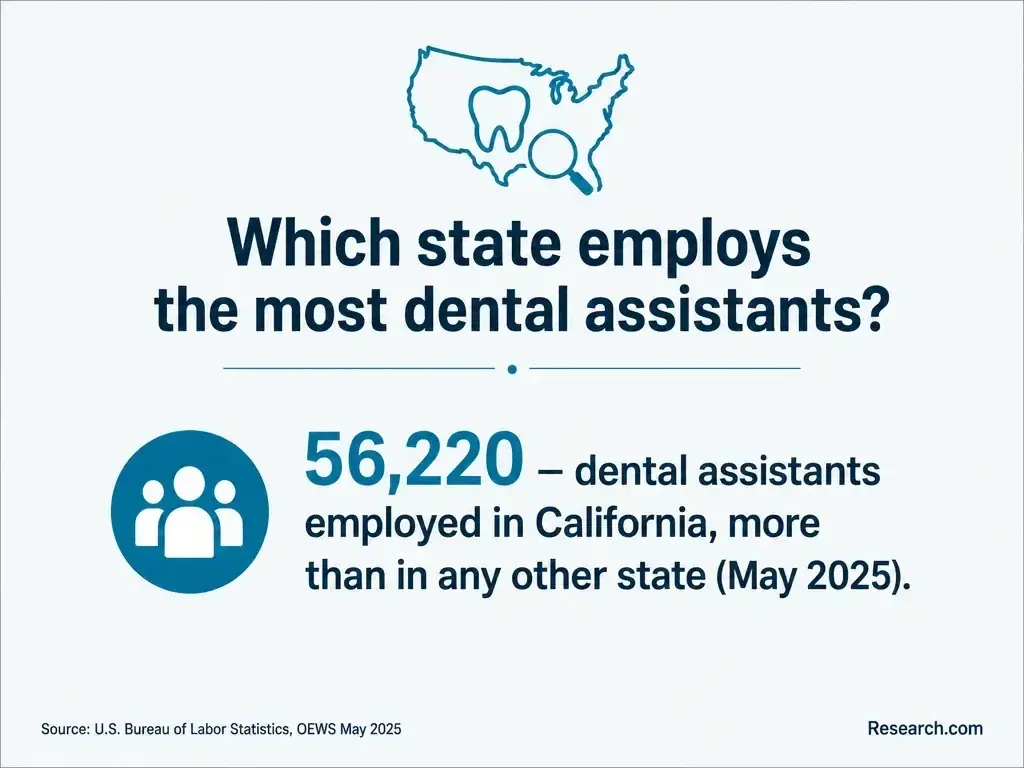
California distinguishes an unlicensed dental assistant from a Registered Dental Assistant (RDA). An entry-level assistant can perform duties permitted for unlicensed personnel under the required supervision, but a school certificate alone does not authorize RDA duties. RDA applicants must meet a Dental Board of California eligibility route and applicable examination, coursework and application requirements. Requirements also differ for duties such as dental radiography and for additional advanced credentials.
Before enrolling, tell the school the specific duties you hope to perform and ask for a written explanation of which California requirements its program meets - and which you must meet afterward. Check that explanation against the Dental Board's current rules. DANB certification is a professional credential, not a substitute for California authorization; likewise, institutional accreditation or state school authorization does not by itself grant permission to perform restricted duties.
The best program is the one whose training, price and schedule fit your intended dental-office role. If you investigate Carrington College-San Jose, San Jose City College or Gurnick Academy of Medical Arts, first confirm that the campus currently offers the particular dental-assisting program you want; offerings and delivery arrangements can change. Then compare each eligible option with available employer training rather than relying on a ranking alone.
Use the same questions with every provider so the answers are comparable:
Be cautious if a school cannot identify its clinical arrangements, presents accreditation as automatic RDA eligibility or quotes tuition without mandatory extras. An accelerated option makes sense if it supplies the required practice without forcing you to abandon needed income; a longer option may be worthwhile when its added instruction directly supports your target duties.
A common starting point is supervised chairside assistance. With experience and the relevant California requirements met, an assistant may pursue RDA registration and additional permitted duties; experienced staff may also move toward specialty-practice support or dental-office coordination. The Dental Board of California governs registered duties, so advancement depends on more than an employer's job title.
Before buying further training, identify the next role and its actual requirements. Searches for a fastest masters degree online are unrelated to this clinical entry pathway; relevant decisions are whether additional approved dental-assisting coursework, examinations or documented experience would expand the duties you can legally perform. Someone whose main goal is a different dental occupation should check that occupation's separate training requirements rather than treating dental-assisting experience as an automatic qualification.
The U.S. Bureau of Labor Statistics projects 7.4% growth in U.S. dental assistant employment from 2025 to 2035. That national projection signals continuing opportunity but does not predict openings at a particular San Jose practice or guarantee a job after training.
For a local decision, compare recent openings across reachable Santa Clara County practices and note whether employers request radiography preparation, RDA registration, experience or particular schedules. Those requirements can change which training route is worthwhile. A program that helps you meet the duties employers actually seek may have more value than a faster credential with fewer practical opportunities.
Education is a significant investment, so Research.com designed this ranking to compare dental assistant programs with other programs in the same occupation and location - not with unrelated schools nationwide. The team reviews outcomes, costs and quality indicators to help readers identify options for closer investigation. Only programs with completions reported to IPEDS are eligible; an unlisted employer-training route or school should not be assumed to be poor quality.
Best-program rankings evaluate student outcomes, including completion and full- and part-time retention; earnings one year after completion and earnings relative to annual attendance cost; tuition, attendance cost, median debt - including debt held by students who withdrew - and federal loan default rates; and quality indicators such as accreditation, relevant industry recognition and student support. Programmatic accreditation or relevant industry recognition receives 20% of the score, institutional accreditation 10%, and student support 10%. Outcomes, earnings and costs share the remaining 60%, with weights distributed using an entropy-based method that gives more weight to indicators that differ more across programs. Most-affordable-program rankings instead score only tuition, attendance cost, median debt and federal loan default rate using that method; accreditation and other quality indicators are not part of that affordability score.
The ranking draws on the following databases and organizations. Some cover education and outcomes broadly, while others provide occupation-specific or cross-trade context; inclusion as a source does not make an organization a California dental-assisting licensing authority.
Use the ranking as a shortlist, then confirm current program offerings, California credential eligibility and a written total-cost estimate directly with each provider. More detail about the approach appears on Research.com's methodology page.
# 1 position
# 2 position
# 3 position
# 4 position
# 5 position
Yes, employer training can be an entry route for duties California permits unlicensed assistants to perform. It does not automatically qualify you for RDA registration or restricted duties; check the Dental Board of California's requirements for your goal.
No. A school credential and California RDA registration are separate. Confirm that the exact program supports an eligible board pathway and identify any remaining examinations, courses or application steps.
Some academic content can be taught remotely, but clinical skills require appropriate in-person practice. Ask where supervised labs and practice occur before enrolling in an online or hybrid option.
Not necessarily. Compare mandatory fees, supplies, travel, financing and wages you may give up - as well as any later training needed for the duties you want.
Choose based on curriculum, clinical experience, cost and California eligibility. An associate degree includes a broader course of study, but the degree title alone does not authorize additional dental-assisting duties.