# 1 position
Unitech Training Academy-Lafayette - Dental Assisting/Assistant.
certificate or diploma

Audited and Verified:
Our Editorial and Data Verification Process
Research.com uses government datasets, official education statistics and primary institutional information to support its career and degree guides. Our review process checks factual accuracy, occupational definitions, source dates and the requirements associated with the credentials discussed.
How This Article Was Fact-Checked
Our editorial team verifies salary estimates, employment projections, education requirements and program information against original data providers and official organizations. Salary figures are checked against the relevant occupational definitions and reporting periods. Information about licensure, accreditation and required in-person training is reviewed separately.
Fact-checked and verified on:

Co-Founder and Chief Data Scientist

Reviewed by Karolina Broda
Fact-Checker and Data Verification
Choosing dental assistant training in Lafayette means looking beyond a school's name: you need practical experience, a manageable total cost, and a credential that fits Louisiana's rules. The U.S. Bureau of Labor Statistics (BLS) projects 7.4% national growth in dental assistant employment from 2025 to 2035, making the training decision timely. The Research.com team of data scientists created the Best Dental Assistant Trade Schools in Lafayette for 2027 ranking to help students identify programs worth considering. This guide explains how to compare those options - and whether school or employer-based training better fits your goal.
Expect a mix of dental terminology, infection control, chairside procedures, patient communication, and supervised practice. Hands-on instruction matters because passing instruments, preparing treatment rooms, and following sterilization protocols cannot be learned reliably from readings alone. Ask how many hours take place in a lab and how many involve patients or a dental-office externship; do not assume that two programs awarding certificates provide the same experience.
The main routes differ in who pays for training and how quickly you can begin working. The distinctions below can help you decide which offers the right balance of structured instruction and workplace experience.
| Route | Training and credential | Best fit and trade-off |
| Career-school certificate or diploma | Classroom and lab training, sometimes with an externship; school-awarded credential | Fits someone seeking a structured route into chairside work; compare the full price and clinical access. |
| Community or technical college program | Structured dental-assisting coursework and practical training; credential varies by program | Fits someone comparing public-school pricing with scheduling and time to completion. |
| Employer-sponsored training | Office-based instruction while working; a school credential is not assured | May reduce upfront school costs, but available supervision and preparation for additional duties vary by employer. |
Formal registered apprenticeships are not the default route into dental assisting. If a provider advertises one, verify its registration, wages, supervision, and credential with the sponsor rather than assuming that any paid office training is a registered apprenticeship (U.S. Department of Labor, Apprenticeship.gov). If you are still comparing occupations, consider where dental assisting sits among other trade school career options before committing to a dental-specific program.
Dental offices are the principal workplace for dental assistants, with duties that can include preparing patients and rooms, assisting dentists during procedures, maintaining instruments, and handling records (BLS, Occupational Outlook Handbook). In and around Lafayette, compare general-dentistry offices with specialty practices when seeking externships or entry-level work: the procedures and schedules you encounter may differ.
Ask a prospective program which local offices host students, whether placements are arranged or student-sourced, and whether an externship is guaranteed. A placement near home or work can materially reduce commuting costs; an office's willingness to hire a trainee is also different from a promise of employment.
The BLS May 2025 median annual wage for dental assistants nationwide was $48,070. It describes the midpoint for workers across experience levels and locations, not typical pay for a newly trained assistant in Lafayette (BLS, Occupational Outlook Handbook). No verified Lafayette wage figure is used here, so ask local employers about their actual entry-level ranges, hours, and benefits before estimating what a program could return.
Compare offers on annual hours as well as hourly pay: a position with limited clinical days may produce less annual income than a full-time role. Expanded responsibilities can change an applicant's options, but training alone does not establish that an employer will assign those duties or increase pay.
Completion time depends on the provider's calendar, course load, and any required externship; there is no single duration that applies to every Lafayette program. Request each school's published start-to-finish schedule and its classroom, lab, and externship hours separately. A short calendar can still require substantial weekly attendance or daytime clinical shifts.
If you work while studying, ask whether missed labs can be made up and whether externships offer evening hours. An accelerated schedule may reduce time away from full-time work overall but make it harder to keep working during training. A fast-track online associates degree is not a substitute for checking the in-person competencies and Louisiana rules attached to a particular dental-assisting program.
Online coursework can cover terminology, anatomy, scheduling, and other material that lends itself to independent study. Chairside skills, instrument handling, infection-control practice, and patient-facing experience require in-person instruction or supervised work. A hybrid option is useful only if its lab and externship locations, hours, and supervision are feasible for you.
Ask where you will demonstrate each hands-on competency and who assesses it. Do not assume an entirely online certificate prepares you for a particular Louisiana-regulated duty or DANB certification pathway; confirm eligibility with the Louisiana State Board of Dentistry and DANB. If price is driving your search, a cheapest associate degree online comparison cannot establish the cost or practical adequacy of local dental-assisting training.
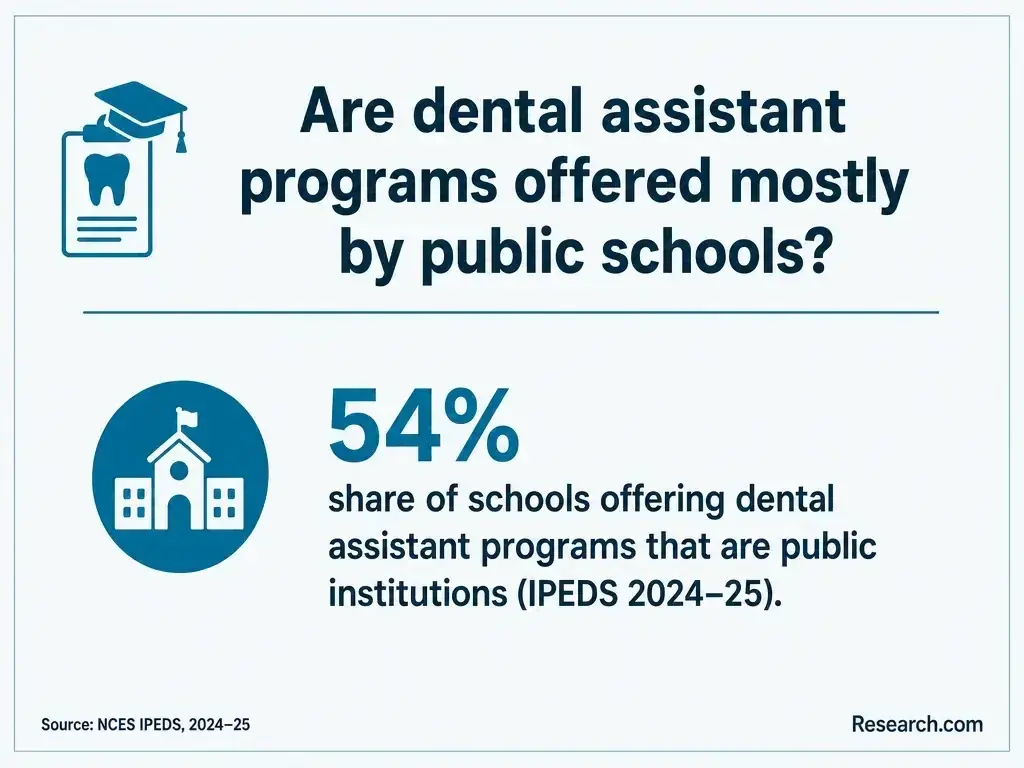
A reliable Lafayette-wide average is not available here. Published tuition alone would also understate the amount needed to become job-ready. Request an itemized, current quote from each provider - including Unitech Training Academy-Lafayette and Delta College of Arts & Technology-Lafayette Campus if their current offerings match your goal - and compare amounts for the same enrollment period.
Your comparison should account for tuition, mandatory fees, textbooks and supplies, scrubs and protective equipment, any separately billed externship costs, certification examinations, transportation, and earnings you may give up while training. Ask whether grant or aid eligibility applies to the specific program, not merely to the institution; verify federal-aid eligibility through Federal Student Aid and the school's financial-aid office (U.S. Department of Education, Federal Student Aid). Paid office training may lower upfront expense, though it may offer less structured instruction.
To judge value, compare the amount you would pay or borrow with your ability to finish, your current earnings, realistic local job offers, and the time needed to recover costs. Debt and interest matter even if a program's sticker price appears modest. If application charges add to your search costs, apply to accredited online schools no fee required is a separate comparison - not evidence that those schools offer suitable dental-assisting training.
A trade-school program may award a certificate or diploma; confirm the exact credential on the school's current program page and enrollment agreement. A school-issued credential documents completion, but it is not the same thing as DANB certification, CODA programmatic accreditation, or authorization to perform a Louisiana-regulated duty (DANB; CODA; Louisiana State Board of Dentistry).
Ask whether the specific dental-assisting program holds CODA accreditation and whether that status matters for the certification route you intend to pursue. Institutional accreditation concerns the school, while state authorization concerns its permission to operate; neither should be treated as a substitute for verifying program-specific training and occupational eligibility. If you have prior training, ask the provider whether it accepts documented prior learning and which required clinical competencies you must still complete.
Schools set their own entry rules. Ask admissions for the current written requirements concerning prior schooling, age, application documents, and any health or background requirements tied to clinical placement. An employer-training position has a different entry process: the dental office decides whom it will hire and train.
Before enrolling, confirm that you can attend the required labs and externship shifts and travel to their actual locations. Also ask when a placement must be secured and what happens if one is unavailable. Meeting a school's admission requirements does not, by itself, establish eligibility for additional duties under Louisiana rules (Louisiana State Board of Dentistry).
Useful training connects dental anatomy and terminology to chairside workflow: preparing instruments and materials, assisting during treatment, explaining routine steps to patients, documenting care, and applying infection-control procedures. Administrative instruction may include scheduling and records. These reflect the occupation's clinical and office responsibilities, though the depth of instruction varies by program (BLS, Occupational Outlook Handbook).
Look for assessed practice, not just a course title. Ask to see the skills checklist used in the lab or externship and whether instruction for radiography or expanded duties is included, optional, or outside the program. This matters if you want those duties soon after entry: a general dental-assisting certificate may not cover every separate requirement (Louisiana State Board of Dentistry).
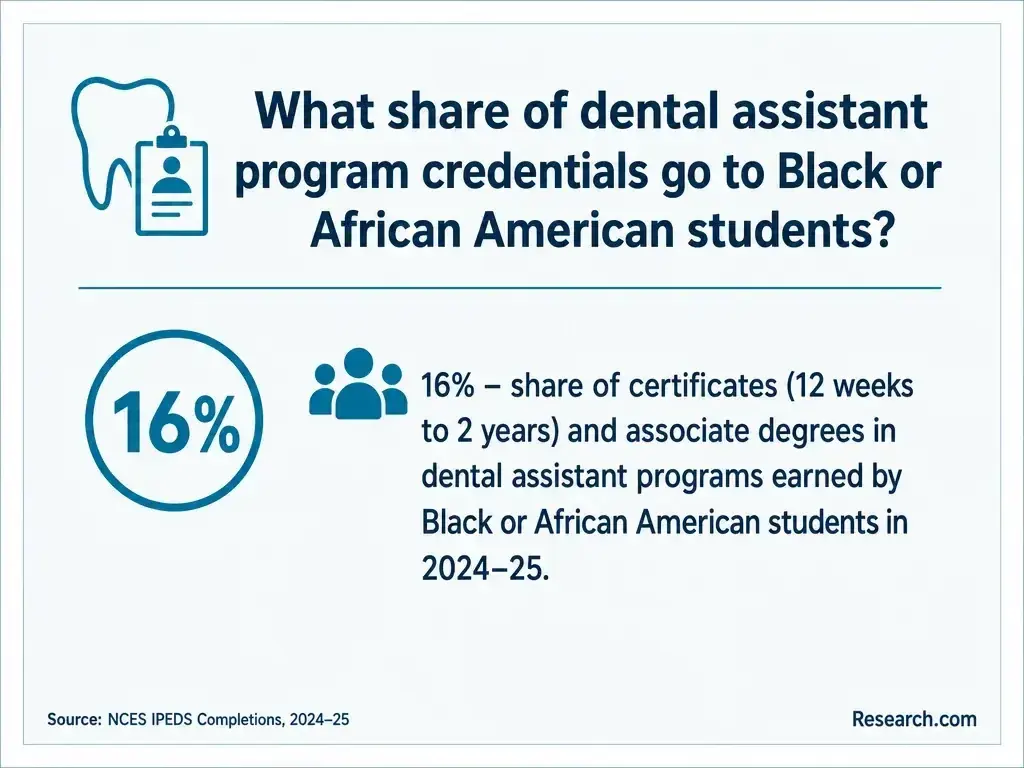
Do not treat basic assisting, expanded duties, radiography, and national certification as one requirement. Louisiana's dental board governs which tasks assistants may perform and the training or other conditions attached to particular duties. DANB awards professional certifications under its own eligibility and examination rules; a DANB credential and a school completion certificate are not interchangeable (Louisiana State Board of Dentistry; DANB).
Start with the duties in the jobs you want. Check the Louisiana State Board of Dentistry's current rules for each duty, then ask the school to identify the exact course and documentation that support eligibility. Confirm any examination, application, or supervision requirements directly with the board before paying for an add-on. Graduation alone should not be assumed to confer permission to perform a regulated procedure.
The best choice is the program that gets you to your intended work at a cost and schedule you can sustain. Rankings can narrow a shortlist, but they cannot tell you whether a particular lab schedule, externship site, or Louisiana duty-specific course fits your circumstances. Avoid choosing solely by advertised speed, tuition, or the word "accredited."
Use these questions when speaking with each school; request the answers in writing so you can compare like with like:
Compare the answers with an available employer-training offer. Someone who needs structured practice may value a school program; someone with a supportive dental-office employer may prefer to earn while learning. Neither route is automatically the better investment. Keep unrelated searches, including the easiest masters degree, out of a comparison about entry into dental assisting.
The immediate target is an entry-level dental assistant role. With experience and any training required for particular duties, an assistant may pursue more specialized chairside responsibilities or take on greater responsibility for scheduling, records, supplies, or office coordination. These are possible paths, not automatic promotions; duties and hiring standards depend on the employer and, where applicable, Louisiana rules (BLS, Occupational Outlook Handbook; Louisiana State Board of Dentistry).
If your main interest is office administration rather than clinical work, ask how much of a program's instruction and placement activity actually serves that goal. Conversely, if you want chairside work, prioritize observed clinical practice over an administrative-heavy curriculum.
The BLS projects U.S. dental assistant employment to grow 7.4% from 2025 to 2035. This is a national occupational projection, not a forecast of Lafayette openings or a guarantee of a job after training (BLS, Employment Projections). Use it as context while checking current local postings for requested experience, schedules, and duties.
When evaluating a program's employment claims, ask how many completers sought work, how placement was defined, and whether positions were in dental assisting. That evidence is more useful for a Lafayette decision than applying a national growth rate directly to your chances of being hired.
Investing in training is an important decision, so the Research.com team evaluates dental assistant programs against other programs in the same occupation and location - not against unrelated trades. The ranking includes only programs with completions reported to the Integrated Postsecondary Education Data System (IPEDS). That makes the comparison more consistent, but it also means an employer-training route or an otherwise legitimate provider may not appear.
Best-program scores consider student outcomes, earnings and return on investment, costs and debt, and quality and recognition. Programmatic accreditation or relevant industry recognition accounts for 20% of the score, institutional accreditation for 10%, and student support services for 10%. The remaining 60% covers completion and full- and part-time retention, earnings one year after completion and relative to annual attendance cost, tuition, attendance cost, debt - including debt held by students who withdrew - and federal loan default rates. An entropy-based method assigns more weight to indicators that differ more across programs. Most-affordable-program rankings instead score only tuition, attendance cost, median debt, and default rates, using entropy-based weights; accreditation and other quality indicators are not part of that affordability score.
To check quality and accuracy across education, accreditation, certification, and training records, the team used these sources:
The ranking is a starting point for a local shortlist, not a substitute for checking current prices, hands-on training, and Louisiana eligibility for the duties you want to perform. More detail on the scoring approach appears in Research.com's methodology.
# 1 position
# 2 position
Not necessarily. Employer-based training can be a route into basic assisting, but a structured program may provide more consistent lab practice. Check Louisiana's separate rules before assuming either route prepares you for additional duties (Louisiana State Board of Dentistry).
Do not assume so. Online study can cover theory, but chairside skills require supervised, in-person practice. Verify any duty-specific or certification eligibility with the Louisiana State Board of Dentistry and DANB.
No. CODA accredits eligible dental education programs; DANB certifies individuals who meet its requirements. Neither is the same as a school-issued completion credential (CODA; DANB).
Only if its schedule, assessed hands-on practice, total cost, and preparation for your intended duties fit your goal. Ask for the lab and externship hours before comparing calendar lengths.
Get the total price and refund terms in writing. Confirm the credential, practical-training arrangements, current accreditation or authorization claims, and any Louisiana requirements for the duties you expect to perform.