# 1 position

Audited and Verified:
Our Editorial and Data Verification Process
Research.com uses government datasets, official education statistics and primary institutional information to support its career and degree guides. Our review process checks factual accuracy, occupational definitions, source dates and the requirements associated with the credentials discussed.
How This Article Was Fact-Checked
Our editorial team verifies salary estimates, employment projections, education requirements and program information against original data providers and official organizations. Salary figures are checked against the relevant occupational definitions and reporting periods. Information about licensure, accreditation and required in-person training is reviewed separately.
Fact-checked and verified on:

Co-Founder and Chief Data Scientist

Reviewed by Karolina Broda
Fact-Checker and Data Verification
Choosing a low-cost dental assistant program near Raymond means comparing more than tuition: the training must also prepare you for chairside work and any duties regulated in Mississippi. The U.S. Bureau of Labor Statistics projects 7.4% national employment growth for dental assistants from 2025 to 2035, making training choices timely. This guide explains costs, credentials, practical training, and career prospects. It also accompanies the Most Affordable Dental Assistant Trade Schools in Raymond for 2027 ranking, created by the Research.com team of data scientists to help students make an informed choice about programs worth considering.
Expect instruction in patient preparation, infection control, instrument handling, dental materials, imaging principles, recordkeeping, and assisting a dentist during procedures. Practice with equipment and patients matters: a course that teaches only terminology is not equivalent to supervised chairside training. The U.S. Bureau of Labor Statistics identifies both patient-care and administrative duties in this occupation.
These pathways differ in what you pay for and how quickly you can begin working. Confirm the actual credential and supervised experience with each provider rather than relying on the program name.
| Pathway | What it offers | Best fit and limitation |
| Certificate or diploma | Focused coursework and, when included, labs and clinical practice | Fits students seeking a direct route; verify clinical placement and certification eligibility. |
| Associate degree in dental assisting | Occupational training plus broader college coursework | Fits students who value the additional coursework; compare its extra time and cost with the intended job. |
| Employer-sponsored training | Supervised learning in a dental office, potentially while earning wages | Fits applicants who can secure a position; training depth and eligibility for expanded duties may differ. |
Hinds Community College is a local public-college option to investigate. Ask where its dental assisting instruction and clinical placements occur, since travel from Raymond affects both schedule and cost. Dental office training is another realistic entry route where an employer is willing to train; it should not be mistaken for a registered apprenticeship unless the sponsor verifies that status with the U.S. Department of Labor or state apprenticeship agency.
Dental assistants work primarily in dentists' offices, according to the U.S. Bureau of Labor Statistics. General dentistry is the most direct place to seek chairside work; specialty practices can require additional familiarity with their procedures. Front-desk scheduling or records duties may also be part of a small practice's role.
For a Raymond resident, the practical job market extends beyond town limits to offices reachable on a reliable daily commute. Before enrolling, check whether required clinical placements and potential employers are accessible from home; a program's advertised location may differ from its lab or clinical site. Ask prospective employers which imaging, infection-control, and patient-care skills they expect new assistants to perform.
The U.S. Bureau of Labor Statistics reports a $48,070 national median annual wage for dental assistants in May 2025. Half of employed assistants nationally earned more and half earned less. That figure includes experienced workers and should not be treated as a starting offer in Raymond.
For a useful local comparison, request current pay ranges from hiring dental offices and compare the same schedule, benefits, and permitted duties. A higher hourly offer may be less valuable if it provides fewer hours or requires a substantially longer commute. When assessing whether training pays off, compare likely post-training earnings with what you could earn without enrolling - not with the national median alone.
Focused certificates and diplomas generally take less time than associate degrees, but a school's calendar alone does not tell you when you will be job-ready. Ask for the required classroom, lab, and supervised clinical hours, the schedule of available clinical placements, and whether part-time attendance delays completion. Do not assume that a particular number of hours applies to every Mississippi pathway; confirm requirements for your intended duties with the Mississippi State Board of Dental Examiners.
If speed is your priority, compare a dental assisting certificate with employer training before pursuing a top associate's degree in 6 months. A fast academic timetable cannot replace hands-on practice or establish eligibility for regulated tasks.
Online delivery can make lectures and some coursework easier to schedule around work. Instrument transfer, infection-control procedures, equipment use, and chairside assistance require practical assessment; supervised clinical experience also depends on an in-person site. A hybrid program can be a sound option if its lab dates and clinical placement are feasible from Raymond.
Before paying for an online option, obtain its written plan for labs and clinical placement, including who arranges the site and whether travel is required. An entirely remote course should not be assumed to meet certification eligibility or prepare you to perform every duty in a dental office. Searches for a cheap online bachelors degree address a different educational goal and are not a substitute for dental assisting practice.
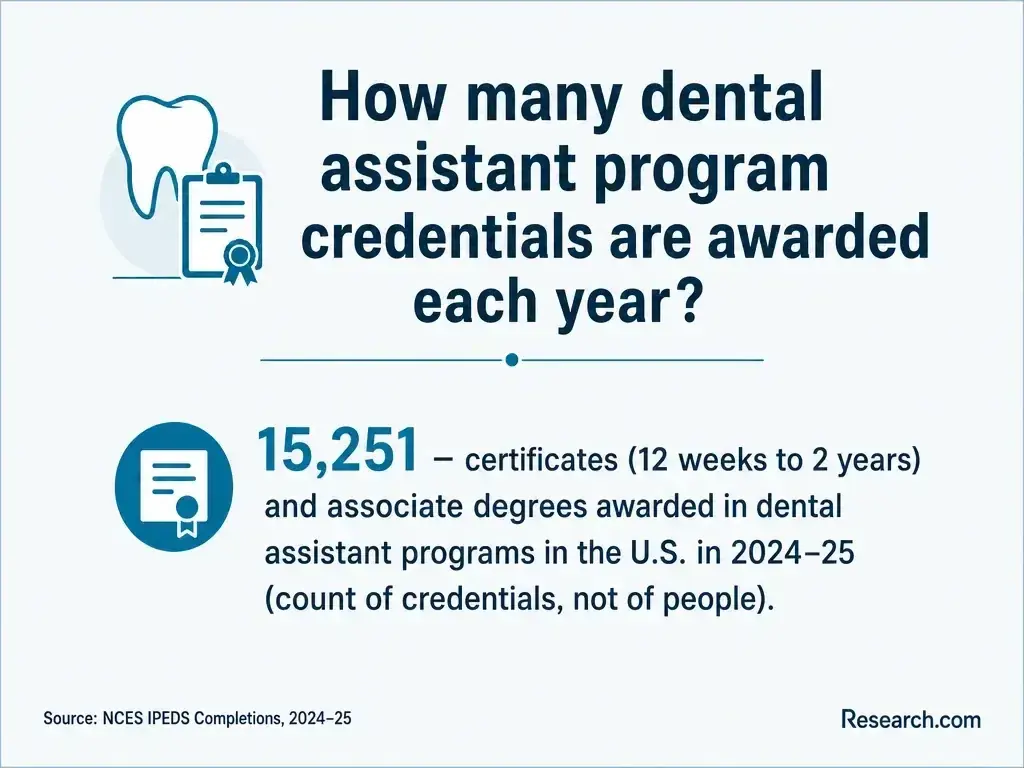
There is no reliable single Raymond-wide average for all dental assisting pathways: public-college programs, private career training, and office-based training can report costs differently, and employer training may involve wages rather than tuition. Request a written, current cost sheet for the specific program and attendance status you are considering. An affordability ranking is a starting point, not your final bill.
Build a job-ready budget that includes tuition, mandatory fees, textbooks, instruments or other required supplies, protective equipment, uniforms, examinations, and transportation to labs or clinical sites. Include any required health checks or background screening and the earnings you would give up while attending. Then subtract only aid you are actually eligible to receive. Federal Student Aid determines federal-aid eligibility; ask the school about its program's status, and check Mississippi Department of Employment Security workforce assistance if you may qualify. Paid office training can reduce upfront cost, but compare the instruction and duties it enables.
The award depends on the pathway: a school may offer a certificate, diploma, or associate degree, while an employer may document workplace training without awarding a college credential. Ask for the exact name of the award before enrolling. A completion certificate, a DANB professional certification, and permission to perform a particular duty under Mississippi rules are different things.
CODA accredits dental assisting programs; institutional accreditation applies to a school, not automatically to each occupational program. Neither type of accreditation alone grants professional certification or permission to perform every task. Check the program's CODA status directly when it matters to your intended DANB eligibility route, then verify DANB's current requirements. A search for the easiest associates degree is a poor substitute for checking the credential's clinical content and occupational fit.
Requirements vary by provider. Ask whether admission requires a high school diploma or equivalent, prerequisite coursework, an assessment, or an interview. Separately, ask about conditions for entering clinical training, such as immunization documentation, health screening, or a background check. A school admission offer does not necessarily mean every clinical site will accept a student.
If application costs are a concern, compare the dental program's own fees and deadlines rather than relying on lists of accredited online universities with free admission process; those lists do not establish the cost or entry requirements of Raymond-area dental assisting training. An applicant considering employer training should likewise ask which duties the office will teach and what supervision it provides.
A useful curriculum connects dental terminology and anatomy to actual chairside work: preparing rooms, passing instruments, maintaining infection-control procedures, helping patients understand instructions, and documenting care. Dental materials and imaging may also appear in training, but what an assistant may do independently or under supervision depends on applicable rules and employer protocols. The U.S. Bureau of Labor Statistics describes this blend of clinical and administrative work.
Compare the amount and assessment of practice, not just a course list. Ask to see how students demonstrate infection-control and chairside competencies, what equipment they use, and whether a supervised dental-office experience is guaranteed or dependent on securing a placement. These details matter more to job readiness than an identical-sounding credential title.
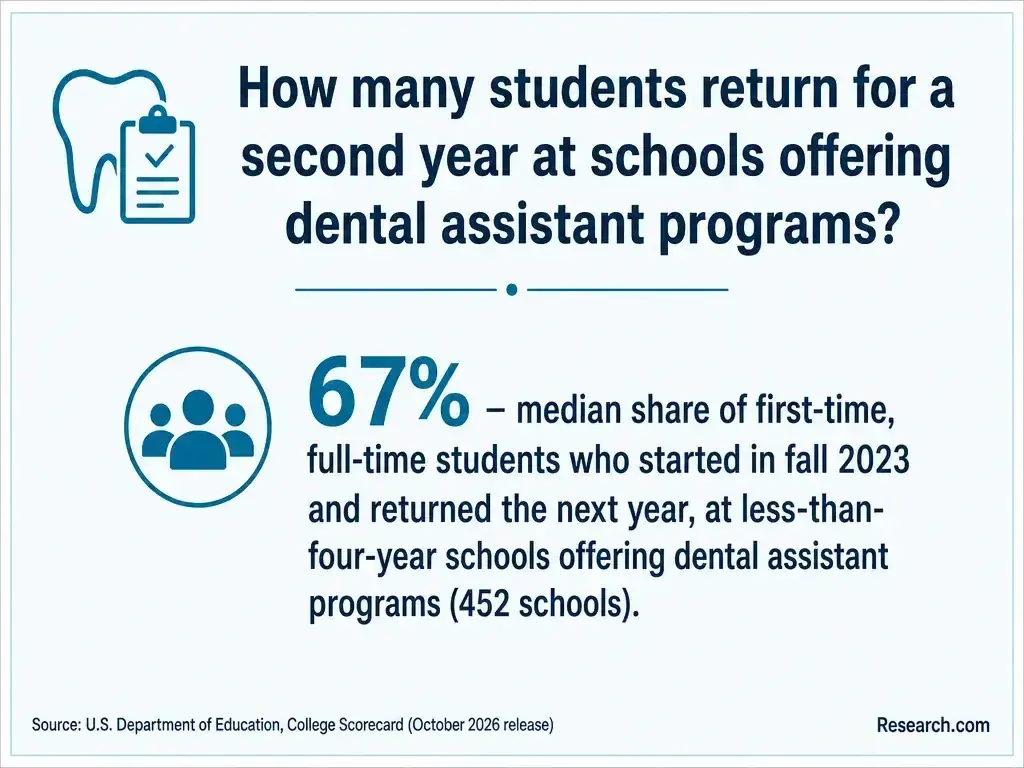
Do not assume that one license or certification governs every dental assisting task. Mississippi's rules distinguish permitted duties and supervision; the Mississippi State Board of Dental Examiners is the authority to consult about requirements for particular functions, including dental radiography. Before selecting a program, identify the duties you want to perform and ask the board and provider what education, examination, permit, or supervision - if any - those duties require.
DANB certification is a professional credential with its own eligibility and examination rules, not the same as state permission to perform a regulated duty. CODA program accreditation and a school's institutional accreditation are different again. Verify each requirement independently rather than accepting a statement that a program is simply "approved" or that graduation automatically qualifies you for all duties.
Start with the job you want, then compare programs on the cost and training needed to reach it. The lowest-ranked price is not the best investment if the schedule prevents completion or the program lacks accessible practical training. A quick associate degree comparison may help you think about time, but speed alone does not measure chairside readiness.
Ask each shortlisted provider the following questions and request answers in writing where possible:
Compare the answers with your schedule, likely completion prospects, current earnings, expected post-training pay, debt, and the time over which you expect the investment to pay off. Be wary of guaranteed salary claims, unexplained fees, or promises that an online credential alone permits every clinical duty.
The immediate path is an entry-level role assisting a dentist, potentially combining chairside and office tasks. With experience and training appropriate to the duties, an assistant may pursue a specialty-practice role, additional DANB certification, or greater responsibility for scheduling and office operations. Advancement is not automatic: employers decide job assignments, while Mississippi rules govern any regulated functions.
Someone who wants to begin earning while learning may prefer a dental office willing to train; someone seeking structured labs and a documented school credential may prefer a college program. If your goal is clinical chairside work, evaluate those routes directly rather than choosing unrelated academic study on the assumption that any credential will open the same job.
The U.S. Bureau of Labor Statistics projects 7.4% growth in U.S. dental assistant employment from 2025 to 2035. That national projection suggests continuing opportunities, but it does not forecast the number of vacancies in Raymond or guarantee a position after training.
Test local demand before committing: review current postings within a commute you can sustain and note whether offices ask for experience, imaging-related eligibility, or particular schedules. If accessible openings are limited, a wider commute may be part of the career plan - and its transportation cost belongs in your training investment calculation.
Investing in occupational training is an important decision. Research.com created its Raymond affordability ranking to help readers compare programs against relevant local options, using multiple data sources and a consistent scoring method. Only programs with completions reported to IPEDS are eligible; the ranking therefore cannot represent every employer-sponsored or other non-IPEDS training option.
The most affordable ranking scores tuition, cost of attendance, median student debt, and federal loan default rate. An entropy-based method gives more weight to measures that differ more across eligible programs. Accreditation and other quality indicators are not part of this affordability score, so readers should check them separately. Research.com's best-program rankings use a different model that also considers student outcomes, earnings, accreditation or industry recognition, and support services.
The team used the following sources to assess reported costs, outcomes, recognition, and occupational context. Using several sources helps readers investigate differences between a low price and a suitable training pathway.
NCCER and the apprenticeship finder do not establish dental assisting program approval. For more detail on the ranking approach, see Research.com's methodology. Use the ranking to build a shortlist, then verify each program's current price, clinical experience, and fit with Mississippi requirements.
# 1 position
# 2 position
Compare the complete cost of a school program with paid, supervised office training. Include supplies, clinical travel, lost earnings, and any aid you can actually receive; the lowest tuition may not mean the lowest total cost.
Online coursework can cover some theory, but chairside skills require in-person practice. Ask how a hybrid program arranges and assesses labs and supervised clinical training before enrolling.
It may support entry-level applications, depending on its training and an employer's requirements. A certificate alone does not establish DANB certification or eligibility to perform every duty regulated in Mississippi.
It may be if you value its broader coursework and can afford the added time. Compare its clinical training and likely job opportunities with a shorter credential; do not assume the degree itself brings higher starting pay.
Ask for its written cost and clinical-placement details, confirm any claimed CODA program accreditation directly with CODA, check DANB eligibility with DANB, and ask the Mississippi State Board of Dental Examiners about requirements for the duties you intend to perform.