# 1 position

Audited and Verified:
Our Editorial and Data Verification Process
Research.com uses government datasets, official education statistics and primary institutional information to support its career and degree guides. Our review process checks factual accuracy, occupational definitions, source dates and the requirements associated with the credentials discussed.
How This Article Was Fact-Checked
Our editorial team verifies salary estimates, employment projections, education requirements and program information against original data providers and official organizations. Salary figures are checked against the relevant occupational definitions and reporting periods. Information about licensure, accreditation and required in-person training is reviewed separately.
Fact-checked and verified on:

Co-Founder and Chief Data Scientist

Reviewed by Karolina Broda
Fact-Checker and Data Verification
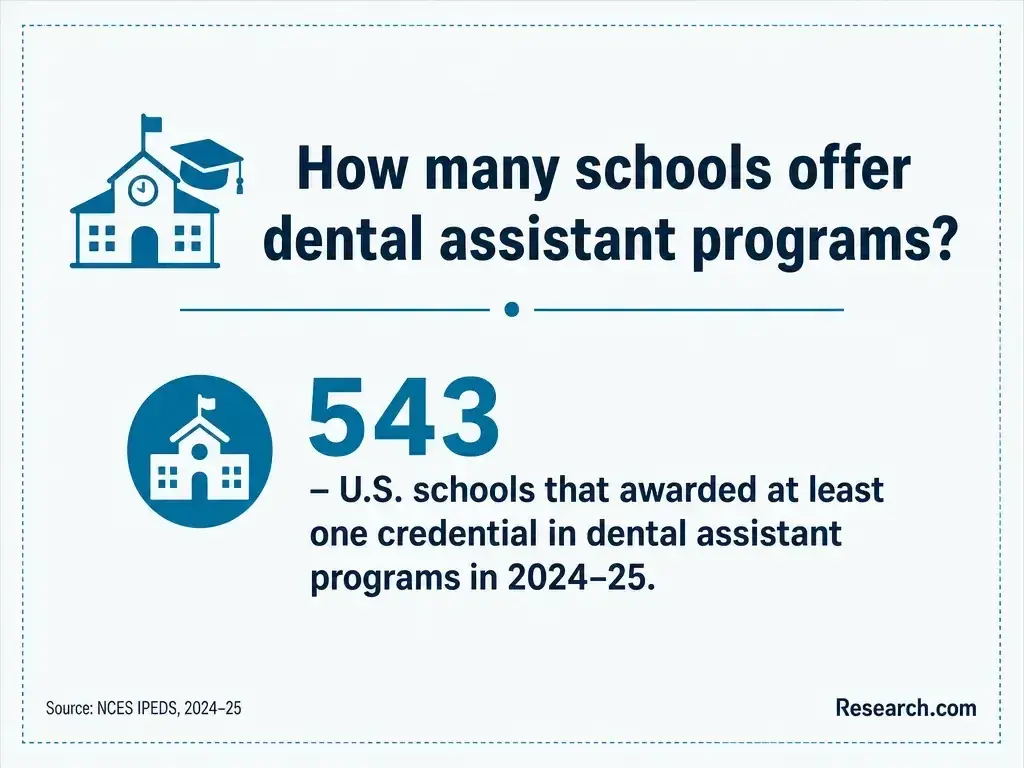
Choosing an affordable dental assistant program near University Center means comparing more than tuition: hands-on training, the credential awarded, and Michigan's rules for specific duties all matter. The U.S. Bureau of Labor Statistics projects 7.4% national employment growth for dental assistants from 2025 to 2035, making this a timely career choice. This guide helps prospective students and career changers compare costs, training routes, and job prospects. It also accompanies the Most Affordable Dental Assistant Trade Schools in University Center for 2027 ranking, created by the Research.com team of data scientists to help students identify programs worth considering.
Expect instruction in chairside assistance, infection control, dental materials, patient communication, and office procedures, paired with supervised practice. Students comparing Delta College with other accessible training routes should ask exactly where they will practice these skills and whether a clinical placement is included. A similarly named certificate from another provider may offer a different amount of hands-on experience.
Three routes serve different goals. A career-school or college certificate can suit someone seeking structured preparation and a defined credential; an associate degree in dental assisting, where offered, generally includes more coursework and takes longer. Direct hiring with employer-provided training may reduce upfront school costs for someone seeking basic supervised duties, but the employer must provide appropriate training, and the route may not establish eligibility for every expanded duty. Dental assisting is not generally a trade entered through a union apprenticeship; verify any advertised registered apprenticeship with its sponsor rather than assuming it exists locally.
For someone prioritizing a shorter credential, lists of quick certifications that pay well can offer perspective, but dental-assisting certificates must be judged against actual clinical practice and Michigan requirements, not speed alone.
Most dental assistants work in dentists' offices, supporting examinations and procedures, preparing rooms, and helping patients understand next steps (U.S. Bureau of Labor Statistics). University Center students should look beyond the campus location when evaluating placements and jobs: a workable commute to a dental practice matters both during clinical training and after completion.
General dental practices are the most direct entry point. Specialty practices, such as orthodontic or oral-surgery offices, may prefer additional experience or task-specific training. Ask a prospective program where recent students completed supervised practice and whether those sites match the type of office where you hope to work; a placement is useful evidence of exposure, not a job guarantee.
The U.S. Bureau of Labor Statistics reports a $48,070 national median annual wage for dental assistants in May 2025. This is the midpoint for workers nationwide, not a University Center wage or an expected first-year offer. Local pay can vary with experience, responsibilities, employer, and schedule; compare actual openings within a realistic commuting distance before borrowing for training.
To judge affordability, compare plausible entry-level offers with the total amount you would spend and borrow, not with the national median alone. Ask programs for documented employment and earnings outcomes for dental-assisting completers, including how many graduates were counted and when earnings were measured. Treat a figure covering all occupations at a school as insufficient evidence for this career.
Duration depends on the credential, schedule, and required clinical experience. A certificate may take less time than an associate degree, while part-time attendance can extend either route. Direct employer training may let someone begin supervised entry-level work sooner, but starting work is not the same as completing preparation for restricted duties or earning a certification.
Do not rely on a catalog's headline duration alone. Request the current program map showing classroom and lab contact hours, clinical hours if required, course sequence, placement availability, and the earliest realistic completion date. Michigan requirements for a specific task or registered-assistant pathway - not a school's marketing timeline - should determine whether the hours and content are sufficient (Michigan Department of Licensing and Regulatory Affairs).
Online coursework may cover terminology, dental anatomy, recordkeeping, and some infection-control theory. It cannot replace supervised practice in chairside assisting, instrument handling, or other hands-on tasks. A hybrid program can reduce classroom trips from University Center, but only if the required lab and clinical sites are reachable and available on a workable schedule.
Ask who arranges in-person practice, where it occurs, and whether the program documents skills needed for your intended Michigan duties. An entirely online course should not be assumed to qualify you for certification or registered-assistant status. General lists of easiest online degrees do not answer that occupation-specific question.
There is no defensible University Center average to quote without comparable, current prices for the available dental-assisting programs. Published tuition alone would understate the cost of becoming job-ready. Obtain a written, itemized estimate from Delta College or any other provider you are considering, using the same intended attendance schedule for each comparison.
The most useful comparison separates these costs and offsets so a shorter program does not appear cheaper simply because expenses are omitted:
Confirm aid eligibility for the specific program, not just the institution, through the school's financial aid office and Federal Student Aid. A guide to the cheapest online universities that accept financial aid cannot establish aid eligibility or clinical suitability for a dental-assisting credential.
The award depends on the program: it may be a certificate, diploma, or, where offered, an associate degree. These are school-issued credentials. They are distinct from DANB professional certification and from Michigan registered dental assistant status; receiving one does not automatically confer the others (Dental Assisting National Board; Michigan Department of Licensing and Regulatory Affairs).
Before enrolling, get the exact award title in writing and ask whether the program has current Commission on Dental Accreditation accreditation if that matters for your planned certification or state pathway. Also ask whether courses can count toward another credential later. Transfer or advanced standing is determined by the receiving program, so keep course descriptions and clinical-hour records rather than assuming credit will transfer.
Requirements vary by provider and by whether the program includes work with patients. A school may request evidence of prior education and require health documentation, background screening, or other steps before clinical placement. Admission to classes does not necessarily mean a student has cleared placement requirements or is eligible for a particular Michigan duty.
Ask admissions and the clinical coordinator which requirements must be met before enrollment, which apply before clinical practice, who pays for each check or screening, and what happens if a placement is delayed. Someone considering direct employer training should instead ask the practice which duties a new hire may perform, who supervises training, and whether the employer supports later certification preparation.
A useful curriculum links classroom knowledge to repeated, observed performance: preparing treatment areas, maintaining infection-control procedures, assisting chairside, handling dental materials, communicating with patients, and documenting visits. Dental imaging and other expanded tasks require particular attention because Michigan rules can distinguish what different assistants may do (Michigan Department of Licensing and Regulatory Affairs).
Ask to see a current skills checklist and how each competency is assessed - in a lab, a clinical site, or both. A program with substantial practice but an inaccessible placement may be a poor fit; a convenient course with no meaningful supervised practice may leave a student unprepared for the work.
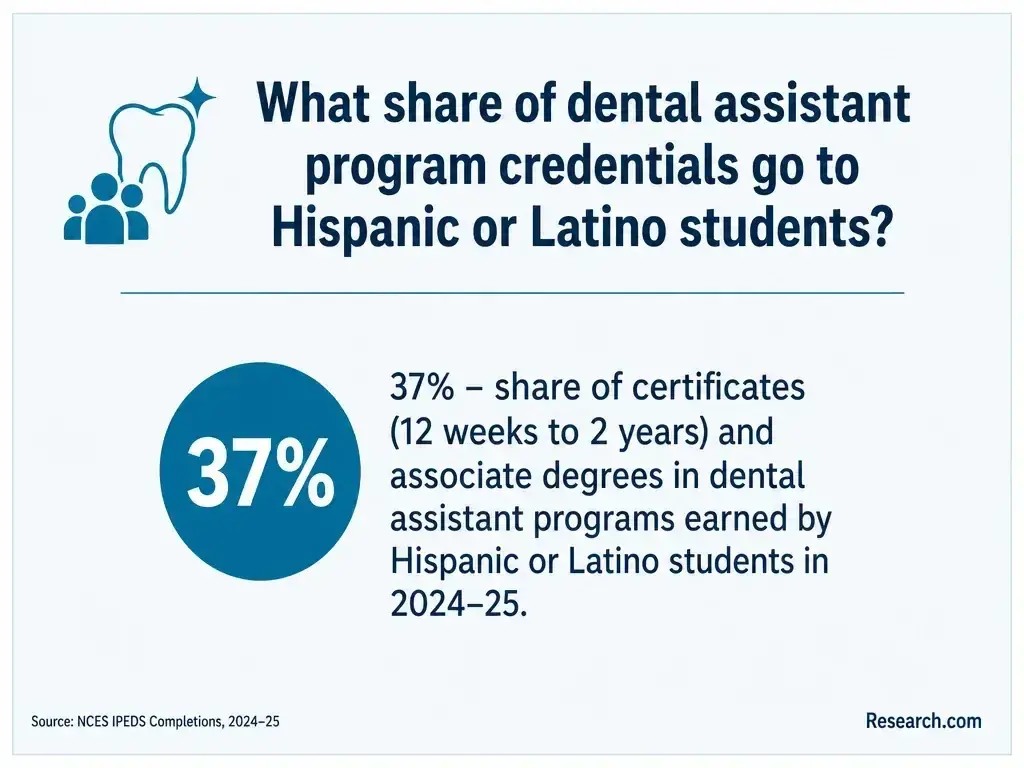
Michigan permits a distinction between dental assistants performing allowable duties under a dentist's supervision and registered dental assistants with additional state-defined eligibility and duties. Do not assume every dental assistant position requires registration, or that any training certificate authorizes every task. Check the Michigan Department of Licensing and Regulatory Affairs and the Michigan Board of Dentistry for the current requirements attached to the duties you want to perform.
DANB certification is a separate professional credential with its own eligibility pathways and examinations; program completion does not automatically award it (Dental Assisting National Board). Institutional accreditation concerns the school, CODA programmatic accreditation concerns a dental education program, and Michigan registration concerns state authorization for specified practice. Ask the school to identify each separately and provide documentation for any eligibility claim.
Start with the job and duties you want, then compare programs against that goal. A cost ranking narrows the field; it cannot show whether a clinical schedule, credential, or Michigan eligibility pathway works for you. Broader guidance on what universities offer dual degree programs is not a substitute for checking the requirements of this trade credential.
Use these questions with each provider before accepting an offer:
Avoid choosing solely by advertised tuition, speed, or a ranking position. For return on investment, weigh your completion prospects, foregone wages, aid, likely debt, plausible post-training earnings, and how long you expect to work in the field. A lower upfront price offers little value if the program cannot provide the practice or eligibility your intended role requires.
An entry-level assistant may build chairside experience in general dentistry and later pursue duties or roles that require further training, qualifying experience, certification, or Michigan registration. Experienced assistants may move toward specialty-practice responsibilities, patient coordination, or office leadership, depending on employer needs. None of these steps follows automatically from a starting certificate.
Choose training that supports the next realistic step, not the longest possible list of future jobs. A fastest online master's degree list, for example, does not establish a route into chairside assisting; practical preparation and the rules for the duties you seek are the relevant tests here.
The U.S. Bureau of Labor Statistics projects 7.4% national growth in dental assistant employment from 2025 to 2035. That signals continuing demand nationally, but it does not measure openings in University Center or guarantee a nearby position. Students should examine current dental-practice openings across the area they can commute to and note which credentials, skills, and schedules employers actually request.
For someone able to work while learning, employer-sponsored entry may be worth comparing with a tuition-based program. For someone seeking structured clinical instruction or eligibility for additional duties, a program with verifiable practical training may justify its extra cost. The strongest choice is the one that connects affordable preparation to the specific local work you intend to pursue.
Education is a significant investment, so Research.com designed this ranking to help readers compare dental assistant programs against relevant options in the same occupation and location. The team uses multiple education and occupational sources to check the credibility and accuracy of its work. Only programs with completions reported to the Integrated Postsecondary Education Data System (IPEDS) are eligible; a provider's absence from the ranking does not mean its training is unavailable or unsuitable.
Most affordable rankings score costs and debt - not program quality - using tuition, cost of attendance, median student debt, and federal loan default rates. Indicator weights are distributed through an entropy-based method, which gives more weight to measures that vary more among programs. Readers should therefore use the ranking as a cost-focused shortlist, then independently check clinical training, outcomes, and eligibility for their intended duties.
Research.com also produces separate best programs rankings. Those consider student completion and full-time and part-time retention; earnings one year after completion and earnings relative to annual attendance cost; tuition, attendance cost, debt including debt held by students who withdrew, and loan default rates; plus accreditation, occupation-specific recognition, and student support. Their weights are 20% for relevant programmatic accreditation or industry recognition, 10% for institutional accreditation, 10% for support services, and 60% for outcomes, earnings, and costs distributed through the entropy-based method. Those quality measures are not part of the most affordable score.
The following sources inform the ranking and its occupation-specific checks. Not every source supplies a scored cost measure, and resources covering other trades should not be read as dental-assisting endorsements.
More detail about Research.com's approach appears on its methodology page. No cost ranking can determine on its own whether a program offers the practical preparation or regulatory pathway a particular student needs.
# 1 position
# 2 position
Not necessarily. Compare total cost, clinical access, completion prospects, and whether the training supports your intended Michigan duties. The lowest tuition may still leave substantial expenses or training gaps.
Some entry-level, supervised duties may be learned through employer training. Check the Michigan rules for the tasks you want to perform; direct hiring does not automatically qualify you for registered-assistant duties (Michigan Department of Licensing and Regulatory Affairs).
Some theory can be taught remotely, but chairside skills require in-person practice. Confirm where and how a program assesses those skills before enrolling.
No. A school credential, DANB certification, and Michigan registered-assistant status are distinct. Verify current state eligibility requirements for the role you want (Michigan Department of Licensing and Regulatory Affairs; Dental Assisting National Board).
Request the full cost estimate, exact credential name, lab and clinical schedule, placement details, refund terms, and written explanation of any claimed certification or Michigan registration eligibility.