Best Dental Assistant Training Programs & Trade Schools - Top Dental Assistant Schools in Tennessee for 2026

Co-Founder and Chief Data Scientist
Choosing the right dental assistant trade school in Tennessee can feel overwhelming, but it’s a crucial step toward a rewarding career. This article introduces a carefully crafted dental assistant trade school programs ranking developed by the Research.com team of data scientists to guide you in making an informed decision.
Discover programs that match your goals and lifestyle, helping you gain valuable skills and certification. Whether you’re starting fresh or changing careers, earning a diploma in this field opens doors to stable work and personal growth. Let’s explore the best options for 2026 together.
Key benefits of finishing dental assistant trade school in Tennessee
- Graduates can expect an average salary around $43,910 per year, with opportunities to earn up to $52,457 based on experience and location in Tennessee.
- Many dental assistant graduates from popular Tennessee trade schools find rewarding careers in dental offices, orthodontics, or specialty clinics, offering room for growth and skill development.
- Completing a dental assistant program online provides flexibility and convenience, as shown by graduates who balance work and study while gaining the same valuable skills as traditional students.
- Best Dental Assistant Training Programs & Trade Schools - Top Dental Assistant Schools in Tennessee for 2026
- What can I expect from dental assistant trade schools in Tennessee?
- Where can I work after finishing dental assistant trade schools in Tennessee?
What can I expect from dental assistant trade schools in Tennessee?
Enrolling in a dental assistant trade school program in Tennessee means committing to around eight months of full-time study, typically totaling about 864 clock hours, though some part-time options, like those at TCAT Pulaski, offer shorter durations near 175 clock hours. Graduates often describe a balanced experience combining classroom learning and hands-on practice, beginning with lessons on dental anatomy, radiology, and infection control.
Students engage with simulation models and mannequins before advancing to real clinical settings, where they assist dentists by preparing instruments, sterilizing equipment, and supporting various procedures. Many recall the satisfaction of helping patients understand oral care, a skill emphasized alongside administrative tasks such as scheduling and managing records.
Popular Tennessee programs emphasize accreditation by the American Dental Association's Commission on Dental Accreditation, ensuring graduates qualify to become Registered Dental Assistants. Those who have completed these programs often highlight the supportive learning environment and the confidence gained from diverse clinical experiences, preparing them for roles in both general and specialty dental practices across the state.
Where can I work after finishing dental assistant trade schools in Tennessee?
Graduates of dental assistant trade school programs in Tennessee typically find employment across a broad spectrum of dental care settings, reflecting the state's diverse healthcare landscape. Many alumni from well-known trade schools in Nashville and Memphis report starting their careers in private dental offices, where they assist licensed dentists in general, pediatric, or specialty clinics such as orthodontics and oral surgery. These roles often involve hands-on tasks like taking X-rays, polishing teeth, and managing patient records, which graduates feel well-prepared for due to their program training.
Others have successfully joined public health clinics and local health departments, contributing to community oral health initiatives. For example, some graduates work with the Tennessee Department of Health, providing dental screenings and preventive care in underserved areas-a rewarding experience that many describe as impactful and fulfilling.
Trade school graduates also pursue positions in corporate dental chains or mobile dental units, enjoying structured career growth and the chance to serve schools and businesses statewide. With over 380 job openings reported in 2025 and hourly wages between $18 and $35, these career paths offer both stability and opportunity.
Graduates from dental assistant trade schools in Tennessee typically start with annual salaries ranging from $39,000 to $44,000, according to recent data. Many new graduates report feeling encouraged when they see hourly wages between $15.72 and $20.53, which translates to about $32,700 to $42,700 per year in full-time roles. For example, those completing programs at well-known Tennessee trade schools often secure positions in dental offices around Nashville or Memphis, where salaries can be as high as $45,880 and $44,580 annually.
Graduates frequently share how earning practical certifications like Registered Dental Assistant (RDA) or Expanded Functions Dental Assistant (EFDA) helps boost their pay. In Knoxville, dental assistants with expanded function skills report hourly rates reaching $34, highlighting the value of additional training after trade school. Many graduates find this career both rewarding and stable, with a clear path to higher income as they gain experience and credentials.
- Applicants must be at least 18 years old and have a high school diploma or GED to enter most dental assistant programs in Tennessee.
- Programs typically last 8-12 months, require full-time study, and include 864 to 1,000 clock hours.
- Tuition generally ranges from $4,000 to $5,000, excluding textbooks and supplies, with financial aid available.
- Students must pass entrance exams like the HESI A2 and provide immunization records for MMR, Varicella, and Hepatitis B.
- Graduates can become Registered Dental Assistants by passing written and clinical exams and maintaining CPR certification.
- The job market is growing at 8% through 2032, with a median salary around $40,230 per year in Tennessee.
Dental assistant trade school programs in Tennessee typically take between 9 to 12 months to complete, offering an efficient path toward entering the dental field. Graduates from well-known Tennessee trade schools often describe the experience as both intensive and rewarding, emphasizing how the program's focused timeline allowed them to quickly transition into employment without sacrificing the quality of their training.
For example, students at popular Tennessee institutions find themselves balancing hands-on clinical practice with classroom instruction within a single academic year. This structure enables them to master essential skills such as chairside assisting, radiography, and infection control in a realistic, patient-focused environment.
Many graduates highlight the positive impact of completing the program swiftly, noting the boost in confidence and motivation that comes from achieving certification promptly. This accelerated timeline also suits those eager to start earning a stable income and gaining practical experience in dental offices across Tennessee.
The main difference between online and on-campus dental assistant trade school programs in Tennessee lies in how instruction and hands-on training are delivered. Online programs, such as those offered by the U.S. Career Institute and Miller-Motte College's Chattanooga campus, provide flexible, self-paced coursework with video lectures and virtual labs. Graduates appreciate the convenience of studying from home while managing work or family, though they must arrange their own clinical hours locally to fulfill state certification requirements.
In contrast, on-campus programs like Walters State Community College and South College immerse students in direct, supervised hands-on training using real dental equipment. Graduates often describe the confidence gained through extensive clinical hours-ranging from 30 observation hours to over 390 hours of patient care-that these programs coordinate on-site or with local dental offices.
Both formats meet Tennessee's licensing standards, but online learners value flexibility and independence, whereas on-campus students benefit from structured schedules and immediate faculty support.
The average cost dental assistant programs Tennessee offer varies significantly depending on the institution and program length. For example, graduates from Revive Dental's RDA Program in Chattanooga typically invest around $4,850 for a 12-week intensive course, which includes certifications and training materials. Meanwhile, students attending Tennessee College of Applied Technology (TCAT) Knoxville encounter a combined tuition and fees total of approximately $4,439 when including textbooks and supplies for their 8-month curriculum. This range highlights the variability in tuition fees dental assistant schools Tennessee may charge, influenced by program duration and included resources.
Graduates from accelerated programs like the TN Professional Training Institute in Murfreesboro, with a three-week course costing $4,999, often praise the fast-tracked, hands-on experience that leads to quick workforce entry. In contrast, those pursuing a more traditional associate degree at Chattanooga State Community College face a higher financial commitment, approximately $14,181.45, but benefit from extended education and comprehensive academic support across five semesters.
Many students express satisfaction with payment flexibility options, such as Nashville Dental Assistant School's weekly plans starting at $100, making the financial responsibilities manageable. Additionally, exploring recognized options like South College's credit-hour-based tuition and Volunteer State Community College's 12-month certificate programs reveals that the average cost dental assistant programs Tennessee offer can be tailored to different learning needs and budgets.
For those considering alternative paths or medical-related certifications, reviewing medical assistant diploma programs can provide insight into complementary career options.
Dental assistant students in Tennessee benefit from a variety of financial aid options that significantly reduce tuition burdens. Graduates from Tennessee Colleges of Applied Technology (TCAT) often recall how the Wilder-Naifeh Technical Skills Grant, offering up to $2,000 annually, made completing their certificates more accessible. Recent high school graduates attending programs under Tennessee Promise frequently share how full coverage of tuition and mandatory fees removed financial stress entirely.
Adults returning to school at Tennessee trade schools appreciate the Tennessee Reconnect grant, which provides tuition-free access for those 24 and older, making career changes feel achievable without overwhelming debt. Many students also leverage the Workforce Innovation and Opportunity Act (WIOA) grants, which can cover the entire cost of training if they qualify through the JOBS4TN system, enabling some to focus fully on their studies without working multiple jobs.
Private schools like the Tennessee Professional Training Institute (TNPTI) highlight flexible payment plans and third-party loans such as Climb Credit, offering monthly payments around $220 and no down payment, which graduates describe as a manageable path to certification.
Enrolling in a dental assistant trade school program in Tennessee typically requires meeting several clear prerequisites designed to prepare students for success. Most schools ask applicants to have a high school diploma or GED, ensuring foundational academic skills. For example, graduates from popular Tennessee trade schools often share how completing these basic requirements gave them confidence when starting hands-on training.
Additional prerequisites frequently include:
- Background checks to ensure patient safety and compliance with healthcare regulations
- Proof of immunizations, which align with clinical site requirements
- Basic CPR certification, sometimes required before clinical rotations begin
- Completion of placement tests in reading and math at some institutions to gauge readiness
Students highlight that meeting these prerequisites was straightforward and helped them feel prepared and motivated. Trade schools in Tennessee often provide orientation sessions that clarify these steps, making the process smooth for newcomers balancing work or family.
Dental assistant trade school programs in Tennessee, such as those at TCAT campuses, offer a well-rounded curriculum combining technical skills and foundational knowledge vital for entry-level dental roles. Graduates often highlight the balance between theory and hands-on practice, which builds confidence before entering the workforce.
Core courses typically include:
- Anatomy & Physiology: Understanding the human body, especially the oral cavity, is essential for effective assistance.
- Dental Anatomy, Head & Neck Anatomy, Embryology & Histology: These courses deepen knowledge of teeth structure and oral tissue development.
- Dental Materials and Microbiology & Sterilization: Students learn about dental substances and strict infection control protocols, a must for safe clinical practice.
- Radiology: Training in dental X-rays is mandatory for Tennessee certification, with students gaining hands-on experience to ensure safety and accuracy.
Practical skills are honed through courses like Operative Dentistry and Prosthodontics, where students assist in real procedures during supervised clinical rotations, often lasting three months at schools like TCAT Northwest.
Professional development classes in Psychology & Communication and Ethics prepare students for patient interactions and legal responsibilities, making graduates feel ready and empowered to step into dental offices confidently.
Dental assistant program specializations in Tennessee often include critical skill areas such as dental radiology, sealant application, nitrous oxide monitoring, and coronal polishing, as evidenced by graduates from Volunteer State Community College who complete nearly 400 clinical hours. Specialized dental assistant training in Tennessee also commonly features hands-on externships, like those at Nashville Dental Assistant School, where students gain real-world experience each week in dental offices while preparing for the State RDA exam.
Programs emphasize practical skills alongside comprehensive knowledge, covering anatomy, pharmacology, preventive dentistry, and office management. For example, Tennessee College of Applied Technology's online Clinical Dental Assistant program prepares students to pass key national board areas, including infection control and anatomy.
Students appreciate accelerated options such as the 10-week ADAPT program that combine flexible hours with rigorous curricula, helping them swiftly transition into the workforce. Many find that these varied specializations provide confidence and readiness for diverse dental roles.
For those exploring flexible options to pursue their training, health care certificates online can supplement their path effectively.
Choosing the best dental assistant programs in Tennessee starts with verifying accreditation by the Commission on Dental Accreditation (CODA) or the Tennessee State Board of Dentistry. Graduates from well-accredited programs report smoother paths to becoming Registered Dental Assistants (RDA) and greater confidence entering the workforce. Admission criteria typically include a high school diploma, immunization proof, and passing entrance exams like the HESI A2. Students often share that preparing for these requirements early reduces stress and improves application success.
Consider program length and scheduling flexibility. Popular schools in Tennessee offer options from 7 to 12 months, with both full-time and part-time formats. Many working students appreciate evening classes that allow balancing jobs and family. Understanding dental assistant school requirements in Tennessee helps candidates select programs that fit their lifestyle without sacrificing quality.
Financial aid availability is crucial. State-supported grants like TN Promise and TN Reconnect make training affordable. Students from local trade schools highlight how these aids ease tuition burdens. Exploring tuition costs including materials, alongside clinical training quality, is essential. Hands-on experience supervised by licensed dentists prepares students for real patient care. For those seeking affordable options, exploring a cheap online dental assistant associate's degree can also be a practical pathway.

Dental assistant trade school graduates in Tennessee have numerous Tennessee dental assistant career paths available, reflecting the state's expanding dental healthcare needs. Most graduates start as Registered Dental Assistants (RDAs), qualified to perform essential support tasks under dentist supervision. Graduates from programs in Memphis and Nashville frequently report gaining hands-on skills during externships, boosting confidence as they enter private practices, public clinics, or specialty offices.
Many also advance by earning certifications in dental radiography, coronal polishing, nitrous oxide monitoring, or sealant application, unlocking opportunities to take on more advanced clinical duties. Another option is to become a Registered Dental Assistant with Expanded Functions, enabling them to perform restorative and prosthetic work after additional state-approved training.
Beyond clinical roles, dental assistant job opportunities in Tennessee include dental office administration and dental sales. Graduates planning long-term careers often continue education to dental hygienist or office manager roles, with some researching how long does it take to become a dental hygienist to gauge timelines for advancement.
- Start as Registered Dental Assistants (RDAs) handling diverse supportive tasks
- Specialize with certifications that increase responsibilities and wages
- Expand scope by training for expanded functions in restorative care
- Pursue roles in administration or dental sales to leverage diverse skill sets
- Continue education toward dental hygienist or management careers for upward mobility
The dental assistant job outlook in Tennessee is strong, with over 350 active job openings statewide, spanning urban centers like Nashville and Knoxville as well as smaller towns. Graduates from well-known trade schools report excellent hiring prospects fueled by a growing demand for dental services across the state. Employers often seek candidates who hold certifications in areas such as radiology and nitrous oxide monitoring, making certification-focused programs especially valuable.
Many graduates find employment quickly, supported by competitive hourly wages ranging from $18 to $22, depending on experience and location. This demand for dental assistants in Tennessee translates into positive employment momentum, reflecting a statewide need fueled by preventive oral health awareness.
Popular trade schools emphasize practical skills and certification prep, helping students to stand out in a tight market. Graduates share that hands-on training and career support are key advantages in securing roles. For those considering flexible options to bolster their credentials, exploring the best online colleges for dental assisting can complement traditional trade programs and open further opportunities.
Best Dental Assistant Training Programs & Trade Schools - Top Dental Assistant Schools in Tennessee for 2026
# 1 position
Chattanooga State Community College - Dental Assisting/Assistant.
associateChattanooga State Community College offers a Hybrid Dental Assisting/Assistant program that prepares students for patient care, dental radiographs, and office administrative duties under dentist supervision. The curriculum includes medical record-keeping, scheduling, equipment maintenance, sterilization, and chairside assisting. Annual in-state tuition is $4,550. Graduates earn a median salary of $40,227 one year after completion. The program is accredited by the Southern Association of Colleges and Schools Commission on Colleges.
# 2 position
Chattanooga State Community College - Dental Assisting/Assistant.
certificate or diplomaThe Dental Assisting/Assistant program at Chattanooga State Community College is a hybrid course designed to prepare students for patient care, dental radiographs, and office administrative duties under dental professionals' supervision. It covers medical record-keeping, equipment maintenance, radiography, chairside assisting, and patient care. The program's annual in-state tuition is $4,550, and graduates earn a median salary of $40,227 one year after completion. It is accredited by the Southern Association of Colleges and Schools Commission on Colleges.
# 3 position
Chattanooga College Medical Dental and & Technical Careers - Dental Assisting/Assistant.
associateThe Dental Assisting/Assistant program at Chattanooga College Medical Dental and Technical Careers offers a hybrid format with some distance education. It prepares students to assist dentists and hygienists through patient care, dental radiographs, office duties, and equipment maintenance. The program covers medical record-keeping, scheduling, sterilization, chairside assisting, and supervised practice. Annual in-state tuition is $10,690. Median earnings one year after completion are $29,984. The program is accredited by the Accrediting Commission of Career Schools and Colleges.
# 4 position
Remington College-Nashville Campus - Dental Assisting/Assistant.
certificate or diplomaThe Dental Assisting/Assistant program at Remington College-Nashville Campus is a hybrid course designed to prepare students for patient care, dental radiographs, and office administrative tasks under dentist supervision. It includes training in medical record-keeping, equipment maintenance, chairside assisting, and supervised practice. The annual in-state tuition is $21,230, and median earnings one year after completion are $21,721. The program is accredited by the Accrediting Commission of Career Schools and Colleges.
# 5 position
Tennessee College of Applied Technology Nashville - Dental Assisting/Assistant.
certificate or diplomaThe Dental Assisting/Assistant program at Tennessee College of Applied Technology Nashville offers hybrid learning with some distance education. It trains students in patient care, dental radiographs, office administration, and chairside assisting under professional supervision. Instruction covers medical record-keeping, scheduling, equipment sterilization, and basic radiography. Graduates earn a median income of $25,189 one year after completion. The program is accredited by the Council on Occupational Education.
# 6 position
Tennessee College of Applied Technology-Knoxville - Dental Assisting/Assistant.
certificate or diplomaThe Dental Assisting/Assistant program at Tennessee College of Applied Technology-Knoxville offers a hybrid format with some distance-education options. It prepares students to provide patient care, take dental radiographs, assist chairside, and manage office administrative tasks under supervision. Instruction covers medical record-keeping, equipment maintenance, sterilization, scheduling, and supervised practice. The program is accredited by the Council on Occupational Education.
# 7 position
Ross Medical Education Center-Knoxville - Dental Assisting/Assistant.
certificate or diplomaThe Dental Assisting/Assistant program at Ross Medical Education Center-Knoxville offers a hybrid format with some distance education. It trains students to provide patient care, take dental radiographs, assist chairside, and handle office administrative tasks under supervision. Instruction includes medical record-keeping, equipment maintenance, sterilization, and patient intake. Graduates earn a median salary of $25,352 one year after completion. The program is accredited by the Accrediting Bureau of Health Education Schools.
# 8 position
Northeast State Community College - Dental Assisting/Assistant.
associateNortheast State Community College offers a Dental Assisting/Assistant program with a hybrid format, allowing some distance education. The curriculum trains students in patient care, dental radiographs, equipment preparation, and office administrative tasks under supervision. Instruction covers medical record-keeping, scheduling, equipment maintenance, sterilization, radiography, chairside assisting, and supervised practical experience. Annual in-state tuition is $4,542. The program is accredited by the Southern Association of Colleges and Schools Commission on Colleges.
# 9 position
Northeast State Community College - Dental Assisting/Assistant.
certificate or diplomaThe Dental Assisting/Assistant program at Northeast State Community College offers a hybrid format with some distance-education options. It prepares students to provide patient care, take dental radiographs, assist with dental procedures, and manage office administrative tasks under professional supervision. The curriculum includes medical record-keeping, equipment maintenance, sterilization, chairside assisting, and supervised practice. Annual in-state tuition is $4,542. The program is accredited by the Southern Association of Colleges and Schools Commission on Colleges.
# 10 position
South College - Dental Assisting/Assistant.
certificate or diplomaSouth College offers a hybrid Dental Assisting/Assistant program that prepares students to provide patient care, take dental radiographs, and assist with dental procedures under supervision. The curriculum includes medical record-keeping, office duties, scheduling, equipment maintenance, sterilization, radiography, and chairside assisting. Annual in-state tuition is $17,935. The program is accredited by the Southern Association of Colleges and Schools Commission on Colleges.
Frequently Asked Questions about dental assistant
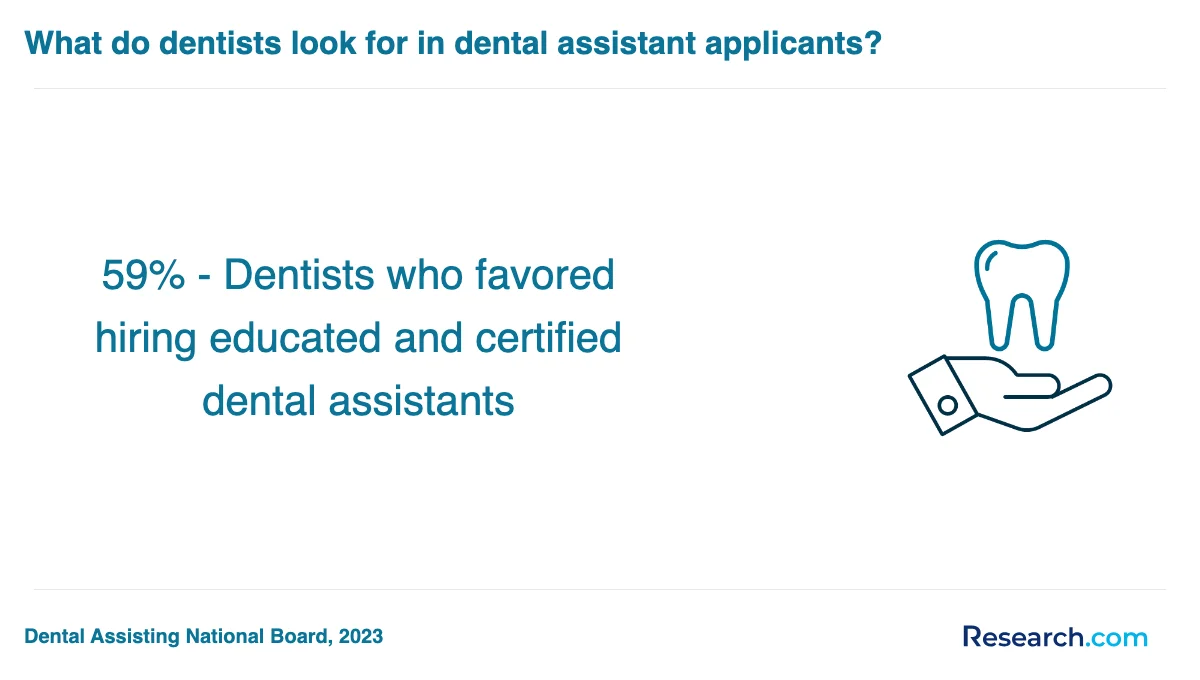
After completing a dental assistant trade school in Tennessee, preparing for the job market involves several key steps. First, obtaining certification through the Dental Assisting National Board (DANB) can significantly improve job prospects, as many employers prefer or require Certified Dental Assistants (CDAs). Tennessee does not mandate state licensure for dental assistants, but certification demonstrates professional competence.
Networking is crucial. Joining local dental associations, such as the Tennessee Dental Association, can provide job leads and professional development opportunities. Additionally, practical experience through externships or internships during training often leads to job offers.
According to the U.S. Bureau of Labor Statistics, dental assistants in Tennessee earn a median wage of about $38,000 annually, with employment expected to grow faster than average through 2031. Staying updated with continuing education enhances skills and employability in this evolving field.
Employers in Tennessee seek dental assistant graduates who demonstrate strong clinical skills and a solid understanding of dental procedures. Competence in chairside assisting, infection control, and radiography is essential, as these tasks form the core responsibilities in most dental offices.
Additionally, effective communication skills are highly valued. Dental assistants must interact clearly with patients and dental teams, ensuring comfort and efficient workflow.
According to the Tennessee Department of Labor and Workforce Development, attention to detail and the ability to follow strict safety protocols are critical for job performance and patient care.
Proficiency in using dental software and managing administrative duties also gives candidates an advantage in the competitive job market.
Finding internships in Tennessee relevant to dental assistant trade school programs involves several practical steps. Start by consulting your trade school's career services office, as many schools maintain partnerships with local dental offices and clinics. These partnerships often provide direct internship opportunities for students.
The Tennessee Board of Dentistry regulates dental assistants and may offer resources or lists of approved training sites. Checking with local dental societies, such as the Tennessee Dental Association, can also connect you to internship openings.
Online job platforms like Indeed or LinkedIn sometimes list dental assistant internships specific to Tennessee, offering a broader search scope. Networking within your community and attending dental health events may reveal unadvertised positions.
According to the U.S. Bureau of Labor Statistics, Tennessee's growing dental care sector increases internship availability, particularly in urban centers like Nashville and Memphis.
Obtaining a dental assistant trade school diploma in Tennessee significantly enhances career mobility and advancement opportunities. The Tennessee Department of Labor and Workforce Development reports a steady growth in dental assistant jobs, with a projected 9% increase from 2022 to 2032. This growth underscores the demand for certified professionals.
A diploma from an accredited program meets state requirements for Registered Dental Assistant (RDA) licensure, a crucial step for eligibility to perform expanded duties like radiography. Holding this credential often leads to higher wages and broader job prospects within dental offices across Tennessee.
Additionally, many employers prefer candidates with formal education, as it reflects both skill competence and commitment to the profession. According to the Bureau of Labor Statistics, dental assistants with postsecondary certificates earn a median annual wage approximately 15% higher than those without formal training.
Part-time job opportunities in Tennessee that complement dental assistant trade school education often include roles within dental offices and healthcare settings. Many students find positions as dental receptionists or sterilization technicians, which build relevant skills like patient communication and infection control. These jobs provide practical experience alongside classroom learning.
Dental assistant positions themselves may be available on a part-time basis, especially in busy clinics. According to the U.S. Bureau of Labor Statistics, Tennessee employs over 5,000 dental assistants, with a median hourly wage around $18.50, suggesting demand for these roles.
Other options include working in medical offices or pharmacies, where students can develop familiarity with healthcare environments and administrative tasks. Such experience supports their future dental assistant careers by enhancing organizational and interpersonal skills.
There are several dental assistant degree programs available near Tennessee that provide excellent educational opportunities. Various colleges and universities offer accredited programs, ensuring comprehensive training in dental assisting. To find the best programs "near me," Research.com is a helpful resource for reviewing program rankings and detailed information about specific institutions.
- Best Dental Assistant Training Programs & Trade Schools - Top Dental Assistant Schools in Kentucky for 2026
- Best Dental Assistant Training Programs & Trade Schools - Top Dental Assistant Schools in Georgia for 2026
- Best Dental Assistant Training Programs & Trade Schools - Top Dental Assistant Schools in North Carolina for 2026
- Best Dental Assistant Training Programs & Trade Schools - Top Dental Assistant Schools in Missouri for 2026
- Best Dental Assistant Training Programs & Trade Schools - Top Dental Assistant Schools in Arkansas for 2026
- Best Dental Assistant Training Programs & Trade Schools - Top Dental Assistant Schools in Virginia for 2026
- Best Dental Assistant Training Programs & Trade Schools - Top Dental Assistant Schools in Ohio for 2026
- Best Dental Assistant Training Programs & Trade Schools - Top Dental Assistant Schools in West Virginia for 2026
- Best Dental Assistant Training Programs & Trade Schools - Top Dental Assistant Schools in Louisiana for 2026
- Best Dental Assistant Training Programs & Trade Schools - Top Dental Assistant Schools in Maryland for 2026
- Dental Assisting Program Application Information | Lamar State College Orange https://www.lsco.edu/programs/degrees-certificates/dental-assisting/application-information.php
- Dental Assistant Program Application | Mountain Empire Community College https://www.mecc.edu/dental-assistant-program-application
- Dental Assistant Training Program Information and Application | Oakland County, MI | Oakland Community College https://www.oaklandcc.edu/training-programs/dental
- Dental Assisting - Application Information | Dental Assisting | Lane Community College https://www.lanecc.edu/programs-academics/areas-study/health-medical-and-fitness/dental-assisting/dental-assisting-application-information
- Apply to the Dental Assisting Program https://mcckc.edu/programs/dental-assisting/apply.aspx
- Dental Assisting | TCAT Nashville https://tcatnashville.edu/programs/dental-assisting
- Dental Assisting https://foothill.edu/dentalasst/
- Dental Assistant Certificate | CCC https://www.clackamas.edu/academics/degrees-certificates/dental-assistant-certificate
- Online Dental Assistant Certificate Program | Self-Paced Course https://www.uscareerinstitute.edu/online-dental-assistant-school
- Dental Assistant School, Certification Training Programs https://rosseducation.edu/programs/dental-assistant.php