# 1 position
Best Dental Assistant Training Programs & Trade Schools in Norfolk for 2027
Audited and Verified:
Our Editorial and Data Verification Process
Research.com uses government datasets, official education statistics and primary institutional information to support its career and degree guides. Our review process checks factual accuracy, occupational definitions, source dates and the requirements associated with the credentials discussed.
How This Article Was Fact-Checked
Our editorial team verifies salary estimates, employment projections, education requirements and program information against original data providers and official organizations. Salary figures are checked against the relevant occupational definitions and reporting periods. Information about licensure, accreditation and required in-person training is reviewed separately.
Fact-checked and verified on:

Co-Founder and Chief Data Scientist

Reviewed by Karolina Broda
Fact-Checker and Data Verification
Choosing dental assistant training in Norfolk means looking beyond a school's name: the credential, hands-on practice, total cost, and Virginia's rules for the duties you want to perform all matter. The U.S. Bureau of Labor Statistics (BLS) reports a May 2025 national median wage of $48,070 for dental assistants, but that is not a starting-pay promise. This guide accompanies the Best Dental Assistant Trade Schools in Norfolk for 2027 ranking, created by the Research.com team of data scientists to help students identify programs worth considering and choose a practical route into work.
Key findings about dental assistant degrees in Norfolk
- Compare Norfolk programs by supervised chairside practice and eligibility for the duties you want, not by certificate title alone; Virginia distinguishes entry-level dental assisting from registered Dental Assistant II practice (Virginia Board of Dentistry).
- The BLS reports a $48,070 national median annual wage for dental assistants in May 2025. Use it as an occupation-wide benchmark, not an estimate of first-year Norfolk earnings.
- National dental assistant employment is projected to grow 7.4% from 2025 to 2035 (BLS). That supports exploring the field, but local openings, training cost, and employer requirements should determine whether a particular program is worth it.
Table of Contents
- Best Dental Assistant Training Programs & Trade Schools in Norfolk for 2027
- What can I expect from a dental assistant trade school program in Norfolk?
- Where can I work with a dental assistant trade school training in Norfolk?
What can I expect from a dental assistant trade school program in Norfolk?
Expect instruction in infection control, dental terminology, chairside procedures, instrument preparation, patient communication, and office workflows, followed by practice that cannot be replicated through reading alone. Depending on the program, students may work in a simulated dental operatory and complete an externship in a dental office. Ask for the actual lab and externship hours, whether placements are arranged, and what happens if a placement is delayed.
The principal decision is whether you need structured preparation for an entry-level job or a program aligned with a specific certification or expanded-duty goal. A short school certificate may be useful for developing chairside confidence; it is not automatically equivalent to a CODA-accredited program or a Virginia Board-approved Dental Assistant II pathway. The Virginia Board of Dentistry and DANB set different requirements for practice and certification, respectively.
Training in a dental office can be an alternative for entry-level duties when an employer is willing to teach and supervise. It may reduce upfront school costs and bring in wages sooner, but the breadth and consistency of instruction depend on the employer. Before choosing it, ask how infection control, radiography eligibility, and any later certification prerequisites will be addressed.
Where can I work with a dental assistant trade school training in Norfolk?
Dental assistants primarily work in dentists' offices, where they prepare patients and equipment and support care under a dentist's direction (BLS). In Norfolk, search across the wider Hampton Roads commuting area rather than limiting applications to city boundaries; an externship site or first employer may be elsewhere in the metro area. Compare the travel time and schedule before accepting an unpaid placement or job.
General dentistry offers broad entry-level exposure, while specialty offices may emphasize particular procedures or patient needs. Ask prospective employers which duties they expect a new assistant to perform and what supervision and additional training they provide. Training does not authorize every clinical task: the Virginia Board of Dentistry's rules determine which duties an assistant may perform and under what conditions.
A verified Norfolk-specific wage is not established here. For a benchmark, the BLS Occupational Outlook Handbook reports a $48,070 national median annual wage in May 2025 for dental assistants. That figure covers workers across experience levels and locations; it should not be treated as a Norfolk offer or a new graduate's likely starting pay.
To evaluate local offers, consult the BLS Occupational Employment and Wage Statistics for the Norfolk-Virginia Beach-Newport News metropolitan area and compare jobs with similar duties and schedules. The metro crosses the Virginia-North Carolina border, so check where a job is located: state practice rules may differ even when employers share a labor market. Consider benefits, paid training, commute costs, and opportunities to take on authorized duties alongside hourly pay.
Many postsecondary dental assisting programs can be completed in about a year, while an associate degree route commonly takes about two years, according to the BLS. Actual Norfolk-area timelines depend on the school's calendar, part-time availability, prerequisite courses, and externship scheduling. Employer-based training has no single standard school-program length; ask when you would be ready to perform each duty under supervision.
Request a written schedule showing classroom, lab, and clinical hours separately. A faster program is attractive if it gets you to a suitable job sooner, but compare the time saved with the supervised practice and credential eligibility you may give up. Listings for 6-month online associate degree programs are not a reliable timeline for hands-on dental assisting training.
Online coursework can cover terminology, anatomy, scheduling, and other subjects suited to remote study. Instrument handling, chairside assistance, infection-control practice, and any clinical placement require supervised in-person work. A hybrid program may suit someone balancing shifts or caregiving, provided its labs and placement are realistically reachable from Norfolk.
Compare formats by where and how practical skills are assessed, not by the percentage of lessons advertised as online. Obtain the lab location, required attendance dates, placement policy, and written explanation of how the program aligns with your intended Virginia duties or DANB eligibility. Online open college enrollment may make coursework easier to start, but open admission does not remove hands-on or occupational requirements.
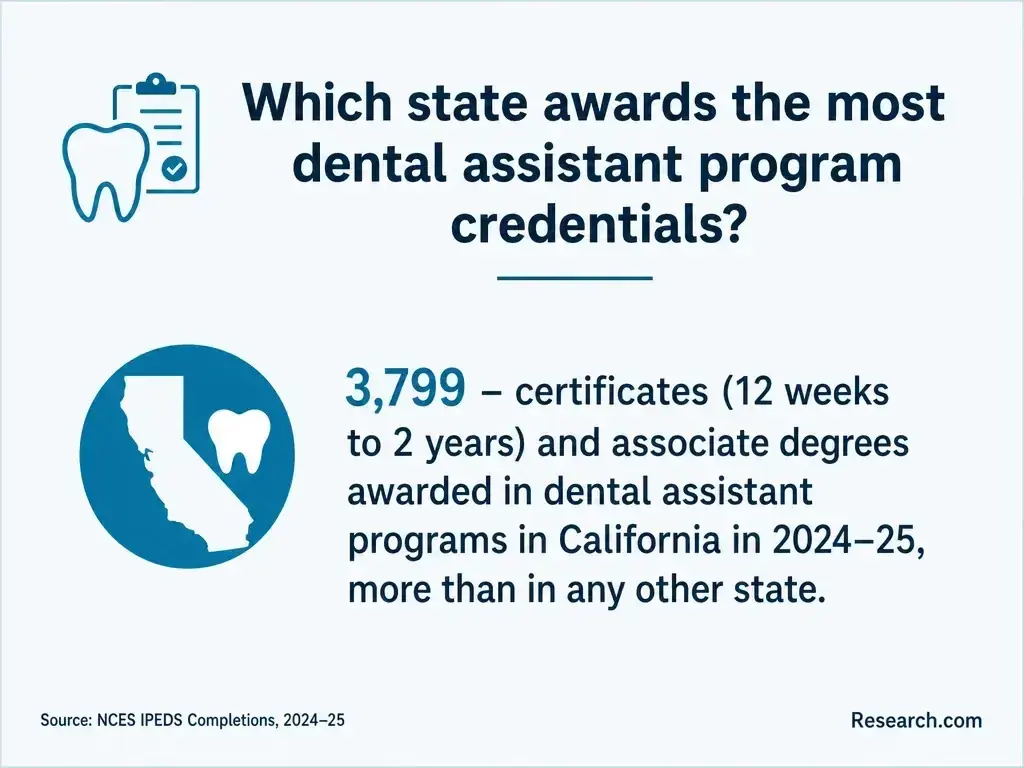
There is no verified Norfolk-wide average program price in the information presented here, and an advertised tuition figure would not capture the full cost of becoming job-ready. Ask each provider for an itemized, current cost sheet and an aid estimate specific to your eligibility. Public-college, private-school, and employer-training prices can differ substantially; provider type alone does not establish value.
The comparison below separates charges that are easy to overlook from costs that depend on a student's circumstances. Use it to request comparable quotes rather than assuming every program charges every item.
| Cost category | What to confirm | Why it changes the decision |
| School charges | Tuition, mandatory fees, textbooks, supplies, and equipment | The advertised price may exclude required purchases. |
| Clinical preparation | Uniforms, protective equipment, immunizations or health checks, and background screening if required | Requirements may arise before an externship begins. |
| Career-entry expenses | Certification examinations and applicable application or registration fees | These may be separate from the school bill. |
| Time and travel | Trips to labs and placements, childcare, and earnings forgone during training | A short or low-tuition option may still be costly to complete. |
Check federal aid eligibility with the school and Federal Student Aid; eligibility belongs to the institution, program, and student, not to the label "trade school." Ask about Virginia workforce assistance, scholarships, and paid employer training before borrowing. For a working student, low cost online schools for working students can provide a general affordability comparison, but their prices should not substitute for a dental assisting quote that includes in-person training.
The award may be a certificate, diploma, or associate degree; the precise title and requirements depend on the provider. An employer-trained assistant may instead receive workplace training without a school award. These routes can all lead toward entry-level work, but they are not interchangeable for certification or expanded duties.
This comparison focuses on what each route can offer, not on a guaranteed job outcome. Verify the award, practical hours, and eligibility claims for the exact program you are considering.
| Training route | Typical credential | Best fit and key limitation |
| Career-school or college program | Certificate or diploma; some programs award an associate degree | Suited to students seeking structured labs and possible externships; the award alone does not establish expanded-duty eligibility. |
| CODA-accredited dental assisting program | School award determined by the provider | Worth examining when DANB certification or a particular regulated pathway is the goal; confirm all additional requirements. |
| Employer-sponsored training | Work experience; school credential not assured | Suited to learners with a supervised job offer; training content and later certification eligibility need separate verification. |
Institutional accreditation concerns a school, CODA accreditation concerns a dental education program, state authorization concerns permission to operate, DANB certification concerns an individual, and Virginia registration concerns authorization for a regulated role. None automatically replaces the others (CODA; DANB; Virginia Board of Dentistry).
Schools set their own admissions rules. Ask whether the program requires a high school diploma or equivalent, placement assessment, health documentation, background screening, or particular prerequisites before labs or externships. A school may admit you before you have completed conditions imposed by a clinical site, so request both sets of requirements in writing.
If you are considering Centura College-Norfolk or Fortis College-Norfolk, verify directly that the campus currently offers the specific dental assisting program, which award it grants, where practical training occurs, and what its current admissions conditions are. Do not infer current availability from a school's name or a past listing. If a program accepts prior learning or transfer credit, ask whether it reduces tuition, time, and required practical hours - and whether any unchanged hours are needed for your intended credential.
Core training typically brings together dental anatomy, terminology, infection prevention, patient preparation, instrument transfer, procedure support, recordkeeping, and office communication (BLS). Radiography instruction may also be included, but completing a lesson should not be confused with meeting Virginia's requirements to perform radiographic duties.
Ask to see how students demonstrate each skill: observation alone is different from repeated practice with feedback. In a clinic or externship, look for supervised experience with real appointment flow, equipment turnover, patient privacy, and communication with the dentist and hygienist. Those details matter more to an entry-level chairside role than an impressive-sounding course list without accessible practice.
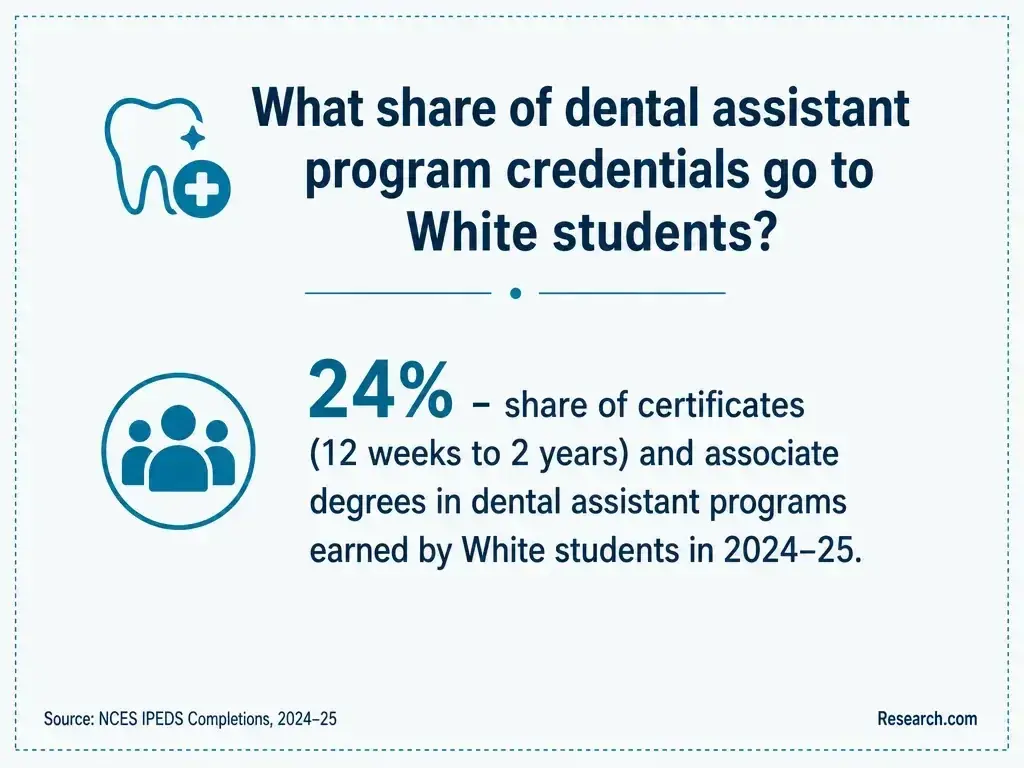
Virginia does not treat every dental assistant duty as the same credentialed role. Entry-level work under a dentist's supervision is distinct from Dental Assistant II duties, for which the Virginia Board of Dentistry sets registration and qualification requirements. Radiographic duties also have applicable training or qualification rules. Check the board's current regulations against the tasks you want to perform before enrolling; a school certificate by itself does not grant permission to perform a regulated duty.
DANB's Certified Dental Assistant credential is a professional certification, not a Virginia occupational license. DANB offers eligibility routes with requirements beyond simply receiving a school award; CODA program status can matter to the route a student plans to use (DANB). Ask a school to identify its exact program accreditation and explain, in writing, which DANB eligibility route and Virginia requirements its graduates may satisfy. If you expect to work across the state line in North Carolina, check that state's dental board separately rather than assuming Virginia rules carry over.
Start with the job you want, then work backward from its duties. A program is worth its cost when its training and supervised experience fit those duties, its credential supports any necessary next step, and the likely financial benefit justifies the full cost and time away from work. Rankings help narrow the search but cannot answer those individual questions.
Use the following checks when speaking with admissions staff. Request documents rather than relying on a verbal assurance that a program is "approved" or "certification-ready."
- Ask for the exact award, program length, lab hours, externship hours, placement location, and policy if a clinical site is unavailable.
- Verify institutional accreditation, any CODA program accreditation, and school authorization separately; ask the Virginia Board of Dentistry about the requirements for your intended duties.
- Request a complete cost and aid estimate, including fees, supplies, travel, and possible certification expenses; compare it with paid employer-training opportunities.
- Ask for program-specific completion, placement, and debt information, including how each measure is defined and which students are counted.
A common mistake is choosing the cheapest or fastest offer before checking practical training and regulatory fit. Another is treating a broad education ranking - such as shortest online doctoral programs - as evidence about entry into a hands-on dental occupation. For this decision, the relevant evidence is the dental assisting program's documented training, cost, and outcomes.
An entry-level assistant may begin with patient preparation, instrument processing, and chairside support, then develop proficiency in particular procedures or office coordination. With the appropriate qualifications and Virginia registration, a Dental Assistant II route may allow additional duties; it is an advancement path to evaluate separately, not an automatic result of experience (Virginia Board of Dentistry).
Experienced assistants may pursue DANB certification, specialty-office work, or lead-assistant and administrative responsibilities, depending on employer needs. These choices should be judged by the additional time, cost, authorized duties, and pay offered locally. Lists of highest paying bachelors do not describe dental assistant earnings or provide a useful return-on-investment comparison for this trade-school decision.
The BLS projects 7.4% national employment growth for dental assistants from 2025 to 2035. That is a national occupation forecast, not a prediction of openings in Norfolk or a promise of placement after training. It suggests reason to investigate the field, while the local decision still depends on current vacancies, commuting range, and the duties employers need filled.
Before paying for a program, review recent Hampton Roads job postings for recurring requirements, then compare those requirements with the school's curriculum and practical placements. In particular, note whether employers request prior chairside experience, radiography qualifications, or certification. That exercise helps identify a training gap a program can actually close - and avoids paying for a credential that does not match available roles.
Best Dental Assistant Training Programs & Trade Schools in Norfolk for 2027
Investing in training is a consequential decision. Research.com's team built the ranking to help readers compare dental assistant programs against other programs in the same occupation and location, using multiple measures rather than a single price or outcome. Only programs with completions reported to the Integrated Postsecondary Education Data System (IPEDS) are included; an unlisted employer-training route or provider should not be assumed to be poor quality.
For best-program rankings, student outcomes, earnings and costs collectively account for 60% of the score, with weights distributed through an entropy-based method. Occupation-relevant programmatic accreditation or industry recognition accounts for 20%, institutional accreditation for 10%, and student support services for 10%. Measures include completion and full- and part-time retention, earnings one year after completion, earnings relative to annual attendance cost, tuition, attendance cost, debt - including debt among students who withdrew - and federal loan default rates. Most-affordable rankings instead score costs and debt only, using entropy-based weights; accreditation and other quality indicators are not part of that score.
The team used the following sources to check educational, outcome, recognition, and training information. A source's inclusion does not mean every source applies equally to dental assisting or that every listed provider offers a current Norfolk program.
- IPEDS database - reported program completions and institutional measures.
- National Center for Education Statistics - federal education data and definitions.
- College Scorecard database - available costs, debt, and earnings measures.
- Peterson's database - supplementary school information.
- Commission on Accreditation of Allied Health Education Programs (CAAHEP) - allied-health accreditation information where applicable.
- Accrediting Bureau of Health Education Schools (ABHES) - institutional or program accreditation information where applicable.
- Commission on Dental Accreditation (CODA) - dental assisting program accreditation information.
- Dental Assisting National Board (DANB) - dental assisting certification information.
- National Center for Construction Education and Research (NCCER) - industry-recognition information used across trade rankings, not a dental assisting credentialing authority.
- Apprenticeship.gov Partner Finder - registered-apprenticeship information where relevant.
The ranking is a starting point, not proof that a program meets an individual student's certification or Virginia practice goals. Readers can learn more about the scoring approach on the Research.com methodology page, then confirm current program details directly with each school and the Virginia Board of Dentistry.
# 2 position
Fortis College-Norfolk - Dental Assisting/Assistant.
certificate or diplomaFrequently asked questions about dental assistant programs in Norfolk
Can I become a dental assistant without trade school?
Employer-supervised training may be a route into entry-level work. Confirm which duties the employer will teach, how supervision works, and whether the experience supports any certification or expanded-duty goal you have (Virginia Board of Dentistry; DANB).
Is a fully online dental assisting program enough?
Online study can teach knowledge-based subjects, but chairside and infection-control skills need supervised practical training. Verify the in-person requirements and any claimed certification or Virginia eligibility before enrolling.
Does a school certificate make me a Dental Assistant II in Virginia?
No. Dental Assistant II is a regulated Virginia role with separate qualifications and registration requirements. Check the current Virginia Board of Dentistry rules and the program's documented alignment with them.
Should I choose the shortest or least expensive program?
Only if it supplies the practical experience and credential pathway your intended job requires. Compare total costs, time out of work, completion prospects, and employer-training alternatives - not tuition or duration alone.
Does CODA accreditation mean I will be certified?
No. CODA accredits programs; DANB certifies individuals under its eligibility and examination rules. Confirm both the program's status and the steps you personally must complete (CODA; DANB).
- U.S. Bureau of Labor Statistics - Dental Assistants
Used to verify salary, employment outlook, and typical education requirements.
https://www.bls.gov/ooh/healthcare/dental-assistants.htm - CODA - Find a Dental Program
Used to verify programmatic accreditation or industry recognition of programs.
https://coda.ada.org/find-a-program - DANB - Certified Dental Assistant (CDA) exam
Professional certification reference for graduates of this occupation.
https://www.danb.org/exams/exam/cda-exam - Centura College-Norfolk - official website
Official school website (programs, tuition, admissions).
https://www.centuracollege.edu/campuses/norfolk - Fortis College-Norfolk - official website
Official school website (programs, tuition, admissions).
https://www.fortis.edu/