# 1 position
South College - Dental Assisting/Assistant.
certificate or diploma

Audited and Verified:
Our Editorial and Data Verification Process
Research.com uses government datasets, official education statistics and primary institutional information to support its career and degree guides. Our review process checks factual accuracy, occupational definitions, source dates and the requirements associated with the credentials discussed.
How This Article Was Fact-Checked
Our editorial team verifies salary estimates, employment projections, education requirements and program information against original data providers and official organizations. Salary figures are checked against the relevant occupational definitions and reporting periods. Information about licensure, accreditation and required in-person training is reviewed separately.
Fact-checked and verified on:

Co-Founder and Chief Data Scientist

Reviewed by Karolina Broda
Fact-Checker and Data Verification
Choosing dental assistant training in Knoxville means looking beyond the fastest certificate: you need hands-on practice, a manageable total cost, and training that fits Tennessee's rules for the duties you want to perform. The U.S. Bureau of Labor Statistics reports a $48,070 national median annual wage for dental assistants in May 2025, but that is not a starting-pay estimate. The Research.com team of data scientists created its Best Dental Assistant Trade Schools in Knoxville for 2027 ranking to help you identify programs worth considering. This guide shows you how to compare them.
Expect instruction in chairside assisting, infection control, instrument handling, patient communication, and dental-office procedures, followed by practical work in a lab or clinical setting. A program is valuable when its supervised practice prepares you for the duties local employers expect - not simply when it awards a certificate quickly.
Knoxville applicants can investigate current offerings at South College, Ross Medical Education Center-Knoxville, and Tennessee College of Applied Technology-Knoxville. Confirm the campus, start date, credential, clinical arrangements, and current approval status with each provider; similarly named programs need not offer the same practical experience.
These routes meet different needs. The credential and worksite experience - not the label "trade school" - should drive your comparison.
| Route | What you receive | Best fit and main limitation |
| Campus-based certificate or diploma | Structured classes, labs, and potentially supervised clinical experience | Fits learners who want guided practice; compare total cost and clinical access. |
| Hybrid training | Remote coursework plus scheduled in-person skills training | Fits learners who need scheduling flexibility; travel and clinical attendance remain necessary. |
| Employer-sponsored entry training | Worksite instruction; a school credential may not be awarded | May reduce upfront cost and provide earnings while learning; verify supervision, scope of duties, and access to additional training. |
Some applicants explore unrelated accelerated education listings, but fastest online associate degree programs are not a substitute for checking a dental assistant program's chairside and clinical requirements. Ask each provider for its course-by-course schedule and where practical skills are assessed.
Most dental assistants work in dentists' offices, according to the U.S. Bureau of Labor Statistics. In the Knoxville area, that makes general dental practices the most direct job-search target; specialty practices may also seek assistants with relevant experience. Work can combine room preparation, chairside support, sterilization, records, and patient scheduling, depending on the position and Tennessee's permitted scope of practice.
Before choosing a clinical placement, ask whether it exposes you to the type of office you want to join. A placement focused on patient flow and instrument processing may suit an entry-level general-practice goal; someone targeting a specialty office should also ask how they can gain experience with that setting's procedures and equipment. A clinical placement is experience, not a job offer.
The U.S. Bureau of Labor Statistics reports a $48,070 national median annual wage for dental assistants in May 2025. Half of workers in the occupation earned more and half earned less nationally; the figure is neither a Knoxville wage nor a forecast of what a new trainee will make.
For a local pay decision, compare current Knoxville-area dental assistant postings with the Bureau of Labor Statistics' metropolitan occupational wage estimates, using the same occupation and reference period where possible. Check hourly pay, expected hours, benefits, and whether a posting requires radiography-related duties or experience. A higher advertised rate may not offset fewer hours or a longer commute to a clinical site or workplace.
Dental assistant certificate and diploma programs typically take about one year, according to the U.S. Bureau of Labor Statistics. An individual Knoxville program may differ because of its calendar, part-time option, required labs, and clinical scheduling. Ask for total clock or contact hours and separately identified supervised clinical hours, rather than relying on the number of months in an advertisement.
A shorter program can mean a quicker job search, but only if you can attend its practical sessions and it prepares you for the duties you intend to seek. Employer-sponsored training may let you earn while learning, although its duration and instruction depend on the employer. Do not assume an employer placement is a registered apprenticeship; ask the sponsor to identify its status and credential, if any. Searches for one year master's programs online address a different educational goal and cannot establish dental chairside competency.
Online delivery can work for terminology, records, and other classroom material. Infection-control technique, instrument transfer, chairside positioning, and patient-facing practice require in-person demonstration and assessment. A hybrid program therefore saves some trips to class but does not remove travel to labs or a clinical site.
Ask where each hands-on requirement takes place, who arranges placements, and whether you can complete them within commuting distance of Knoxville. If a program advertises itself as entirely online, request written evidence of how it assesses practical skills and whether its preparation fits the Tennessee duties you want. An online completion certificate alone should not be treated as proof of certification or state authorization. Listings of easy doctoral programs likewise say nothing about whether dental assisting skills can be learned remotely.
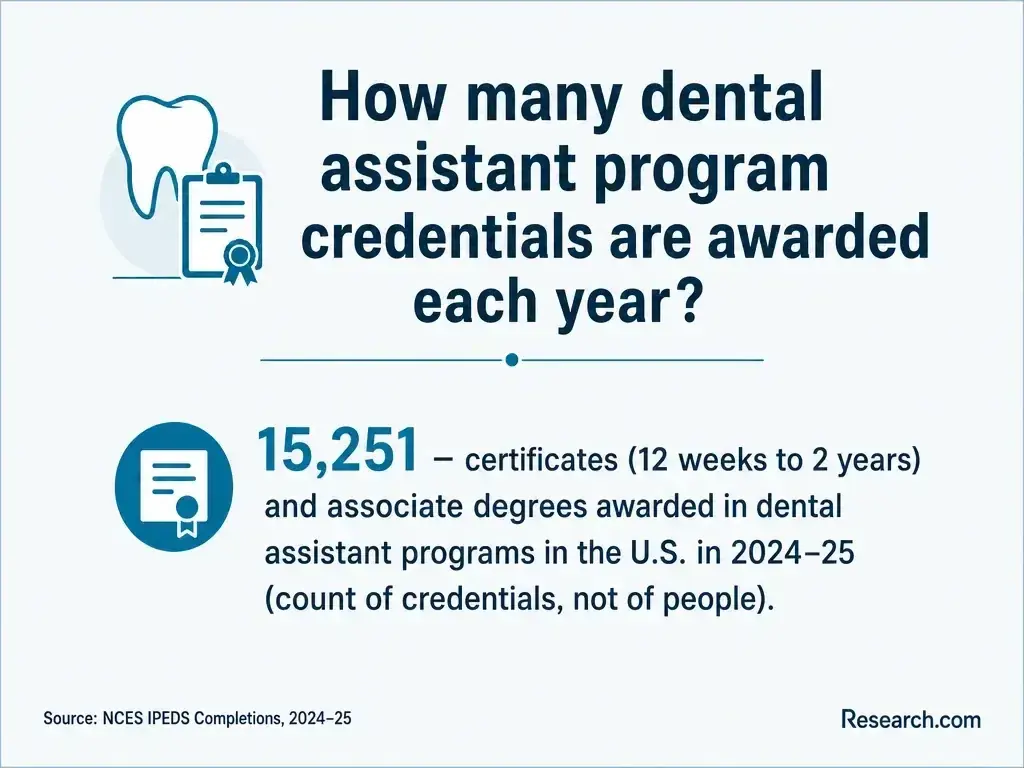
There is no reliable single Knoxville-wide price that covers every dental assistant route. Public technical training, private career-school programs, and employer instruction can have different charges and different items included. Request an itemized cost to become job-ready from each provider before comparing offers.
The largest cost differences may sit outside advertised tuition. Use the following categories to check whether two quotes describe the same purchase.
| Cost category | What to confirm |
| School charges | Tuition, mandatory fees, textbooks, materials, and any lab or clinical charges |
| Required supplies and entry costs | Uniforms, protective equipment, checks or health requirements if applicable, and certification or state-application fees |
| Attendance costs | Travel to campus and clinical sites, childcare if needed, and earnings given up to attend |
| Offsets | Grants, scholarships, eligible federal or Tennessee aid, employer support, and wages during paid training |
Confirm aid eligibility for the specific program through the school and Federal Student Aid; institutional eligibility does not mean every short course qualifies. Tennessee Student Assistance Corporation programs may help eligible residents, but eligibility depends on the student and training route. Comparing only tuition is a common mistake when one option requires more travel or unpaid time away from work.
A school may award a certificate or diploma on completion. That school credential is separate from Certified Dental Assistant (CDA) certification issued by the Dental Assisting National Board (DANB), and neither automatically grants permission for every regulated dental duty in Tennessee. DANB sets its own eligibility and examination requirements; confirm whether your chosen program supports the applicable route before enrolling.
Accreditation terms also describe different checks. Institutional accreditation concerns the school, while Commission on Dental Accreditation (CODA) accreditation concerns an eligible dental assisting program. State school authorization and Tennessee Board of Dentistry requirements serve other purposes. Ask for the exact institution and program names in the relevant accreditor's records, then ask the board what additional approval or training applies to your intended duties. Even shortest doctorate programs are irrelevant to those dental assistant credential checks.
Entry requirements vary by provider. Request the current admissions checklist rather than assuming that admission to one Knoxville program qualifies you for another. Confirm the school's educational prerequisites, application documents, start dates, and whether a clinical site imposes additional health, safety, or background-check conditions. Ask about those conditions before paying a nonrefundable charge.
If you already have relevant coursework or dental-office experience, ask whether the school evaluates transfer credit or prior learning - and which labs and clinical competencies must still be completed. An employer-training route has its own hiring requirements and may be more practical for someone who must earn immediately, but it may offer less structured instruction. Admission, completion, certification eligibility, and permission to perform particular duties are separate checkpoints.
Core preparation covers dental terminology and anatomy, infection prevention, instrument and treatment-room preparation, chairside assistance, patient communication, and office documentation. Programs may also teach radiography-related concepts, but classroom coverage is not by itself proof that a graduate may expose dental radiographs in Tennessee. Check the Tennessee Board of Dentistry's requirements for that duty.
Ask a provider to show where students practice each skill, how instructors observe performance, and what happens if a student cannot secure or complete a clinical placement. That comparison is more revealing than two course catalogs with similar names. Digital records and imaging systems also make accurate documentation and equipment training useful questions to raise with instructors and prospective employers.
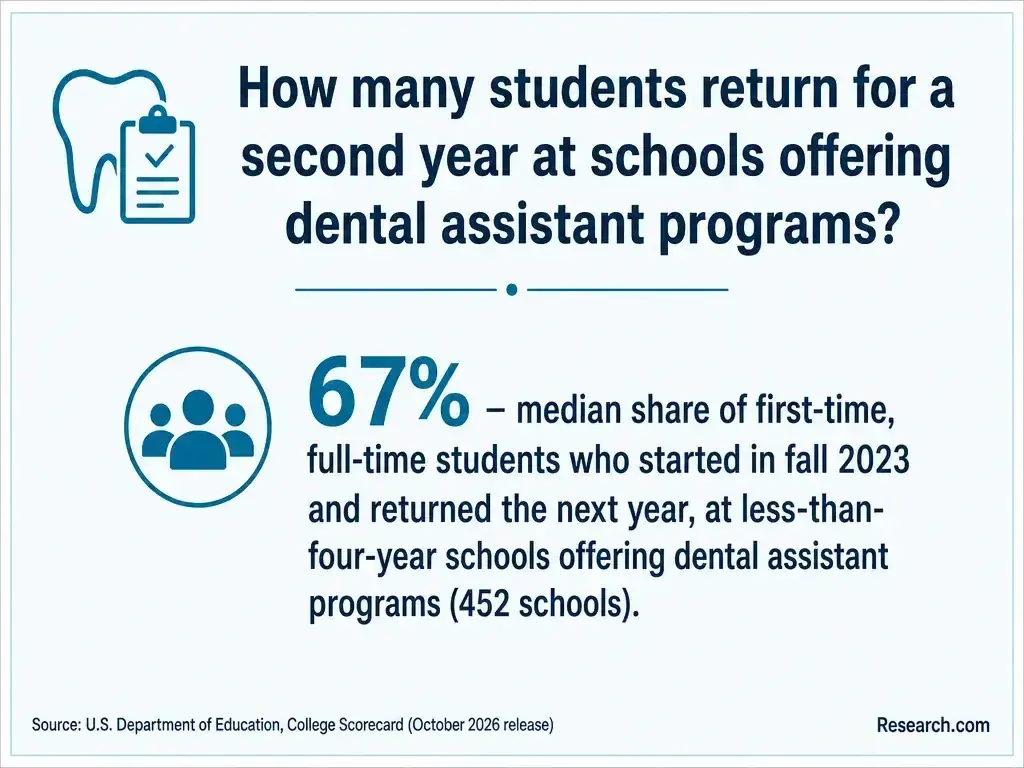
Do not assume there is one credential that covers every dental assistant task. Tennessee regulates which duties assistants may perform and the conditions for particular functions; requirements can differ between basic assisting, dental radiography, and expanded duties. The Tennessee Board of Dentistry is the authority to check for the specific role you want. A school's completion certificate and DANB's voluntary national CDA certification are distinct from state authorization, according to the Tennessee Board of Dentistry and DANB.
Before enrolling, name the duties you want to perform and ask the board and program whether the curriculum, any required approved training, examinations, applications, and supervision align with them. Obtain the answer for the current Tennessee rules, especially if you may later work across a state line: another state can set different requirements. Avoid a program that describes graduation as automatic permission to perform all dental functions.
The best choice is the program that gives you a workable route to the duties and job you want at a cost and schedule you can sustain. Use the ranking to form a shortlist, then verify the details it cannot settle. An affordable program with inaccessible clinical sessions may be a worse investment than a higher-priced option you can complete; a fast program is not a bargain if it omits the practical preparation you need.
Take these questions to each admissions representative and request answers in writing so you can compare the same facts across providers.
For a personal return-on-investment estimate, compare program length, lost earnings, likely debt, completion risk, and plausible entry-level pay against what you earn now. Include aid and a realistic time horizon; institution type alone does not determine value. Broader listings such as dual degree programs in usa should not distract from verifying the practical and regulatory requirements of this trade-school decision.
The direct path is an entry-level dental assistant role, often with learning continuing under a dentist's supervision. With experience and any additional training or authorization Tennessee requires, an assistant may pursue more specialized clinical duties or take on responsibilities such as coordinating patient flow or supporting practice operations. A certificate alone does not confer those added permissions or a promotion.
If your main goal is immediate paid work, ask local offices whether they hire and train entry-level assistants. If you want structured practice, documented clinical experience, or preparation for a particular credential, compare formal programs instead. For either route, retain records of completed training and supervised skills; they can help you explain your experience to employers and check future credential requirements.
The U.S. Bureau of Labor Statistics projects 7.4% growth in U.S. dental assistant employment from 2025 to 2035. This national projection supports considering the occupation, but it does not measure how many openings will exist in Knoxville when you finish training.
Test local demand before committing: review recent postings for required skills, schedules, and experience, then ask programs about their clinical partners and how they document employment outcomes. Compare openings you could realistically commute to, not just a national growth figure. If nearby employers consistently request a duty your proposed training does not prepare you to pursue under Tennessee rules, that is a reason to reconsider the program before enrolling.
Investing in training is a consequential decision, so Research.com evaluates dental assistant programs against other programs in the same occupation and location - not against unrelated schools. The ranking includes only programs with completions reported to the Integrated Postsecondary Education Data System (IPEDS). That makes comparisons more consistent, but it also means the ranking cannot capture every employer-training route or provider.
Best-program scores consider student outcomes; earnings and return on investment; costs and debt; and quality and recognition. Programmatic accreditation or relevant industry recognition accounts for 20% of the score, institutional accreditation for 10%, and student support for 10%. The remaining 60% covers outcomes, earnings, and costs, with weights distributed using an entropy-based method that gives more weight to indicators that vary more across programs. Most-affordable-program rankings instead score tuition, attendance cost, debt, and federal loan default rates; accreditation and other quality indicators are not part of that affordability score.
The Research.com team used the following data sources to check program, institutional, outcome, and occupation-related information. A source's inclusion does not mean it accredits every dental assistant program.
These measures help narrow your options, but a ranking cannot confirm a particular student's financial aid, clinical placement, or eligibility for a Tennessee dental duty. Verify those details directly before enrolling. More information about the approach appears on Research.com's methodology page.
# 1 position
# 2 position

# 3 position

Employer-sponsored entry training may be an option. Before accepting it, check the Tennessee Board of Dentistry's rules for the duties you will perform and ask the employer who supervises your training.
No. A school awards its completion credential; the Dental Assisting National Board awards CDA certification to candidates who meet its requirements and pass its examination.
You may be able to take some coursework online, but chairside and other practical competencies need in-person training and assessment. Confirm where those sessions occur before enrolling.
Do not assume so. Ask the Tennessee Board of Dentistry what authorization and training apply to dental radiography, then confirm whether your program provides the required preparation.
Not necessarily. Compare fees, supplies, clinical travel, lost earnings, aid, and completion prospects alongside tuition. Check that the lower-cost route prepares you for your intended duties.
Start with the exact credential, hands-on hours and placement arrangements, total cost, and alignment with Tennessee requirements. Those facts determine whether a program can serve your career goal.