# 1 position


Audited and Verified:
Our Editorial and Data Verification Process
Research.com uses government datasets, official education statistics and primary institutional information to support its career and degree guides. Our review process checks factual accuracy, occupational definitions, source dates and the requirements associated with the credentials discussed.
How This Article Was Fact-Checked
Our editorial team verifies salary estimates, employment projections, education requirements and program information against original data providers and official organizations. Salary figures are checked against the relevant occupational definitions and reporting periods. Information about licensure, accreditation and required in-person training is reviewed separately.
Fact-checked and verified on:

Co-Founder and Chief Data Scientist

Reviewed by Karolina Broda
Fact-Checker and Data Verification
Choosing dental assistant training in Indianapolis means looking beyond how quickly a program ends: you need to know whether its clinical practice, cost, and credential match the work you want to do. The U.S. Bureau of Labor Statistics projects 7.4% national employment growth for dental assistants from 2025 to 2035. This guide explains local training routes, Indiana requirements, and career trade-offs. It also features a Best Dental Assistant Trade Schools in Indianapolis for 2027 ranking, created by the Research.com team of data scientists to help students identify programs worth considering.
Expect instruction in chairside support, infection control, dental materials, patient communication, and office procedures, followed by practice in a lab, clinic, or dental office. The important distinction is between learning a procedure and being prepared and authorized to perform it at work. Ask each program which tasks students practice, under whose supervision, and whether it arranges an externship or expects students to find one.
Indianapolis applicants can compare community-college training, private career-school training, and employer-sponsored entry routes. Ivy Tech Community College, Fortis College-Indianapolis, and Indiana University-Indianapolis are institutions to investigate, but applicants should confirm the current campus, credential, schedule, and clinical placement directly rather than assume similarly named offerings are equivalent. An office willing to train a beginner may be the better route for someone who must keep earning; a structured program may suit someone who wants scheduled lab instruction and documented preparation before applying.
Dental offices are the principal workplace for dental assistants, according to the U.S. Bureau of Labor Statistics. In the Indianapolis area, applicants can also investigate group practices, specialty offices, community dental clinics, and educational clinics. The workplace matters because a general practice may provide broad chairside exposure, while an orthodontic or oral-surgery office may train assistants around a narrower set of procedures.
For a first job, compare postings by permitted duties, supervision, paid training, and schedule, not title alone. A school-arranged externship may help you meet local employers, but it is not a job offer. Ask whether the placement includes substantive chairside work or mostly observation and office support.
The U.S. Bureau of Labor Statistics reports a $48,070 national median annual wage for dental assistants in May 2025. This is the midpoint for employed assistants across experience levels and locations - not a local wage, an entry-level offer, or an expected salary for every program graduate. Use Indianapolis-area job postings and the latest BLS metropolitan occupational wage release to assess local offers, checking whether a figure is an hourly rate, mean, or median before comparing it with the national median.
Pay can also depend on experience, assigned duties, specialty practice, and hours offered. When evaluating a program's return, compare likely incremental earnings with what you could earn without it, then account for training time, aid, debt payments, and the chance of completing the program. An advertised occupational median by itself cannot establish that tuition is worth paying.
Dental assistant certificates and diplomas can run from several months to about a year; shorter introductory courses and longer college pathways serve different purposes. These are planning ranges, not Indiana-mandated program lengths. Indiana does not impose one statewide clock-hour requirement for every basic dental assistant training route; hours, schedule, and clinical expectations depend on the program and on any additional duty or certification you pursue. Confirm each provider's published calendar and required lab and externship hours.
Acceleration has a real trade-off: less time in school may mean less supervised practice or more responsibility to find a placement. If you are comparing quick college courses that pay well, do not judge dental-assisting options by duration alone. Ask how many hours involve direct patient care, whether those hours are guaranteed, and when you can realistically begin paid work.
Online instruction can cover topics such as terminology, records, and some infection-control concepts. Chairside assisting, instrument handling, radiography practice where applicable, and patient-facing competencies require appropriate in-person facilities and supervision. A course advertised as "online" should therefore identify exactly where its labs and clinical experience occur - and who arranges them for an Indianapolis student.
A hybrid schedule may help someone working in a dental office, while a campus-based program may offer more predictable access to equipment and supervised practice. People comparing broader accelerated degree college options for working adults should not assume that the same fully remote model works for this hands-on occupation. Neither online delivery nor institutional accreditation alone establishes eligibility for a dental-assisting certification or an Indiana-regulated duty.
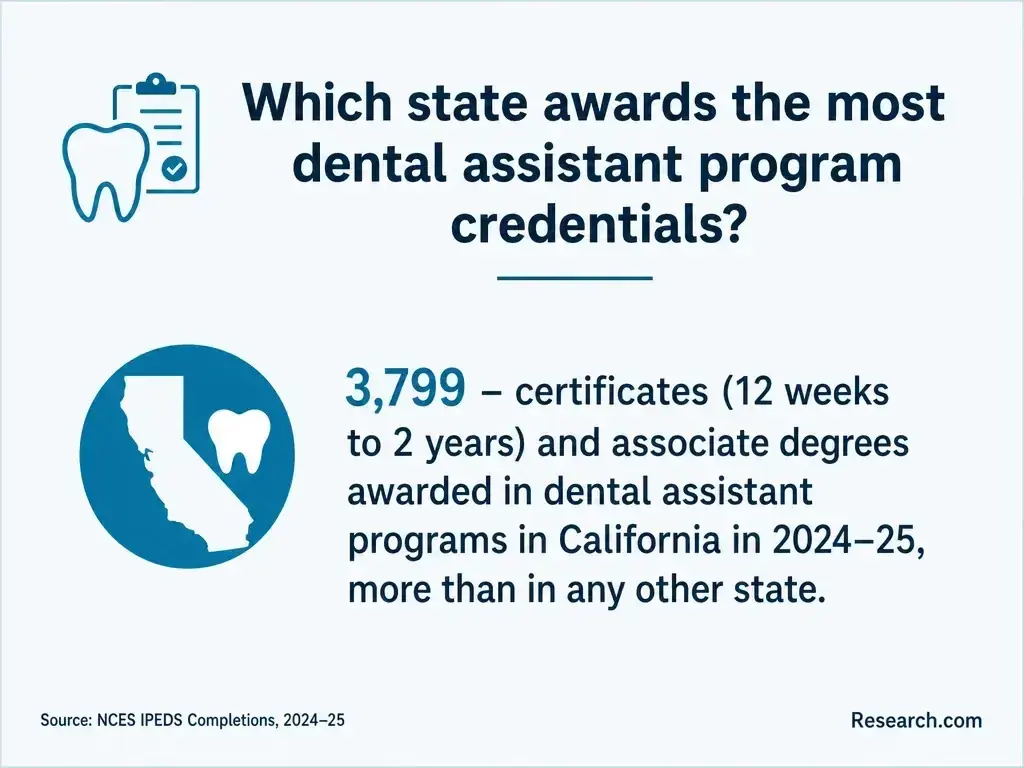
There is no defensible single Indianapolis average that covers short courses, college programs, private career-school offerings, and employer training on the same basis. Request a current, itemized total cost to become job-ready from each provider. The following comparison shows why tuition alone can misstate that cost; amounts and what is included vary by program.
| Cost or offset | What to verify before enrolling |
| School charges | Tuition, mandatory fees, books, supplies, lab materials, and any separate externship charge. |
| Career-entry expenses | Uniforms, protective equipment, background checks or health requirements where applicable, transportation, and relevant examination or authorization fees. |
| Time and funding | Lost earnings during required daytime training, grants or scholarships, eligible student aid, and wages available through employer-sponsored training. |
A lower advertised price is most valuable when the program also supplies the practical experience and credential preparation you need. Ask whether federal aid is available for the specific program, not merely at the institution; eligibility depends on federal and program rules (Federal Student Aid). Indiana workforce assistance may also be worth checking for eligible applicants, but funding and approved-provider lists can change. Comparisons with low cost online colleges for job holders should account for dental assisting's additional in-person costs.
A school may award a certificate, diploma, or an academic credential if that particular program offers one. An employer training route may provide documented workplace experience without a school award. None of these is automatically the Dental Assisting National Board's Certified Dental Assistant (CDA) credential, and none alone grants permission to perform every regulated duty in Indiana (Dental Assisting National Board; Indiana State Board of Dentistry).
The distinctions below help you match a pathway to your goal rather than comparing credential names alone. Verify the exact award and eligibility terms with the provider and the relevant credentialing body.
| Pathway | Likely outcome | Best fit and key check |
| College or career-school program | School certificate or diploma; a longer program may award an academic credential. | Students seeking structured labs and placements; check accreditation status and whether the curriculum supports intended duties. |
| Employer-sponsored training | Supervised work experience, with any school credential dependent on a separate arrangement. | Applicants who can secure paid entry-level work; check training quality and how experience is documented. |
| Professional certification | A credential awarded by a certifying organization after its eligibility and examination requirements are met. | Assistants seeking an employer-recognized qualification; check current Dental Assisting National Board eligibility rather than assuming graduation confers it. |
The Commission on Dental Accreditation's programmatic accreditation, an institution's accreditation, Indiana school authorization, professional certification, and state authorization for a specific duty answer different questions. Confirm each independently where relevant.
Requirements vary by provider. A program may ask for a high school diploma or equivalent, an application, placement information, immunization or health records, and a background check before clinical placement. An employer may instead interview and train an entry-level hire. Ask which conditions apply before admission and which must be completed before clinical work; a delayed placement can extend your time to completion.
If you are considering a college with open admission, remember that general college admission does not guarantee a seat in a dental-assisting program or clinical placement. Ask whether prior coursework or documented dental-office experience earns credit or advanced standing. Get any credit decision in writing before using it to estimate your completion date or cost.
A useful curriculum connects dental anatomy and terminology with infection prevention, instrument preparation, chairside workflow, dental materials, patient communication, and records or scheduling. Radiography instruction may be included, but completing a lesson is not the same as meeting Indiana's requirements to take radiographs (Indiana State Board of Dentistry; Indiana Department of Health).
The test of training quality is how students demonstrate those skills. Ask to see the lab competency checklist, how instructors assess infection-control practice, and what tasks students perform during supervised clinical work. Digital imaging and electronic records make equipment familiarity useful, but an Indianapolis employer may use different systems; strong training should teach safe principles as well as a particular device.
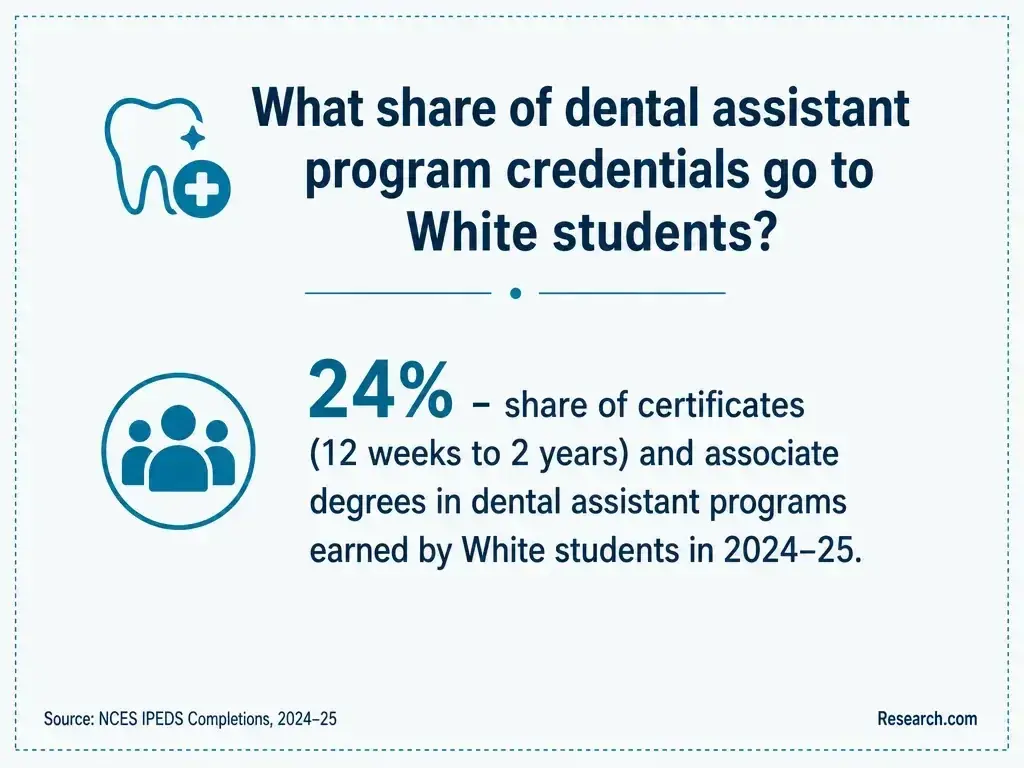
Indiana does not issue a general occupational license that every dental assistant must hold to enter the role. That does not mean every assistant may perform every task. Radiography and other expanded or delegated duties have separate Indiana rules, and employers must follow applicable supervision and scope requirements (Indiana State Board of Dentistry; Indiana Department of Health). Check the current requirements for the exact duties in a job description before choosing a course that claims to prepare you for them.
National certification, including the CDA credential, is separate from state permission to perform regulated duties. The Dental Assisting National Board sets certification eligibility and examination requirements; qualifying education and qualifying work-experience routes are not interchangeable without meeting its rules. A CODA-accredited program can matter to a certification pathway, but accreditation alone is not certification, a state permit, or a job guarantee (Commission on Dental Accreditation; Dental Assisting National Board).
Start with the duties you want to perform, then work backward to the training and eligibility they require. A short course may be a sensible entry point for someone with a supervising employer; a more structured program may justify its cost if it provides substantial practice and a reliable clinical placement. A ranking can narrow the search, but it cannot establish fit for your schedule or intended duties.
Use the following checks with each Indianapolis provider, and request written answers so you can compare like with like:
Red flags include an "entirely online" clinical claim without an in-person plan, a promise that a school certificate automatically grants state permission or national certification, and a tuition quote that omits required expenses. If answers are unclear, delay enrollment until the provider explains them.
The direct path is an entry-level assisting role with supervised responsibilities suited to your training and Indiana's rules. Experience may support a move into a specialty practice, additional permitted duties after meeting applicable requirements, lead-assistant responsibilities, or dental-office coordination. These are possible progressions, not automatic promotions; ask employers which experience and credentials they actually require.
If your goal is independently providing dental hygiene care, dental assistant training is not a substitute for that occupation's distinct education and licensure requirements (Indiana State Board of Dentistry). Likewise, readers exploring what are the highest paying bachelor degrees are comparing a different educational investment, not an advanced dental-assisting credential. Choose this training primarily because the work and entry route fit your goal, not because a different occupation's wage looks attractive.
The U.S. Bureau of Labor Statistics projects 7.4% national employment growth for dental assistants from 2025 to 2035. That supports considering the occupation, but it does not forecast Indianapolis hiring or guarantee an opening for a new graduate. Use the latest Indiana workforce projections, Indianapolis-area postings, and conversations with clinical-placement offices to judge local demand before committing to tuition.
Pay particular attention to whether openings welcome trainees or request prior chairside experience and specific radiography qualifications. That distinction can change which route is worth the investment: paid office training may suit an available beginner opening, while a program with dependable supervised clinical experience may better prepare someone applying where employers expect practice from day one.
Investing in training is an important decision, particularly when programs with similar names can differ in cost, clinical experience, and credential outcomes. Research.com created this ranking to help readers compare dental assistant programs with other programs serving the same occupation and location. The team checks multiple education, outcomes, accreditation, and occupational sources to improve the ranking's credibility and accuracy. Only programs reporting completions to IPEDS are eligible; a provider's absence does not mean it lacks authorization or offers poor training.
Best-program rankings assess student outcomes, earnings and return on investment, costs and debt, and quality and recognition. The measures include completion and full- and part-time retention; median earnings one year after completion and earnings relative to annual attendance cost; tuition, attendance cost, median debt - including debt held by students who withdrew - and federal loan default rate; and institutional accreditation, relevant programmatic accreditation or industry recognition, and student support. Relevant programmatic accreditation or industry recognition receives 20% of the score, institutional accreditation 10%, and student support 10%. An entropy-based method distributes the remaining 60% among outcomes, earnings, and cost indicators, giving more weight to measures that vary more across programs.
Most-affordable-program rankings use only tuition, attendance cost, median debt, and federal loan default rate, with entropy-based weights. Accreditation and other quality measures are not part of that affordability score. The team consulted the following sources; some cover trade education broadly and are not dental-assisting credentials or approvals.
The ranking is a starting point, not a substitute for confirming a program's current Indianapolis availability, complete price, clinical placement arrangements, and fit with Indiana rules. Readers can find more detail on Research.com's methodology.
# 1 position
# 2 position
# 3 position
# 4 position

Yes. An employer may train an entry-level assistant for appropriate supervised duties. Check the training offered and any separate Indiana requirements for tasks such as radiography (Indiana State Board of Dentistry; Indiana Department of Health).
No. A school awards its own credential; the Dental Assisting National Board awards CDA certification to applicants who meet its current eligibility and examination requirements.
Coursework may be online, but chairside and other practical competencies need appropriate in-person instruction or supervised experience. Ask where that work takes place before enrolling.
Only if its practice, placement, cost, and credential preparation meet your goal. Compare the time until you are ready to apply for the duties you want - not just the advertised course length.
No. Accreditation and Indiana authorization for radiography are separate matters. Verify the current state requirements and ask the program how its training addresses them (Commission on Dental Accreditation; Indiana Department of Health).