# 1 position
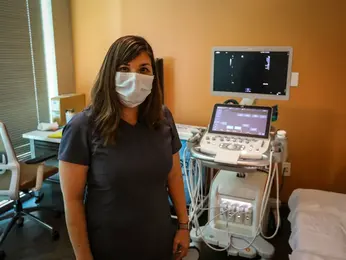
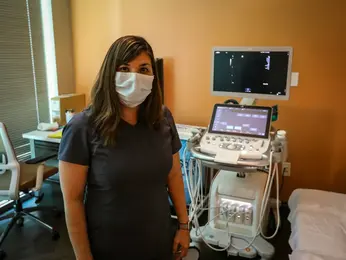
Midwestern Career College - Dental Assisting/Assistant.
certificate or diploma

Audited and Verified:
Our Editorial and Data Verification Process
Research.com uses government datasets, official education statistics and primary institutional information to support its career and degree guides. Our review process checks factual accuracy, occupational definitions, source dates and the requirements associated with the credentials discussed.
How This Article Was Fact-Checked
Our editorial team verifies salary estimates, employment projections, education requirements and program information against original data providers and official organizations. Salary figures are checked against the relevant occupational definitions and reporting periods. Information about licensure, accreditation and required in-person training is reviewed separately.
Fact-checked and verified on:

Co-Founder and Chief Data Scientist

Reviewed by Karolina Broda
Fact-Checker and Data Verification
Choosing dental assistant training in Chicago means weighing more than tuition: you need enough chairside practice, a workable commute, and a credential that fits the duties you want to perform. The U.S. Bureau of Labor Statistics projects 7.4% national employment growth for dental assistants from 2025 to 2035, making training quality worth examining. This guide explains costs, credentials, Illinois rules, and career prospects. It also accompanies the Best Dental Assistant Trade Schools in Chicago for 2027 ranking, created by the Research.com team of data scientists to help students make an informed choice about programs worth considering.
Expect a mix of classroom instruction, simulated practice, and, where the program provides it, supervised experience in a dental setting. Dental assistants prepare treatment areas, support dentists during procedures, manage instruments and infection control, and help with records and patient communication; the exact duties allowed depend on Illinois rules and an employer's supervision arrangements (U.S. Bureau of Labor Statistics; Illinois Department of Financial and Professional Regulation).
The main choice is between a structured certificate or diploma program and direct entry through a dental office willing to train a new assistant. A school program can make sense if you want scheduled practice and help securing clinical experience. Employer training may suit someone who can find a supportive office and needs to earn while learning. Neither route should be assumed to qualify you automatically for national certification or every expanded duty.
A short occupational credential is designed for entry into dental assisting, not for every healthcare role. If you are comparing good paying certifications, check the actual duties, hands-on requirements, and local hiring conditions behind each option before choosing by advertised speed or pay.
Most dental assistants work in dentists' offices, according to the U.S. Bureau of Labor Statistics. Around Chicago, that can mean general practices or specialty offices such as orthodontics, oral surgery, and pediatric dentistry. A specialty office may offer focused experience, but its workflow can differ from the broader chairside practice taught in an entry-level program.
Ask prospective programs where students complete clinical work and whether placements are accessible by your usual transit route. A placement far from home can add meaningful time and travel costs even when tuition is affordable. Community clinics and larger group practices may also be worth exploring, but confirm each employer's training expectations rather than assuming all offices hire new assistants on the same terms.
A verified Chicago-specific wage should be the first figure you request from a prospective program or check in the latest U.S. Bureau of Labor Statistics metropolitan occupational wage release. For context, the national median was $48,070 in May 2025 for dental assistants (U.S. Bureau of Labor Statistics). That is the midpoint among workers nationally - not a Chicago starting wage or a predicted salary for a new graduate.
When judging a program's return, compare a realistic entry-level offer with what you could earn without training. Then account for aid, debt, time away from paid work, the likelihood of finishing, and how long you expect to work in the occupation. A higher-cost program is not automatically a worse investment if its practical training meets your needs; a low-cost route is not automatically better if you cannot complete its schedule or secure the experience employers seek.
There is no single Illinois-wide clock-hour requirement for basic dental assistant entry that makes every training program the same length (Illinois Department of Financial and Professional Regulation). Compare each provider's published calendar length with its actual instructional hours, lab schedule, and any required clinical or externship time. Evening or part-time attendance can spread the same training across a longer period.
Ask when hands-on practice starts and whether the school arranges clinical placements or expects students to find them. An accelerated schedule is useful if you can attend consistently and get enough supervised repetition; it is less useful if missed lab days or a delayed placement postpone your job search. An office-based trainee may start paid work sooner but should ask how the employer teaches and checks essential skills.
Online coursework can cover terminology, records, anatomy, and infection-control concepts. It cannot, by itself, demonstrate chairside instrument transfer, operatory setup, or other practical skills. A hybrid program is most useful when its in-person labs and any clinical placement are clearly scheduled and reachable from where you live.
The format comparison below separates what can reasonably be studied remotely from what you should verify in person before enrolling.
| Format | Potential advantage | What to verify |
| On-campus | Scheduled access to equipment, instructors, and practice partners | Lab time, class size, commute, and clinical placement |
| Hybrid | Less travel for theory coursework | Required campus dates, supervised practice, and placement location |
| Online-only coursework | Flexible study of classroom topics | How practical competence is taught and whether the route fits certification goals |
An online certificate is not interchangeable with a fully supervised training experience. Searches such as what's the easiest online degree to get? answer a different question: for dental assisting, start with what you must be able to do safely in a treatment room.
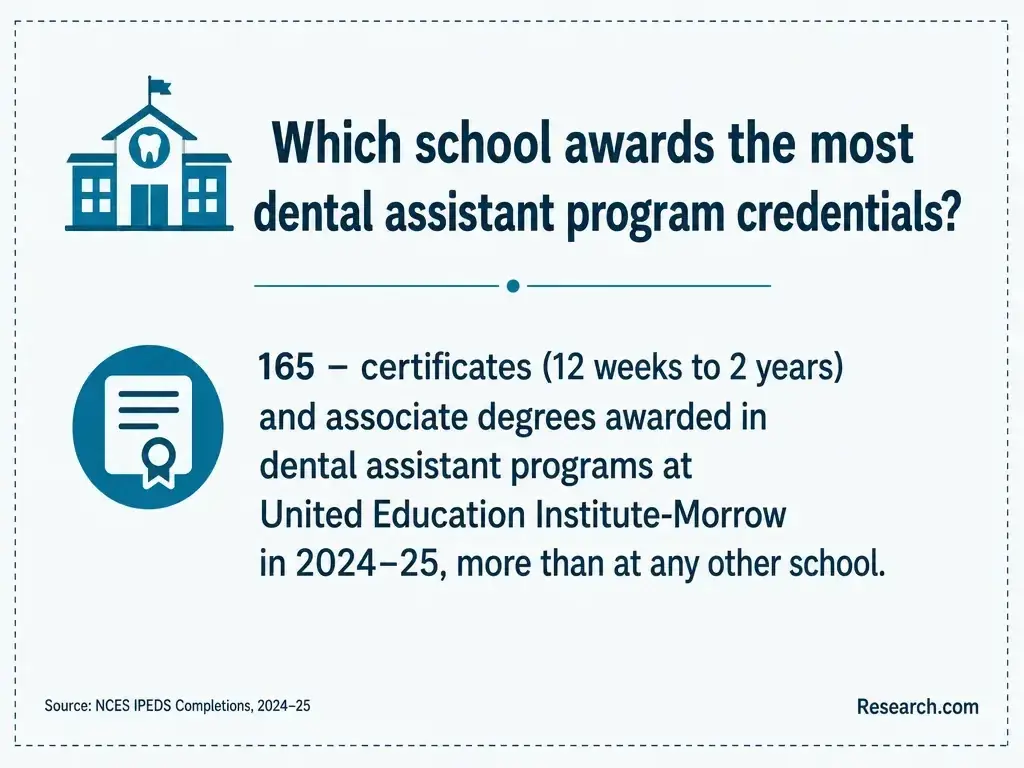
There is no responsible single Chicago average that covers career schools, community-based training, and employer instruction on comparable terms. Request a current, written total-cost breakdown from every program you consider. A quoted tuition figure may omit expenses needed to finish training or begin work.
Use the same cost categories for each option so a shorter program does not appear cheaper simply because it leaves items out:
Check aid eligibility for the specific program, not just the institution, using Federal Student Aid information and the school's financial-aid office. Dental assistant training is an occupational purchase; searches for online master degree cheap will not tell you its job-ready cost.
A school may award a certificate or diploma after its own requirements are completed. That school credential is distinct from Certified Dental Assistant (CDA), a national certification administered by the Dental Assisting National Board (DANB). DANB has specific eligibility routes and examination requirements; finishing a course with "certification" in its marketing does not by itself mean you have earned the CDA.
Also distinguish institutional accreditation, which concerns a school, from Commission on Dental Accreditation (CODA) accreditation of a particular dental assisting program. State authorization to operate a school, programmatic accreditation, professional certification, and permission to perform particular Illinois dental functions answer different questions (CODA; DANB; Illinois Department of Financial and Professional Regulation). Ask for the program's exact credential name, its current CODA status if claimed, and which DANB eligibility route graduates can use.
If your goal is dental assisting, compare credentials that lead to that work. A search for best college degrees for the future does not establish whether a dental assistant program meets your intended certification or workplace requirements.
Admission requirements are set by individual providers, not by one Chicago-wide application rule. Request the current admissions checklist from each school: it may address prior schooling, identification, language or placement assessment, and documentation needed before clinical participation. Ask separately whether a clinical site requires health records, screening, or a background check; being admitted to classes does not necessarily mean you can begin a placement.
For direct-entry office training, the first hurdle is finding an employer willing to teach a beginner. Before accepting a position, ask who supervises trainees, which duties beginners perform, and whether paid work time includes structured instruction. That conversation helps you compare a job offer with the practice and feedback you would receive in a school lab.
A useful entry-level curriculum connects dental anatomy and terminology to the work of preparing patients and supporting procedures. Look for repeated practice in instrument identification and transfer, infection prevention and sterilization, treatment-room setup, records, and communication with patients and the dental team. These areas reflect common occupational duties described by the U.S. Bureau of Labor Statistics; a course outline alone does not show how well students can perform them.
Ask to see the lab checklist and how instructors assess hands-on skills. If a program advertises radiography or expanded-function training, request the precise Illinois rule it addresses and what additional steps, if any, remain before you may perform that function. Do not assume exposure to a topic in class is permission to perform it at work.
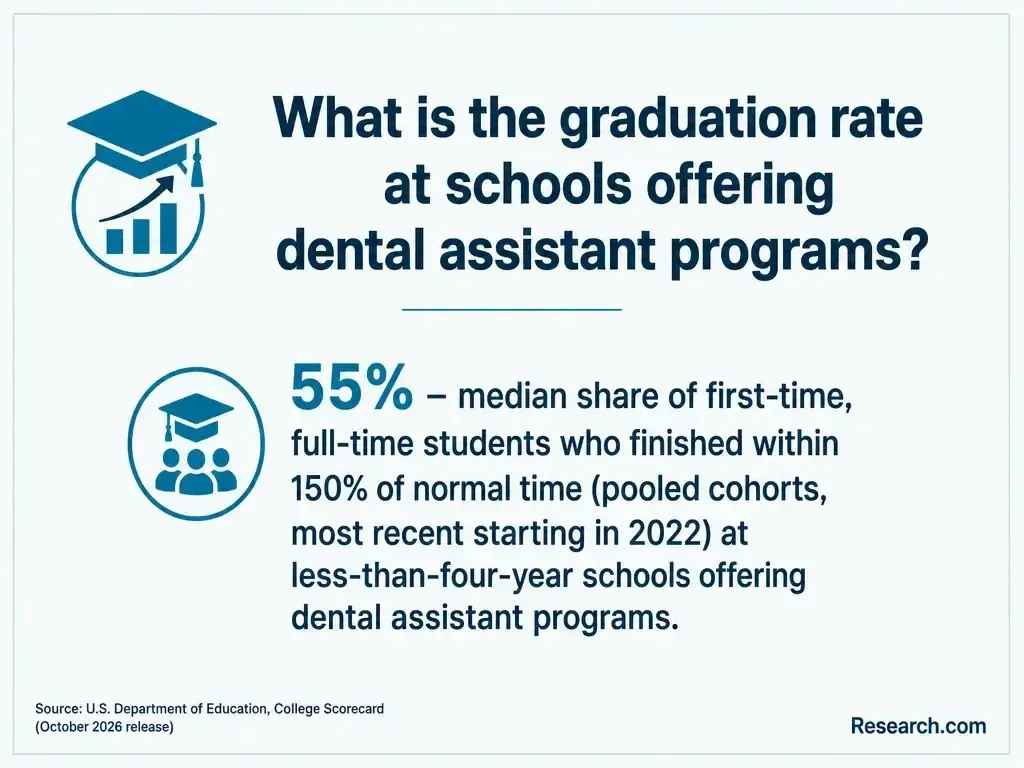
Illinois does not issue a general occupational license that every dental assistant must hold to enter basic assisting work. The Illinois Dental Practice Act and rules instead govern supervision and which functions an assistant may perform; some expanded functions have additional training or qualification requirements (Illinois Department of Financial and Professional Regulation). Requirements for a particular task are not the same as a general entry license.
The DANB CDA is a professional certification, not an Illinois dental assistant license. It can matter to an employer or to your advancement goals, but verify DANB's current eligibility route and examinations before paying for a program on the assumption it will qualify you. For duties involving radiography or other regulated functions, confirm the current Illinois requirements with the relevant state regulator and the hiring practice rather than relying on a school's broad claim that graduates can do "everything."
Start with your intended first job, not the ranking position. A general-practice applicant may value broad chairside repetition, while someone aiming for a specialty office should ask whether clinical experience covers that setting. If comparing Midwestern Career College and MDT College of Health Sciences, obtain each program's current catalog and written answers to the same questions; do not assume similarly named credentials include similar lab or clinical time.
Use this sequence to turn a shortlist into an enrollment decision:
A red flag is a promise of certification, unrestricted clinical duties, or employment without an explanation of the separate requirements. Rankings can narrow your search, but written evidence about practical training and total cost should determine whether a program is worth your investment.
The direct path is entry-level chairside or administrative-support work in a dental practice. With experience, an assistant may move into a specialty setting, take on additional duties when qualified under Illinois rules, or pursue supervisory responsibilities within a practice. DANB certification can be an optional professional milestone, subject to its eligibility and examination rules; it does not replace experience or state rules governing particular functions (DANB; Illinois Department of Financial and Professional Regulation).
Keep the career goal specific when comparing training. An unrelated search such as short phd programs online is not an alternative route into chairside dental assisting. The relevant question is whether your chosen training lets you practice the skills an entry-level dental employer expects and build toward the duties you want next.
The U.S. Bureau of Labor Statistics projects 7.4% growth nationally from 2025 to 2035 for dental assistants. That supports considering the occupation, but it is not a Chicago hiring forecast or a guarantee of an opening when you finish. For a local decision, review current Chicago-area postings for required experience, schedules, and preferred credentials, then ask programs which employers have recently hosted their students.
Demand alone cannot make an unsuitable program worthwhile. A route that provides dependable chairside practice and fits your commute and finances may be a better choice than a faster-looking route whose clinical experience or job-entry requirements remain unclear.
Investing in education is an important decision, so Research.com evaluates dental assistant programs against other programs in the same occupation and location - not against unrelated schools nationwide. The ranking includes only programs with completions reported to IPEDS. That boundary makes comparisons more consistent, but it also means an employer training route or a provider absent from IPEDS is not necessarily unavailable or poor quality.
For the best-programs ranking, Research.com examines student completion and full-time and part-time retention; earnings one year after completion and earnings relative to annual attendance cost; tuition, attendance cost, debt - including debt among students who withdrew - and federal loan default rates; plus accreditation, relevant industry recognition, and student support. Programmatic accreditation or industry recognition accounts for 20% of the score, institutional accreditation for 10%, and student support for 10%. The remaining 60% covers outcomes, earnings, and costs, with weights distributed through an entropy-based method that gives more weight to indicators that vary more across programs.
A separate most-affordable-programs ranking uses only tuition, attendance cost, median debt, and federal loan default rate, with entropy-based weights; accreditation and other quality measures do not enter that score. To check the credibility and relevance of the ranking, the Research.com team draws on the following sources. Some cover broader education or workforce contexts rather than dental assisting specifically:
The result is a starting point for comparing locally relevant options, not a substitute for confirming a program's current price, clinical arrangements, and certification fit. Read more about how Research.com creates its rankings.
# 1 position
# 2 position
Dental Assisting/Assistant
Delivery mode: On Campus (May Include Online Courses)
15.28
/ 100
Final score
Accreditation
Institutional accreditation from Accrediting Bureau of Health Education Schools.
MDT College of Health Sciences received a Research.com Trade Program Score of 15.28/100.
Yes. An office may train someone for basic assisting work, subject to Illinois rules on duties and supervision. Ask what training the employer provides and check separate qualifications for any expanded functions you hope to perform (Illinois Department of Financial and Professional Regulation).
No. A school certificate documents completion of its program; the Certified Dental Assistant credential is awarded by DANB after its eligibility and examination requirements are met (Dental Assisting National Board).
You can study some theory online, but chairside skills need supervised, in-person practice. Ask how a program provides labs and clinical experience before enrolling.
Only if its schedule leaves enough practical training for your goal and you can attend every required lab or placement. Compare actual instructional hours and clinical arrangements, not calendar length alone.
Request an itemized total price and program-level outcomes. Compare them with your aid, likely lost earnings, completion prospects, and the training expected by employers - not with the national median wage as though it were a starting offer.