# 1 position


Audited and Verified:
Our Editorial and Data Verification Process
Research.com uses government datasets, official education statistics and primary institutional information to support its career and degree guides. Our review process checks factual accuracy, occupational definitions, source dates and the requirements associated with the credentials discussed.
How This Article Was Fact-Checked
Our editorial team verifies salary estimates, employment projections, education requirements and program information against original data providers and official organizations. Salary figures are checked against the relevant occupational definitions and reporting periods. Information about licensure, accreditation and required in-person training is reviewed separately.
Fact-checked and verified on:

Co-Founder and Chief Data Scientist

Reviewed by Karolina Broda
Fact-Checker and Data Verification
Choosing dental assistant training in Oxnard means looking beyond a school's name: you need a program that fits your budget, provides chairside practice, and prepares you for the California duties you want to perform. The U.S. Bureau of Labor Statistics projects 7.4% national employment growth for dental assistants from 2025 to 2035. This guide explains local training choices, costs, credentials, and career prospects. It also accompanies the Best Dental Assistant Trade Schools in Oxnard for 2027 ranking, created by the Research.com team of data scientists to help students identify programs worth considering.
Expect instruction in infection control, instruments, dental materials, patient communication, office procedures, and assisting during treatment, followed by practice with equipment and patients where the program provides a clinical placement. California defines which duties an unlicensed dental assistant or an RDA may perform; classroom completion does not expand those duties by itself (Dental Board of California).
The practical choice is between a structured certificate or diploma program, an associate-degree pathway if one specifically awards dental assisting training, and supervised entry-level employment with additional required courses. A longer academic credential is worthwhile only if its added instruction, experience, or progression options justify its cost and time. For readers comparing short occupational pathways more broadly, certificate careers that pay well provides context, but dental assisting requires its own California-specific checks.
Do not confuse dental assisting with dental hygiene. Even if Oxnard College is convenient to visit, confirm the exact program and credential offered rather than assuming any dental program trains assistants.
Dental offices are the main employment setting for dental assistants nationally, with opportunities in general practices and specialties such as orthodontics and oral surgery (U.S. Bureau of Labor Statistics, Occupational Outlook Handbook). In Oxnard, your realistic search area may also include other Ventura County communities; that matters when comparing a nearby program's clinical placements with the commute required for work afterward.
Ask where recent students completed clinical practice and whether those sites accepted graduates for interviews. A placement is valuable evidence of access to a working dental office, but it is not a job offer. Some offices hire entry-level assistants and train them on the job; that route may suit someone who needs to earn while learning, provided the employer can support required California training and supervised duties.
The U.S. Bureau of Labor Statistics reports a $48,070 national median annual wage for dental assistants in May 2025. That figure covers experienced and newer workers across the country; it should not be used as a promised first-year wage or substituted for a verified Oxnard-area figure. Local offers can differ with experience, specialty, hours, and permitted duties.
For a useful return-on-investment estimate, request recent entry-level pay ranges from prospective clinical sites and employers. Compare expected earnings after training with what you could earn without enrolling, then account for program cost, foregone work hours, borrowing, the chance of completing, and how long you expect to work in the field. A higher-priced program needs a demonstrable advantage - not merely a higher advertised salary claim.
Dental assisting certificates and diplomas commonly take months rather than years, but schedules, clinical requirements, and credential goals determine the actual finish date. Ask each provider for its total clock or credit hours, hours of supervised chairside practice, class schedule, and typical time to placement. A short classroom schedule can become much longer if clinical slots are limited.
California also provides an experience-based route toward RDA eligibility that involves documented work experience and other board requirements; the Dental Board of California publishes the current qualifying routes. This may appeal to someone already working in a dental office, but it is not equivalent to completing a school program on an accelerated timetable. Confirm the board's current experience, course, and examination requirements before choosing either route.
Online delivery can work for terminology, office procedures, and some theory. Instrument handling, sterilization technique, radiography practice where applicable, and chairside assisting need appropriate in-person instruction or supervised work. An online label does not establish California RDA eligibility or satisfy a clinical requirement (Dental Board of California).
The distinction matters when comparing programs marketed alongside the cheapest online associates degree options: dental assisting depends on demonstrable practical skills, not just remotely completed coursework. For a hybrid program, get the location and schedule of every lab and clinical session in writing. Include travel from Oxnard and time away from work in your comparison.
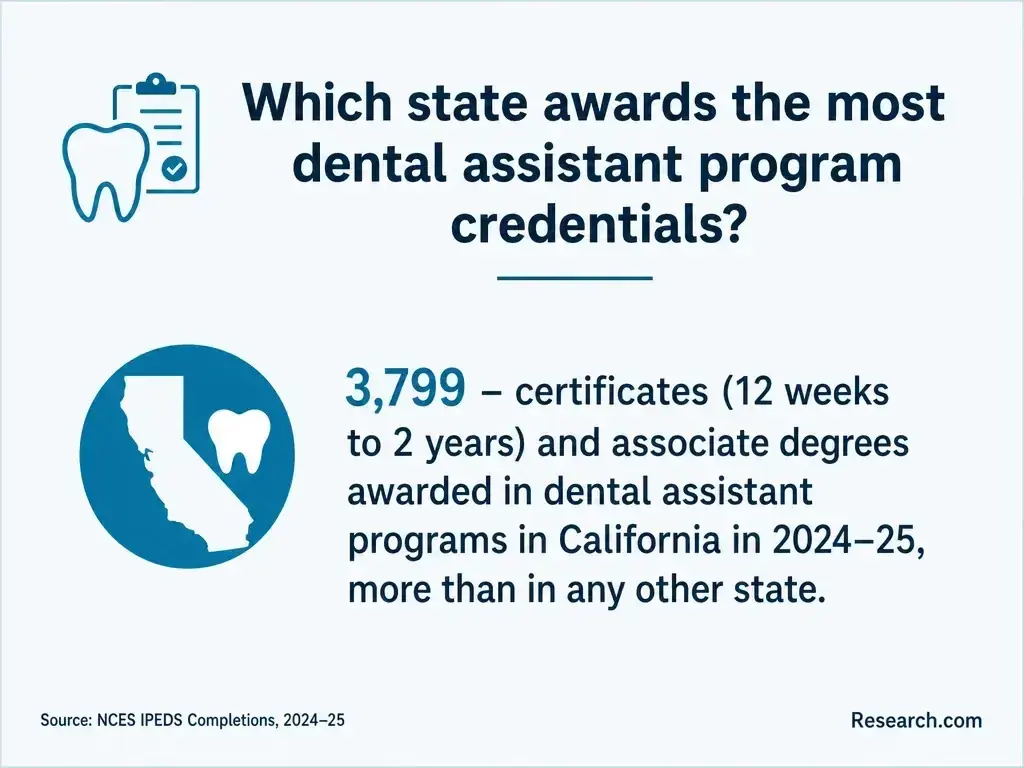
There is no defensible single Oxnard average that covers college programs, career schools, and employer training on the same basis. Request a current, itemized total cost to become job-ready from each option. Published tuition alone can omit expenses that change which route is affordable.
Use the same cost categories for every program you compare:
Subtract grants, scholarships, or employer-paid training only when eligibility and amounts are confirmed. Ask whether the particular school and program qualify for federal aid; appearing among fafsa accepted online colleges is not a substitute for checking your dental assisting program's aid eligibility. Federal Student Aid notes that aid eligibility depends on both student and program circumstances.
A school may award a certificate, diploma, or - in a qualifying academic pathway - an associate degree. Those are education credentials, not California RDA registration. An employer may also document completed workplace training without awarding a school credential. Ask for the exact award name and a written explanation of what graduates are prepared or eligible to apply for.
Institutional accreditation evaluates a school; programmatic accreditation evaluates a particular program; state authorization addresses permission to operate; and the Dental Board of California determines California dental-assisting registration requirements. DANB certification is a separate professional credential, not a substitute for California authorization to perform regulated duties (Dental Board of California; Dental Assisting National Board). Do not assume two certificates with the same title provide the same clinical experience or eligibility.
Requirements vary by provider and clinical site. Programs may ask for proof of secondary-school completion or its equivalent, an application, immunization records, a health clearance, or a background check before patient-facing practice. Obtain the school's current admissions and clinical-placement policies before paying a nonrefundable fee; an admission offer may not resolve a separate clinical-site requirement.
If you plan to work while training, ask whether required labs and placements can accommodate your schedule. For employer-sponsored entry, ask what duties you can perform initially, who supervises you, which courses the employer pays for, and whether the experience will be documented for a future credential application. The Dental Board of California, rather than an admissions representative's assurance, is the authority on RDA eligibility.
Core training typically covers infection prevention, instrument processing, dental anatomy and terminology, materials, patient preparation, chairside assistance, records, and communication. Radiography and other expanded duties require particular attention because California restricts who may perform specific procedures and under what conditions (Dental Board of California). Ask whether the program teaches a skill, provides supervised practice, and prepares you to meet any separate California requirement for performing it.
Digital records and imaging also make comfort with dental-office software useful, but software lessons cannot replace safe patient care. During a visit, ask to see the lab, learn how skills are assessed, and establish whether clinical experience involves observing, simulations, or supervised participation with patients. These are materially different forms of practice.
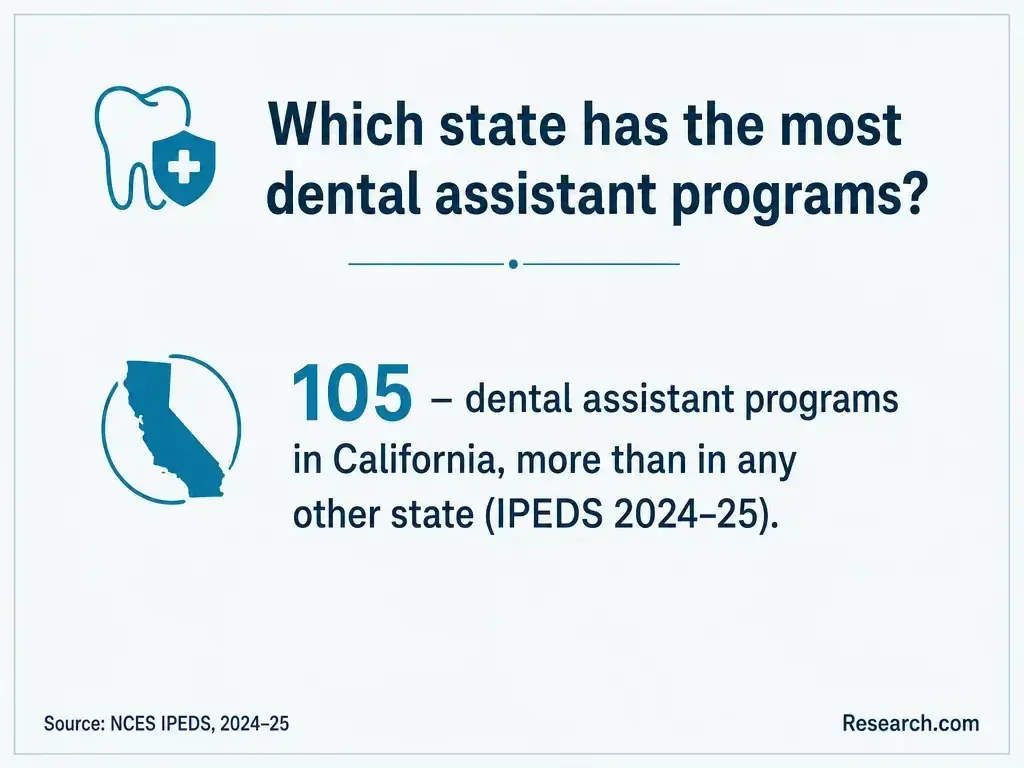
California permits entry-level dental assisting under defined supervision without first becoming an RDA, but limits the duties an unlicensed assistant may perform. RDA registration is a distinct California credential with board-specified eligibility, education or experience, and examination requirements. Certain procedures have additional training or authorization rules (Dental Board of California). Because these rules can change, check the board's current duty tables and application instructions for the exact role you want.
National certification through DANB may be useful to some employers, but it does not automatically grant California RDA status (Dental Assisting National Board; Dental Board of California). Before enrollment, ask a program to identify the California requirement addressed by each course and what graduates must still complete. Treat any claim that graduation alone authorizes every chairside duty as a red flag.
Start with your intended job: entry-level chairside assistant, or eventual RDA. Then compare programs against that goal rather than choosing solely from a ranking. Even search results for easy phds illustrate the problem with browsing by credential label instead of the occupation and California rules that govern it.
Before committing, work through these checks in order:
A program is more likely to be worth its cost if you can attend its practical sessions, complete its requirements, and use the training for your intended California role. Walk away from pressure to enroll before receiving a written cost breakdown or a clear explanation of hands-on training.
A common progression is supervised entry-level assisting, broader permitted duties after meeting California requirements, and RDA registration for those who qualify. Experience may lead to responsibilities in a specialty practice, patient coordination, scheduling, or office operations; each employer sets its own hiring expectations. Dental hygiene is a separate occupation with different education and licensure requirements, not an automatic promotion from assisting (Dental Board of California).
If your goal is to enter a dental office soon, weigh focused training against paid, supervised entry-level work. A search for a cheapest fastest bachelor's degree does not answer that trade-specific decision. Ask employers which duties and credentials they value before spending more on training that may not change your immediate job options.
The U.S. Bureau of Labor Statistics projects national dental assistant employment to grow 7.4% from 2025 to 2035. That is a national occupational projection, not a forecast of openings in Oxnard or a guarantee of employment after training. It supports considering the field, but local hiring conditions and your ability to reach clinical sites and employers remain decisive.
Before enrolling, review current Ventura County-area postings for the duties, experience, schedule, and RDA status employers request. Compare those requirements with the program's curriculum and placement arrangements. If most suitable postings require experience you will not gain, ask how the program helps students bridge that gap rather than assuming projected growth will do it for you.
Investing in training is an important decision, especially when programs with similar names may differ in cost and practical preparation. Research.com's team built the ranking to compare dental assistant programs against other programs in the same occupation and location, using measures of outcomes, affordability, and quality rather than relying on reputation alone. Only programs reporting completions to IPEDS are eligible; an unlisted employer-training or career-school option is not necessarily unapproved or ineffective.
For the best programs ranking, programmatic accreditation or relevant industry recognition accounts for 20% of the score, institutional accreditation for 10%, and student support services for 10%. Completion, full-time and part-time retention, earnings one year after completion, earnings relative to annual attendance cost, tuition, attendance cost, debt - including debt held by students who withdrew - and federal loan default rates make up the remaining 60%. Their individual weights use an entropy-based method, which gives more weight to indicators that vary more across programs. The most affordable programs ranking scores only tuition, attendance cost, median debt, and loan default rates using that method; accreditation and other quality measures do not enter its score.
The team used the following sources to check education, outcome, recognition, and training information. Some cover colleges more completely than short-term or employer-sponsored training, so readers should still verify a program's current details directly.
Use the ranking to narrow your options, then confirm current prices, clinical arrangements, and California credential eligibility before enrolling. Further details on the scoring approach appear in Research.com's methodology.
# 1 position
# 2 position
Yes. California allows supervised entry-level dental assisting within defined duty limits. An employer-training route may reduce upfront school costs, but confirm required courses, supervision, and how experience will be documented if you later seek RDA registration (Dental Board of California).
No. California RDA registration has separate board requirements. Ask what the program fulfills and what education, experience, examinations, or applications remain (Dental Board of California).
Theory may be available online, but practical dental assisting skills require in-person practice or supervised work. Verify the location of labs and clinical training before enrolling.
Only if it provides enough practical preparation for your intended job and fits California's applicable rules. Compare total cost and time to job readiness, not advertised course length alone.
Possibly. Eligibility depends on the student and the specific program. Ask the provider's aid office for a written estimate and confirm any grant or loan terms before budgeting (Federal Student Aid).