# 1 position

Audited and Verified:
Our Editorial and Data Verification Process
Research.com uses government datasets, official education statistics and primary institutional information to support its career and degree guides. Our review process checks factual accuracy, occupational definitions, source dates and the requirements associated with the credentials discussed.
How This Article Was Fact-Checked
Our editorial team verifies salary estimates, employment projections, education requirements and program information against original data providers and official organizations. Salary figures are checked against the relevant occupational definitions and reporting periods. Information about licensure, accreditation and required in-person training is reviewed separately.
Fact-checked and verified on:

Co-Founder and Chief Data Scientist

Reviewed by Karolina Broda
Fact-Checker and Data Verification
Choosing dental assistant training near Norwalk means comparing more than tuition: programs differ in clinical practice, credentials, and preparation for California's permitted duties. The U.S. Bureau of Labor Statistics projects 7.4% national employment growth for dental assistants from 2025 to 2035. For career changers and first-time students, this guide explains the costs, training routes, and requirements that matter. It also accompanies the Best Dental Assistant Trade Schools in Norwalk for 2027 ranking, created by the Research.com team of data scientists to help students make an informed choice about programs worth considering.
A dental assisting program prepares students to support dentists during patient care, maintain infection-control procedures, prepare instruments and rooms, and handle records or scheduling. In California, training for a task does not by itself authorize an assistant to perform it; permitted duties depend on the assistant's status and applicable Dental Board requirements.
Norwalk students can compare certificate programs at nearby community colleges, career-school training, and entry-level positions with employer-provided instruction. Cerritos College is one nearby public-college option to investigate. A classroom-and-clinic program may suit someone who wants structured practice before applying for work; employer training may suit someone who can secure a position and learn while earning. Neither should be assumed to cover every expanded duty. Ask who supervises patient care, where clinical experiences take place, and which California requirements the curriculum addresses.
Dental offices are the primary workplace for dental assistants nationally, according to the U.S. Bureau of Labor Statistics. Around Norwalk, a practical search can include general and specialty practices across southeast Los Angeles County and neighboring Orange County. A wider commute may increase the number of practices and training sites within reach, but it also raises transportation costs and can complicate unpaid clinical hours.
General practices may combine chairside, sterilization, and front-office work; specialty offices may emphasize a narrower set of procedures and patient needs. Before accepting a placement or job, ask which duties you will actually perform and whether the employer supports any additional California-required courses or certificates. A placement is experience, not a job offer.
The U.S. Bureau of Labor Statistics reports a $48,070 national median annual wage for dental assistants in May 2025. That is the midpoint for employed workers across experience levels and locations - not a promised salary for a newly trained assistant in Norwalk. Local offers can differ with experience, permitted duties, specialty, schedule, and employer.
When estimating whether training will pay off, compare actual entry-level offers in your commuting area with what you could earn without enrolling. Use the same assumptions about hours and benefits for each option. Do not treat a national median, a school's advertised earnings figure, or the wage of an experienced registered dental assistant as your likely first paycheck.
There is no single required program length for every entry-level dental assistant in California. A full-time certificate may be shorter than a part-time route, while employer training begins with a job and builds skills on the worksite. Published program duration can also exclude prerequisites, waiting periods for a clinical placement, or courses needed for particular duties. Verify the current catalog's calendar, total contact hours, and required in-person hours rather than relying on an advertised completion date.
A fast program makes sense only if it leaves enough time to practice infection control and chairside skills under supervision. Readers comparing 1 year certificate programs that pay well should check whether a dental assisting option's stated length includes its clinical component and California-specific coursework.
Online instruction can cover terminology, records, anatomy, and some infection-control concepts. It cannot replace supervised practice with instruments, patients, radiographic equipment, or clinical safety procedures. A hybrid program can be practical for someone balancing work and study if its campus labs and clinical sites are reachable from Norwalk.
The comparison below focuses on what each format can realistically deliver; "online" alone does not establish eligibility to perform a regulated California duty.
| Format | Potential advantage | Decision-critical limitation |
| On-campus | Scheduled equipment practice and direct feedback | Travel and fixed lab times |
| Hybrid | Some coursework completed remotely | Labs and clinical experiences still require attendance |
| Fully online coursework | Flexible theory study | Does not itself provide hands-on clinical competence or establish California duty eligibility |
If you are comparing cheap online colleges, ask a dental assisting provider a more specific question: exactly where, when, and at whose expense will you complete every required hands-on component?
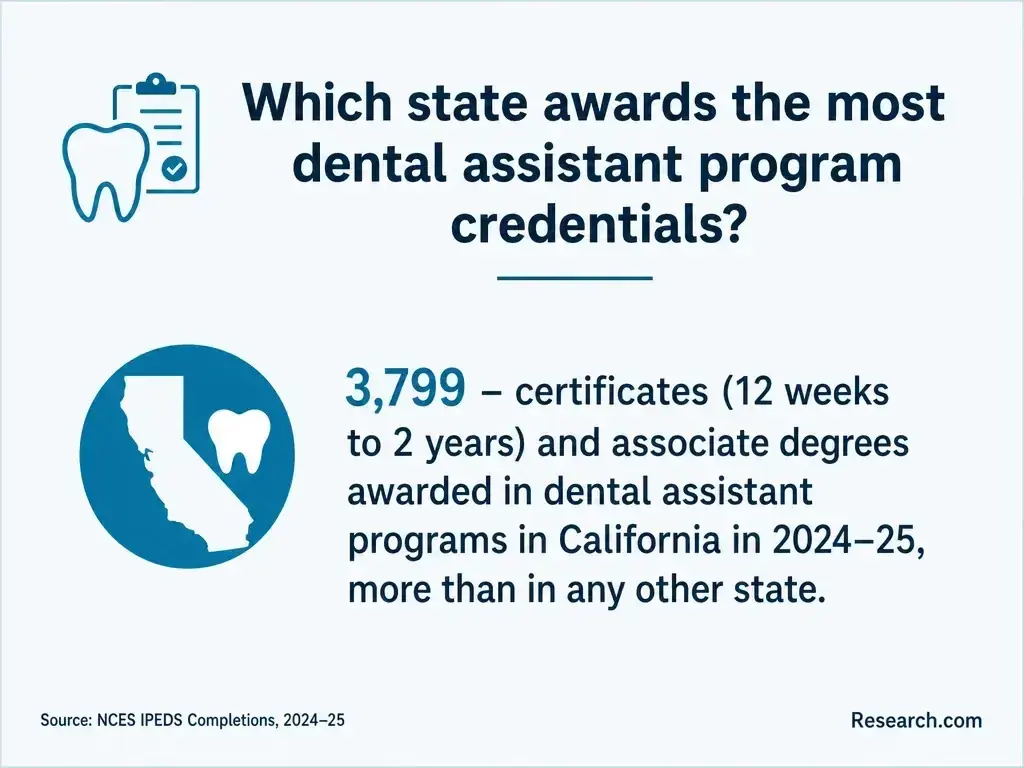
A defensible Norwalk-wide average is not available from the information needed to compare all nearby college, career-school, and employer-training routes. Published tuition alone is also an incomplete price. Request a current written estimate for the total cost to become job-ready, including mandatory fees, books, supplies, uniforms and protective equipment, required health or background checks, courses or examinations for intended duties, and travel to labs or clinical sites.
Then account for lost earnings during training and subtract aid or employer-paid expenses you can actually obtain. Federal aid depends on the student's and program's eligibility; do not assume every short course qualifies. California residents can ask public-college financial-aid staff about applicable state assistance. Paid employer training may reduce out-of-pocket costs but offers less predictable structure than a scheduled program.
Lists of certificate programs that pay well can help frame alternatives, but the relevant comparison is your net training cost against realistic local earnings - not the certificate label.
The credential depends on the route: a school may award a completion certificate, while employer training may produce work experience without a school credential. A school certificate, California Registered Dental Assistant (RDA) status, and Dental Assisting National Board (DANB) Certified Dental Assistant (CDA) certification are different things. Neither a certificate's name nor institutional accreditation automatically grants the others.
CODA programmatic accreditation concerns a dental assisting program; institutional accreditation concerns the school. California's Dental Board determines state RDA requirements and permitted duties, while DANB sets its own certification eligibility and examinations. Check each separately if your goal is a particular credential or expanded scope of work. A list of lucrative certifications is not a substitute for checking whether employers near Norwalk request the credential you plan to pursue.
Admission rules vary by provider. Ask about prior education, placement assessments, application deadlines, and whether a clinical site requires immunization records, a health screening, or a background check. Check these requirements before paying a deposit: a student might be admitted to coursework but unable to begin a required placement on schedule.
Employer-trained entry is a separate route, not admission to a school. It depends on finding a practice willing to hire and supervise a beginner. Ask whether the practice pays for required training and provides time to complete it. For either route, clarify how previous coursework or documented work experience is evaluated; never assume a prior class will waive a California requirement.
Useful curricula connect dental terminology and anatomy with chairside preparation, instrument handling, sterilization, patient communication, records, and practice workflow. Labs should let students demonstrate techniques - not merely watch them. Clinical experience should add supervised work in a functioning dental setting, with clear feedback on safety and patient interaction.
For a California-focused program, inspect how instruction addresses infection control and the duties for which you seek eligibility, including radiography if relevant. Ask for the curriculum and clinical-hour breakdown, equipment access, and the process for securing a placement. Two programs with similarly named certificates may offer materially different opportunities to practice.
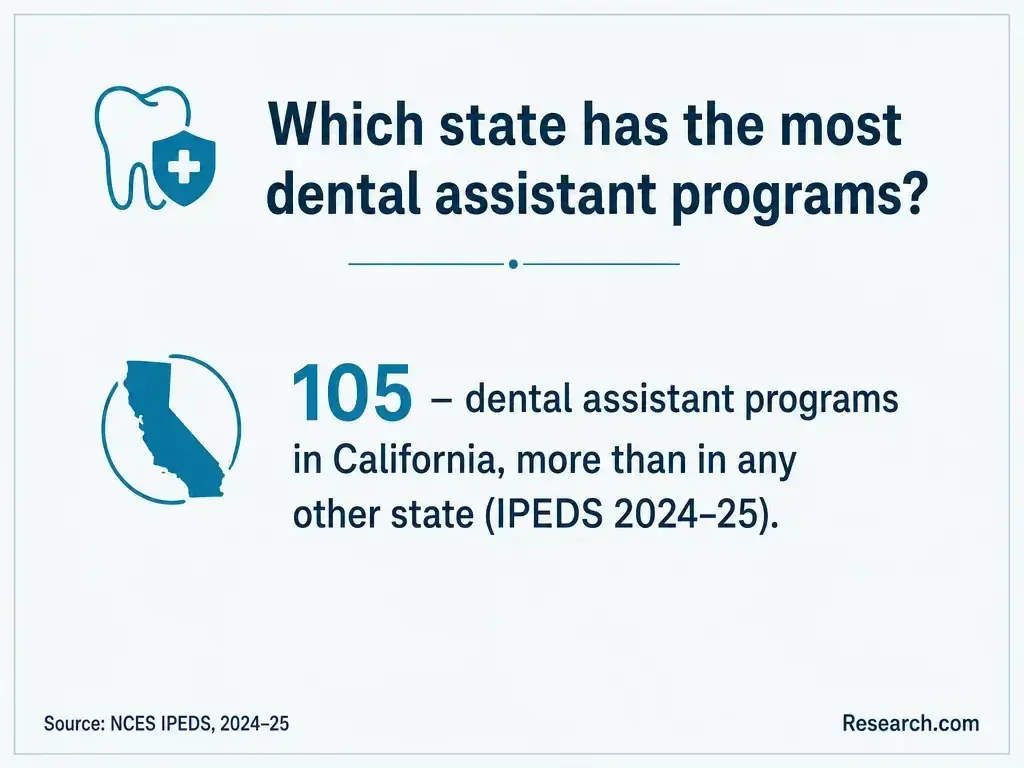
California allows entry-level dental assisting work without making every assistant an RDA, but it restricts which duties an unlicensed assistant may perform. The Dental Board of California establishes training and eligibility rules for specific duties and for RDA registration; taking dental radiographs, for example, requires meeting California's applicable radiation-safety requirements. The Board also specifies infection-control and dental-practice-law training for unlicensed assistants. Confirm current requirements with the Board before choosing courses, especially if you intend to perform expanded duties.
DANB's CDA is a professional certification, not a California occupational license or automatic RDA registration. CODA accreditation, school authorization, a certificate of completion, and an employer's willingness to hire likewise serve different purposes. The most useful question for admissions staff is: Which exact duties and credential eligibility will I have when I finish, and what additional steps remain?
Start with the work you want to do, then compare programs on the requirements for that work. A ranking can identify options to investigate, but it cannot tell you whether a particular clinical schedule, commute, or total cost fits your circumstances.
Ask each provider the same questions so the answers are comparable:
Verify accreditation with the relevant accreditor and California duty requirements with the Dental Board rather than relying on an advertisement. Be wary of "fully online" clinical training, guaranteed jobs, or a claim that accreditation alone grants RDA status. For return on investment, consider aid, debt, completion probability, earnings you forgo while studying, plausible post-training earnings, and how long you expect to work - not institution type alone.
An entry-level assistant can build experience in general practice, then seek training relevant to specialty offices, additional California-permitted duties, or RDA registration if eligible. Experience may also support lead-assistant or practice-coordination responsibilities. These steps require employer opportunities and, where applicable, separate training or registration; they are not automatic outcomes of a certificate.
If your goal is to start chairside work soon, compare structured training with an employer willing to train a beginner. If your goal is a specific expanded duty, work backward from the Dental Board's requirements. Searches such as what is the shortest masters degree will not answer that occupational-entry question.
The U.S. Bureau of Labor Statistics projects 7.4% growth in dental assistant employment nationally from 2025 to 2035. This supports investigating the occupation, but it does not forecast openings in Norwalk or guarantee a job after training. Norwalk applicants compete and search across a broader commuting area, so compare current postings in the locations you can reach and note whether employers ask for experience, radiography eligibility, or RDA status.
Use that demand check before committing to an accelerated or expensive program. If nearby entry-level postings offer employer training, price that alternative alongside school; if the jobs you want consistently require skills you cannot gain on the job, a program with accessible supervised practice may justify its cost.
Investing in training is an important decision, so Research.com evaluates programs against others in the same occupation and location rather than treating a national ranking as a substitute for local choice. Only programs with completions reported to IPEDS are included. That makes the ranking useful for comparing represented programs, but it does not mean an employer-training route or a provider absent from IPEDS is unavailable or poor quality.
Best-program rankings assess student outcomes; earnings and return on investment; costs and debt; and quality and recognition. Programmatic accreditation or relevant industry recognition accounts for 20% of the score, institutional accreditation for 10%, and student support services for 10%. The remaining 60% covers completion and retention, earnings one year after completion, earnings relative to annual attendance cost, tuition, attendance cost, debt - including debt held by students who withdrew - and federal loan default rates. An entropy-based method gives more weight to indicators that differ more across programs. Most-affordable rankings instead score only tuition, attendance cost, median debt, and default rate, using entropy-based weights; accreditation and other quality indicators are not part of that score.
The team draws on the following sources to check education, outcomes, recognition, and training information. Some sources cover broader trade education and are not themselves evidence that a dental assisting program holds a particular approval:
Readers can use the ranking to narrow their options, then confirm current prices, clinical placements, and California eligibility directly with a provider. More detail on the approach is available in Research.com's methodology.
# 1 position
# 2 position
No. It is one nearby public-college option to investigate; career-school programs and employer-provided training may also be available. Compare current curricula, clinical access, eligibility, and total cost.
Online coursework can teach theory, but chairside and other practical skills require in-person training. Confirm how a provider arranges supervised practice before enrolling.
No. A completion certificate and RDA registration are separate. Check the Dental Board of California's current eligibility requirements and ask what steps remain after graduation.
It may be if its practice, credential preparation, and schedule improve your path into the jobs you want at a manageable net cost. Compare it with paid employer training and realistic entry-level offers.
Get the full price, clinical-site details, required attendance schedule, awarded credential, and a written explanation of which California duty requirements the training addresses.