# 1 position


Audited and Verified:
Our Editorial and Data Verification Process
Research.com uses government datasets, official education statistics and primary institutional information to support its career and degree guides. Our review process checks factual accuracy, occupational definitions, source dates and the requirements associated with the credentials discussed.
How This Article Was Fact-Checked
Our editorial team verifies salary estimates, employment projections, education requirements and program information against original data providers and official organizations. Salary figures are checked against the relevant occupational definitions and reporting periods. Information about licensure, accreditation and required in-person training is reviewed separately.
Fact-checked and verified on:

Co-Founder and Chief Data Scientist

Reviewed by Karolina Broda
Fact-Checker and Data Verification
Choosing affordable dental assistant training in Reno means comparing more than tuition: hands-on practice, time away from work, and the skills local dentists expect all affect the investment. The U.S. Bureau of Labor Statistics projects 7.4% national employment growth for dental assistants from 2025 to 2035. This guide explains costs, credentials, Nevada rules, and career prospects for new students and career changers. It also features a Most Affordable Dental Assistant Trade Schools in Reno for 2027 ranking, created by the Research.com team of data scientists to help students identify programs worth considering.
Expect a combination of classroom instruction and supervised practice in chairside assistance, infection control, instruments, patient records, and dental materials. A worthwhile program lets you practice procedures and receive feedback before working with patients. Ask exactly which skills are taught in a lab, which are practiced at a dental office, and who arranges any externship.
Reno-area applicants can compare a community-college route, including any current dental assisting offering at Truckee Meadows Community College, with career-school programs and direct hiring by a dental practice that trains assistants on the job. Confirm current availability and credential details directly; a school's general health-program catalog does not establish that a particular dental assisting program is enrolling.
The pathways solve different problems. A structured program may suit someone who wants supervised practice before applying for office jobs. Employer training may reduce upfront school costs and let someone earn while learning, but the instruction and portability of the skills can vary by practice.
General dental practices are the most direct entry point. Assistants may also seek positions in specialty practices, such as orthodontics or oral surgery, when their training and permitted duties fit the job. The U.S. Bureau of Labor Statistics identifies dentists' offices as the principal employer of dental assistants nationally.
For a local job search, compare postings across Reno and nearby Sparks rather than assuming every practice uses the same definition of "dental assistant." One office may emphasize chairside work; another may need scheduling, sterilization, or radiography-related skills. Match the duties in actual postings against the program's supervised practice and Nevada's rules before paying to enroll.
A verified Reno-specific wage figure is not established here, so the national figure is a benchmark, not a local salary quote. The U.S. Bureau of Labor Statistics reports a $48,070 national median annual wage for dental assistants in May 2025. Median means half of workers in the occupation earned more and half earned less; it includes experienced workers, not just recent trainees.
When weighing a program, collect wages from current Reno-Sparks job postings and compare roles with similar duties, schedules, and experience requirements. An offer that includes paid training or benefits can change the calculation more than a headline hourly rate. Do not assume a certification - or a place in an affordability ranking - produces the national median wage on graduation.
Duration depends on the credential, schedule, and amount of practical instruction. Short occupational certificates and longer diploma-style programs should not be treated as interchangeable simply because both say "dental assisting." Ask each provider for its current calendar, required clock or contact hours, lab hours, externship hours, and the expected date you could begin applying for jobs. No single training-hour requirement applies to every entry-level dental assisting route in Nevada.
An accelerated schedule can shorten time away from the labor market, but it may compress practice into days you cannot attend while working. Part-time study may protect current earnings while extending commuting and childcare costs. Employer training can provide an earlier paycheck, although the time needed to master duties depends on the office and the tasks assigned.
Online coursework can cover terminology, anatomy, records, and some infection-control concepts. It cannot replace supervised chairside practice, instrument handling, or in-person assessment of clinical skills. A hybrid program may work well for someone balancing shifts in Reno, provided the required labs and any externship are accessible at times they can attend.
Before choosing a remote option, ask where practical work takes place, who secures a local placement, and whether the curriculum prepares students for the particular duties they want to perform under Nevada rules. "Online" alone does not establish certification eligibility or job readiness. Readers comparing flexibility and price can use most affordable online schools for working students as a broader cost reference, but should verify dental-specific in-person requirements separately.
There is no defensible single Reno average without a current, comparable set of program prices and included expenses. A quoted tuition price may exclude items another provider bundles. Request a written, itemized estimate from each option - including any employer-training route - before deciding which is most affordable.
The following comparison separates expenses that are easy to overlook. It is a budgeting framework, not a claim that every Reno program charges every item.
| Cost component | What to verify | Why it changes the comparison |
| Tuition and mandatory fees | Total program price and payment terms | A short schedule does not necessarily mean a lower price. |
| Supplies and preparation | Books, scrubs, protective equipment, and required health checks | Bundled and separately billed prices are not directly comparable. |
| Career-entry expenses | Optional certification examinations and travel to labs or externships | Expenses can arise after tuition is paid. |
| Income and assistance | Lost work hours, grants, eligible aid, or wages during employer training | The lowest tuition may not yield the lowest net cost. |
Federal aid depends on the institution, program, and student's eligibility; it is not available merely because training leads to a healthcare job, according to Federal Student Aid. Ask about Nevada workforce-training assistance as well. To judge return on investment, compare net cost and likely debt with your current earnings, realistic local job offers, completion prospects, and the time it will take to recover the investment. Other 2 year certificate programs that pay well can provide career context, but their earnings should not be substituted for dental assisting wages.
A training provider may award a certificate or diploma documenting completion. That school-issued credential is different from a professional certification issued after meeting an organization's requirements and passing its examination. It is also different from a state occupational license. Confirm the exact award on the program's current catalog and ask what employers recognize it for.
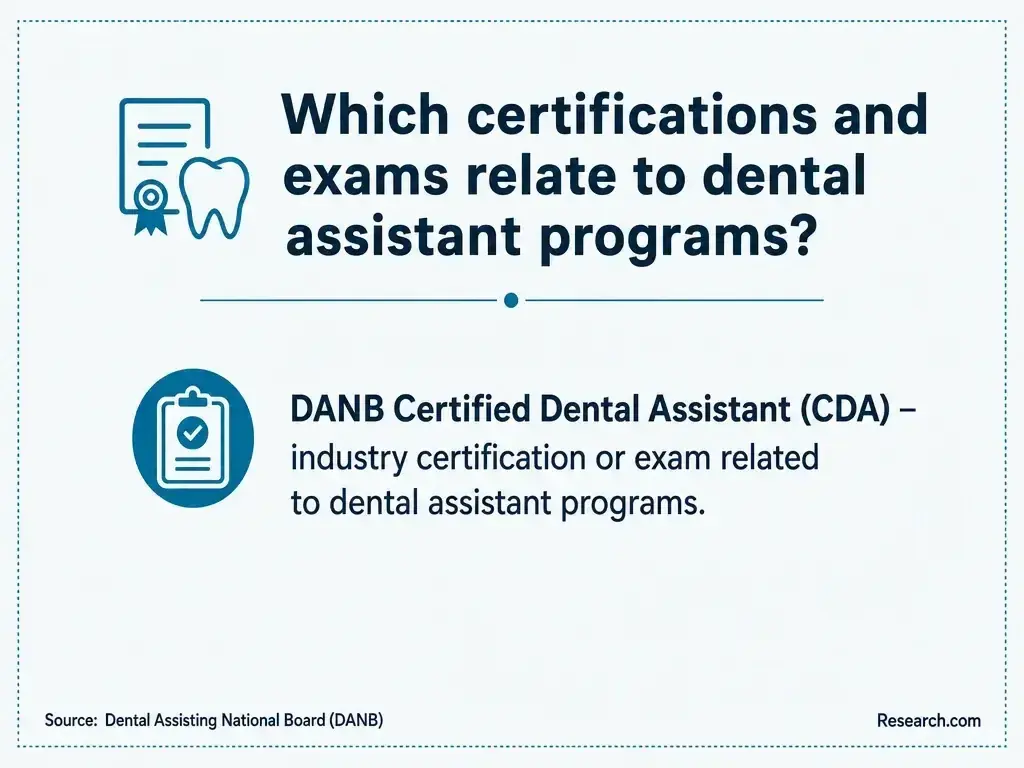
For students considering Dental Assisting National Board certification, verify the specific certification sought and its current eligibility route before enrolling; program completion alone should not be assumed to qualify every applicant. The Commission on Dental Accreditation identifies programs with its programmatic accreditation, which is distinct from a school's institutional accreditation or state authorization. These distinctions matter more than a credential name that sounds impressive but does not support the student's intended next step.
Entry requirements vary by provider and by whether the student will enter a clinical setting. Request the current admissions checklist, including any education prerequisite, application deadline, immunization or health documentation, background-check policy, and requirements for placement at a dental practice. An externship site may impose conditions beyond those for classroom admission.
Direct-entry applicants should ask prospective employers what they will teach, when paid work begins, and which tasks require demonstrated competence or supervision. If you are comparing flexible training outside this occupation, accredited schools online with no fee to apply may help frame application-cost questions; it does not replace checking the admission and clinical requirements of a dental assisting program.
Core instruction typically addresses dental terminology, patient preparation, instrument transfer, sterilization, infection prevention, dental materials, charting, and office communication, consistent with the occupation described by the U.S. Bureau of Labor Statistics. Depending on the curriculum and Nevada rules, students may also study radiography and practice associated procedures under appropriate supervision.
Look past the course titles. Ask to see how students demonstrate safe infection-control technique, how much chairside practice they receive, and whether an externship exposes them to real appointment flow. Digital records and imaging workflows make comfort with dental-office technology useful, but software lessons are not a substitute for hands-on competence.
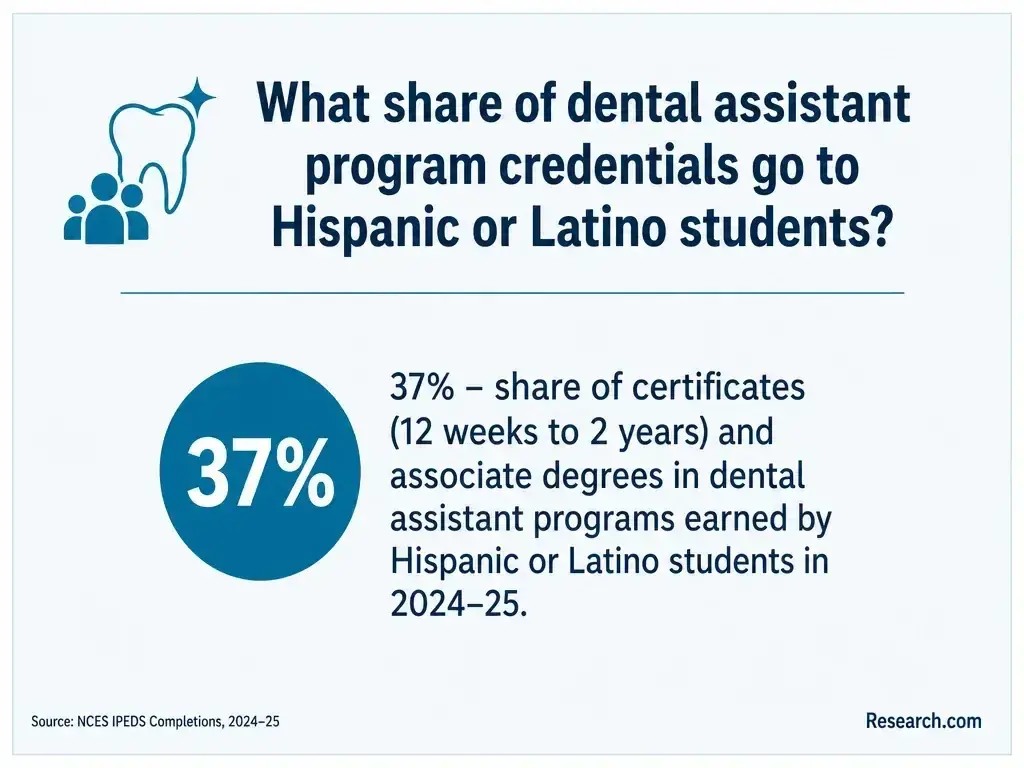
Nevada does not require a general occupational license simply to work as a dental assistant. That does not mean every assistant may perform every procedure: scope of duties, supervision, and radiography requirements must be checked against current Nevada State Board of Dental Examiners rules. Ask a provider to identify precisely which duties its practical instruction prepares you to perform and under what supervision.
Dental Assisting National Board certification is a separate professional credential, with eligibility and examination requirements set by DANB; it should not be confused with Nevada permission to carry out a particular task. Likewise, institutional accreditation, Commission on Dental Accreditation program accreditation, and state school authorization answer different questions. Verify each directly rather than accepting "accredited" as a blanket promise of employment or certification eligibility.
The best choice is the least costly viable route to your intended duties - not automatically the lowest-ranked price or fastest completion date. Shortlist providers using the affordability ranking, then test each option against the same job-readiness questions:
A red flag is an admissions claim that a certificate automatically permits every dental procedure or assures a particular wage. Another is a very low tuition quote without a complete list of required purchases. If a practice will train and pay you for the same entry-level role, compare that offer with school on the quality of supervision and opportunities to learn - not just the absence of tuition. The easiest way to get a bachelor's degree addresses a different education decision and should not influence this occupation-specific comparison.
The usual first step is an entry-level role in a general practice, followed by greater responsibility as skills and employer trust develop. Some assistants move into specialty-practice support, patient coordination, or office administration. Additional certification may help with certain career goals, but it is not the same as a mandatory entry license; verify its relevance with prospective employers and DANB.
Training as a dental assistant does not, by itself, qualify someone for a different regulated dental occupation. If your goal is a role outside dental assisting, compare that occupation's separate education and Nevada requirements before investing. Similarly, online phd programs without dissertation address a wholly different path, not advancement required for dental assisting.
The U.S. Bureau of Labor Statistics projects 7.4% national employment growth for dental assistants from 2025 to 2035. This supports considering the occupation, but it is not a Reno-specific forecast or a guarantee of an opening after training.
Use the national projection alongside current Reno-Sparks postings: note how many accept beginners, which duties recur, and whether employers offer training. That local check can reveal whether paying for a particular certificate adds value over direct entry. It also helps a working adult decide whether an accelerated schedule is worth lost income when the jobs they want require skills the program does - or does not - teach.
Investing in training is an important decision. Research.com's data scientists created the affordability ranking to help readers compare dental assisting programs against other programs serving the same location, rather than against unrelated national options. Only programs with completions reported to the Integrated Postsecondary Education Data System (IPEDS) are eligible. Consequently, an employer-training route or a provider absent from IPEDS is not necessarily unavailable or poor quality.
The most affordable ranking scores costs and debt: tuition, cost of attendance, median student debt, and federal loan default rate. Weights are assigned through an entropy-based method that gives more weight to indicators that differ more across programs. Accreditation and other quality measures are not part of this affordability score. That distinction matters: readers should use the ranking to narrow their cost comparison, then independently check practical training, recognition, and career fit.
To support the ranking and check relevant institutional and occupational information, the team uses these data sources. Some cover the broader trade-school landscape rather than dental assisting specifically:
Research.com checks source quality and comparability so readers can investigate affordable options without mistaking a low price for a complete career-entry plan. See Research.com's methodology for more about how rankings are created.
# 1 position
# 2 position
Paid, employer-provided training may have the lowest upfront school cost, if an office is hiring and provides appropriate supervision. Compare its wages and training plan with each school's full price and practical instruction; cheapest upfront is not always best for your goals.
Potentially. Nevada does not require a general dental assistant license for entry, and an employer may train a new hire. Confirm which duties the office will teach and the current state rules governing those duties.
Online lessons can cover theory, but chairside and other practical skills require in-person practice. Ask where labs or externships occur before enrolling in a remote program.
No. A school certificate documents completion of that provider's program. Dental Assisting National Board certification has its own eligibility and examination rules.
No. Its score covers costs and debt, not lab quality or clinical placements. Use it to build a shortlist, then verify practical training, recognition, and Nevada duty alignment yourself.