# 1 position

Audited and Verified:
Our Editorial and Data Verification Process
Research.com uses government datasets, official education statistics and primary institutional information to support its career and degree guides. Our review process checks factual accuracy, occupational definitions, source dates and the requirements associated with the credentials discussed.
How This Article Was Fact-Checked
Our editorial team verifies salary estimates, employment projections, education requirements and program information against original data providers and official organizations. Salary figures are checked against the relevant occupational definitions and reporting periods. Information about licensure, accreditation and required in-person training is reviewed separately.
Fact-checked and verified on:

Co-Founder and Chief Data Scientist

Reviewed by Karolina Broda
Fact-Checker and Data Verification
Choosing dental assistant training in Flint means looking beyond the shortest advertised program: the credential, clinical practice, and Michigan rules must match the work you want to do. The U.S. Bureau of Labor Statistics projects 7.4% national employment growth for dental assistants from 2025 to 2035, making this a timely career to investigate - not a promise of local openings. This guide explains costs, training routes, and career requirements. It will also feature a Best Dental Assistant Trade Schools in Flint for 2027 ranking created by the Research.com team of data scientists to help students identify programs worth considering.
A dental assistant program prepares students to support dentists during treatment, prepare patients and instruments, follow infection-control procedures, and keep clinical records. Some programs also teach administrative work. The key distinction is between entry-level assisting skills and training intended to support additional credentials or duties regulated by the Michigan Board of Dentistry.
For local comparison, ask Mott Community College and Ross Medical Education Center-Flint which dental assisting credentials and schedules they currently offer; do not assume a campus offers a program merely because its parent institution advertises one. A community-college route may suit someone seeking a broader curriculum or transferable coursework. A focused career-school route may suit someone who prioritizes a shorter, scheduled path. Office-based training can suit someone who has an employer willing to teach and supervise them, but its experience and credential outcome may differ from a formal program.
General and specialty dental practices are the clearest employment targets. Assistants may also work in public-health dental settings and clinics, although openings and duties vary. Because clinical work depends on face-to-face patient care, a Flint student should ask where a program arranges externships and whether placements are reachable from home or work. A placement outside the city can materially increase travel costs or make a daytime program impractical.
Training does not make every dental task permissible. Before choosing a specialty-office placement or a program advertising expanded functions, match the duties in its curriculum to Michigan Board of Dentistry rules and the credentials the employer expects.
The national median annual wage for dental assistants was $48,070 in May 2025, according to the U.S. Bureau of Labor Statistics. Half of workers in the occupation earned more and half earned less; the figure includes experienced workers and should not be treated as a Flint graduate's starting offer. Compare actual local postings by required credential, duties, schedule, and benefits before estimating the payoff from training.
For a personal return-on-investment estimate, compare expected after-training earnings with what you could earn without the program. Include tuition, aid, debt costs, completion likelihood, time away from paid work, and the years you expect to stay in the occupation. A more expensive program is not automatically a worse investment if it provides a clinical placement and credential you need; a faster program is not automatically better if it leaves a training gap.
Completion time depends on the credential and schedule. A focused certificate or diploma generally takes less time than an associate-degree pathway, while part-time attendance can extend either route. Employer training may let someone begin working sooner, but the time needed to become competent - and the duties permitted without further credentials - depends on the office and Michigan rules.
Ask each provider for its current calendar, total clock or credit hours, scheduled lab hours, and required externship hours. Also ask whether clinical hours are guaranteed within the advertised completion period. Readers comparing quick college degrees should note that speed alone does not establish dental assisting readiness: chairside practice and any applicable credential requirements remain essential.
Online delivery can make terminology, records, and some safety coursework easier to fit around a job. It cannot replace practicing instrument transfer, infection control, patient positioning, or other chairside skills with supervision. For a hybrid option, establish where labs occur, who arranges the clinical site, and whether its schedule works with your commute.
An entirely online advertisement is a red flag if it implies that coursework alone qualifies a student for every dental assisting duty or credential in Michigan. Guides to top college degrees for seniors online address a different educational decision; dental assisting applicants need to evaluate the in-person component first.
There is no responsible single "average Flint program cost" without comparable, current prices for the same credential and attendance pattern. Request a written, itemized cost to become job-ready from each provider. Compare these price components rather than tuition alone:
Subtract only aid for which you are eligible. Federal aid depends on the institution and program, not merely whether classes are online; online colleges that take financial aid are a useful reminder to verify eligibility for the specific dental assisting program. Ask about scholarships and workforce-training assistance, and compare those with wages available through employer-sponsored training. Searches for cheap masters programs online do not provide a meaningful price benchmark for this occupation.
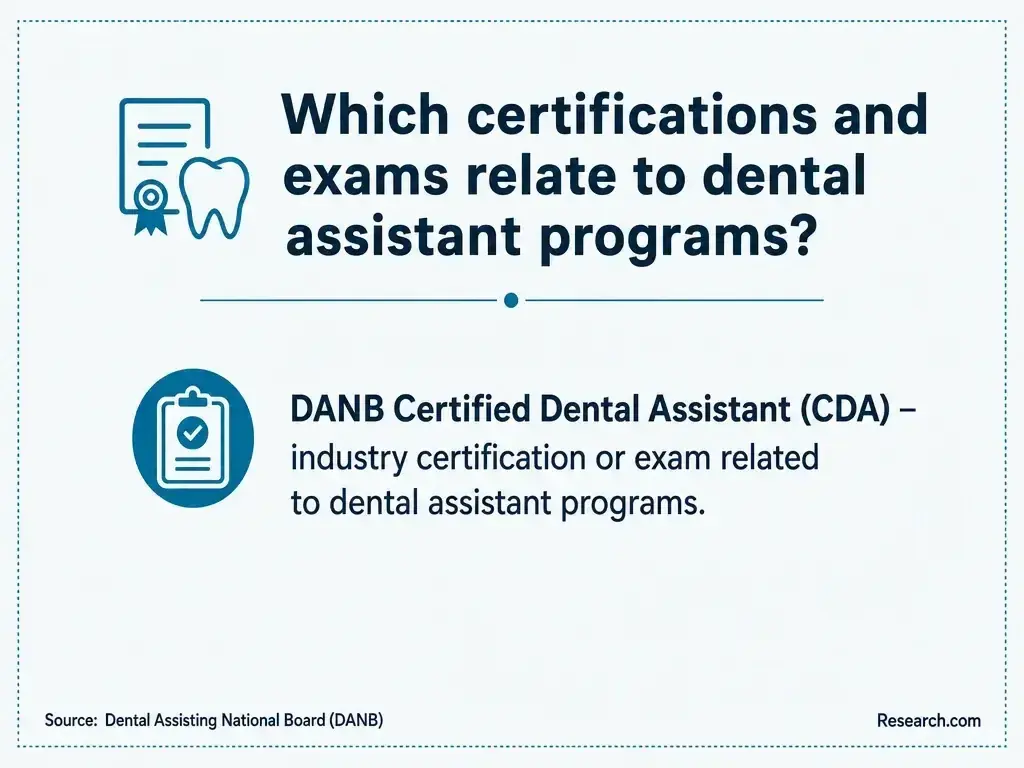
A school may award a certificate, diploma, or associate degree; an employer-training route may provide documented experience without an academic credential. These outcomes are not interchangeable. A school credential records completion, CODA accreditation describes a program's accreditation status, DANB certification is a separate professional credential, and Michigan licensure governs particular regulated duties. None automatically confers the others.
Before enrolling, obtain the exact credential title and ask whether the curriculum and graduate eligibility align with the DANB examination or Michigan credential you intend to pursue. Some applicants compare best colleges for dual degree options, but combining academic credentials is not a substitute for the clinical training and regulatory eligibility relevant here.
Entry conditions differ by provider and clinical site. Request the current admissions checklist for the specific dental assisting program: prior schooling, application steps, any placement requirements, and whether clinical participation requires immunization records, a background check, or other documentation. Ask when each condition must be satisfied; an applicant could otherwise be admitted to coursework but unable to start an externship.
For employer training, ask what tasks a new hire will learn under supervision and whether the employer pays for related instruction or certification. Neither school admission nor a job offer should be mistaken for permission to perform duties that Michigan restricts.
Relevant instruction connects dental anatomy and terminology to chairside procedures, instrument preparation, sterilization, patient communication, records, and office workflow. Clinical practice is what tests whether a student can apply those skills accurately while a team treats patients. Dental radiography and other functions require particular attention to Michigan's applicable rules, rather than an assumption that a course description authorizes the work.
Compare programs by asking how students are assessed in labs and at clinical sites - not just which topics appear in a catalog. Digital imaging and electronic records are also worth asking about because the equipment used at a placement may differ from what a classroom demonstrates.
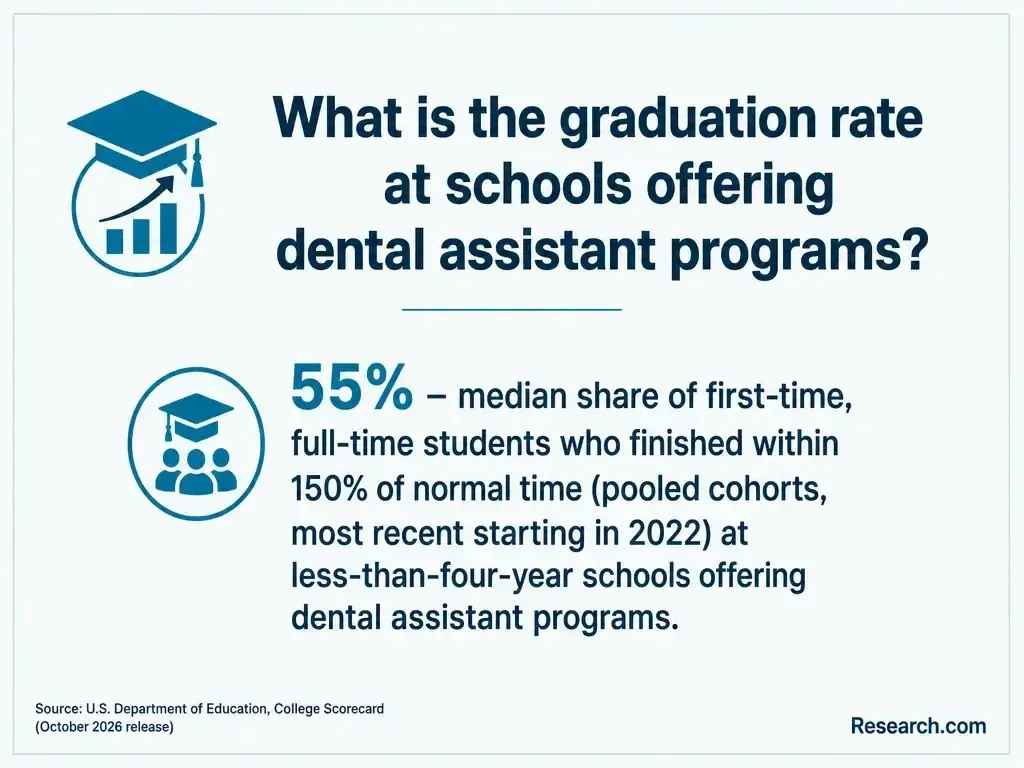
Not every dental assistant position requires the same credential in Michigan. The Michigan Board of Dentistry regulates dental assisting duties and the registered dental assistant pathway; DANB certification is a separate professional credential. Requirements for a particular activity can differ from requirements for an entry-level assisting job. Confirm the current Board rules for your intended duties, including any education, examination, supervision, or application requirements, before paying for a program.
Check three things separately: whether the institution holds recognized accreditation, whether the dental assisting program has CODA accreditation if that matters for your intended pathway, and whether its graduates meet Michigan or DANB eligibility rules. State school authorization and accreditation are also distinct. Ask the provider to identify the rule or credential requirement it believes its training satisfies; do not rely on "certification-ready" alone.
The best choice is the program that gets you to your intended duties at a manageable cost - not necessarily the first result in a ranking. Use the ranking as a shortlist, then request comparable answers from each provider and verify regulatory claims with the Michigan Board of Dentistry. These questions expose the most consequential differences:
A common mistake is treating similarly named certificates as equivalent without comparing clinical hours and credential eligibility. Another is choosing solely by advertised tuition or national median wages. If an office can provide appropriate paid training for your intended entry-level role, compare that option directly with school - including supervision, credential limitations, and foregone earnings.
Entry-level chairside assisting can lead to work in general or specialty practices. With experience, an assistant may take on more responsibility in clinical coordination, patient scheduling, or office operations. Additional regulated duties require meeting the applicable Michigan requirements; an employer's promotion does not replace them. Certification may also help demonstrate skills where an employer values it, but its role should be checked against the particular job.
If your goal is primarily office administration, compare whether the clinical time and cost of a dental assisting program are justified. If your goal is a regulated clinical function, favor training that documents practical competencies and supports the relevant eligibility route.
The U.S. Bureau of Labor Statistics projects 7.4% growth nationally for dental assistants from 2025 to 2035. That indicates a growing occupation nationally, not a forecast of openings in Flint or a guarantee of employment after training. Local hiring depends on practice needs, turnover, and the duties an applicant can perform.
Use the national projection as background, then review current Flint-area postings before enrolling. Note which credentials employers actually request and how far you would travel for work. That check is especially important if a program's clinical placement is outside your preferred commuting area.
Education is a consequential investment. Research.com's ranking is designed to help readers compare dental assistant programs against other programs in the same occupation and location, rather than against unrelated schools. The team evaluates reported outcomes, costs, and recognition; readers should still confirm current offerings and Michigan eligibility directly with each provider. Only programs with completions reported to IPEDS are included, so an unlisted employer-training or career-school option is not necessarily unsuitable.
For best-program rankings, student outcomes include completion and full-time and part-time retention. Earnings and return-on-investment measures include median earnings one year after completion and earnings relative to annual attendance cost. Cost measures include resident and nonresident tuition, attendance cost, median debt - including debt among students who withdrew - and federal loan default rates. Quality measures cover institutional accreditation, occupation-relevant programmatic accreditation or industry recognition, and student support. Programmatic accreditation or industry recognition receives 20% of the score; institutional accreditation, 10%; and student support, 10%. The remaining 60% covers outcomes, earnings, and costs, weighted using an entropy-based method that gives more weight to indicators that differ more across programs.
Most-affordable-program rankings instead score tuition, attendance cost, median debt, and federal loan default rates using entropy-based weights. Accreditation and other quality indicators are not part of that affordability score. The following sources inform the ranking; a source's inclusion does not mean every listed program holds every accreditation or credential it tracks.
Use the ranking to form a shortlist, then compare each program's actual clinical experience, total price, and fit with Michigan's scope-of-practice rules. More detail on the scoring approach appears in Research.com's methodology.
# 1 position
# 2 position
# 3 position

Some entry-level roles may offer supervised employer training. Check the job's duties against Michigan Board of Dentistry rules; employer training and school credentials may support different career options.
Online coursework can cover some theory, but chairside competencies need in-person practice. Confirm where supervised labs and clinical training occur and whether the program supports your intended credential.
Do not assume every entry-level position requires it. DANB certification, Michigan's registered dental assistant pathway, and permission to perform particular duties are separate questions to verify for the job you want.
Choose based on the required clinical training, credential eligibility, time, and total cost. The longer credential is not automatically necessary for an entry-level role; the shorter one is not automatically sufficient for every career goal.
Confirm the program is currently offered, its complete price and clinical schedule, the credential awarded, placement arrangements, and any Michigan or DANB eligibility claims in writing.