# 1 position
ATA College - Dental Assisting/Assistant.
certificate or diploma

Audited and Verified:
Our Editorial and Data Verification Process
Research.com uses government datasets, official education statistics and primary institutional information to support its career and degree guides. Our review process checks factual accuracy, occupational definitions, source dates and the requirements associated with the credentials discussed.
How This Article Was Fact-Checked
Our editorial team verifies salary estimates, employment projections, education requirements and program information against original data providers and official organizations. Salary figures are checked against the relevant occupational definitions and reporting periods. Information about licensure, accreditation and required in-person training is reviewed separately.
Fact-checked and verified on:

Co-Founder and Chief Data Scientist

Reviewed by Karolina Broda
Fact-Checker and Data Verification
Choosing dental assistant training in Louisville means comparing more than tuition: the program must teach chairside skills and prepare you for the duties you want to perform in Kentucky. The U.S. Bureau of Labor Statistics projects 7.4% national employment growth for dental assistants from 2025 to 2035. This guide explains training routes, costs, credentials, and career prospects. It also accompanies the Best Dental Assistant Trade Schools in Louisville for 2027 ranking, created by the Research.com team of data scientists to help students make an informed choice about which programs are worth considering.
Expect instruction in infection control, dental terminology, patient preparation, chairside instrument transfer, sterilization, recordkeeping, and practice workflow. A useful program also provides supervised practice: reading about four-handed dentistry is not the same as positioning equipment or assisting during a procedure. Ask whether practical work takes place in a simulation lab, a dental office, or both, and how instructors assess competence.
Training routes differ in what they deliver. This comparison identifies the trade-off to investigate before paying a deposit; actual schedules and eligibility depend on the provider.
| Route | Typical credential or outcome | Best fit and principal trade-off |
| Career-school certificate or diploma | School-issued dental assisting credential | Structured entry training; compare total price and clinical access. |
| Community or technical college program | Certificate or, where offered, associate degree | Students seeking a longer curriculum; check scheduling, completion time, and total attendance cost. |
| Dental-office training | Employer-documented experience, not necessarily a school credential | Applicants able to secure a trainee position; training breadth and supervision vary by office. |
An apprenticeship is a distinct, structured work-and-learning arrangement only when a suitable sponsor and position actually exist; an office job should not automatically be called a registered apprenticeship. For a short credential, the decisive question is whether its supervised practice and documentation match the tasks a Kentucky employer will assign.
Dental offices are the primary setting, including general practices and specialty practices such as orthodontics and oral surgery. The U.S. Bureau of Labor Statistics describes dental assistants as performing both patient-care and administrative tasks; a Louisville student should ask placement staff which local practices accept trainees and whether placements involve the specialty they hope to enter.
Specialty offices may require different instruments, schedules, and patient communication. If you are considering best careers introverts might pursue, observe an actual dental office before enrolling: even instrument-focused assistant roles involve frequent, close patient and team interaction.
A reliable Louisville-specific wage figure is not established here, so the national benchmark is the safer starting point: the May 2025 median annual wage for dental assistants was $48,070 (U.S. Bureau of Labor Statistics). A median describes employed workers across experience levels, not what a newly trained Louisville assistant will be offered. Compare current local job postings by required duties, experience, and schedule, and ask employers about paid training and benefits.
When judging whether tuition is recoverable, compare a plausible entry offer with what you could earn without enrolling - not with lists of highest paying majors. Dental assisting is a specific occupation with its own training costs and wage range; unrelated earnings comparisons can make a modest training investment look either better or worse than it is.
Dental assistant certificates and diplomas can differ substantially in calendar length, weekly attendance, and clinical scheduling. There is no single program length or clock-hour total that should be assumed for every Louisville provider. Request each school's published total hours, breakdown of lab and office-based training, start dates, and expected completion date. Part-time study may preserve income but extend the time before you can seek a fully trained role.
If speed is the priority, compare the complete path to employment rather than the advertised classroom period. A short course may still leave you arranging supervised practice or additional preparation for particular duties. Lists of quick careers that pay well are less useful than a written training schedule and a clear account of what you can do when it ends.
Online coursework can cover terminology, anatomy, infection-control concepts, and office procedures. Chairside assisting, instrument handling, sterilization practice, and any required clinical experience need in-person supervision and assessment. A hybrid program is useful if its local lab and office arrangements fit your schedule; an online-only course should not be treated as equivalent to hands-on dental assistant training.
Ask who secures a Louisville-area clinical site, whether travel is required, and what happens if a placement falls through. An online accelerated bachelor's degree is a different educational route; it does not replace the practical preparation needed for chairside dental assisting.
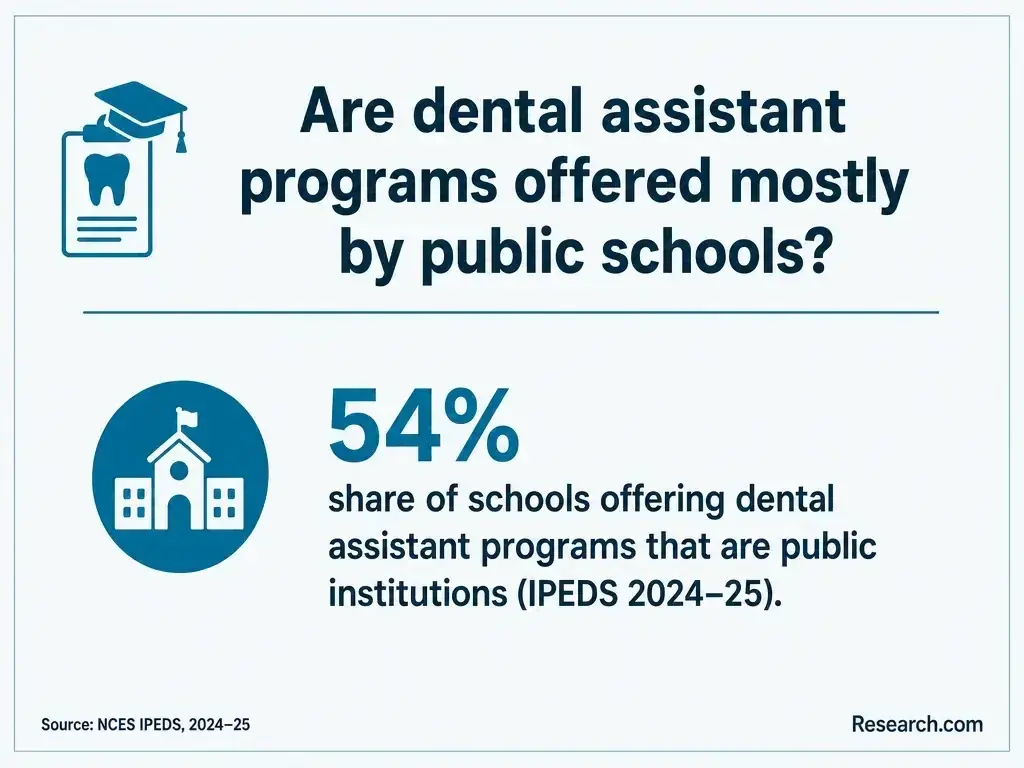
A defensible Louisville-wide average is not available from the cited information, and a school's advertised tuition is not the total cost of entering the occupation. Obtain an itemized, written estimate from each provider before comparing prices. Include mandatory fees, books, scrubs and protective equipment, supplies, any required health screening or background check, travel to clinical sites, and certification or examination charges if you intend to pursue them.
The less expensive option is not necessarily the better investment if it omits supervised practice. Conversely, a higher-priced program is difficult to justify solely because it finishes sooner. Compare completion likelihood, time away from paid work, grants or eligible aid, likely borrowing, and the pay difference you reasonably expect over a defined period. Federal aid eligibility depends on the school and program, not merely on its trade-school label (Federal Student Aid).
The school may award a certificate or diploma; a qualifying longer college program may award an associate degree. These are educational credentials, not occupational licenses. The Dental Assisting National Board (DANB) separately administers professional certifications with their own eligibility and examination requirements. Do not assume that finishing a program automatically awards a DANB certification.
Check institutional accreditation and state authorization separately from dental-assisting programmatic accreditation. The Commission on Dental Accreditation (CODA) is the relevant dental program accreditor to check when a school claims CODA accreditation. A school's authorization to operate, its institutional accreditation, and a program's CODA status answer different questions; none alone establishes permission to perform every duty in Kentucky (CODA; Kentucky Board of Dentistry).
Admissions requirements vary by provider. Ask whether entry requires a high school diploma or equivalent, an interview or assessment, immunization records, a background check, or prerequisites for office-based training. Confirm which items must be completed before classes begin and which are needed only before a clinical placement; delays in either can change your actual finish date.
Employer training has a different entry point: securing a dental office willing to hire and supervise a beginner. Before accepting that route, ask what duties you will initially perform, who teaches clinical skills, and whether the employer supports any additional qualifications you will need. A school acceptance letter and an employer job offer are not interchangeable assurances of clinical training.
A practical curriculum joins clinical and workplace skills: preparing treatment areas, passing instruments, maintaining infection-control procedures, supporting patient comfort, documenting care, and coordinating the next appointment. Radiography or other expanded tasks require particular attention because training in a topic does not, by itself, establish eligibility to perform it under Kentucky rules (Kentucky Board of Dentistry).
Ask to see a skills checklist, not just a course title. It should show which procedures students practice on models, which they perform or observe in an office, the level of supervision, and how competence is recorded. That evidence makes two similarly named certificates much easier to compare.
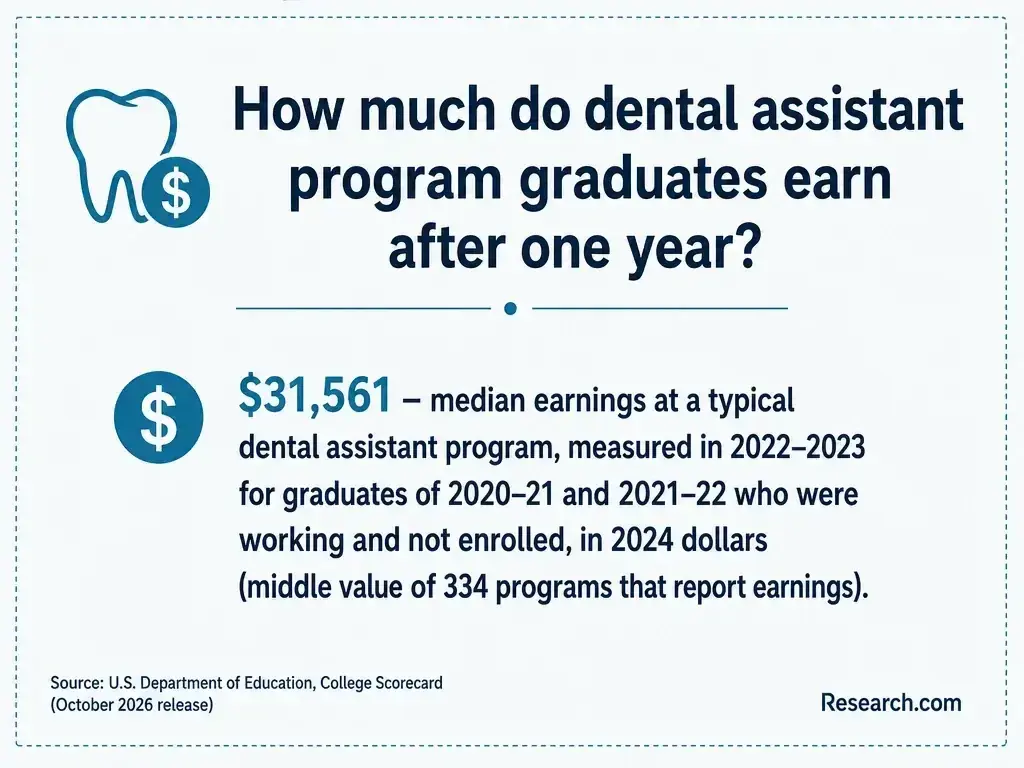
Do not confuse entry into a supervised assistant role with permission to perform every dental-office duty. Kentucky Board of Dentistry rules govern dental assisting functions, including requirements applicable to radiography and certain additional duties. Before enrolling, identify the tasks you want to perform and ask both the program and the board which training, documentation, examination, or other conditions apply. Do not rely on a school's general statement that graduates are "certification-ready" as proof of Kentucky eligibility.
DANB certification is a separate professional credential with eligibility rules set by DANB; it is not the same thing as Kentucky authorization for a particular function (DANB; Kentucky Board of Dentistry). If you expect to work across the river in Indiana, verify that state's rules independently rather than assuming Kentucky training carries identical permissions.
Start with the duties and workplace you want, then compare programs on evidence that affects entry into that role. A ranking can narrow options, but a strong fit depends on supervised practice, regulatory alignment, cost, and a schedule you can finish. If you are also exploring other courses that pay well, compare their actual entry requirements rather than assuming similarly priced certificates lead to similar jobs.
Request answers to these questions from each provider, and keep the responses with its current catalog and cost sheet:
Red flags include a guaranteed job or salary, an unitemized price, vague clinical-placement promises, or a claim that accreditation automatically grants permission for expanded duties. Compare a school route with a genuine supervised job offer before borrowing; the better choice is the one that delivers the needed skills at a cost and pace you can sustain.
An entry role may combine chairside support, sterilization, patient preparation, and scheduling. With documented experience and any additional qualifications required for particular duties, an assistant may pursue more specialized clinical responsibilities or a lead-assistant role. Orthodontic and oral-surgery practices offer different workflows, so seek relevant placement experience rather than assuming a general certificate covers every specialty's procedures.
Advancement is not automatic: employers may value reliability, patient communication, and demonstrated competence as much as a credential's title. Ask a prospective employer what training it provides for new duties and whether it pays for continuing education or an optional certification.
The U.S. Bureau of Labor Statistics projects 7.4% growth in dental assistant employment nationally from 2025 to 2035. That supports considering the occupation, but it is not a Louisville hiring forecast or a promise that a particular graduate will find work. Local opportunity depends on office vacancies, the duties employers need covered, and whether applicants can demonstrate chairside readiness.
To test demand before enrolling, review current Louisville-area openings and speak with practices that host trainees. Note which postings accept beginners, which specify radiography or experience, and whether a school's clinical sites resemble the offices hiring. This checks the value of a program against the local jobs you could realistically pursue.
Education is a substantial investment, so the Research.com team designed this ranking to compare dental assistant programs against other programs serving the same occupation and location. The team checks multiple education, outcomes, accreditation, and occupational sources to support the ranking's quality, credibility, and accuracy. Only programs with completions reported to IPEDS are eligible; the absence of an employer-training route or other provider from the ranking does not mean it is unavailable or unsuitable.
Best-program scores assess student outcomes, earnings and return on investment, costs and debt, and quality and recognition. Programmatic accreditation or relevant industry recognition accounts for 20% of the score, institutional accreditation for 10%, and student support for 10%. The remaining 60% covers outcomes, earnings, and costs, with weights distributed through an entropy-based method. Most-affordable-program rankings instead score only tuition, attendance cost, student debt, and federal loan default rate; they do not include accreditation or other quality indicators in the score.
The following sources were used to create the ranking. They help readers distinguish reported school outcomes from accreditation, certification, and other forms of recognition.
Readers can use the ranking to narrow their search, then verify each program's current dental-assisting curriculum, practical training, price, and Kentucky-specific eligibility before enrolling. Some listed sources cover other trades and are not dental-assisting accreditors. More detail on the ranking process appears in Research.com's methodology.
# 1 position
# 2 position

Employer-provided training may be an option if a dental office hires and supervises beginners. Compare its structured practice and preparation for your intended Kentucky duties with what a school provides.
Do not assume so. Theory can be taught online, but chairside and infection-control skills need in-person practice. Confirm how supervised practical training is arranged before enrolling.
No. A school certificate documents completion of that program; DANB certification has separate eligibility and examination requirements (DANB).
Choose the option that provides the practical training and Kentucky-specific preparation you need at a manageable total cost. Include clinical travel, supplies, lost work time, and any intended examination fees in the comparison.
Do not assume identical rules across state lines. Check Indiana's requirements for the duties you plan to perform before choosing a program or accepting a job there.