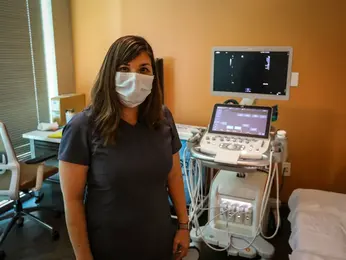
# 1 position
PCI Health Training Center - Dental Assisting/Assistant.
certificate or diploma

Audited and Verified:
Our Editorial and Data Verification Process
Research.com uses government datasets, official education statistics and primary institutional information to support its career and degree guides. Our review process checks factual accuracy, occupational definitions, source dates and the requirements associated with the credentials discussed.
How This Article Was Fact-Checked
Our editorial team verifies salary estimates, employment projections, education requirements and program information against original data providers and official organizations. Salary figures are checked against the relevant occupational definitions and reporting periods. Information about licensure, accreditation and required in-person training is reviewed separately.
Fact-checked and verified on:

Co-Founder and Chief Data Scientist

Reviewed by Karolina Broda
Fact-Checker and Data Verification
The cheapest dental assistant program may not be the least expensive route to a job if it leaves you paying separately for clinical training or Texas registration requirements. Dental assistants had a national median annual wage of $48,070 in May 2025, according to the U.S. Bureau of Labor Statistics (BLS). This guide helps Dallas students compare total costs, hands-on training, credentials, and career prospects. It also accompanies the Most Affordable Dental Assistant Trade Schools in Dallas for 2027 ranking, created by the Research.com team of data scientists to help students make informed choices about programs worth considering.
Expect training for chairside support, patient preparation, infection control, instrument processing, dental materials, records, and office workflow. A useful program lets you practice these tasks in a lab and, where offered, a supervised dental-office placement. Ask how many hours occur in each setting: two programs awarding certificates may offer substantially different amounts of patient-facing experience.
Dallas-area choices can include private career-school certificates, community-college certificates or associate-degree pathways, and training arranged by a dental employer. A certificate may suit someone seeking relatively quick entry; an associate-degree pathway can suit a student who wants a broader academic curriculum, provided its additional time and cost support a specific goal. Employer training can reduce upfront expense but may offer less structured instruction or a narrower range of procedures. Dental assisting is not generally organized around a required registered apprenticeship; verify any program advertised as one with its sponsor (Apprenticeship.gov; Texas State Board of Dental Examiners).
Descriptions of top online vocational schools can help you compare flexible coursework, but dental assisting still requires a credible plan for practicing physical, chairside skills. Do not assume a remote course provides that experience.
Dental offices are the principal workplace for dental assistants, according to BLS. In the Dallas-Fort Worth area, a job search can encompass general dentistry and specialty practices, such as orthodontics or oral surgery; duties depend on the practice and what Texas permits an assistant to do. This gives students a reason to ask where a program places learners for clinical experience, rather than judging it only by classroom location.
A practice may hire and train an entry-level assistant, making school an option rather than a universal prerequisite. Before choosing that route, ask whether training is paid, who supervises X-ray duties, and whether the employer will support the steps needed for Texas RDA registration if those duties are part of the intended job.
There is no responsible way to turn a national wage into a promised Dallas offer. The U.S. median annual wage was $48,070 in May 2025 for dental assistants across experience levels and employers (BLS, Occupational Outlook Handbook). For a local comparison, check the latest BLS Occupational Employment and Wage Statistics estimate for the Dallas-Fort Worth-Arlington metropolitan area and compare it with current entry-level postings. Note the reference year: metro estimates and national median figures may come from different releases.
When weighing tuition against earnings, use the pay you could realistically obtain without training as your baseline, then compare likely entry-level offers rather than the occupation-wide median. Benefits, available hours, commute length, and whether a practice pays for RDA-related steps can materially change the value of an offer.
There is no single Texas clock-hour requirement that makes every dental assistant training program equivalent. Certificate schedules vary by provider and enrollment intensity; an associate-degree pathway generally includes more coursework. Request each school's published calendar, total contact hours, lab hours, and any externship hours, then ask when those hours actually occur. Evening classes may still require daytime clinical availability.
An accelerated college degree is not a substitute for checking dental assisting competencies. A shorter schedule is attractive if it gets you into paid work sooner, but not if it compresses supervised practice below what you need to work confidently or pursue your intended Texas duties. Employer-based training may begin with paid work sooner, although the time needed to learn a full range of procedures depends on the practice.
Online or hybrid instruction can work for terminology, anatomy, records, and some infection-control theory. Instrument handling, chairside procedures, and patient interaction call for in-person practice and supervision. A fully remote course should not be treated as equivalent to a program with dental labs and an office placement, or assumed to satisfy Texas RDA requirements (Texas State Board of Dental Examiners).
The format comparison is less about where lectures happen than where skills are assessed. Before enrolling in a hybrid option, get written answers about its lab address, required attendance, clinical-site arrangements, supervision, and any travel outside Dallas. Campus instruction may be simpler for someone who needs regular access to equipment; hybrid study may fit a working student who can reliably attend its in-person sessions.
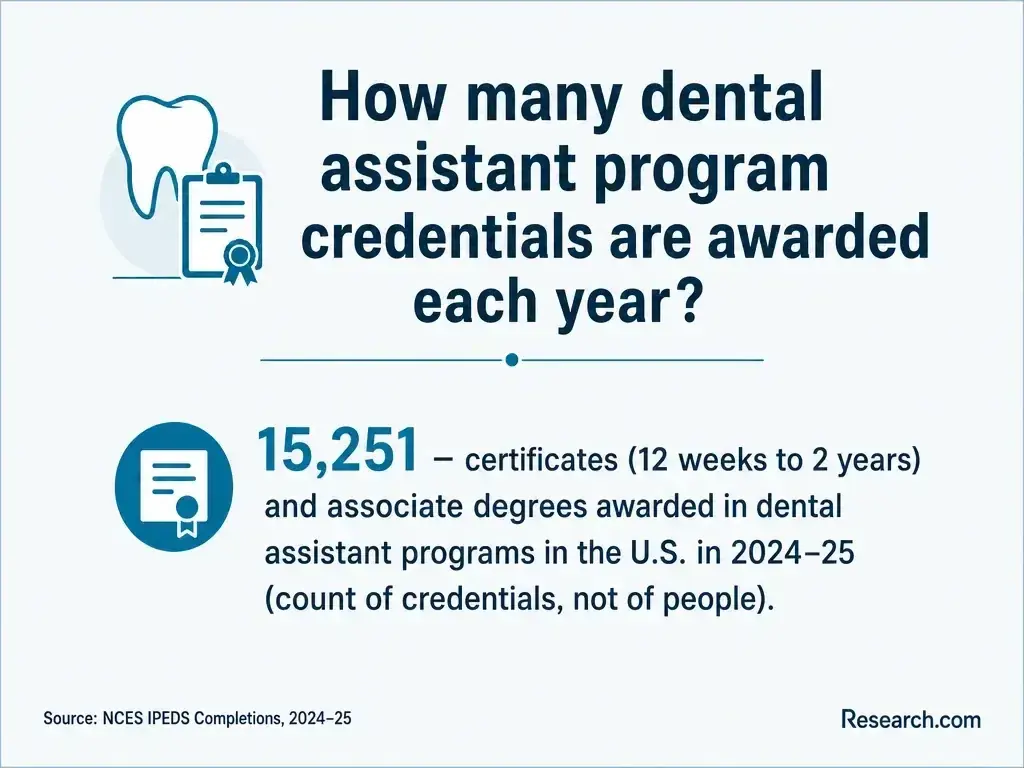
A defensible Dallas-wide average cannot be stated without a comparable, current set of program prices and definitions. A school's advertised tuition may omit expenses that another school includes. Ask each provider for an itemized total cost through job entry, using the same checklist:
Federal aid depends on the institution and program's eligibility, not simply on a school's use of the word "accredited" (U.S. Department of Education, Federal Student Aid). Ask for your individual aid estimate and the amount you would need to borrow. Searching how much does an online phd cost will not give you a useful price benchmark for this occupation; compare Dallas dental assisting programs on the same included-cost basis instead.
Depending on the pathway, you may receive a school certificate or diploma, earn an associate degree, or complete employer training without a school credential. Those are education or training outcomes. They are distinct from Texas RDA registration and from the Dental Assisting National Board's voluntary Certified Dental Assistant (CDA) credential (Texas State Board of Dental Examiners; DANB).
Also distinguish institutional accreditation, which concerns the school, from CODA programmatic accreditation, which concerns a dental assisting program. State authorization to operate, accreditation, professional certification, and permission to perform regulated duties answer different questions; none automatically replaces the others (CODA; Texas State Board of Dental Examiners). Ask a provider to identify the exact credential on your completion document and which, if any, Texas registration or DANB eligibility routes its curriculum supports.
Admissions rules are school-specific. A provider may ask for proof of prior schooling and impose requirements before lab or clinical participation, such as health documentation or a background check. Get these requirements, their deadlines, and their costs in writing before paying a deposit. Separately, check the Texas State Board of Dental Examiners' current RDA application requirements if taking X-rays is part of your goal; admission to a school does not establish eligibility for registration.
Returning students can use resources on degrees for older adults to think through scheduling, but the practical questions here are whether you can attend in-person labs, travel to a clinical site, and meet the applicable Texas requirements. Ask whether prior coursework or documented dental-office experience can reduce training time, and insist on a written evaluation rather than assuming credit will transfer.
Training commonly combines dental terminology and anatomy with infection prevention, sterilization, instrument transfer, dental materials, patient communication, charting, and scheduling (BLS, Occupational Outlook Handbook). Programs preparing students for radiography-related duties should explain the instruction and practical assessment tied to the relevant Texas RDA pathway (Texas State Board of Dental Examiners).
Look beyond a course-title list. Ask to see how students demonstrate safe instrument processing, prepare a treatment room, assist during a procedure, and communicate with a patient. Increasing use of digital records and imaging makes familiarity with practice technology useful, but software instruction cannot replace infection-control habits or supervised chairside practice.
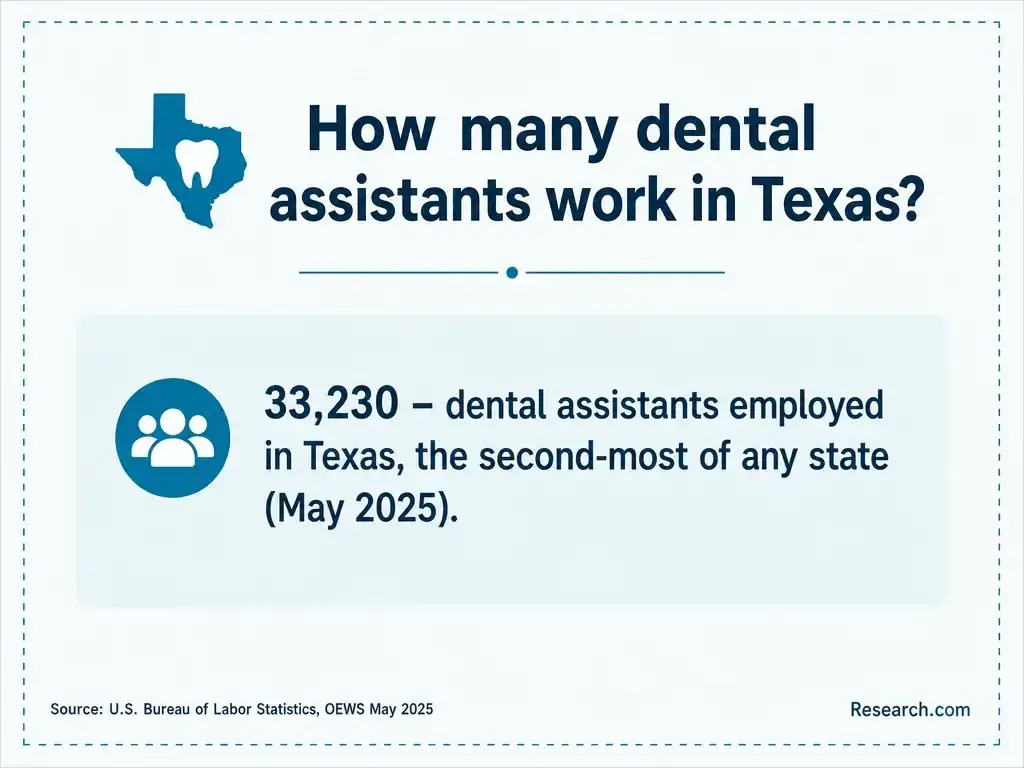
Basic dental assisting and taking dental X-rays are different regulatory questions in Texas. The Texas State Board of Dental Examiners provides an RDA registration route for assistants who take dental radiographs. Do not assume a course-completion certificate, CODA accreditation, or DANB certification is itself a Texas registration. Confirm the board's current qualifying routes, application steps, and permitted duties before selecting a program (Texas State Board of Dental Examiners).
DANB's CDA is a professional certification with its own eligibility and examination rules; whether it is useful depends on your employer and career goals (DANB). Additional duties can have separate Texas rules. Ask a prospective employer which duties the job requires, then verify the corresponding board requirements rather than paying for credentials you do not need - or overlooking one you do.
Start with the job you want - general chairside assistance, a role involving X-rays, or a specialty practice - and work backward to its skills and Texas requirements. The affordability ranking is a shortlist, not proof that the lowest-scoring cost option is the best personal investment. If considering PCI Health Training Center, The College of Health Care Professions-Dallas, or Concorde Career College-Dallas, confirm the currently offered dental assisting program and obtain its own written details; do not assume programs or prices are identical across campuses.
Use these checks before making a nonrefundable commitment:
A list of accredited universities online with no cost to apply cannot verify a dental assisting program's Texas fit. For this choice, the red flags are unitemized fees, vague clinical promises, unsupported claims of automatic registration, and salary claims presented as guaranteed outcomes.
A new assistant may begin with patient preparation, sterilization, and chairside support, then take on duties permitted by Texas rules as skills and applicable credentials develop. Experience may support work in orthodontic or oral-surgery practices, treatment coordination, office administration, or supervision of other assistants. These are possible progressions, not automatic promotions or separate licenses conferred by a school certificate (BLS, Occupational Outlook Handbook; Texas State Board of Dental Examiners).
If your goal is primarily front-desk work, compare the cost of chairside training with employer-provided office training. If you want radiography duties, prioritize a pathway that clearly explains Texas RDA eligibility. Additional certification can be worthwhile when a target employer values it, but it should not be mistaken for a universal entry requirement.
BLS projects 7.4% growth in U.S. dental assistant employment from 2025 to 2035. This national projection suggests continuing opportunities but does not forecast a particular number of Dallas openings or guarantee work for a graduate (BLS, Employment Projections). For a local decision, compare current postings across the Dallas-Fort Worth area for required experience, X-ray duties, schedules, and pay.
The most useful demand signal is whether practices offering jobs you would accept recognize the training you are considering. A shorter, cheaper program may be sufficient for an employer willing to teach on the job; a program with substantial supervised practice may be more valuable if postings expect assistants to contribute quickly in a busy office.
Investing in training is an important decision, so Research.com evaluates programs against others in the same occupation and location rather than treating every trade-school option as interchangeable. The accompanying most affordable ranking scores tuition, cost of attendance, median student debt, and federal loan default rates; an entropy-based method gives more weight to measures that differ more across programs. Accreditation and other quality measures do not contribute to this affordability score.
Only programs with completions reported to IPEDS are included. That limitation matters: an employer training route or a provider absent from college-oriented datasets is not necessarily unavailable or low quality. Research.com also produces separate best programs rankings that consider outcomes, earnings and return on investment, costs and debt, and quality and recognition. In those rankings, occupation-relevant programmatic accreditation or industry recognition receives 20%, institutional accreditation 10%, student support 10%, and outcomes, earnings, and costs a combined 60% allocated through an entropy-based method. The two rankings answer different questions.
The team draws on the following sources to check program, institution, and industry information. Some cover trade education broadly rather than dental assisting specifically:
Use the ranking to narrow a cost-conscious shortlist, then confirm current prices, clinical experience, and Texas eligibility directly with each provider. More detail on Research.com's approach appears on its methodology page.
# 1 position
# 2 position
# 3 position
Compare written, all-in school quotes with paid employer training. The lowest tuition is not necessarily the lowest net cost once supplies, travel, lost wages, and any required registration expenses are included.
Employer-based entry may be possible for basic assisting. Check the Texas State Board of Dental Examiners' requirements before taking on duties such as dental X-rays, which involve RDA registration.
Online coursework can cover theory, but it cannot by itself demonstrate hands-on chairside skills. Confirm where practical training happens and whether the pathway supports your intended Texas duties.
No. School completion and Texas RDA registration are distinct. Ask the provider which board-recognized route its training supports and verify the current application requirements with the Texas State Board of Dental Examiners.
It may be if its supervised practice and credential fit jobs you want at a manageable total cost. Compare that benefit with paid employer training, your likely borrowing, forgone wages, and realistic entry-level offers - not an occupation-wide median alone.