# 1 position
Houston Community College - Dental Assisting/Assistant.
certificate or diploma

Audited and Verified:
Our Editorial and Data Verification Process
Research.com uses government datasets, official education statistics and primary institutional information to support its career and degree guides. Our review process checks factual accuracy, occupational definitions, source dates and the requirements associated with the credentials discussed.
How This Article Was Fact-Checked
Our editorial team verifies salary estimates, employment projections, education requirements and program information against original data providers and official organizations. Salary figures are checked against the relevant occupational definitions and reporting periods. Information about licensure, accreditation and required in-person training is reviewed separately.
Fact-checked and verified on:

Co-Founder and Chief Data Scientist

Reviewed by Karolina Broda
Fact-Checker and Data Verification
Comparing dental assistant programs in Houston takes more than finding the lowest tuition: you also need practical training and a path to the duties you want to perform. The U.S. Bureau of Labor Statistics projects 7.4% national employment growth for dental assistants from 2025 to 2035. This guide is for prospective students and career changers weighing cost, training time, and Texas requirements. It accompanies the Most Affordable Dental Assistant Trade Schools in Houston for 2027 ranking, created by the Research.com team of data scientists to help students identify programs worth considering.
Expect instruction in chairside support, infection prevention, instruments, patient communication, and dental-office workflow, followed by supervised practice. A school's certificate or diploma documents completion of its curriculum; it does not, by itself, grant a Texas registration or a national certification. For a student who wants to work directly with patients, the quality and accessibility of hands-on training matter as much as the credential's name.
Houston-area choices may include a public college program, a private career-school program, or employer-led training in a dental office. Classroom-based training can offer a structured start and access to practice equipment; employer training may reduce upfront school costs but depends on a practice willing to teach and supervise a newcomer. Ask what tasks a new hire can actually perform under Texas rules, not merely whether an employer accepts the school's certificate.
Most dental assistants work in dentists' offices, according to the U.S. Bureau of Labor Statistics. In the Houston area, that can mean general practices, pediatric or orthodontic offices, oral-surgery practices, and larger group practices. The setting changes the skills a student should seek: a general practice may value broad chairside experience, while a specialty office may train a new hire on its procedures and equipment.
When comparing programs, ask where students complete supervised practice and whether placements are arranged by the school. A placement across the metropolitan area can add substantial travel time and expense, even when tuition looks affordable.
The latest national figure supplied by the U.S. Bureau of Labor Statistics is a $48,070 median annual wage in May 2025 for dental assistants. It describes workers at all experience levels across the United States, not entry-level pay in Houston. For a local comparison, consult the Bureau's most recently published Occupational Employment and Wage Statistics for dental assistants in the Houston-The Woodlands-Sugar Land metropolitan area and check the reference year before comparing it with an offer.
Ask prospective employers about hourly pay, scheduled hours, benefits, and any premium for specific duties. To judge whether training is worth its price, compare the likely earnings change with your total cost, borrowing, time away from work, and chance of finishing - not the national median alone.
There is no single Houston-wide program length or required clock-hour total for every dental assistant pathway. A short career-school course, a longer certificate or diploma program, and training provided by an employer can involve different schedules and amounts of supervised practice. Request each school's current calendar and a breakdown of classroom, lab, and clinical hours; do not assume similarly named credentials require equivalent training.
An accelerated schedule can get you to an interview sooner but may leave less flexibility for work or transportation. A part-time schedule may protect current earnings while delaying completion. Compare the date you can realistically become job-ready, including any clinical placement wait, rather than the advertised classroom finish date.
Online coursework can cover terminology, anatomy, office procedures, and some infection-control concepts. It cannot replace supervised practice with instruments, chairside procedures, or other competencies that must be demonstrated in person. A hybrid program can be a workable option if its lab and clinical sites are accessible from home and its schedule fits your job; an entirely remote course should not be treated as proof of practical readiness or Texas eligibility.
If you are comparing online trade schools, ask where hands-on work occurs, who arranges a dental-office placement, and which Texas requirements the curriculum is designed to address. Get those answers in writing before paying a deposit.
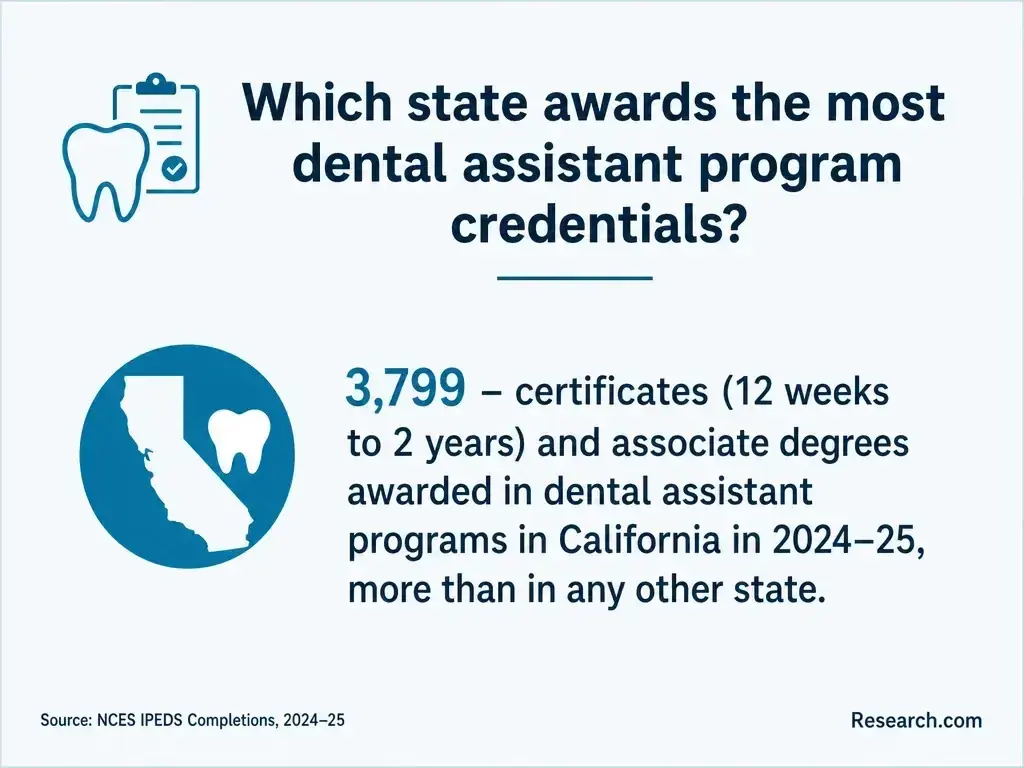
A reliable Houston-wide average cannot be stated without a defined set of comparable programs and current, itemized prices. An advertised tuition figure may exclude charges needed to finish training or begin work. The useful comparison is each option's total out-of-pocket cost to become job-ready, including any borrowing costs.
Request a written estimate covering the items below so you can compare a public program, a career school, and employer training on the same basis:
Federal aid depends on both student eligibility and the specific institution and program, according to Federal Student Aid. Houston-area applicants can also ask Workforce Solutions about current workforce-training assistance; eligibility and approved-provider rules vary. Do not assume a low advertised price or a payment plan makes a program cheaper overall.
A school may award a certificate or diploma for completing its dental assistant curriculum. A public-college pathway may instead award a college certificate or, where offered, an associate degree. These are educational awards, not the same as Texas Registered Dental Assistant status or Dental Assisting National Board certification. Check the exact award on the program's catalog and ask whether credits can transfer or count toward a later credential; transfer is never automatic.
If you are comparing the cheapest online college for associate's degree options with dental assistant training, first check whether the specific program includes the in-person dental competencies you need. An inexpensive general online credential is not an interchangeable route into chairside work.
Requirements vary by provider. Ask whether applicants need a high school diploma or equivalent, an entrance assessment, immunization records, a background check, or other documentation before clinical placement. Confirm which costs are due before admission and which conditions could prevent you from completing the practical portion after classes begin.
An application-fee waiver can reduce the cost of exploring options, but lists of accredited online colleges free to apply for do not establish that a particular dental assistant program has a local clinical placement. Verify program-specific entry and placement rules directly.
A useful curriculum connects dental anatomy and terminology to patient preparation, instrument handling, chairside assistance, sterilization, records, scheduling, and communication. Depending on the program and Texas rules, it may also address radiography or other regulated duties. The U.S. Bureau of Labor Statistics describes both patient-care and administrative tasks as part of dental assistants' work; programs differ in how much time they devote to each.
Ask to see the lab syllabus and a description of supervised clinical work. Practicing infection-control steps and patient interactions under observation is more informative than a course title alone. If your target is a specialty practice, ask whether the placement exposes students to that setting or whether the employer would provide the specialty training later.
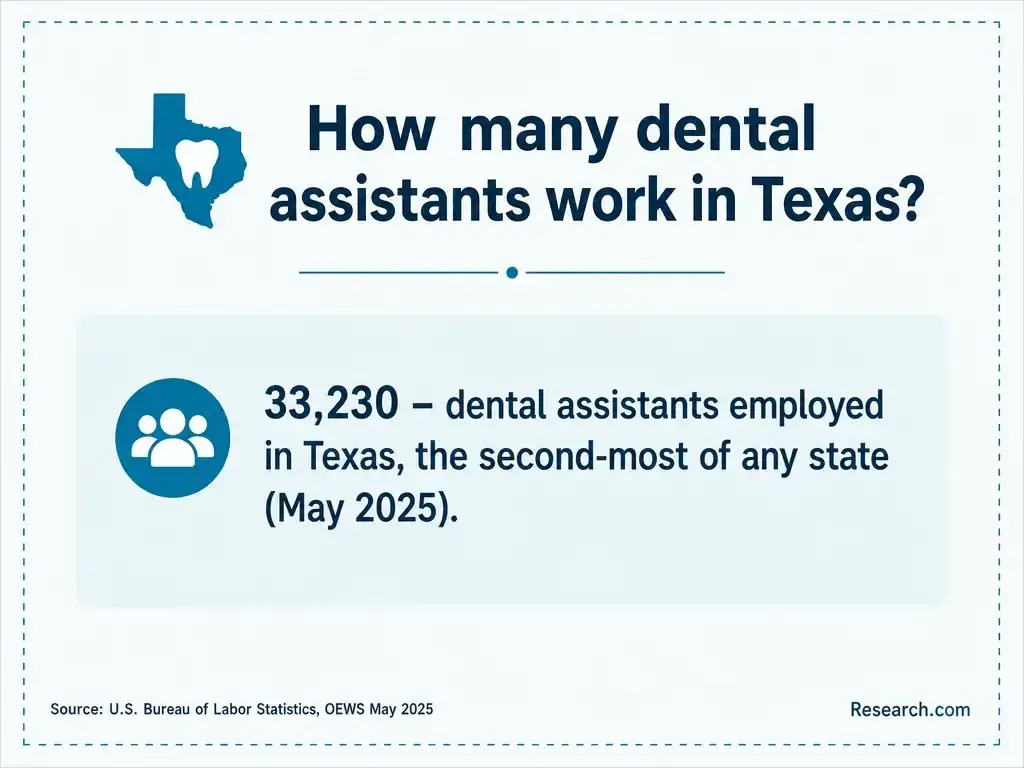
Texas distinguishes between basic dental-assisting work and duties tied to Registered Dental Assistant (RDA) status or other qualifications. The Texas State Board of Dental Examiners sets the applicable rules, including requirements relevant to dental radiography. Check the Board's current duty and registration requirements against the tasks you hope to perform; finishing a school program does not automatically confer RDA status.
National certification from the Dental Assisting National Board is a separate credential with its own eligibility and examination rules. Likewise, institutional accreditation, Commission on Dental Accreditation program accreditation, and Texas school authorization answer different questions; none should be presented as a substitute for another. Ask a provider to identify precisely which application or examination pathway its graduates can pursue and what additional steps remain.
Start with the job you want, then test whether each program delivers the relevant skills at a manageable total cost. A low-price course is poor value if its practical training is inaccessible; a higher-price program is not automatically better because it has a longer schedule or a recognizable name.
Before enrolling, put the same questions to every provider and compare the written answers:
Check the answers with the Texas State Board of Dental Examiners, the relevant accreditor, and the provider's current catalog. If an admissions representative cannot distinguish a completion certificate from state registration, treat that as a reason to pause. A separate guide to job certifications that pay well may help you compare occupations, but it cannot establish the value of a particular Houston dental assistant program.
Training can lead to an entry-level chairside or administrative dental-assisting role. With experience and any qualifications required for particular duties, an assistant may move into a specialty practice, take on greater responsibility for office workflow, or pursue optional national certification. These steps depend on the employer, the work performed, and applicable Texas rules - not simply on time spent in a program.
Dental assisting is a focused occupational pathway. A masters degree in one year is not an entry requirement for it; assess this investment against the dental duties and workplace you actually want, rather than an unrelated educational path.
The U.S. Bureau of Labor Statistics projects 7.4% growth in national dental assistant employment from 2025 to 2035. That indicates demand across the occupation, but it is not a Houston-specific forecast or a guarantee of a local opening. For a location-sensitive decision, compare the most recent Houston-area occupational figures and current dental-office postings with the program's clinical placement network.
Look beyond posting counts: note whether nearby employers seek new assistants, prefer experience, or specify radiography-related qualifications. That distinction can tell you whether a shorter entry route is realistic or whether more structured hands-on preparation would improve your fit.
Education is a consequential investment, so Research.com designed this ranking to help readers compare dental assistant programs with local alternatives rather than with unrelated trades. Only programs reporting completions to the Integrated Postsecondary Education Data System (IPEDS) are eligible. That means a provider's absence from the ranking does not establish that its training is unavailable or unsuitable.
Most affordable rankings score tuition, cost of attendance, median student debt, and federal loan default rate. Indicator weights are assigned through an entropy-based method, which gives more weight to measures that vary more across eligible programs. Accreditation and other quality measures are not part of the affordability score. For context, Research.com's separate best programs methodology also considers student outcomes, earnings, support services, institutional accreditation, and occupation-relevant recognition. Readers should therefore use this affordability ranking as a cost-focused shortlist, then independently check clinical training and Texas regulatory fit.
The team draws on the following sources to check education, cost, recognition, and occupational context. Some cover other trades as well as dental assisting and should not be mistaken for dental-assisting approvals:
See Research.com's methodology for more on the ranking process. Before enrolling, request a current, itemized price and confirm what the program teaches in person; a favorable cost score alone cannot answer either question.
# 1 position
# 2 position
# 3 position
# 4 position
# 5 position
# 6 position

Compare itemized public-college and career-school prices with dental offices willing to train new hires. Employer training may lower upfront costs, but confirm the supervision offered and whether it prepares you for your intended duties.
Online lessons can teach theory, but they do not replace in-person practice. Confirm where a program provides supervised lab or clinical training and whether its curriculum aligns with Texas rules.
No. A school completion credential and Texas Registered Dental Assistant status are different. Check current application and duty requirements with the Texas State Board of Dental Examiners.
Possibly, if its supervised training, schedule, support, and demonstrated outcomes justify the additional total cost. Compare those benefits with debt, lost earnings, and your likelihood of finishing.
No. Aid eligibility depends on the student and the specific institution and program. Ask the school's financial aid office to verify eligibility before relying on an aid estimate.