# 1 position
UEI College-Chula Vista - Dental Assisting/Assistant.
certificate or diploma

Audited and Verified:
Our Editorial and Data Verification Process
Research.com uses government datasets, official education statistics and primary institutional information to support its career and degree guides. Our review process checks factual accuracy, occupational definitions, source dates and the requirements associated with the credentials discussed.
How This Article Was Fact-Checked
Our editorial team verifies salary estimates, employment projections, education requirements and program information against original data providers and official organizations. Salary figures are checked against the relevant occupational definitions and reporting periods. Information about licensure, accreditation and required in-person training is reviewed separately.
Fact-checked and verified on:

Co-Founder and Chief Data Scientist

Reviewed by Karolina Broda
Fact-Checker and Data Verification
Choosing an affordable dental assistant program in Chula Vista means looking beyond tuition: the training must also prepare you for hands-on work and the California duties you want to perform. The U.S. Bureau of Labor Statistics reports a $48,070 national median annual wage for dental assistants in May 2025. This guide explains costs, credentials, career prospects, and licensing rules alongside the Most Affordable Dental Assistant Trade Schools in Chula Vista for 2027 ranking, created by the Research.com team of data scientists to help students make an informed choice about programs worth considering.
Expect instruction in chairside procedures, infection prevention, patient communication, dental materials, and office workflow, with supervised practice before you work independently on permitted tasks. Programs can differ substantially in clinical access and in whether their curriculum is designed for entry-level assisting or a California Registered Dental Assistant (RDA) pathway. A similarly named certificate does not establish the same eligibility at every school.
For a Chula Vista student, the practical question is where and when hands-on training takes place. Compare campus lab schedules, clinical placement arrangements, and travel to dental offices across South Bay or the wider San Diego area. If you are also exploring most successful college majors, note that dental assisting is a shorter occupational-training decision: judge it by readiness for specific dental-office duties, not by a college-major ranking.
Dental offices are the principal workplace for dental assistants, according to the U.S. Bureau of Labor Statistics. In and around Chula Vista, that can mean general or specialty practices in South Bay or elsewhere in the San Diego metropolitan area. Some assistants also work in larger group practices or public-health settings. The duties available in any office depend on California rules, the assistant's qualifications, and employer needs - not simply on the title of a school credential.
Ask a prospective program where students complete clinical experience and whether those sites offer a realistic commute. A placement across the metro area may expand exposure to potential employers, but transportation and scheduling can materially increase training costs.
The U.S. Bureau of Labor Statistics reports a $48,070 national median annual wage for dental assistants in May 2025. That is a midpoint for employed assistants across experience levels, not a Chula Vista starting salary. For a local pay decision, compare current dental assistant job postings with the latest BLS San Diego metropolitan wage estimates, using the same occupation and reference period rather than a mix of job titles.
Pay can also depend on experience, specialty duties, hours, and the qualifications an employer requires. Avoid using national earnings - or lists of top paying college majors - as a promise of return on a dental assisting certificate. A useful comparison starts with the wages available to you before training and the realistic pay for entry-level jobs you could take afterward.
There is no single Chula Vista program length or clock-hour total. A short entry-level course, a career-school certificate with clinical experience, and training intended to meet California RDA eligibility requirements can demand different amounts of time. Get each provider's published calendar, required attendance hours, lab hours, and clinical requirements; ask whether a placement is guaranteed, arranged with assistance, or left to the student.
Faster completion may get you into an entry-level job sooner, but it is a poor bargain if it omits practical competencies or courses needed for your intended duties. Part-time attendance can preserve earnings while extending the time before you can seek a new role. If an employer offers supervised on-the-job training, compare its pay and schedule with the time and cost of school rather than assuming a classroom program is mandatory for basic entry.
Online instruction can cover terminology, anatomy, scheduling, and some infection-control theory. It cannot replace supervised chairside practice, instrument handling, or other in-person competencies. A hybrid program may be workable for someone balancing a job and training, provided its lab and clinical schedule is accessible from Chula Vista and its curriculum meets the requirements for the duties the student seeks.
Before paying for a remote program, ask exactly where practical training occurs, who arranges the site, and whether the Dental Board of California recognizes any claimed course or RDA eligibility pathway. Online education roundups, including guides to best degree programs for older adults online, address a different decision; convenience alone does not establish dental assisting competency or regulatory eligibility.
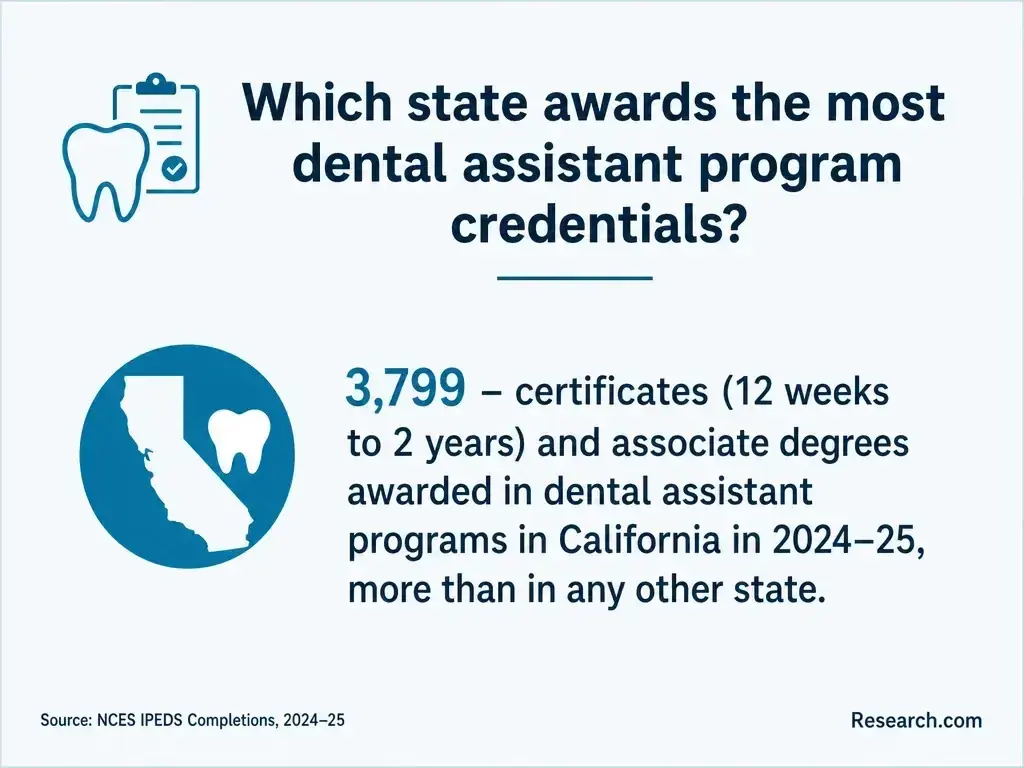
A defensible Chula Vista average cannot be stated without comparable, current total-price disclosures from local providers. Published tuition may exclude mandatory fees and costs that depend on a student's schedule or clinical site. Instead of relying on a single advertised figure, request an itemized estimate from each program and compare the amount needed to become job-ready.
The table separates charges commonly confused with tuition. Ask which items are included, which are optional, and which are refundable if you withdraw.
| Cost component | What to verify |
| School charges | Tuition, mandatory fees, books, materials, uniforms, and protective equipment |
| Career-entry charges | Required courses, examinations, applications, and any employer-required screening |
| Time and travel | Transport to campus and clinical sites, childcare, and earnings forgone while training |
| Potential offsets | Grants, scholarships, eligible federal or state aid, and paid employer training |
Federal aid depends on both student and program eligibility; accreditation by itself does not make every short course aid-eligible. Confirm eligibility with the school's financial-aid office and Federal Student Aid. Lists of affordable online colleges that accept FAFSA are not a substitute for checking the specific dental assisting program and its hands-on requirements.
Depending on the provider, you may earn a certificate or diploma documenting completion of its dental assisting curriculum. That school-issued credential is distinct from California RDA registration and from voluntary professional certification through the Dental Assisting National Board (DANB). Check the exact award named in the catalog and whether the program supplies documentation for any board-required courses or eligibility route.
Institutional accreditation evaluates a school; CODA accreditation evaluates eligible dental programs; California school authorization concerns permission to operate; and Dental Board of California requirements govern state-recognized duties and registration. None should be treated as interchangeable. If you may pursue RDA status, verify the particular pathway with the board before enrolling rather than relying on a general claim that a program is "accredited."
Admissions requirements vary by provider and may include an application, proof of prior schooling or equivalent preparation, an interview, and enrollment paperwork. Clinical sites may impose separate health or screening requirements. Ask for requirements in writing before making a nonrefundable payment, especially if you need an evening schedule or expect to train at an off-campus office.
School admission is not the same as authorization to perform every dental assisting duty. California sets task-specific rules, including requirements relevant to radiography and RDA registration, through the Dental Board of California. A provider should be able to explain which entry-level duties its training covers and which additional steps remain after completion.
Dental assisting training typically combines dental anatomy and terminology with chairside support, instrument preparation, sterilization, infection control, dental materials, patient records, and communication. A strong practical component lets students rehearse safe procedures in a lab and receive feedback in a supervised clinical setting. The U.S. Bureau of Labor Statistics describes assistants' work as both patient-facing and administrative, so proficiency in one area does not replace the other.
Read the course outline at the task level. For example, a lesson about dental radiography is not necessarily the California-approved training needed to take radiographs, and watching a procedure is not the same as performing it under supervision. Ask how competency is assessed and whether the program documents completed clinical experience.
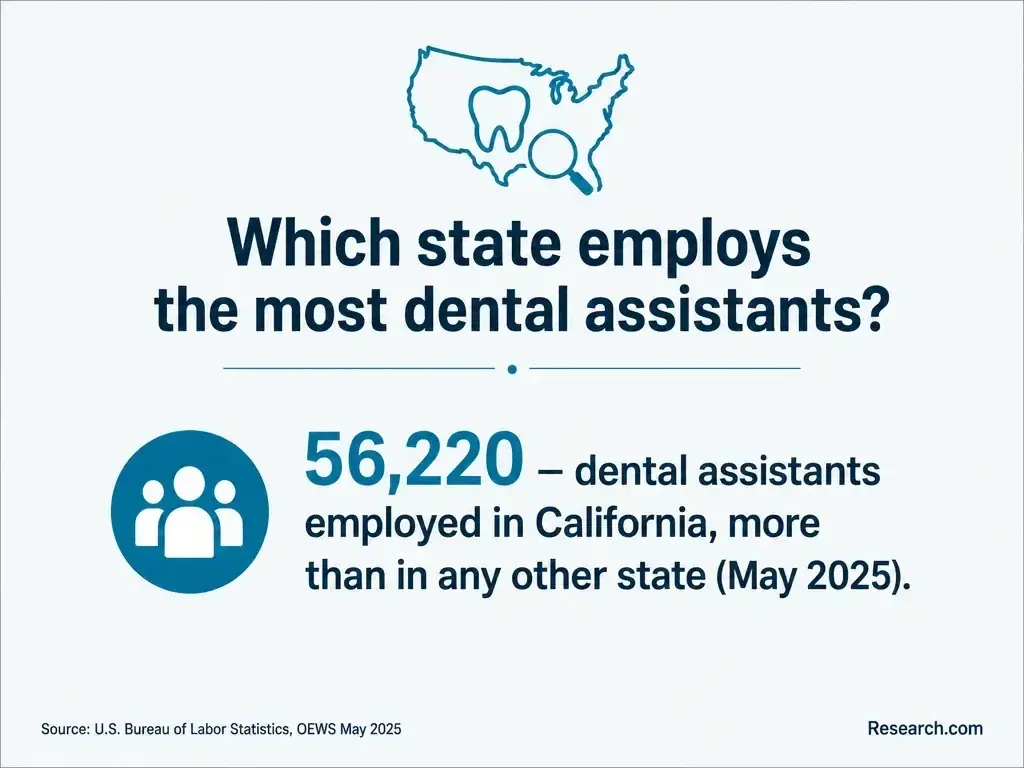
Not for every entry-level dental assisting job. California allows unlicensed dental assistants to perform permitted basic duties under the applicable supervision rules, but certain tasks require additional training or qualifications. RDA is a separate California registration with board-defined eligibility and examination requirements. The Dental Board of California also sets rules affecting courses such as infection control and the California Dental Practice Act, and qualifications for taking dental radiographs.
DANB certification is a professional credential, not a California occupational license. Before selecting a program, identify the duties in jobs you want and check the board's current requirements for each. Ask whether the school's curriculum meets a specified RDA pathway or only prepares you for basic assisting; graduation alone should never be taken as proof of registration eligibility.
Start with the job you want, then compare programs on eligibility, supervised practice, total cost, and the likelihood that you can finish on your schedule. The affordability ranking is a useful shortlist, not a substitute for checking current terms. If considering UEI College-Chula Vista or Pima Medical Institute-Chula Vista, request each school's current dental assisting catalog and confirm that the specific program, schedule, and clinical arrangements are available.
Use these questions when speaking with admissions staff; request written answers where they affect cost or California eligibility.
Compare those answers with employer-sponsored training if your goal is basic entry and paid learning is available. Avoid choosing solely by school type, speed, or advertised tuition. Return on investment depends on completion probability, debt, aid, earnings you give up while training, realistic pay afterward, and how long you expect to work in the field. Even a guide to colleges with double major programs cannot answer that occupation-specific investment question.
Basic assisting can lead to broader chairside responsibilities as an employee gains experience and meets California's requirements for particular duties. RDA registration is a distinct advancement goal; specialty-office work, scheduling or treatment coordination, and lead-assistant responsibilities may also become options depending on an employer's needs. None follows automatically from finishing a certificate.
Choose training according to the next role, not the most impressive-sounding credential. If you want rapid entry, ask local employers whether they train new assistants and which qualifications they expect at hiring. If you want RDA eligibility, map every required course, examination, and experience step against the Dental Board of California's current rules before paying. General lists of most successful college majors do not measure this progression.
The U.S. Bureau of Labor Statistics projects 7.4% growth in U.S. dental assistant employment from 2025 to 2035. That national projection suggests continuing demand for the occupation, but it is not a forecast of openings in Chula Vista or a guarantee of work after training. Local hiring can differ by office, specialty, experience level, and the duties an applicant is qualified to perform.
Use the projection as context, then check current South Bay and wider San Diego job postings for required skills, schedules, and pay. If postings repeatedly request radiography qualifications or RDA status, weigh the cost and time of obtaining those qualifications against the entry-level route before selecting a school.
Investing in occupational training is an important decision, and an affordable program is not necessarily the best fit for every student. To make the ranking credible and useful, the Research.com team compares programs against others in the same occupation and location, checks multiple data sources, and includes only programs with completions reported to IPEDS. That coverage rule means an employer training route or other provider may be available even if it does not appear in the ranking.
The most affordable ranking scores tuition, cost of attendance, median student debt, and federal loan default rate. Weights are assigned through an entropy-based method, which gives more weight to measures that differ more across programs. Accreditation and other quality indicators do not enter this affordability score. Research.com's separate best programs rankings also consider student outcomes, earnings, return on investment, student support, and relevant recognition; their weighting should not be mistaken for the affordability methodology. Readers can use this ranking to narrow their cost comparison, then verify current program details before enrolling.
The team used the following sources to assemble and check ranking information. Some are broad education datasets or references for other trades; their inclusion does not mean they accredit dental assisting programs or cover every local training route.
For more detail about Research.com's ranking practices, see its methodology page.
# 1 position
# 2 position
Compare a school's complete job-ready cost with any available paid employer training. The cheapest tuition is not necessarily the cheapest route once fees, supplies, commuting, and lost earnings are included.
California permits entry into certain basic assisting duties without an RDA license. An employer may provide training, but you must still meet applicable rules for the tasks you perform. Check the Dental Board of California's current requirements.
No. A school certificate documents completion of its program. RDA registration has separate eligibility and examination requirements set by the Dental Board of California.
Theory may be taught online, but chairside skills require in-person practice. Confirm where a hybrid program provides labs and supervised clinical experience and whether its courses meet your intended California pathway.
It may be if its training matches the duties you want, you can complete the schedule, and realistic local pay justifies your total cost and time away from work. Compare it with paid employer training before deciding.