# 1 position

Audited and Verified:
Our Editorial and Data Verification Process
Research.com uses government datasets, official education statistics and primary institutional information to support its career and degree guides. Our review process checks factual accuracy, occupational definitions, source dates and the requirements associated with the credentials discussed.
How This Article Was Fact-Checked
Our editorial team verifies salary estimates, employment projections, education requirements and program information against original data providers and official organizations. Salary figures are checked against the relevant occupational definitions and reporting periods. Information about licensure, accreditation and required in-person training is reviewed separately.
Fact-checked and verified on:

Co-Founder and Chief Data Scientist

Reviewed by Karolina Broda
Fact-Checker and Data Verification
A low tuition quote does not tell you whether a dental assisting program will get you into a California dental office - or what it will cost to become job-ready. The Research.com team of data scientists created the Most Affordable Dental Assistant Trade Schools in Imperial for 2027 ranking to help students identify programs worth considering. With U.S. dental assistant employment projected to grow 7.4% from 2025 to 2035, according to the Bureau of Labor Statistics, this guide helps Imperial-area students compare costs, hands-on training, credentials, and California requirements before enrolling.
Expect a combination of classroom instruction, simulation, and supervised practice - not simply a certificate at the end of online lessons. Dental assistants prepare treatment rooms, support dentists during procedures, manage infection control, and may take on imaging or other duties only when California's rules permit them. Before applying, confirm exactly which duties a program trains students to perform and whether it arranges clinical experience in a dental office (Bureau of Labor Statistics; Dental Board of California).
Imperial Valley College is the local public-college option to investigate first. Ask for its current dental assisting program outline, credential, clinical-placement arrangements, and complete price; do not assume that a general college listing confirms a particular course is offered in 2027. Working directly for a dental office is another possible route into basic assisting. It may reduce upfront school costs, but the quality and range of training depend on the employer, and additional coursework may still be needed for restricted duties or RDA eligibility (Dental Board of California).
Trade-school training makes the most sense if you want structured practice and a documented curriculum. Direct entry may suit someone who already has a supervised job offer and can verify how the employer will teach required skills. For a wider comparison of occupational training, see short certificate programs that pay well; the relevant question here remains whether a specific dental program prepares you for California-permitted work.
Dental offices are the main employment setting for dental assistants nationally, according to the Bureau of Labor Statistics. In Imperial County, that makes access to supervised placements and a realistic commute to offices in and around Imperial, El Centro, and neighboring communities more consequential than a school's classroom address alone. Ask whether clinical sites are arranged or must be found independently, and whether their schedules fit your transportation and work commitments.
General dentistry offers broad chairside experience; specialty practices may require additional on-the-job training in their procedures. An entry-level assistant should not assume that a program's mention of a specialty confers permission to perform a California-restricted duty. Confirm the applicable training and supervision rules with the Dental Board of California.
The Bureau of Labor Statistics reports a May 2025 U.S. median annual wage of $48,070 for dental assistants. That figure describes workers across experience levels and locations, not new graduates in Imperial. Without a comparably defined current Imperial-area wage figure, it would be misleading to present the national median as local pay.
For a useful personal estimate, compare actual entry-level offers from offices you could commute to, including hours and benefits. Then compare the resulting earnings with what you would likely earn while training or in your next-best job. A higher-paying specialty position may require experience or additional authorized skills rather than a different entry certificate (Bureau of Labor Statistics; Dental Board of California).
There is no single California clock-hour requirement for every person entering basic dental assisting. Program length depends on the credential, course schedule, and clinical requirements; part-time study can take longer than a full-time sequence. Request the current catalog's total units or clock hours, required lab and office-placement hours, start dates, and expected completion date rather than relying on an advertised "fast-track" label.
RDA eligibility is a separate timing decision. California recognizes qualifying routes that can involve a Dental Board-approved educational program or documented dental-assisting work experience, alongside other applicable requirements. The work-experience route is not an instant substitute for school, and completing a short course is not automatically equivalent to completing an approved RDA pathway (Dental Board of California).
Online delivery can work for terminology, anatomy, records, and some infection-control theory. It cannot replace supervised chairside practice, instrument handling, or the in-person training needed for duties governed by California rules. A hybrid option is useful only if its labs and clinical sites are accessible from Imperial and its training supports the credential or duties you intend to pursue (Dental Board of California).
Ask a provider to identify, in writing, where every practical component occurs and who secures the placement. Be wary of an "entirely online" promise that does not explain hands-on assessment or California eligibility. Lists of easy to get certifications that pay well can suggest other career options, but they cannot establish that an online dental course qualifies you for restricted clinical work.
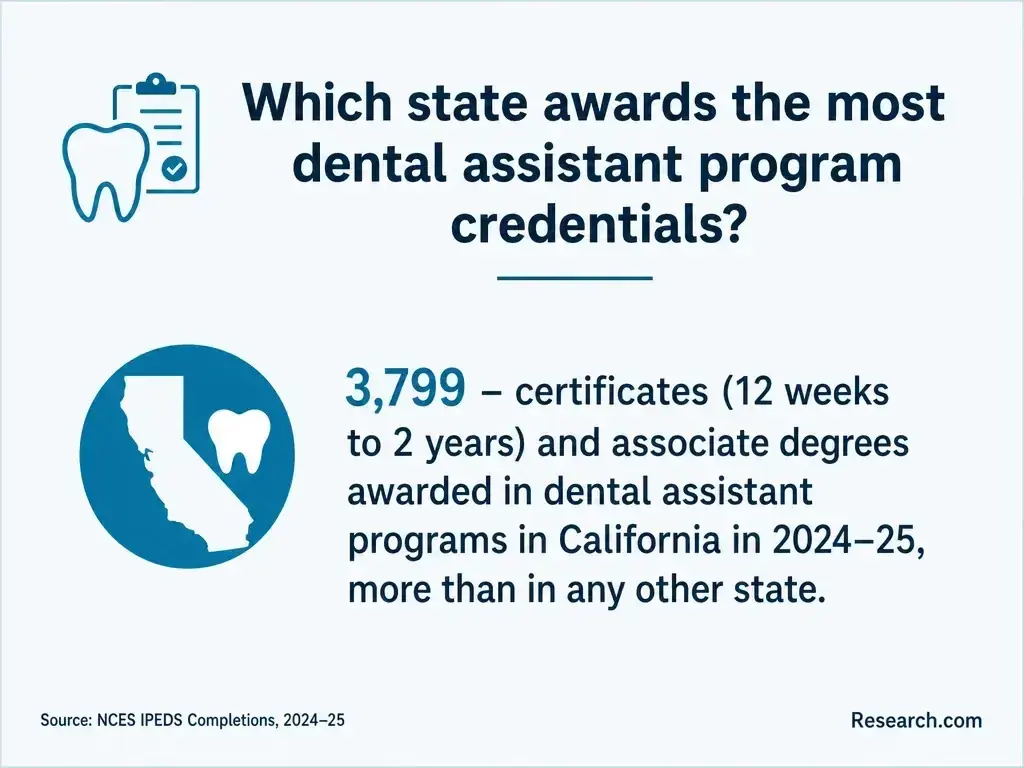
A defensible Imperial-wide average is not available from the information needed to compare every local training route, including employer-based training. Use an itemized total cost to become job-ready instead. California's community-college enrollment fee is $46 per unit for eligible residents, according to the California Community Colleges Chancellor's Office; the final charge depends on the program's units, residency status, and additional expenses.
The comparison below separates costs that students often overlook. Request current figures directly from each provider rather than treating tuition as the whole price.
| Cost category | What to include in a comparison |
| School charges | Enrollment or tuition, mandatory fees, and any resident/nonresident difference |
| Training materials | Books, uniforms, protective equipment, instruments, and consumable supplies |
| Career-entry expenses | Required courses, examinations, applications, and any placement-related screening |
| Time and travel | Trips to campus and clinical sites, plus earnings forgone during unpaid training |
| Potential offsets | Eligible grants or aid, scholarships, workforce assistance, or wages from employer-sponsored training |
Ask Imperial Valley College's financial-aid office which specific program qualifies for federal aid and what California-resident fee relief may apply; eligibility is not automatic for every short course (Federal Student Aid; California Community Colleges Chancellor's Office). To assess return on investment, weigh net cost and debt against completion likelihood, your current earnings, plausible post-training earnings, and the time it will take to recover costs - not just an occupational median.
That depends on the program: a training provider may award a certificate or another documented completion credential. Ask for the exact credential printed on the completion record and the curriculum behind it. A school credential, Dental Assisting National Board certification, and a California RDA license are different things; none should be described as automatically granting the others (Dental Assisting National Board; Dental Board of California).
Likewise, institutional accreditation evaluates an institution, while Commission on Dental Accreditation recognition concerns a particular dental program. California Dental Board approval for an RDA educational pathway is another distinct question. Check each status against the organization that grants it, using the exact program name - not the school's general marketing page (Commission on Dental Accreditation; Dental Board of California).
Requirements vary by provider and by clinical site. Confirm the current application process, prerequisite education or coursework, placement deadlines, and any required immunization documentation, screening, or safety training directly with the program. Ask whether a clinical site can impose additional conditions before you pay a deposit or enroll in a course sequence.
Admission is not the same as California authorization to perform every dental-assisting duty. If your goal is RDA licensure, obtain a written explanation of how the program supports the Dental Board of California's current eligibility requirements and which steps remain yours to complete after training.
A relevant curriculum should develop infection prevention, treatment-room preparation, dental terminology, chairside communication, instrument handling, and records practices, with supervised opportunities to demonstrate those skills. Imaging and expanded duties require particular attention: learning about a procedure is not the same as meeting California's requirements to perform it (Bureau of Labor Statistics; Dental Board of California).
Compare programs by the time students actually spend practicing in labs and dental offices, who evaluates their work, and which procedures the training covers. For Imperial-area students, a promised externship has less value if its site is too far away or its hours conflict with paid work. Ask for a clinical schedule before choosing a faster or cheaper option.
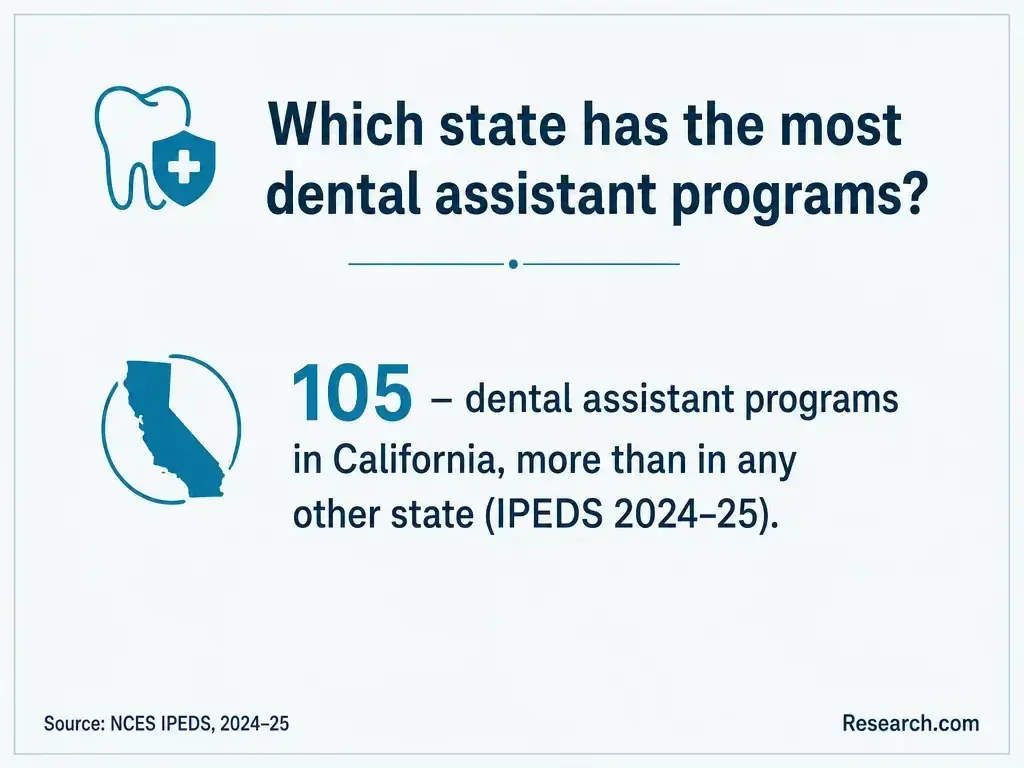
Not for all basic assisting duties. California allows unlicensed dental assistants to perform permitted supportive tasks under the required supervision, but it regulates certain procedures separately. RDA is a state license with its own eligibility and examination requirements; professional certification from the Dental Assisting National Board is a different credential and does not itself replace California authorization (Dental Board of California; Dental Assisting National Board).
Before enrolling, name the duties you want to perform - especially dental radiography or expanded functions - and check the Dental Board of California's current rules for each. Ask whether the program provides the required board-accepted education, practical instruction, and documentation. A claim that graduates are "certified" does not answer whether they may legally perform a particular procedure.
Start with your intended job, then compare the least costly routes that genuinely prepare you for it. An affordability ranking is a useful screening tool, not proof that a program has clinical placements, a particular approval, or strong outcomes for your circumstances. These checks turn a quoted price into a practical enrollment decision:
If your immediate goal is basic chairside work and an office offers well-supervised paid training, direct entry may be a better financial fit than paying for a credential first. If you need structured practice or a defined route toward additional California-authorized duties, a program with verifiable hands-on training may justify its cost. Comparing the highest paying trades can help you test your broader career priorities, but those occupations have different entry costs and requirements.
A realistic progression is basic chairside assisting, then additional training and documented eligibility for restricted duties, and potentially RDA licensure. Experience can also support scheduling, treatment coordination, or lead-assistant responsibilities, depending on the employer. These are possibilities, not automatic promotions tied to a certificate (Dental Board of California; Bureau of Labor Statistics).
If your primary goal is clinical patient care, compare programs on supervised chairside experience. If you prefer office operations, ask how much instruction covers records, scheduling, and patient communication rather than paying for advanced clinical training you do not plan to use. Career comparisons such as which bachelor's degree pays the most address a different educational investment and should not be used to estimate a dental assistant certificate's return.
U.S. dental assistant employment is projected to grow 7.4% from 2025 to 2035, according to the Bureau of Labor Statistics. That national projection signals continuing demand for the occupation, but it does not measure vacancies in Imperial County or guarantee a local offer. A student who must remain nearby should check current postings and ask placement staff which offices take trainees before committing to a schedule or loan.
Clinical practice also limits how far remote training can substitute for worksite experience. A comparison with one year online phd programs would not describe this trade pathway: dental assisting decisions turn on accessible hands-on training, California-permitted duties, and the cost of reaching an entry-level office job.
Investing in training is an important decision, so the Research.com team uses multiple education and occupational data sources and checks program comparisons against the same occupation and location. The most-affordable ranking includes only programs with completions reported to the Integrated Postsecondary Education Data System (IPEDS). It evaluates tuition, cost of attendance, median student debt, and federal loan default rates; weights are assigned using an entropy-based method. Accreditation and other quality indicators do not contribute to this affordability score.
The following sources inform the ranking process. Some cover broader education or trade-school categories rather than dental assisting specifically; their inclusion does not mean every listed organization accredits dental assisting programs.
This scope helps readers compare reported costs among qualifying local programs, but it is not a complete directory of training options: an employer training route or a provider absent from IPEDS may still be legitimate. Check current prices, practical training, and California Dental Board requirements separately. More detail is available on Research.com's methodology page.
# 1 position
# 2 position
No. Its public-college enrollment fee can be a useful starting point for eligible California residents, but compare the full program bill with supplies, clinical travel, lost work time, and any paid employer-training offer.
Basic assisting can be an entry route without a school credential, subject to California's limits on duties and supervision. Additional training and requirements apply to certain procedures and RDA licensure (Dental Board of California).
Do not assume so. Verify the California Dental Board's current eligibility rules and how the program provides required practical training and documentation before enrolling.
Not necessarily. Ask for the required clinical hours, site location, supervision arrangements, and who is responsible for securing a placement.
Ask whether the institution is accredited, whether the specific dental assisting program has Commission on Dental Accreditation status, and whether any claimed RDA pathway has California Dental Board approval. These are separate checks.