# 1 position
Most Affordable Dental Assistant Schools & Training in San Marcos for 2027
Audited and Verified:
Our Editorial and Data Verification Process
Research.com uses government datasets, official education statistics and primary institutional information to support its career and degree guides. Our review process checks factual accuracy, occupational definitions, source dates and the requirements associated with the credentials discussed.
How This Article Was Fact-Checked
Our editorial team verifies salary estimates, employment projections, education requirements and program information against original data providers and official organizations. Salary figures are checked against the relevant occupational definitions and reporting periods. Information about licensure, accreditation and required in-person training is reviewed separately.
Fact-checked and verified on:

Co-Founder and Chief Data Scientist

Reviewed by Karolina Broda
Fact-Checker and Data Verification
Choosing dental assistant training near San Marcos means comparing more than tuition: hands-on practice, California requirements, and time away from work can change the real cost. The U.S. Bureau of Labor Statistics projects 7.4% national employment growth for dental assistants from 2025 to 2035. This guide explains the training routes, costs, credentials, and career prospects behind the Most Affordable Dental Assistant Trade Schools in San Marcos for 2027 ranking, created by the Research.com team of data scientists to help students make an informed choice about programs worth considering.
Key findings about dental assistant degrees in San Marcos
- Compare the total cost to become job-ready, not tuition alone: ask each San Marcos-area program for required supplies, clinical travel, fees, and a written account of its hands-on training.
- California permits entry into basic dental assisting duties without an RDA license, but expanded duties have separate requirements. A short certificate and a pathway to Registered Dental Assistant status are not interchangeable (Dental Board of California).
- The national median for dental assistants was $48,070 in May 2025, with 7.4% projected growth from 2025 to 2035; neither figure predicts a new graduate's San Marcos pay or hiring prospects (U.S. Bureau of Labor Statistics).
Table of Contents
- Most Affordable Dental Assistant Schools & Training in San Marcos for 2027
- What can I expect from a dental assistant trade school program in San Marcos?
- Where can I work with a dental assistant trade school training in San Marcos?
What can I expect from a dental assistant trade school program in San Marcos?
A dental assistant training program combines classroom instruction with chairside skills: preparing treatment areas, assisting a dentist during procedures, infection control, patient communication, and records. Expect supervised practice with instruments and equipment, not just lectures. Before enrolling, ask whether practice takes place in a school lab, a dental office, or both, and how placement and supervision work (U.S. Bureau of Labor Statistics; program information).
The key local distinction is entry-level training versus an RDA pathway. Palomar College and Pima Medical Institute-San Marcos are options to investigate, but students should verify each current offering, credential, schedule, clinical arrangements, and California eligibility directly. An employer may also train a new assistant for permitted basic duties; that route can preserve earnings but may offer less structured instruction. California's Dental Board, rather than a school's marketing description, determines which duties require additional qualifications.
Where can I work with a dental assistant trade school training in San Marcos?
Dental assistants primarily work in dentists' offices, including general practices and specialties such as orthodontics and oral surgery (U.S. Bureau of Labor Statistics). For a San Marcos student, a clinical placement matters twice: it develops chairside skills and provides a chance to learn what commuting to a potential employer in North County is actually like. Ask whether placement is arranged by the school and whether students may need to travel beyond San Marcos.
The job involves sustained patient contact, teamwork, and precise infection-control routines. Someone exploring best careers for introverts should not assume dental assisting means working alone; a practice observation, if available, is a better test of fit than a personality label.
The U.S. Bureau of Labor Statistics reports a $48,070 national median annual wage for dental assistants in May 2025. That is the midpoint across employed assistants, not a starting-pay offer or a San Marcos-specific figure. Experience, authorized duties, specialty practice, and hours worked can affect an individual offer.
For a useful local comparison, ask prospective employers what they pay newly trained assistants and whether additional qualifications change pay. Compare offers on the same basis - hourly rate, expected weekly hours, benefits, and commuting costs - rather than treating the national median as a promised return on tuition.
Program length depends on the credential and schedule. A focused certificate may get a student into supervised chairside practice sooner than a longer college pathway, but speed is useful only if the instruction covers the intended duties. California also recognizes an RDA eligibility route based on qualifying work experience; the Dental Board of California specifies 15 months and 1,280 hours for that route, along with other applicable requirements. Those hours are a regulatory work-experience requirement, not a universal minimum for every dental assisting certificate.
If a short program appeals to you, compare its actual lab and clinical schedule - not just its advertised completion date - with other top paying 6 month certificate programs online. Dental chairside competence still requires in-person practice. Ask each provider when students can begin clinical work and whether part-time attendance delays completion.
Online instruction can cover subjects such as terminology, records, and some infection-control concepts. It cannot replace supervised chairside work, instrument handling, or practical training for duties regulated in California. A hybrid program can suit a working student if its required labs and office experience are accessible from San Marcos and its training matches the student's intended role.
Do not infer occupational eligibility from a program's online label. Request a written breakdown of remote coursework, in-person sessions, clinical placement responsibility, and any course documentation needed for California-regulated duties. Comparisons of affordable degrees online can help frame general education costs, but they cannot establish whether a dental assisting program supplies required practical training.
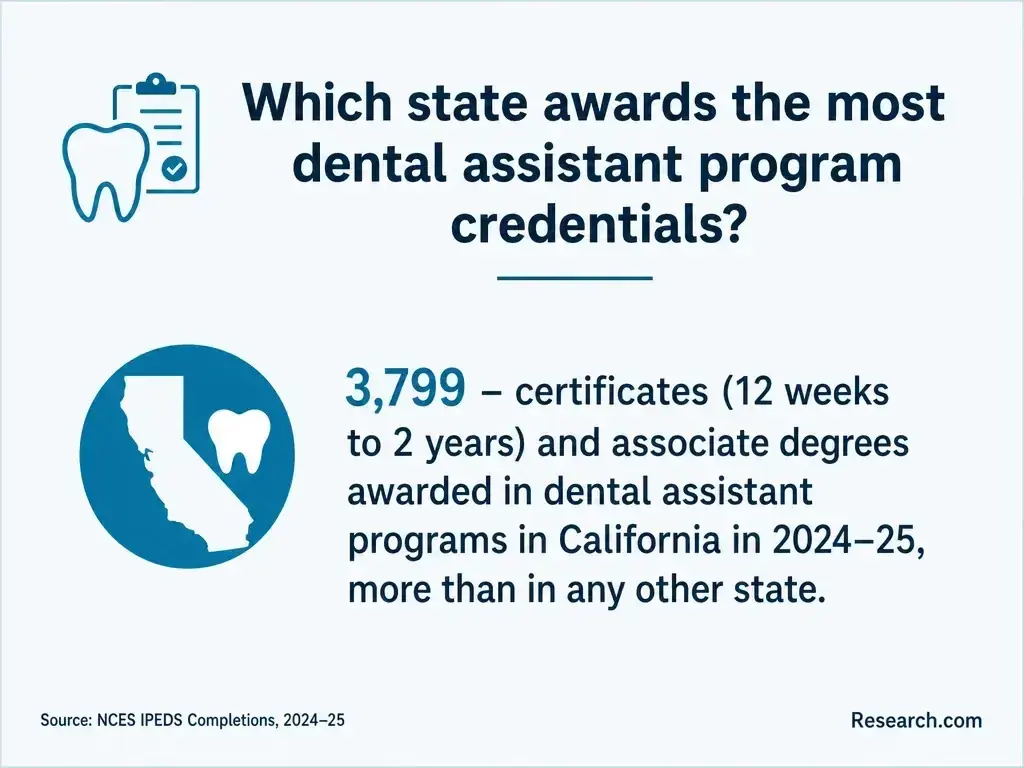
There is no reliable single "average San Marcos program cost" that covers every certificate, college option, and employer-training route. Published tuition can omit charges that materially change the choice. Request the same itemized, current price information from each provider before calling one option more affordable.
The table separates costs paid to a school from costs of becoming ready to work. It also shows why a lower tuition figure need not mean a lower total investment.
| Cost category | What to verify | Decision implication |
| School charges | Tuition, mandatory fees, books, supplies, uniforms, and protective equipment | Compare required charges for the entire program, not one term. |
| Career-entry charges | Applicable courses, examinations, applications, health checks, and background checks | Check which charges apply to the duties and credential you intend to pursue. |
| Time and travel | Lab and clinical-site travel, parking, and earnings forgone during training | An accelerated schedule may cost more in lost work hours. |
| Offsets | Eligible grants, scholarships, workforce assistance, and paid employer training | Compare the amount you would actually pay or borrow. |
Federal aid depends on both student and program eligibility; do not assume every short program qualifies (Federal Student Aid). Ask about California and local workforce-training assistance as well. A sound return-on-investment comparison considers completion likelihood, debt, earnings before and after training, time to employment, and the period over which the investment could pay off - not tuition divided by a national median wage.
A program may award a certificate or diploma; a college may also offer an associate degree. The award is a record of completing that provider's curriculum, not automatically a California RDA license or a national certification. Ask for the exact credential name and a list of the duties and eligibility requirements the curriculum addresses (program information; Dental Board of California).
Institutional accreditation concerns the school; Commission on Dental Accreditation accreditation concerns a dental assisting program; state school authorization concerns permission to operate; and California occupational requirements govern regulated duties. These are different checks. Dental Assisting National Board certification is another distinct credential, with its own eligibility rules (Commission on Dental Accreditation; Dental Assisting National Board). Verify the one your intended job actually calls for.
Entry requirements vary by provider. Before applying, check the current catalog for prior-education requirements, application deadlines, placement steps, and any health or background requirements tied to clinical participation. Ask whether you must arrange an office placement yourself and whether previously completed coursework or documented work experience can count toward the program; do not assume transfer or advanced standing is available (program information).
For employer-sponsored entry, the practical requirements are different: you need an employer willing to hire and train you for duties you may legally perform. For a school pathway, confirm that you can attend every required lab and clinical shift before paying a deposit. Admission to a program and eligibility for a later regulated credential are separate questions (Dental Board of California).
Useful training develops a repeatable chairside workflow: prepare the operatory, follow infection-control procedures, anticipate instruments, communicate with patients, document care, and clean and reset equipment. Instruction may also address dental anatomy, materials, imaging concepts, and office administration (U.S. Bureau of Labor Statistics; program information).
Curriculum titles alone reveal little about competence. Ask to see the skills students demonstrate in a lab or clinical setting, who evaluates them, and how much supervised practice each student receives. If you want to perform radiographic or other expanded duties in California, compare the actual course content and required documentation against Dental Board of California rules rather than assuming a general dental assisting course covers them.
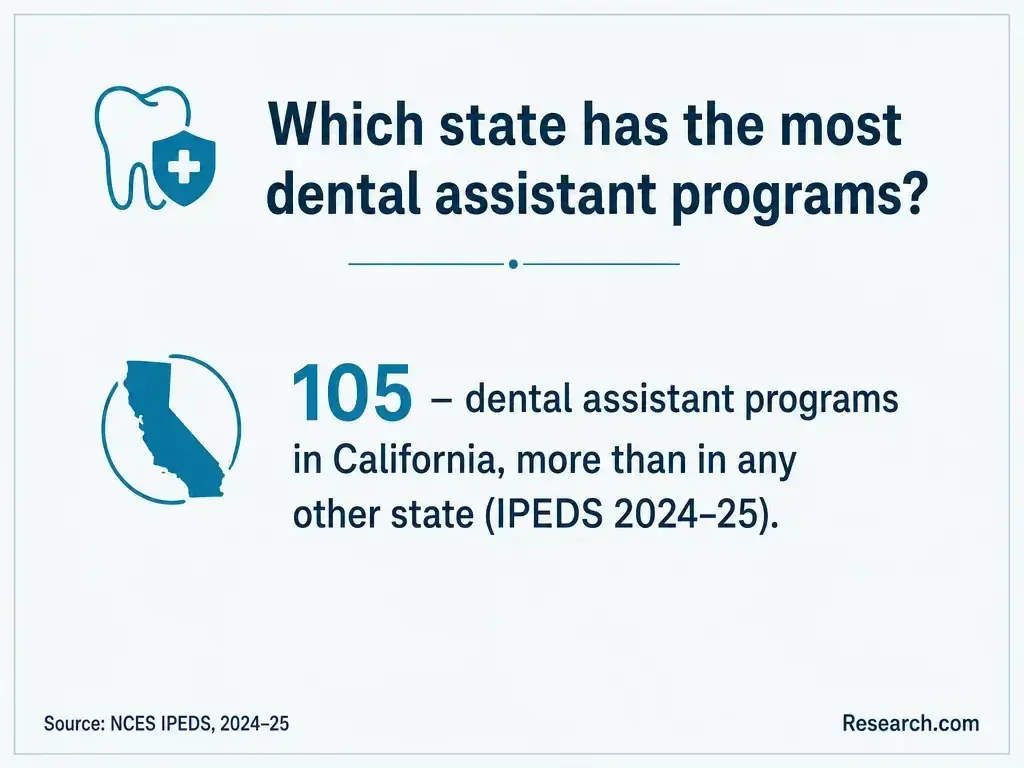
No RDA license is required for all dental assisting work in California. An unlicensed assistant may perform permitted basic duties under the required dental supervision, while radiographic and expanded functions have additional rules. RDA status is a separate state-regulated pathway involving qualifying education or experience and other Board requirements, including applicable examinations and coursework (Dental Board of California). A school certificate does not grant permission to perform every duty.
Before choosing a program, identify the tasks in the jobs you want and check the Dental Board of California's current duty and application requirements. Then ask the provider to show, in writing, which requirements its training fulfills and which remain your responsibility. National certification through the Dental Assisting National Board may be valuable to an employer, but it does not replace California's rules for state-regulated duties.
The best-value option is the least costly viable route to your intended role, not necessarily the lowest advertised tuition. Use the ranking to find candidates, then verify clinical access, completion costs, and credential fit. A page about non dissertation phd programs, for example, is unrelated to dental chairside eligibility; keep your comparison focused on the occupational training you need.
Ask each school or training employer these questions before committing money or leaving a job:
- What is the full required cost, including supplies, outside courses, and clinical travel, after any aid?
- Which skills will I practice in person, where, under whose supervision, and who secures the placement?
- What exact credential will I receive, and which California duties or RDA requirements does this training address?
- What are the current completion, placement, and debt figures for this specific program, and how are they measured?
Common red flags are a guaranteed-pay claim, an online-only promise of chairside readiness, an unexplained placement process, or a claim that accreditation alone confers RDA eligibility. Confirm each important answer against the current program catalog and Dental Board of California requirements.
Basic chairside assisting can be an entry point. With appropriate additional training, experience, and authorization, an assistant may pursue expanded duties or RDA status; experienced assistants may also take on scheduling, coordination, or supervisory responsibilities within a practice (Dental Board of California; U.S. Bureau of Labor Statistics). These are possible paths, not automatic promotions from a certificate.
If your goal is quick entry, compare a short program with paid employer training. If you want a structured route toward broader permitted duties, examine the relevant course and clinical requirements first. Lists of certification jobs that pay well are useful for exploring alternatives, but a dental credential's value depends on the duties an employer needs and California permits - not its title alone.
The U.S. Bureau of Labor Statistics projects 7.4% national growth in dental assistant employment from 2025 to 2035. That supports considering the occupation, but it is not a forecast of openings in San Marcos or a guarantee of work after graduation. Local opportunities depend on practice hiring, commuting range, schedules, and the duties an applicant can perform.
Before enrolling, review current dental assistant postings within a commute you would accept. Note how often employers request chairside experience, radiography qualifications, or RDA status, then compare those requirements with each program's training. That check turns a broad national outlook into a more useful local enrollment decision.
Most Affordable Dental Assistant Schools & Training in San Marcos for 2027
Education is a consequential investment, so Research.com compares dental assisting programs with other programs in the same occupation and location. The Most Affordable ranking evaluates tuition, cost of attendance, median student debt, and federal loan default rate; an entropy-based method gives more weight to measures that differ more across programs. Accreditation and other quality indicators are not part of this affordability score. Only programs with completions reported to IPEDS are eligible, so a provider's absence is not evidence that its training is unavailable or poor quality.
Researchers used the following sources to assess comparable programs and check relevant context. Not every source measures dental assisting costs directly: for example, construction-training and apprenticeship resources help distinguish other trade pathways from the dental assisting programs being ranked.
- IPEDS database: program completions and institutional reporting.
- National Center for Education Statistics: definitions and education data context.
- College Scorecard database: available institutional cost, debt, and outcome measures.
- Peterson's database: supplemental institutional information.
- Commission on Accreditation of Allied Health Education Programs: allied-health accreditation context, not a substitute for dental assisting program approval.
- Accrediting Bureau of Health Education Schools: health-education accreditation information.
- Commission on Dental Accreditation: dental assisting program accreditation information.
- Dental Assisting National Board: certification requirements and credential context.
- National Center for Construction Education and Research: comparison with construction-trade credentialing, not dental assisting certification.
- Apprenticeship.gov Partner Finder: checks for registered work-based training alternatives.
The ranking is a starting point for a local shortlist, not proof that the lowest-scoring-cost option supplies the clinical practice or California eligibility a student needs. Research.com also explains its ranking approach on its methodology page.
# 2 position
Palomar College - Dental Assisting/Assistant.
certificate or diploma# 3 position
Pima Medical Institute-San Marcos - Dental Assisting/Assistant.
certificate or diploma
Frequently asked questions about dental assistant programs in San Marcos
What is the cheapest way to become a dental assistant near San Marcos?
Paid employer training may minimize upfront school costs for permitted basic duties. Compare it with certificate options using total expenses, lost earnings, supervision, and the skills you want to gain.
Can I become a dental assistant without trade school in California?
Yes, for permitted unlicensed duties under the required supervision. Additional duties and RDA status have separate Dental Board of California requirements.
Can I complete dental assistant training entirely online?
Online coursework can cover some theory, but chairside skills require in-person practice. Check how any hybrid program arranges labs and clinical experience.
Does a certificate make me an RDA?
No. A school credential and California RDA status are different. Verify the current Board requirements and what the specific program fulfills.
Should I choose the shortest program?
Only if it provides the supervised practice and eligibility relevant to your target job. Compare total cost and time to employment, not advertised duration alone.
- U.S. Bureau of Labor Statistics - Dental Assistants
Used to verify salary, employment outlook, and typical education requirements.
https://www.bls.gov/ooh/healthcare/dental-assistants.htm - CODA - Find a Dental Program
Used to verify programmatic accreditation or industry recognition of programs.
https://coda.ada.org/find-a-program - DANB - Certified Dental Assistant (CDA) exam
Professional certification reference for graduates of this occupation.
https://www.danb.org/exams/exam/cda-exam - Palomar College - official website
Official school website (programs, tuition, admissions).
https://www2.palomar.edu/ - Pima Medical Institute-San Marcos - official website
Official school website (programs, tuition, admissions).
https://pmi.edu/