# 1 position
High Desert Medical College - Dental Assisting/Assistant.
certificate or diploma

Audited and Verified:
Our Editorial and Data Verification Process
Research.com uses government datasets, official education statistics and primary institutional information to support its career and degree guides. Our review process checks factual accuracy, occupational definitions, source dates and the requirements associated with the credentials discussed.
How This Article Was Fact-Checked
Our editorial team verifies salary estimates, employment projections, education requirements and program information against original data providers and official organizations. Salary figures are checked against the relevant occupational definitions and reporting periods. Information about licensure, accreditation and required in-person training is reviewed separately.
Fact-checked and verified on:

Co-Founder and Chief Data Scientist

Reviewed by Karolina Broda
Fact-Checker and Data Verification
A low-priced dental assistant program is only a bargain if it provides the clinical practice and California-specific training needed for the job you want. The U.S. Bureau of Labor Statistics projects 7.4% national growth in dental assistant employment from 2025 to 2035, making the choice timely. For prospective students in Lancaster, California, this guide explains costs, credentials, hands-on training and career prospects. It also accompanies the Most Affordable Dental Assistant Trade Schools in Lancaster for 2027 ranking, created by the Research.com team of data scientists to help students identify programs worth considering.
Expect a short occupational training program built around chairside procedures, patient care and infection prevention - not classroom study alone. Students typically practice preparing treatment areas, transferring instruments, taking impressions or digital scans when included in the curriculum, documenting visits and communicating with patients. Whether they can perform a particular task at work depends on California's rules, their training and supervision (Dental Board of California; U.S. Bureau of Labor Statistics).
The practical choice is between a structured school program and supervised employer training where an office is willing to hire and train a beginner. School can offer scheduled labs and an arranged externship; direct entry can reduce upfront tuition but may provide less predictable exposure to different procedures. A search for the quickest degree to make the most money does not answer the more important question here: which route builds the skills and California-specific qualifications needed for the dental office role you want?
For any program under consideration, request its current curriculum and ask which procedures students perform on models, in a lab and in an actual dental setting. A similarly named certificate is not evidence of equivalent clinical preparation.
General dental practices are the most direct entry point. Depending on an office's needs and the assistant's permitted duties, opportunities may also arise in orthodontic, pediatric or oral-surgery practices, community dental clinics and larger group practices (U.S. Bureau of Labor Statistics; Dental Board of California). Specialty offices may expect additional procedure-specific training rather than treating every new certificate holder as ready for the same duties.
Lancaster students should assess the actual commute to both an externship and a first job. A placement outside Lancaster may broaden experience, but travel time and transport costs can change the value of an otherwise inexpensive program. Ask schools where recent students completed clinical placements and whether students must find their own sites.
A verified Lancaster-specific wage figure is not established here, so the best supported benchmark is the $48,070 national median annual wage for dental assistants in May 2025 (U.S. Bureau of Labor Statistics). A median describes workers across experience levels and locations; it is not an expected offer for a newly trained assistant in the Antelope Valley.
When estimating whether training will pay off, compare local entry-level job postings by hourly rate, benefits, schedule and required duties. Include the commute and whether the position provides paid training. An offer for a supervised beginner and one requiring RDA registration are not like-for-like pay comparisons.
There is no single duration for Lancaster dental assistant training. A short certificate may concentrate instruction into a few months, while a longer program may provide more scheduled lab practice and clinical experience. An employer-trained route has a different timeline because skills are acquired while working. Compare each provider's published calendar length, clock or contact hours, lab hours and externship hours; do not equate weeks on a brochure with hours of supervised practice.
Ask when the next externship begins and whether a placement delay can postpone completion. For someone who needs to start earning quickly, time away from paid work can matter as much as tuition. Searches for 1 year master degree programs describe a different time-to-credential question; the relevant measure here is time until the student can competently perform the intended dental assisting duties.
Online coursework may cover terminology, anatomy, infection-control concepts and administrative tasks. It cannot replace supervised practice with instruments, patients and clinical workflows. A hybrid option makes sense only if its in-person labs and clinical placement are accessible from Lancaster and cover the duties the student intends to perform.
The comparison below separates delivery convenience from practical preparation. Confirm the current schedule with each provider before relying on a format label.
| Format | Potential advantage | What to verify |
| On-campus | Regular access to supervised labs and equipment | Lab time, clinical placement and commuting schedule |
| Hybrid | Remote study for suitable theory topics | Required campus days and who arranges in-person clinical work |
| Online coursework only | Flexible theory study | A separate, credible route to hands-on training and any required California qualifications |
Do not mistake flexible enrollment for occupational readiness. Even open enrollment online college courses cannot, by themselves, demonstrate chairside competence or establish eligibility for California-specific duties. Check the practical component before paying a deposit.
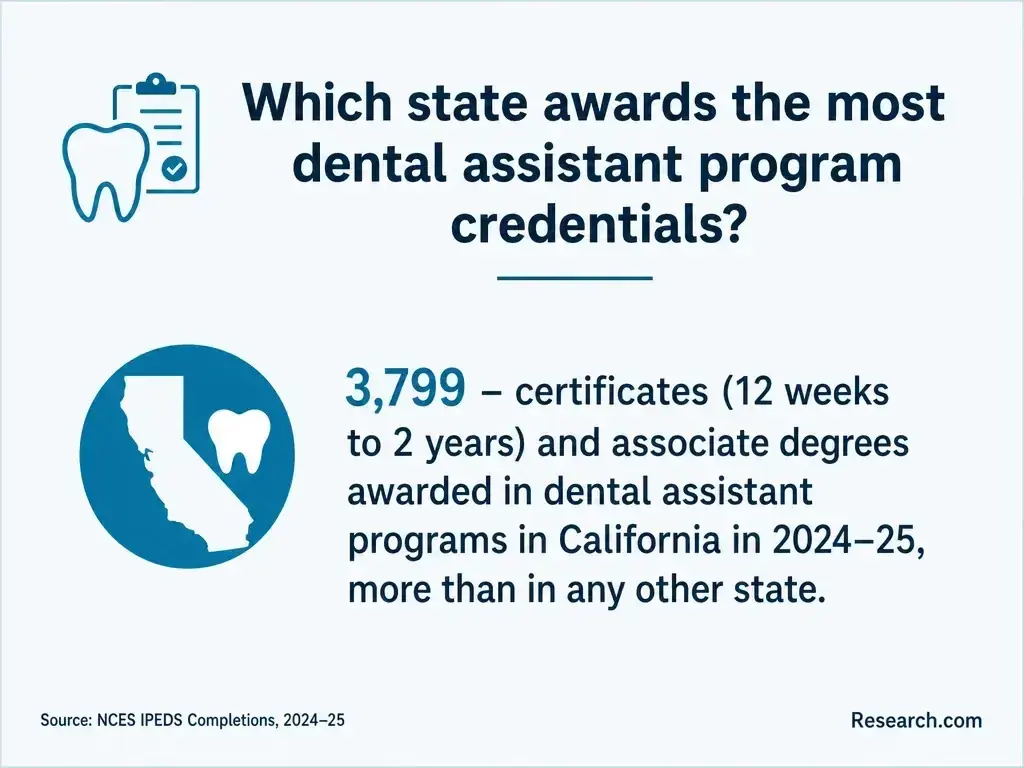
A defensible Lancaster-wide average cannot be stated without current, comparable prices for the relevant programs and what each price includes. Instead, obtain a written total cost to become job-ready from each school. The cheapest tuition can be the more expensive route if essential clinical training or required supplies are charged separately.
For a useful comparison, ask each provider to itemize tuition and mandatory fees; textbooks, instruments, uniforms and protective equipment; any health screening or background check required for placement; transportation to labs and clinical sites; and applicable examination or application charges. Add foregone earnings if the schedule prevents paid work. Then subtract only aid or employer support for which you are actually eligible.
Federal aid depends on the institution and program's eligibility, not simply on its being a trade school (Federal Student Aid). Ask the school for its current aid information and check local workforce-training assistance before borrowing. Paid employer training may lower direct education cost, but compare its supervision and skill development with the school option.
Most relevant school routes lead to a certificate or diploma of completion; the precise award depends on the provider. That school-issued credential documents training. It is distinct from an optional professional certification, state recognition of specific expanded duties and California Registered Dental Assistant registration (Dental Board of California; Dental Assisting National Board).
Before enrolling, ask the provider to name the award exactly and explain which, if any, California requirements its courses satisfy. Institutional accreditation concerns the school; programmatic accreditation concerns a particular program; state authorization permits a school to operate under applicable rules. None should be treated as an automatic grant of occupational registration or permission to perform every dental assisting task.
Admissions rules vary by provider. Schools may request proof of prior schooling, an application and an interview or assessment; clinical sites may impose separate health, safety or screening conditions. Ask for the requirements before paying a nonrefundable fee, particularly if a clinical placement is necessary to finish.
School admission and employment eligibility are different decisions. A student can meet a program's entrance requirements without yet meeting an employer's hiring standards or California's requirements for a particular duty. If you already have dental office experience, ask whether the school grants documented prior-learning credit and, more importantly, whether the remaining training still covers the skills you need.
A strong curriculum connects infection prevention, dental anatomy, instruments, chairside assistance, patient communication and recordkeeping to repeated practical exercises. Digital imaging may be part of modern office workflow, but students should confirm exactly what imaging instruction is included and whether additional California requirements apply before they perform radiographic duties (Dental Board of California; U.S. Bureau of Labor Statistics).
The most revealing question is not whether a topic appears in a course catalog, but how students demonstrate competence. Ask how many supervised opportunities they receive to set up and break down a treatment room, assist during procedures and work with patients. Searches for phd programs without dissertation concern a different kind of assessment; dental assisting requires observable practical skills.
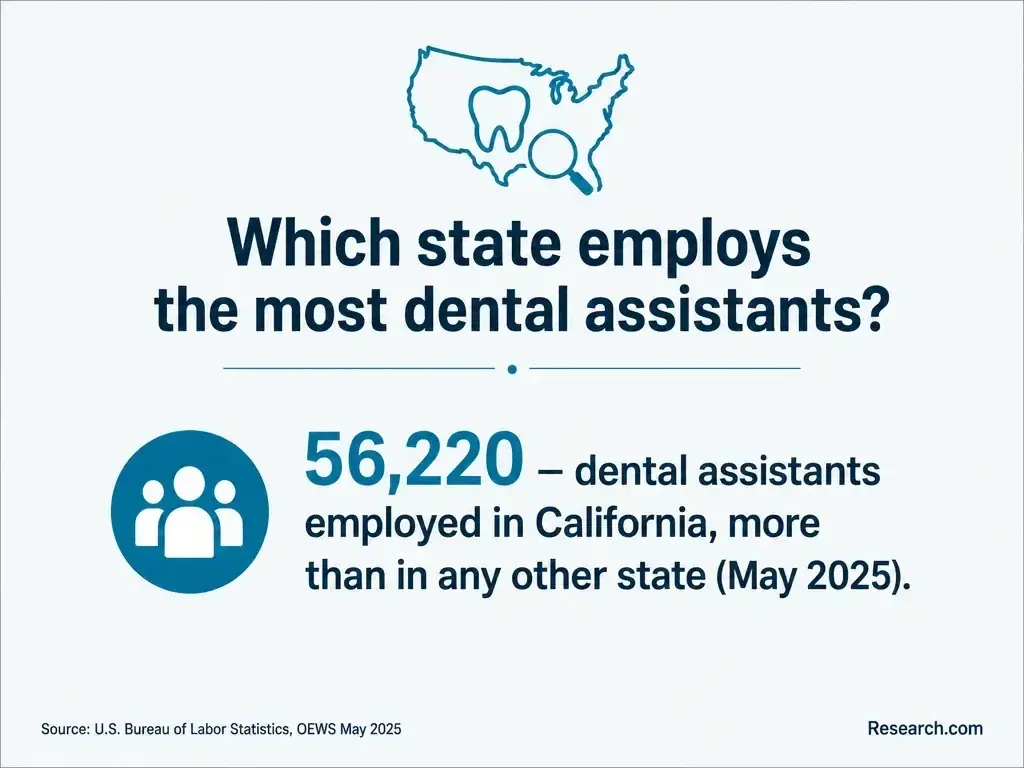
Not every dental assistant role requires RDA registration. California permits supervised dental assisting within the duties allowed for an unlicensed assistant, while Registered Dental Assistant status and certain expanded duties have additional requirements. The Dental Board of California sets the applicable rules, including requirements tied to infection control, basic life support and particular procedures. Verify the current rules for the duties in the job you want; do not assume a general school certificate covers them.
National certification through the Dental Assisting National Board is separate from California registration. Likewise, CODA programmatic accreditation is not a license, and a school's institutional accreditation is not proof of eligibility for an RDA examination. Ask a provider to identify the specific California pathway its curriculum supports and what graduates must still complete after training (Dental Board of California; Commission on Dental Accreditation; Dental Assisting National Board).
Start with the role you want: supervised entry-level assistant or a pathway toward RDA registration. Then compare programs on evidence of practical preparation and total cost, using the affordability ranking to narrow options rather than to make the decision for you. If considering High Desert Medical College or Career Care Institute, request each provider's current program details directly; do not assume its offerings, prices or clinical arrangements are unchanged.
Use this sequence to uncover differences that an advertised tuition figure or certificate name can hide:
A red flag is a promise that a fast, entirely online certificate automatically qualifies students for every dental office task. Another is a price quote that omits required clinical travel or supplies. For return on investment, weigh aid, debt, completion likelihood, earnings you give up during training and plausible post-training pay over time - not institution type or tuition alone.
A common starting point is a supervised chairside assistant role. With experience and the qualifications required for particular duties, an assistant may seek RDA registration or move into a specialty office, lead-assistant position or dental office coordination. Advancement is not automatic: California regulates which clinical tasks an assistant may perform, and employers decide what experience they require (Dental Board of California; U.S. Bureau of Labor Statistics).
This pathway fits someone who wants patient-facing dental work and can attend in-person practice. Someone primarily seeking remote work should reconsider before paying for clinical training. Likewise, an affordable online bachelors degree search addresses a different goal; compare dental assistant options by their route to supervised work, not by an unrelated credential's price.
The U.S. Bureau of Labor Statistics projects 7.4% national employment growth for dental assistants from 2025 to 2035. That supports investigating the occupation, but a national projection cannot establish how many Lancaster-area vacancies will be available when a particular student finishes training.
To test the local market, review current Lancaster and commutable-area openings before enrolling. Separate advertisements accepting supervised beginners from those requiring RDA registration, radiography qualifications or prior specialty experience. That distinction shows whether a proposed program prepares you for jobs you could realistically apply for - not merely for jobs with the right title.
Education is a significant investment, and a low advertised price does not tell the whole story. Research.com's team assembled the ranking to help readers compare dental assistant programs against relevant local alternatives, using multiple education and occupational data sources and checking the credibility of the measures used.
The most-affordable ranking evaluates costs and debt: tuition, cost of attendance, median student debt and federal loan default rate. Its indicator weights are assigned through an entropy-based method, which gives more weight to measures that vary more across programs. Accreditation, student support and other quality indicators are not part of this affordability score. Only programs with completions reported to IPEDS are eligible; a provider's absence from the ranking does not establish that it lacks authorization or offers poor training.
The following sources were used to create the ranking. They cover different parts of the comparison and should not be interpreted as interchangeable forms of program approval:
These sources do not all accredit dental assisting programs: some provide education or workforce data, and others document standards or credentials. The ranking offers a starting point for finding lower-cost options, not a substitute for confirming clinical training, California requirements and a school's current charges. More detail on Research.com's approach is available on its methodology page.
# 1 position
# 2 position
Compare the full cost of school programs with supervised employer training if an office offers it. Include supplies, clinical travel and income lost during training; the lowest tuition is not necessarily the lowest-cost route to a job.
Online study can cover theory, but it cannot replace hands-on chairside training. Confirm how a program provides supervised practical experience and meets requirements for any California duties you plan to perform (Dental Board of California).
No. A school certificate and California Registered Dental Assistant registration are different credentials. Check the Dental Board of California's current eligibility and examination requirements for the RDA pathway.
It can provide supervised experience with patient care and office workflow. Ask whether one is required, who arranges it, where sites are located and whether placement delays affect graduation.
Choose neither on that measure alone. Compare total cost, supervised practice, completion timing and how well the training matches the entry-level jobs or California registration pathway you intend to pursue.