# 1 position


Audited and Verified:
Our Editorial and Data Verification Process
Research.com uses government datasets, official education statistics and primary institutional information to support its career and degree guides. Our review process checks factual accuracy, occupational definitions, source dates and the requirements associated with the credentials discussed.
How This Article Was Fact-Checked
Our editorial team verifies salary estimates, employment projections, education requirements and program information against original data providers and official organizations. Salary figures are checked against the relevant occupational definitions and reporting periods. Information about licensure, accreditation and required in-person training is reviewed separately.
Fact-checked and verified on:

Co-Founder and Chief Data Scientist

Reviewed by Karolina Broda
Fact-Checker and Data Verification
Choosing dental assistant training near Cypress means comparing more than tuition: a low-cost program still needs to teach the hands-on skills your intended job requires. The U.S. Bureau of Labor Statistics projects dental assistant employment to grow 7.4% nationally from 2025 to 2035. For students and career changers, this guide compares training routes, costs, credentials, and California requirements. It also accompanies the Most Affordable Dental Assistant Trade Schools in Cypress for 2027 ranking, created by the Research.com team of data scientists to help you identify programs worth considering.
In Cypress, California, dental assistant training is preparation for work under a dentist's supervision, not a single standardized credential. A student may pursue a career-school certificate, a community-college certificate, or supervised entry-level employment. Cypress College is a local provider to investigate, but confirm its current dental assisting offerings, schedule, clinical arrangements, and published charges directly before comparing it with another route.
Expect instruction in infection control, patient preparation, instrument handling, chairside procedures, dental materials, records, and workplace communication. Simulated practice should lead to supervised clinical experience where the program offers it. Ask which tasks students perform, where they practice, who supervises them, and whether the schedule allows you to keep working. A shorter program can be a good fit for entry-level employment; it may be poor value if your goal requires additional California-approved coursework or experience afterward.
If you are comparing this occupational route with broader education choices, keep the decision anchored to the job you want: a guide to college degrees that are worth it does not replace checking a dental assisting program's clinical training and California eligibility.
Dental offices are the main setting for dental assistants, according to the U.S. Bureau of Labor Statistics. Around Cypress, that makes access to practices across Orange County and neighboring communities relevant: a placement farther from campus can add commuting costs and limit the shifts you can accept. General practices, pediatric practices, orthodontic offices, and oral surgery practices may use assistants differently, so ask prospective employers which procedures they expect a new hire to know.
Training alone does not authorize every duty. California's Dental Board distinguishes duties by credential and required education; a practice can train an entry-level assistant while reserving expanded duties for qualified staff. If you want a particular specialty, prioritize programs offering applicable clinical exposure rather than assuming any dental-office placement is equivalent.
The U.S. Bureau of Labor Statistics reports a May 2025 national median annual wage of $48,070 for dental assistants. The median covers experienced and newly employed workers across the country; it is neither a Cypress wage estimate nor a likely first-job offer. Use it as context, then compare current local job postings by experience, credential, duties, hours, and benefits.
When judging an offer, separate base pay from the value of paid training, health coverage, and a predictable schedule. Ask whether the practice will pay for required courses or examinations before committing to an expensive program on the assumption that a credential will automatically raise your starting pay.
There is no single required length for every California dental assistant training route. Short entry-level courses, longer certificate programs, and supervised workplace training have different calendars and outcomes. For a school program, request its published total clock or contact hours, hours spent in labs and clinical settings, and time to completion for your actual full-time or part-time schedule. Do not confuse an advertised classroom end date with the date you can finish a placement or meet an advanced credential's requirements.
For Registered Dental Assistant eligibility, check the California Dental Board's current education-or-experience routes and course requirements before choosing a timetable. Prior dental-office experience might matter for a qualifying route, but a school's promise of "advanced standing" does not by itself establish board eligibility. If speed is your priority, comparing a quickest highest paying degree with this trade pathway is less useful than asking when you could safely begin paid chairside work.
Online delivery can make terminology, records, and other classroom topics easier to fit around work. It cannot replicate supervised chairside practice or establish that a student has performed a clinical task competently. The comparison below shows what to verify before choosing a convenient format.
| Format | Potential advantage | Critical limitation to check |
| On-campus | Scheduled access to equipment, instructors, and practice partners | Travel, fixed attendance, and any separate clinical-site schedule |
| Hybrid | Remote theory with scheduled in-person practice | Location and frequency of labs and supervised clinical work |
| Online coursework | Flexible study of appropriate classroom material | Whether local hands-on training exists and whether any claimed California credential pathway accepts it |
Ask for the address of every required lab and placement, not just the campus mailing address. For an RDA goal, confirm course and program claims against the California Dental Board's current requirements; "online" and "accredited" do not, on their own, establish eligibility.
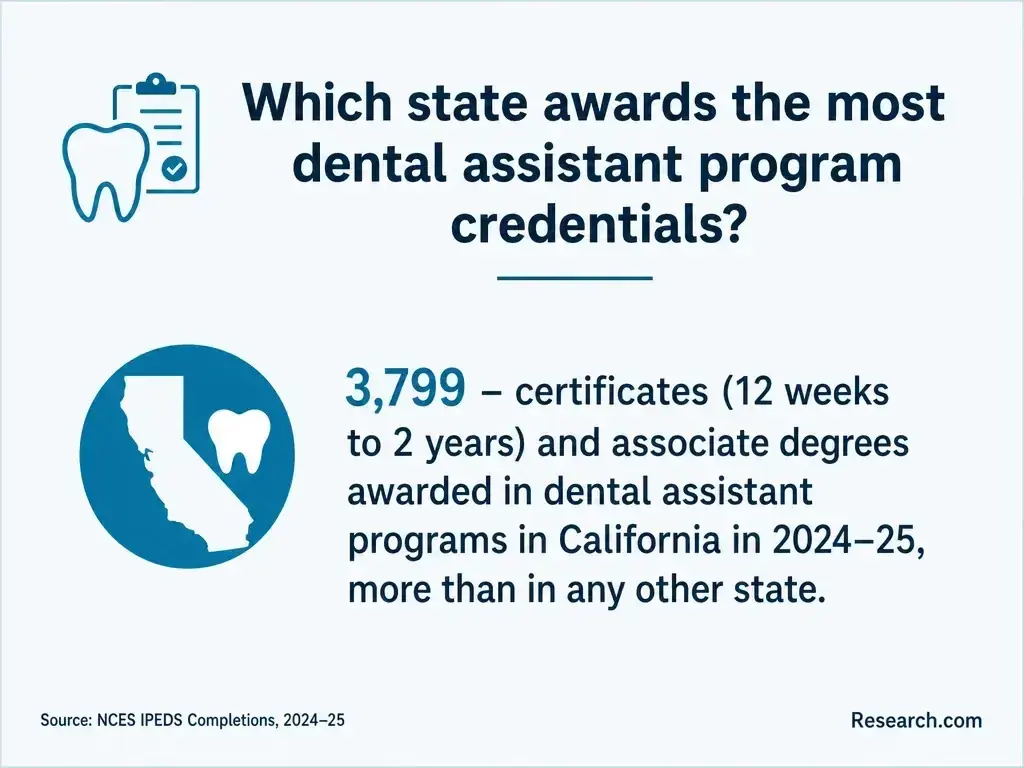
A defensible Cypress-wide average is not available from the information used here. Published tuition can describe different course lengths, include different supplies, and exclude providers that do not report completions to IPEDS. Instead of relying on a purported average, obtain a written, itemized quote for each program that matches your goal.
Compare tuition and mandatory fees alongside textbooks, uniforms, protective equipment, materials, required health or background checks, examination or application charges, and travel to labs or clinical sites. Then subtract grants or employer-paid training you actually qualify for and account for wages you would give up. Federal Student Aid notes that aid eligibility depends on both the student and the eligible institution or program; do not assume every short course qualifies. Ask the school's aid office about eligibility and the California Employment Development Department or your local workforce office about applicable training assistance.
A low tuition figure can lose its advantage if clinical travel is extensive or a required course is sold separately. Conversely, supervised paid work may lower out-of-pocket costs while taking longer to build the same range of skills. Readers weighing cheap bachelor degrees should not transfer those programs' pricing or aid assumptions to a dental assisting certificate.
That depends on the provider and pathway. A training program may award a certificate of completion or another school credential; an employer may instead document supervised training. Neither is automatically a California Registered Dental Assistant license. Programmatic accreditation, institutional accreditation, school authorization, professional certification, and state licensure answer different questions.
CODA accredits qualifying dental assisting programs; ABHES may accredit eligible health-education institutions or programs. The Dental Assisting National Board administers professional certifications under its own eligibility rules. The California Dental Board sets the requirements for California dental assistant duties and RDA licensure. Check each status separately, including whether a claimed approval applies to the specific program and required course, not merely its parent institution.
An RDA is an advancement target for someone who wants the associated permitted duties, not a credential every entry-level assistant must already hold. Compare the school's exact award and documented board pathway with the job advertisements you intend to pursue. Broader guides to lucrative majors cannot tell you whether a dental assisting certificate meets that occupational goal.
Requirements vary by provider. Ask whether admission requires prior schooling, an assessment, immunization records, a background check, or health documentation for clinical placement, and when each item is due. Admission to a program and acceptance at a clinical site can have different conditions. A school should explain those conditions and their costs before you make a nonrefundable payment.
Employer training is another entry route for some dental assistant duties, according to the U.S. Bureau of Labor Statistics, but hiring is competitive and the practice determines what training it will provide. If you already work in a dental office, ask the California Dental Board how documented experience may fit an RDA eligibility route before purchasing coursework you might not need.
A useful curriculum connects patient safety with chairside workflow: infection prevention and sterilization, preparing treatment rooms, passing instruments, handling materials, communicating with patients, and maintaining accurate records. The U.S. Bureau of Labor Statistics identifies these as core dental assistant activities. Programs may also teach imaging-related topics, but California rules govern who may perform radiographic duties and what approved education is required; a lesson about X-rays is not proof of authorization.
Look beyond a course-title list. Ask to see how instructors assess instrument handling and infection control, whether students practice with dental equipment, and what they actually do during supervised clinical experience. Digital records and imaging systems can differ between training and a first job, so the ability to follow protocols and learn an office's workflow matters alongside familiarity with a particular device.
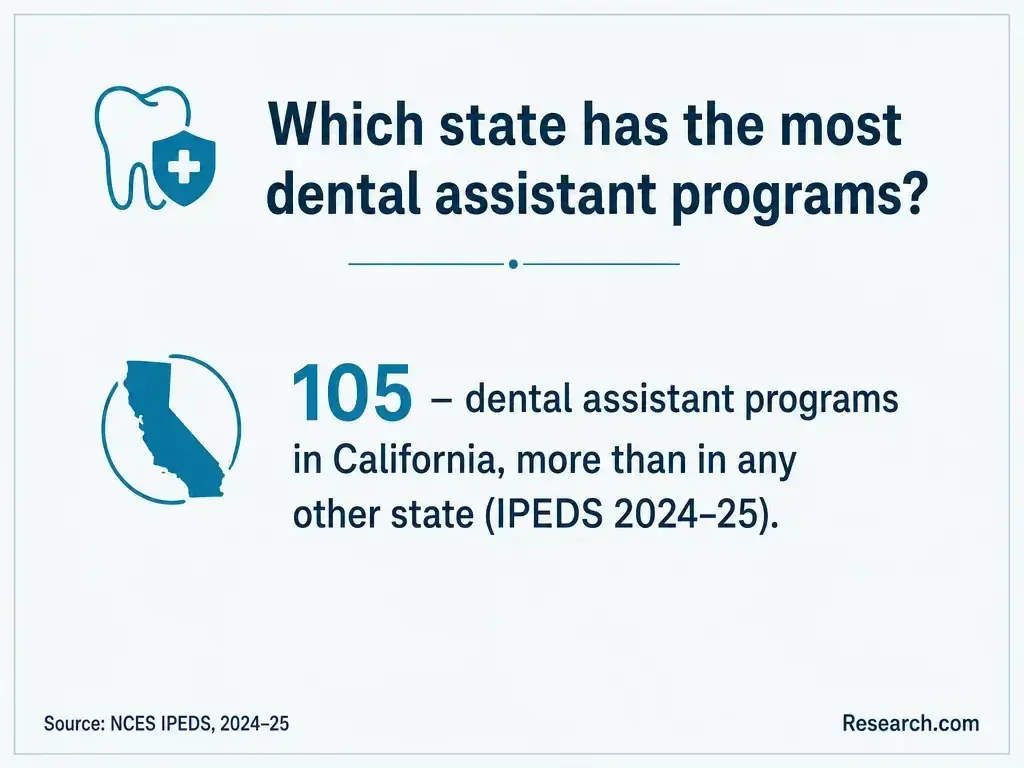
Not for every entry-level dental assistant task. California permits certain duties under a dentist's supervision without an RDA license, while other duties require specified education or an RDA credential. The California Dental Board, not a school's marketing description, is the authority for permitted duties, approved courses, experience routes, and RDA application requirements. Verify the current rules for the tasks you want to perform before enrolling.
DANB certification is a separate professional credential with its own eligibility and examination requirements; it does not automatically confer California RDA licensure. Likewise, a CODA-accredited program and an authorized school are not interchangeable with a state license. If an employer advertises for an RDA, ask whether it requires the license at hire rather than assuming you can obtain it immediately after completing a certificate.
Start with your target job: entry-level chairside assistant, an RDA-track role, or work in a specialty practice. Then compare only pathways that can plausibly get you there. The affordability ranking is a useful shortlist, but its score does not measure clinical instruction or RDA eligibility.
Before paying an enrollment deposit, get clear answers to these questions:
A red flag is a promise that a certificate alone grants an RDA license or that fully remote study replaces clinical competency. Consider duration, lost earnings, aid, debt, your likelihood of completing, and plausible pay over time - not institution type alone. A comparison with easy master degrees is no shortcut to that trade-specific investment calculation.
An entry-level assistant may begin with patient preparation, room turnover, and chairside support under supervision, then build experience in a general or specialty practice. California RDA licensure can open duties reserved for that credential once the Dental Board's requirements are met. Additional employer training may support a move into specialty assistance, scheduling, or office coordination; none of those moves is guaranteed by a certificate.
If your aim is independent clinical practice rather than assisting a dentist, check that occupation's separate education and licensing route before enrolling. Dental assistant training is best suited to someone who wants to enter dental-office work and values patient contact and practical instruction; it is a weaker investment if the only available program lacks the supervised experience your intended role calls for.
The U.S. Bureau of Labor Statistics projects 7.4% national employment growth from 2025 to 2035 for dental assistants. That suggests continuing demand across the occupation, but it does not predict openings in Cypress or guarantee that a new graduate will be hired. National projections and a local job search answer different questions.
To test the local market, review current Orange County-area postings for entry-level versus RDA roles, required schedules, and preferred experience. If most roles you would accept require duties beyond an entry-level assistant's scope, factor the additional training and time into your program decision before treating a short certificate as a complete route to those jobs.
Investing in training is an important decision, and an affordability ranking should make its limits clear. Research.com compares programs against others in the same occupation and location, using reported costs and debt to help readers build a shortlist. Only programs with completions reported to IPEDS are eligible; an omitted employer-training option or career school is not necessarily unavailable or unsuitable.
For the most affordable ranking, the score uses tuition, cost of attendance, median student debt, and federal loan default rate. Indicator weights are assigned through an entropy-based method, which gives more weight to measures that differ more across programs. Accreditation and other quality indicators do not contribute to the affordability score. The team uses the following sources to assemble and check ranking information; inclusion on this list does not mean every source supplies a scored measure or endorses a dental assisting program:
Because an affordability score does not establish clinical quality or California Registered Dental Assistant eligibility, use the ranking to narrow options, then verify training and regulatory fit independently. More detail on the approach is available in Research.com's methodology.
# 1 position
# 2 position
No. Compare its current offerings with other available training formats and supervised employer training. Confirm each option's clinical experience, total cost, and fit with your intended California duties.
Online coursework can cover theory, but chairside skills need in-person practice. Check where required labs or clinical training take place and whether the program supports your intended California credential pathway.
No. The California Dental Board sets separate RDA eligibility and application requirements. Ask the program to identify precisely which requirements its training addresses.
Not necessarily. Compare the full cost to become job-ready, supervised practice, completion prospects, and any additional courses your target job requires. An inexpensive certificate that leaves a training gap can cost more overall.
Training may help if you need structured practice or a defined credential pathway. Employer training may suit someone who can secure a supervised entry-level role and wants to earn while learning. Ask what duties and instruction the employer will actually provide.