# 1 position
North-West College-West Covina - Dental Assisting/Assistant.
certificate or diploma

Audited and Verified:
Our Editorial and Data Verification Process
Research.com uses government datasets, official education statistics and primary institutional information to support its career and degree guides. Our review process checks factual accuracy, occupational definitions, source dates and the requirements associated with the credentials discussed.
How This Article Was Fact-Checked
Our editorial team verifies salary estimates, employment projections, education requirements and program information against original data providers and official organizations. Salary figures are checked against the relevant occupational definitions and reporting periods. Information about licensure, accreditation and required in-person training is reviewed separately.
Fact-checked and verified on:

Co-Founder and Chief Data Scientist

Reviewed by Karolina Broda
Fact-Checker and Data Verification
Choosing affordable dental assistant training in West Covina means looking beyond the advertised tuition: hands-on practice, California requirements, and time away from work can change the value of a program. The U.S. Bureau of Labor Statistics projects 7.4% national employment growth for dental assistants from 2025 to 2035. This guide explains costs, credentials, career prospects, and alternatives so you can judge which route fits your goal. It will also feature a Most Affordable Dental Assistant Trade Schools in West Covina for 2027 ranking, created by the Research.com team of data scientists to help students make an informed choice.
A dental assistant training program prepares students to support dentists with patient care, infection prevention, instruments, records, and office workflow. In West Covina, the crucial distinction is between learning entry-level assisting tasks and meeting California's separate requirements for particular duties or registered dental assistant (RDA) status. A short completion certificate can be useful without granting either one.
These routes differ in what you pay for and when you gain workplace experience. Confirm the actual credential and clinical arrangement rather than relying on a program's name.
| Training route | What to expect | Best fit |
| Career-school certificate or diploma | Structured coursework and labs; an externship may be included, but its availability and requirements must be verified. | Someone who wants guided practice and a defined training schedule. |
| Community college or public vocational certificate | Coursework and practical training under the provider's published curriculum; scheduling and fees vary. | Someone able to compare public-program access and timing against private options. |
| Employer-sponsored entry training | Supervised learning in a dental office, potentially while earning wages; required California courses and duty-specific qualifications still apply. | Someone with access to an employer willing to train and document experience. |
Dental assisting is not a trade with a universal apprenticeship requirement. Before paying extra for speed, compare the hands-on time and California eligibility of fast certificate programs that pay well with the specific dental assistant route you need.
Most dental assistants work in dental offices, according to the U.S. Bureau of Labor Statistics. Around West Covina, a job search can extend across the San Gabriel Valley rather than stopping at city limits; that makes commute time relevant both for externships and eventual work. General and specialty practices may emphasize different tasks: an orthodontic office, for example, has a different workflow from a general practice.
Ask a training provider where its students complete supervised practice and whether you must secure your own site. A placement across the region may expand your experience, but an unreliable commute can make an otherwise affordable program harder to finish. An externship is experience, not a job offer.
The U.S. Bureau of Labor Statistics reports a $48,070 national median annual wage for dental assistants in May 2025. This is the midpoint for workers across experience levels and locations - not an entry-level offer or a West Covina wage estimate. Use actual local postings for the duties you qualify to perform when estimating your likely pay.
For a personal return-on-investment comparison, weigh expected post-training pay against what you earn now, the full amount you would borrow, and the work hours you may lose during training. Completion probability and how long you expect to stay in the occupation also matter. A cheaper program is not automatically the better investment if it lacks the practical preparation your target employers expect.
There is no single California program length for everyone entering dental assisting. Schedules depend on whether you choose a full-time certificate, part-time training, or supervised learning with an employer. Published calendar length can also conceal the time needed to finish labs, arrange an externship, and complete separate duty-specific requirements.
Ask for the total clock or contact hours, the hours spent practicing in person, the expected externship schedule, and the earliest realistic completion date. California also has experience-based routes to RDA examination eligibility; the Dental Board of California specifies qualifying experience and other conditions, so working as an assistant should not be mistaken for automatic RDA eligibility. If speed is your priority, use lists of fast track degree programs only as a reminder to check timelines - not as a substitute for the dental assistant program's practical-training schedule.
Online instruction can cover material such as terminology, anatomy, recordkeeping, and some infection-control concepts. It cannot replace supervised practice with instruments, patient positioning, chairside procedures, or any in-person training required for a California-authorized duty. A hybrid option is useful if its lab and clinical locations are accessible from West Covina and its in-person schedule fits your work obligations.
Before enrolling in an advertised online program, obtain a written explanation of where practical assessments occur and who arranges clinical experience. Also ask which California requirements, if any, its coursework is designed to satisfy. A school-issued online completion certificate alone should not be treated as permission to perform radiography or expanded duties.
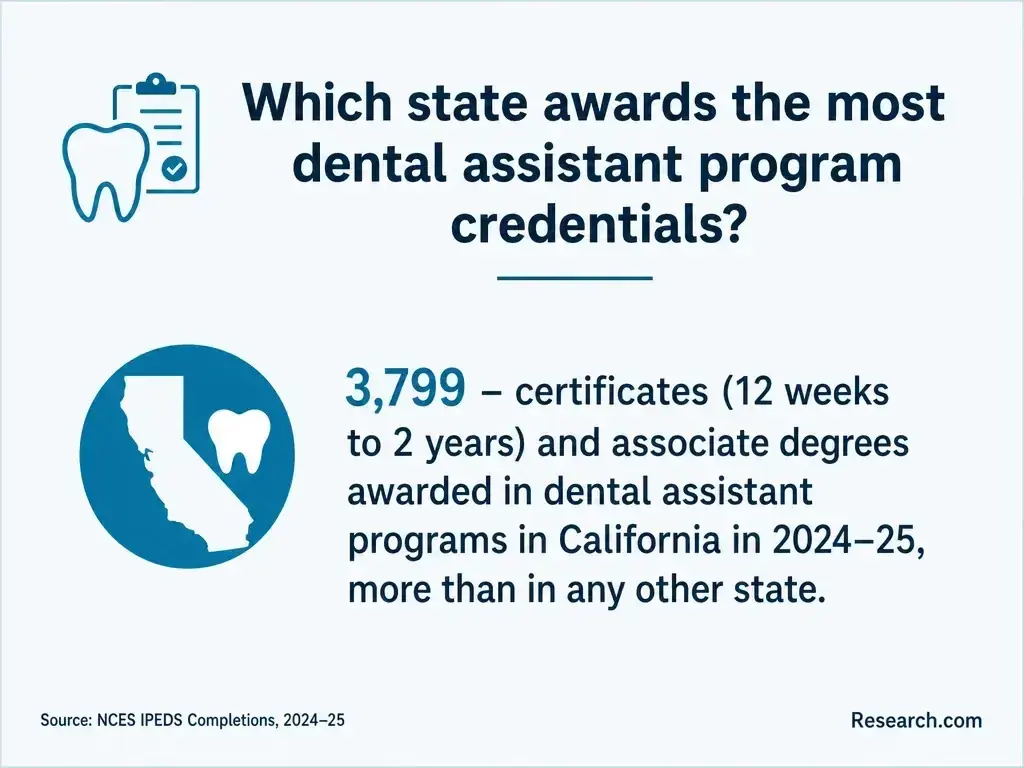
There is no reliable single average price that captures every West Covina dental assistant route. Published tuition can differ from the amount needed to become job-ready, and an employer-trained assistant may face a very different upfront cost from a career-school student. Request an itemized, current cost-of-attendance estimate from each provider rather than using a general certificate price as a local average.
The following costs belong in the same comparison because a low tuition figure may leave substantial required expenses outside the quote.
Check federal-aid eligibility for the specific school and program through Federal Student Aid; eligibility should not be assumed from accreditation alone. Compare the final out-of-pocket amount and likely debt before using broader lists of best certificate programs that pay well to judge affordability.
A trade-school graduate may receive a certificate or diploma from the provider. That document records completion of its curriculum; it is not the same as a California RDA registration, authorization for a restricted duty, or a professional certification. Confirm the exact credential printed on the award and what the curriculum prepares you to apply for.
These distinctions matter when comparing similarly named programs. CODA programmatic accreditation concerns a dental assisting program; institutional accreditation concerns the school; California school authorization and Dental Board approval answer different regulatory questions. The Dental Assisting National Board's professional certifications also have their own eligibility rules. None of these designations automatically substitutes for another or guarantees employment.
Admission rules are set by the provider, while eligibility to perform particular dental duties is governed separately by California. Request the current admissions checklist from any program you are considering, including its education prerequisite, language or assessment requirements, health documentation, and deadlines. If clinical work is part of the curriculum, ask whether additional site requirements could delay placement.
For someone entering through an employer, the immediate question is whether a dental office will provide appropriate supervision and time to complete applicable California courses. Prior work experience may help with hiring or a qualifying RDA route, but do not assume a school will waive coursework or grant advanced standing. Get any credit or waiver decision in writing before paying a deposit.
Relevant training combines patient-facing communication with precise, repeatable clinical tasks. Students should expect instruction in dental terminology, anatomy, infection prevention, instrument handling, chairside assistance, documentation, and office procedures. The U.S. Bureau of Labor Statistics describes these as core areas of dental assistants' work.
For program comparison, ask to see how students demonstrate each hands-on competency, not just whether it appears on a course list. Radiography and other regulated functions deserve particular scrutiny: instruction about a procedure is not proof that a graduate has completed California's required training or may perform it independently. An externship can help connect lab skills to a working practice, but verify its supervision and actual responsibilities.
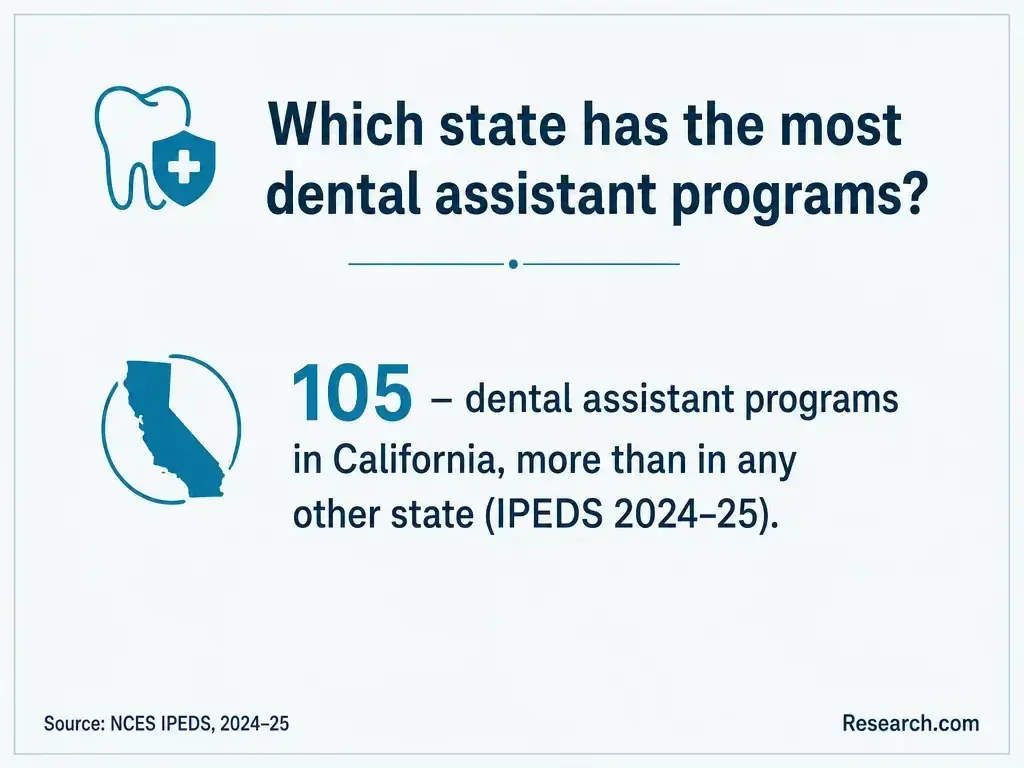
California does not make RDA registration the universal starting requirement for every dental assistant job. It does regulate what an unlicensed assistant may do and sets separate education, experience, course, and examination conditions for RDA registration and certain duties. The Dental Board of California is the authority to check for the pathway and functions you intend to pursue.
In particular, do not assume that a general program certificate qualifies you to take dental radiographs or perform coronal polishing; California has duty-specific requirements. Likewise, CODA accreditation, school authorization, and voluntary professional certification are not occupational licenses. Ask a prospective provider to identify, in writing, which Dental Board requirements its program fulfills and which remain your responsibility after completion.
The best choice is the least costly route that you can realistically complete and that prepares you for your intended duties - not necessarily the first program in an affordability ranking. For West Covina applicants comparing North-West College-West Covina and UEI College-West Covina, use each provider's current dental assistant program disclosures; do not assume that a campus listing confirms a particular curriculum, schedule, or approval.
Work through these checks before signing an enrollment agreement. They expose the most consequential gaps between a low advertised price and an entry-ready credential.
Rankings and lists of best schools to go to for college can help frame questions, but they cannot replace those program-level checks. Treat an unwritten promise of licensure eligibility, guaranteed placement, or an externship without a clear arrangement as a reason to pause.
Entry-level assisting can lead to greater responsibility as you gain experience and meet California's requirements for additional duties or RDA registration. Dental offices may also value assistants who develop strengths in patient coordination, scheduling, or a specialty practice. Advancement is conditional: a training certificate alone does not confer a new scope of practice or a supervisory position.
If your goal is specifically chairside dental work, compare the cost of training with the value of entering an office and learning under supervision. Broad lists of best paid bachelor degrees do not answer whether dental assisting is the right investment; the relevant comparison is between dental assistant training routes, the duties each enables, and your likely cost to qualify.
The U.S. Bureau of Labor Statistics projects 7.4% growth in U.S. dental assistant employment from 2025 to 2035. That national projection suggests continuing demand, but it does not measure openings in West Covina or guarantee a position after training.
For a local reality check, review current openings within a commute you would actually accept and note whether employers request experience, RDA status, or eligibility for specific duties. If most appealing roles require qualifications your proposed program does not provide, include the time and cost of obtaining them in your decision before enrolling.
Education is a consequential investment, so Research.com designed this ranking to help readers compare affordable dental assistant programs against relevant options in the same location - not against unrelated occupations. Only programs with completions reported to the Integrated Postsecondary Education Data System (IPEDS) are eligible. That boundary matters: an employer training route or a provider absent from IPEDS is not necessarily unavailable or poor quality.
For the most affordable ranking, the score uses tuition, cost of attendance, median student debt, and federal loan default rate. Weights are assigned through an entropy-based method, which gives more weight to measures that vary more across eligible programs. Accreditation, student support, earnings, and other quality measures are not part of this affordability score. By contrast, Research.com's best-program rankings assess outcomes, earnings and return on investment, costs and debt, and quality and recognition. In those rankings, occupation-relevant programmatic accreditation or industry recognition receives 20%, institutional accreditation 10%, student support 10%, and the remaining outcomes, earnings, and cost indicators share 60% through entropy-based weighting.
The Research.com team used the following data sources in creating and checking the ranking. Sources concerning other trades do not establish dental assisting accreditation or licensing eligibility; readers should verify those separately.
The ranking can narrow a cost-conscious search, but it cannot establish that a particular program meets your intended California duties or fits your schedule. Check the program's current disclosures and the Dental Board of California's requirements before enrolling. Research.com explains its broader approach on its methodology page.
# 1 position
# 2 position
Employer-sponsored training may reduce upfront tuition if you can find a supervising office. Compare its wages and required California courses with a school's full cost and practical training; neither route is automatically cheapest for everyone.
Not for every California dental assistant position. The Dental Board of California restricts duties by qualification, so check the tasks in each job posting and the requirements for performing them.
Not by itself. Confirm that you meet California's requirements for dental radiography before performing that duty, regardless of a program's title.
Online coursework can cover theory, but chairside skills require in-person practice. Check where labs and clinical training take place and whether they satisfy your intended California pathway.
Do not assume so. Ask whether one is required, who arranges it, where sites are located, and whether placement depends on additional conditions.
No. An affordability score does not establish hands-on quality, completion likelihood, or California duty eligibility. Compare those factors alongside total cost and debt.