# 1 position
Carrington College-Pleasant Hill Campus - Dental Assisting/Assistant.
certificate or diploma

Audited and Verified:
Our Editorial and Data Verification Process
Research.com uses government datasets, official education statistics and primary institutional information to support its career and degree guides. Our review process checks factual accuracy, occupational definitions, source dates and the requirements associated with the credentials discussed.
How This Article Was Fact-Checked
Our editorial team verifies salary estimates, employment projections, education requirements and program information against original data providers and official organizations. Salary figures are checked against the relevant occupational definitions and reporting periods. Information about licensure, accreditation and required in-person training is reviewed separately.
Fact-checked and verified on:

Co-Founder and Chief Data Scientist

Reviewed by Karolina Broda
Fact-Checker and Data Verification
Choosing dental assistant training in Pleasant Hill means comparing more than tuition: a short program may get you into a dental office quickly, but it may not prepare you for the duties or credentials you want. The U.S. Bureau of Labor Statistics projects 7.4% national employment growth for dental assistants from 2025 to 2035. This guide explains California's training routes, costs, hands-on requirements, and career prospects. It also accompanies the Best Dental Assistant Trade Schools in Pleasant Hill for 2027 ranking, created by the Research.com team of data scientists to help students identify programs worth considering.
Expect a combination of classroom instruction, practice with dental equipment, and supervised work with patients or in a clinical setting. Dental assistants prepare treatment rooms, support dentists during procedures, maintain infection-control procedures, document care, and may perform additional duties only when California rules permit them. The amount of chairside practice matters more than a program's label: two certificates can prepare students for different scopes of work.
Pleasant Hill applicants can investigate offerings at Carrington College-Pleasant Hill Campus and Diablo Valley College, while confirming which dental assisting programs, schedules, and clinical placements each currently offers. Ask whether the curriculum targets entry-level employment, California RDA application requirements, or a later credential. A dental office willing to train a new hire can be a sensible alternative for someone seeking permitted entry-level duties; it is not automatically equivalent to a board-approved RDA program. Source: Dental Board of California.
Most dental assistants work in dentists' offices, according to the U.S. Bureau of Labor Statistics. Around Pleasant Hill, that makes general dentistry, pediatric dentistry, orthodontic, oral-surgery, and other specialty practices relevant places to investigate. Duties and hiring expectations differ: a specialty office may value experience with its procedures, while an entry-level general practice may place more emphasis on reliable chairside support and infection control.
Ask programs where students complete clinical training and whether placements are accessible from your home and work schedule. A placement across the wider East Bay can increase travel costs even if classes are nearby. An employer's willingness to train you also matters: it may make direct entry practical, but you should establish which tasks California allows you to perform before committing to that route. Source: Dental Board of California.
A dependable Pleasant Hill-specific wage estimate is not established here. For context, the national median annual wage for dental assistants was $48,070 in May 2025, according to the U.S. Bureau of Labor Statistics. That figure includes experienced workers and should not be treated as a new graduate's offer. Compare actual local job postings by credential, duties, hours, and benefits; RDA-designated openings and entry-level assistant openings may not be comparable.
For an investment decision, compare likely take-home improvement against your current earnings, debt payments, commute, and time away from work. A higher posted wage may not offset a longer commute or fewer paid hours. Do not use an occupational median as a guaranteed post-training salary.
There is no single Pleasant Hill program length: certificate and diploma schedules, part-time attendance, clinical placement, and the credential sought all affect the finish date. Some offices train assistants on the job for permitted duties, while California RDA applicants must satisfy a recognized eligibility route and other board requirements. Ask for the current calendar and required classroom, laboratory, and clinical hours in writing rather than assuming an advertised course length equals the time until you can work in your intended role. Source: Dental Board of California.
An accelerated schedule can reduce time away from earnings, but only if it includes the practice and credential preparation you need. A fast online associates degree may appeal to someone comparing timelines, yet its speed or online format does not establish California dental assisting eligibility; check the actual dental curriculum and in-person requirements.
Online delivery can suit terminology, administrative topics, and some theory instruction. It cannot replace learning to position equipment, maintain a sterile field, assist chairside, and work safely with patients. A hybrid program may be worthwhile for a working adult if its labs and clinical placements are realistically accessible from Pleasant Hill; an entirely remote course should not be assumed to satisfy an employer's practical expectations or California RDA requirements. Source: Dental Board of California.
Before paying for remote coursework, ask where skills are assessed, who secures the clinical site, and whether missed in-person sessions delay completion. When comparing cheapest online schools for job holders, include travel and unpaid clinical time: the lowest online tuition may not produce the lowest cost of becoming job-ready.
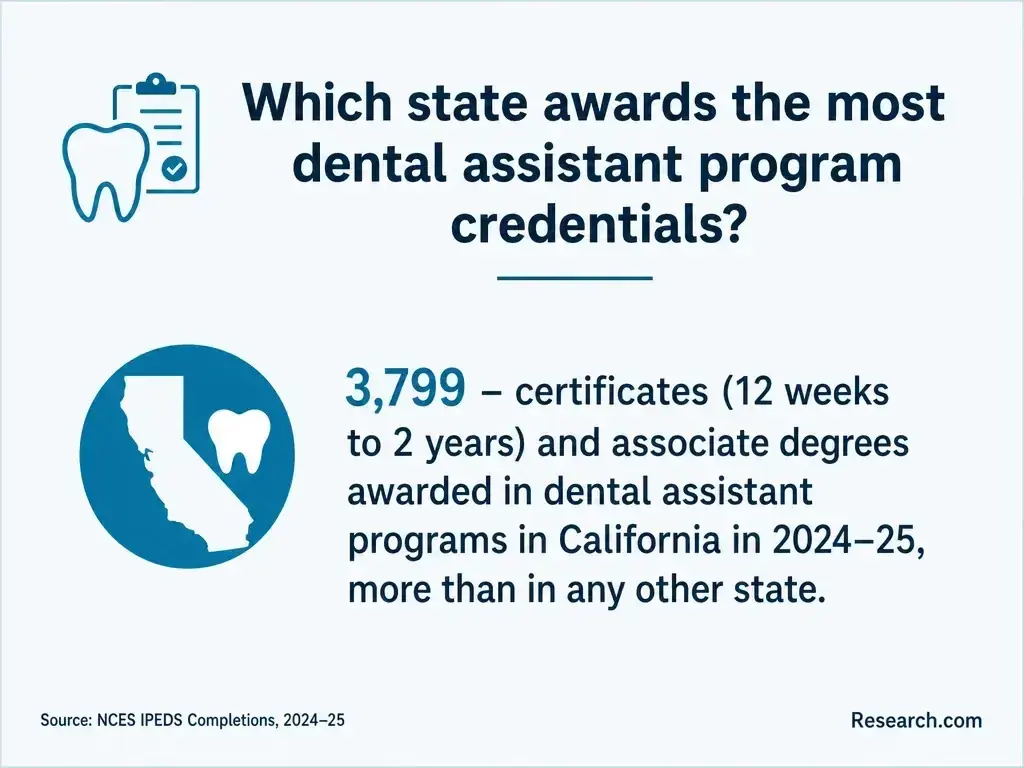
A reliable Pleasant Hill-wide average is not available because program types, included supplies, and aid eligibility differ. Request an itemized, current cost of attendance from each provider rather than using one school's advertised tuition as a market average. The comparison below shows expenses that can change which route is affordable.
| Cost or offset | What to compare |
| School charges | Tuition, mandatory fees, textbooks, materials, and equipment included in the quoted price. |
| Clinical and entry costs | Uniforms, protective equipment, health or background requirements where applicable, exam or application charges, and travel to placements. |
| Time and funding | Lost earnings during training, grants or scholarships, eligible aid, debt, and any wages from employer-sponsored training. |
Federal aid is not available for every course or provider; verify the specific program's eligibility rather than relying on a school-wide claim. Online colleges that take financial aid offer a useful comparison point for funding questions, but FAFSA participation does not establish dental assisting eligibility or cover every short training course. Source: U.S. Department of Education Federal Student Aid.
The award depends on the program: it may be a certificate, diploma, or associate degree. Those are educational awards, not interchangeable with California RDA registration or national certification. An associate program can offer broader coursework, but its added time and expense make sense only if its curriculum and credential support your specific goal. Even an easiest associate's degree to get comparison cannot tell you whether a particular program provides the dental labs and clinical experience you need.
California's RDA designation is a state registration with eligibility requirements administered by the Dental Board of California. The Dental Assisting National Board's Certified Dental Assistant (CDA) credential is a separate professional certification with its own eligibility rules. CODA programmatic accreditation, institutional accreditation, state school authorization, and board recognition serve different purposes; none should be inferred solely from a school's award title. Sources: Dental Board of California; Dental Assisting National Board; Commission on Dental Accreditation.
Entry requirements vary by provider and clinical site. Ask about prior schooling, placement assessments, immunizations, background checks, and the ability to meet clinic schedules before applying; do not assume that admission to a school also secures a clinical placement. A prospective trainee entering through an employer should likewise confirm what supervision and instruction the office provides.
Keep admission separate from occupational eligibility. California specifies which duties an unlicensed dental assistant may perform and imposes additional training or registration conditions for other duties. If your goal is RDA work, request written confirmation of the program's relationship to the board's current eligibility routes, then check it with the Dental Board of California. Being accepted into a course does not establish that you can apply for registration after graduation.
A useful curriculum connects dental anatomy and terminology to hands-on chairside assistance, instrument handling, sterilization, infection prevention, patient communication, records, and dental-office workflow. Radiography or expanded-duty instruction needs particular scrutiny: California restricts who may perform specific tasks and under what training conditions. Ask how each skill is practiced and evaluated, not merely whether it appears in a course description. Sources: U.S. Bureau of Labor Statistics; Dental Board of California.
Look for supervised experience with patient flow and the pace of a working practice. Digital records and imaging may appear in training, but familiarity with software alone does not substitute for safe clinical technique. A student aiming for front-desk work may value scheduling and insurance exposure; someone pursuing chairside duties should prioritize substantial, observed practical work.
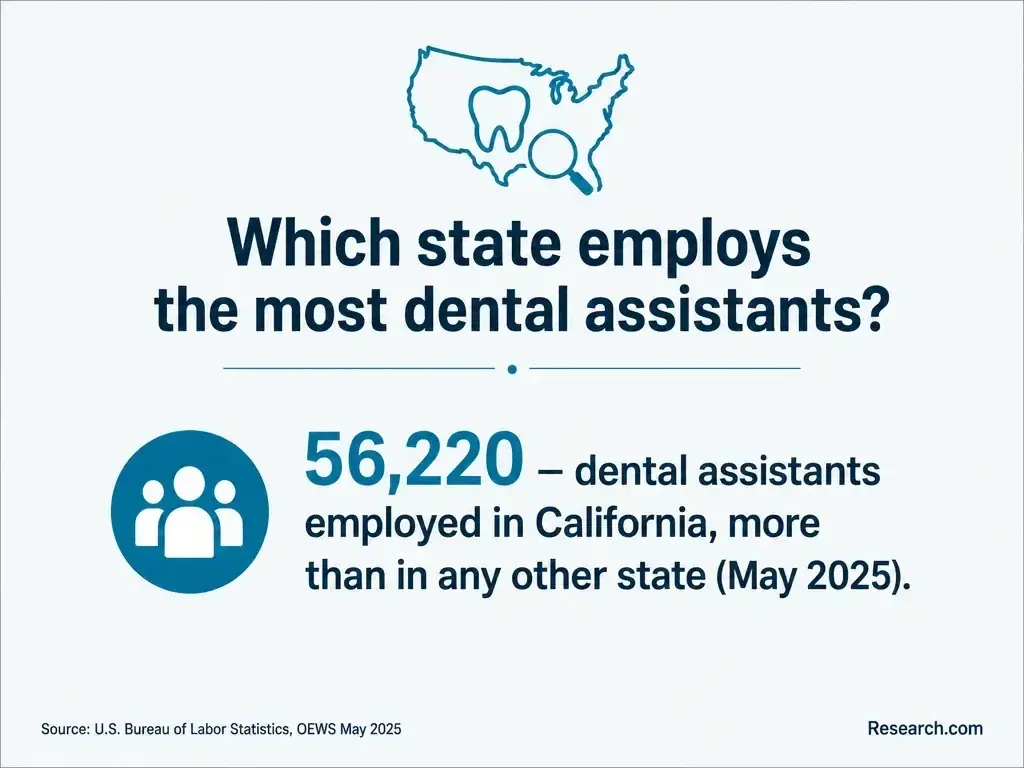
Not for every entry-level dental assistant role. California permits certain duties without RDA registration, but it regulates the scope of those duties and the training needed for particular procedures. RDA registration is necessary to work under that designation and perform duties reserved for it. The Dental Assisting National Board's CDA certification is distinct from California registration; do not assume one automatically confers the other. Sources: Dental Board of California; Dental Assisting National Board.
Start with the duties in the jobs you want, then check the Dental Board of California's current duty and RDA eligibility rules before selecting a course. Ask the school to identify any required board-recognized instruction, examinations, and application steps that remain after completion. This prevents a common costly mistake: purchasing a certificate whose name sounds appropriate but does not support the intended scope of practice.
Choose the route that gets you to your intended duties at a manageable total cost - not simply the highest-ranked or shortest program. An on-campus program can be a strong fit if you need structured practice and clinical placement; employer training may suit someone who can secure a suitable office role and wants to begin with permitted duties. An associate program needs a clear reason for its additional time. Unrelated searches such as doctorate degree no dissertation do not help establish dental assisting entry requirements; filter results by occupation and California eligibility instead.
Use the same questions with Carrington College-Pleasant Hill Campus, Diablo Valley College, or any employer offering training. Written answers make differences easier to verify:
For return on investment, consider your present earnings, realistic post-training pay, completion probability, aid and debt, program duration, and the period over which benefits may accrue. A sound comparison also accounts for when costs and earnings occur. Accreditation and a favorable ranking are useful checks, but neither replaces verification of clinical quality or California eligibility.
Training can lead to entry-level chairside or administrative dental-office work, depending on the curriculum and employer. With the required eligibility and registration, an assistant can pursue California RDA duties; experience can also support movement into specialty practices, patient coordination, or office supervision. These are possible paths, not automatic promotions. Source: Dental Board of California.
If your immediate aim is to earn while learning, ask local offices whether they hire and train assistants for duties permitted without registration. If you already know you want RDA-designated work, compare that route's additional training and application requirements before accepting a role that offers no clear way to progress. National certification may be useful with some employers, but confirm its relevance to the jobs you actually want. Sources: Dental Board of California; Dental Assisting National Board.
The U.S. Bureau of Labor Statistics projects 7.4% national employment growth for dental assistants from 2025 to 2035. That signals continued demand across the occupation, but it is not a forecast for Pleasant Hill or a promise that a particular graduate will find work. Local openings depend on practice hiring, turnover, schedules, and the duties an applicant is qualified to perform.
Use the national projection as background, then sample current East Bay postings for requirements such as RDA registration, chairside experience, and availability. If most appealing vacancies request duties your planned course does not prepare you to perform, that is a stronger reason to reconsider the program than the national growth figure is a reason to enroll. Sources: U.S. Bureau of Labor Statistics; Dental Board of California.
Investing in training is an important decision. Research.com developed the ranking to help readers compare dental assistant programs with other options serving the same occupation and location, using documented measures rather than promotional claims. Only programs with completions reported to IPEDS are eligible; an employer-training route or other provider absent from the ranking is not necessarily unavailable or unsuitable.
Best-program rankings consider student outcomes; earnings and return on investment; costs and debt; and quality and recognition. Programmatic accreditation or relevant industry recognition receives 20% of the score, institutional accreditation 10%, and student support services 10%. The remaining 60% covers completion and full- and part-time retention, earnings one year after completion and relative to annual attendance cost, tuition, attendance cost, debt - including debt held by students who withdrew - and federal loan default rates. An entropy-based method distributes that remaining weight according to how much indicators vary across programs. Most-affordable rankings instead score only tuition, attendance cost, debt, and loan default rates, with entropy-based weights; accreditation and other quality measures are not part of that score.
Research.com consulted the following databases and organizations to check reported education, outcome, recognition, and training information. Some sources cover the wider trade-school landscape rather than establishing a dental assistant program's California eligibility:
The ranking is a starting point, not a determination of licensure eligibility or an individual student's return on investment. Readers can review Research.com's methodology for more detail, then verify each program's current offerings, clinical training, costs, and California credential pathway directly.
# 1 position
# 2 position
# 3 position
Possibly. Some offices train people for duties California permits without RDA registration. Confirm the employer's training plan and the Dental Board of California's rules for the tasks you would perform.
No. A school certificate is not state registration. Check the Dental Board of California's current RDA eligibility and application requirements for the specific program.
Theory may be offered online, but chairside skills require in-person practice. Ask where labs and clinical training occur before enrolling in a remote or hybrid course.
No. Compare the complete price, supervised experience, credential eligibility, and time until you can pursue the jobs you want. A short course that leaves essential training unfinished may cost more in the long run.
Choose based on the duties and credential you want, not the award's name. Ask both types of program to document clinical hours, California eligibility, total cost, and expected completion time.