# 1 position


Audited and Verified:
Our Editorial and Data Verification Process
Research.com uses government datasets, official education statistics and primary institutional information to support its career and degree guides. Our review process checks factual accuracy, occupational definitions, source dates and the requirements associated with the credentials discussed.
How This Article Was Fact-Checked
Our editorial team verifies salary estimates, employment projections, education requirements and program information against original data providers and official organizations. Salary figures are checked against the relevant occupational definitions and reporting periods. Information about licensure, accreditation and required in-person training is reviewed separately.
Fact-checked and verified on:

Co-Founder and Chief Data Scientist

Reviewed by Karolina Broda
Fact-Checker and Data Verification
Choosing an affordable dental assistant program near Youngwood means looking beyond tuition: you need clinical practice and a credential that fits the work you want to do. The U.S. Bureau of Labor Statistics projects 7.4% national employment growth for dental assistants from 2025 to 2035. For prospective students and career changers, this guide explains costs, training routes, Pennsylvania requirements, and job prospects. It also features a Most Affordable Dental Assistant Trade Schools in Youngwood for 2027 ranking, created by the Research.com team of data scientists to help students identify programs worth considering.
Dental assistant training prepares students to support a dentist with patient care and office workflow. Expect instruction in infection control, instrument processing, chairside procedures, dental terminology, patient communication, records, and scheduling. A strong practical component lets students rehearse those tasks before performing them under supervision; a course that offers only videos is not equivalent to one with a lab and clinical placement.
Youngwood-area applicants can ask Westmoreland County Community College about current dental assisting offerings, schedules, clinical sites, and the precise credential awarded. Do not assume a program is available in a particular term or that every class and placement occurs in Youngwood. A dental office may also train an entry-level assistant on the job, an alternative worth comparing if immediate earnings matter more than a school credential. For duties beyond basic assisting, ask what additional training Pennsylvania requires before paying for it.
General dental practices are the most direct employment target. Specialty practices, including orthodontic, pediatric, and oral surgery offices, may also hire assistants, although their procedures and employer training expectations differ. The Bureau of Labor Statistics identifies dentists' offices as the principal national employer of dental assistants.
For a Youngwood resident, the practical job market may extend beyond town boundaries into other Westmoreland County communities and the Pittsburgh-area labor market. That makes commuting part of the training decision: ask where clinical placements occur, whether transportation is required, and whether those sites introduce students to offices where they would realistically seek work.
The Bureau of Labor Statistics reports a $48,070 U.S. median annual wage for dental assistants in May 2025. A median describes workers across experience levels and locations; it is neither a Youngwood wage estimate nor a likely first-job offer. Specialty duties, hours, employer benefits, and experience can change the value of an offer.
For a local return-on-investment decision, compare actual entry-level offers from offices you could commute to, rather than applying the national median to your first year. Ask prospective employers whether training time is paid and whether they support later radiography or expanded-function training. Those details may matter more than a small difference in advertised hourly pay.
There is no single Youngwood-wide training length or required number of school hours for every entry-level dental assistant. Short courses, certificate or diploma programs, associate-degree programs, and supervised employer training have different schedules and outcomes. Ask each provider for its current calendar, total instructional hours, lab hours, and required clinical hours; do not infer hands-on time from the credential name.
An accelerated schedule can get a student through coursework sooner but may leave less time to earn wages or arrange a placement. Working adults comparing quick and easy degrees that pay well should treat dental assisting as a practical occupation, not simply a fast credential: the shortest route is useful only if it develops the skills their intended employer requires. Part-time study may be preferable when keeping a job offsets the extra months in training.
Dental terminology, records, and some safety concepts can be taught remotely. Instrument handling, chairside assistance, infection-control routines, and patient-facing practice require supervised, in-person learning. A hybrid program can work well if its labs and clinical sites are reachable from Youngwood; an entirely online course should not be assumed to provide the practical training or eligibility needed for a particular credential.
Unlike an accelerated online degree for working adults, dental assistant training may require travel even when lectures are online. Before enrolling, request the lab timetable and clinical-placement policy in writing. Check who arranges the placement, whether evening or weekend hours are possible, and what happens if a site is unavailable.
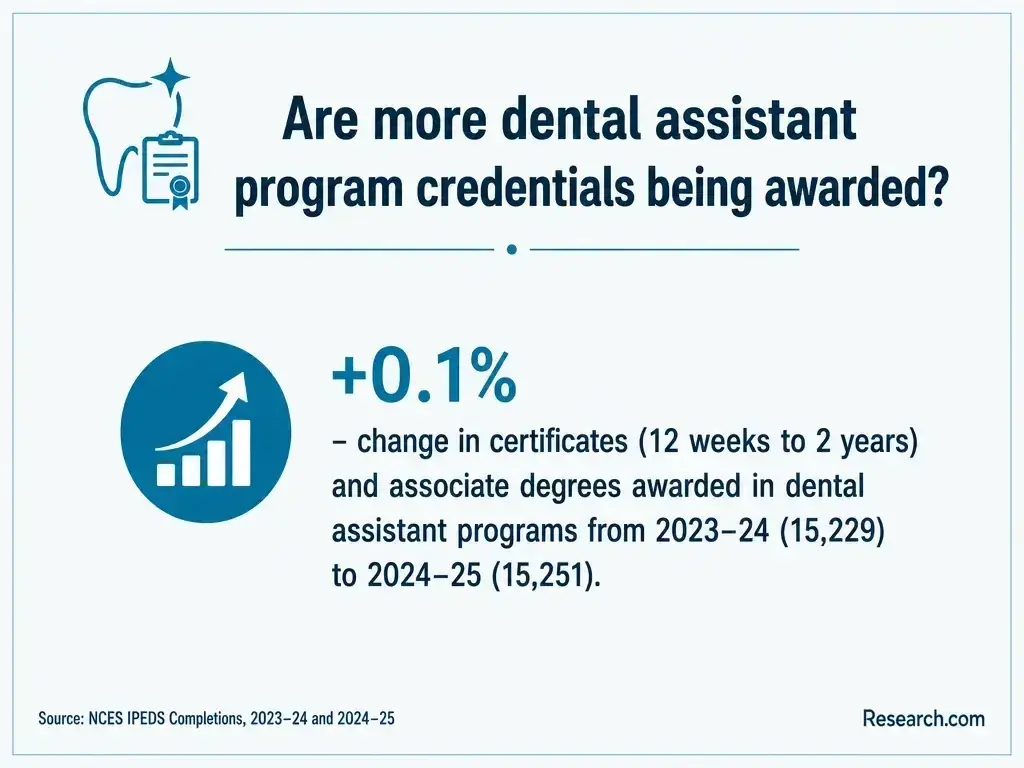
A reliable Youngwood-wide average is not available here: providers offer different credentials and may not publish comparable all-in prices. An advertised tuition figure is therefore a poor basis for calling one route the cheapest. Request a current, itemized cost sheet for the exact program and term before comparing options.
The table shows costs that can change the ranking of two seemingly similar offers. It is a checklist for interpreting quotes, not a list of estimated prices.
| Cost category | What to verify |
| School charges | Tuition, mandatory fees, books, and lab materials |
| Clinical readiness | Uniforms, protective equipment, health screenings, and background checks if required |
| Career entry | Applicable exam, application, or additional training charges |
| Time and travel | Trips to campus and clinical sites, plus earnings forgone during training |
| Offsets | Confirmed grants, scholarships, eligible aid, or paid employer training |
An associate-degree route may have a different cost structure from a short occupational certificate; the question how much does it cost to get an associate's degree online is useful for comparison, but online tuition alone cannot price required dental labs or clinical travel. Ask the school's financial aid office which aid applies to the specific program. Then compare net cost and likely debt with a paid on-the-job offer, accounting for training time and the chance of completion.
Depending on the program, completion may result in a certificate, diploma, or associate degree. These are school-awarded credentials, not interchangeable with professional certification or Pennsylvania authorization to perform particular duties. Employer training may instead provide supervised experience without an academic award.
The Dental Assisting National Board administers professional certification examinations, including the Certified Dental Assistant pathway; eligibility depends on its current rules and the applicant's training or experience. Programmatic accreditation by the Commission on Dental Accreditation is a separate question from institutional accreditation, state school authorization, and certification eligibility. Ask a provider to name its award and document which, if any, examination pathways its graduates can pursue.
Requirements vary by provider and placement site. Applicants should check the published prerequisites for their intended term, then ask whether clinical participation calls for health documentation, immunizations, a background check, or other screening. Confirm deadlines and whether these requirements create costs before committing to a program. Employers offering supervised entry-level training may use a different hiring process.
Advice about online colleges with open admissions does not establish admission or clinical eligibility for a dental assisting program. Even if entry to a school is open, a limited lab seat or clinical placement can carry separate conditions. Ask admissions staff to distinguish school admission, program admission, and permission to begin clinical work.
Core training should connect technical routines to patient safety: setting up treatment areas, passing instruments, following infection-control procedures, recording information accurately, and communicating with anxious patients. Depending on the curriculum, students may also encounter dental imaging concepts, dental materials, anatomy, and practice administration. The Bureau of Labor Statistics describes both clinical and administrative duties in this occupation.
Ask to see a skills checklist rather than relying on a course catalog. Find out which procedures students practice in a lab, which they perform in a supervised office, and how competence is assessed. If imaging or expanded duties are your goal, verify that the relevant instruction meets Pennsylvania's current requirements; exposure to a topic in class does not itself establish permission to perform it at work.
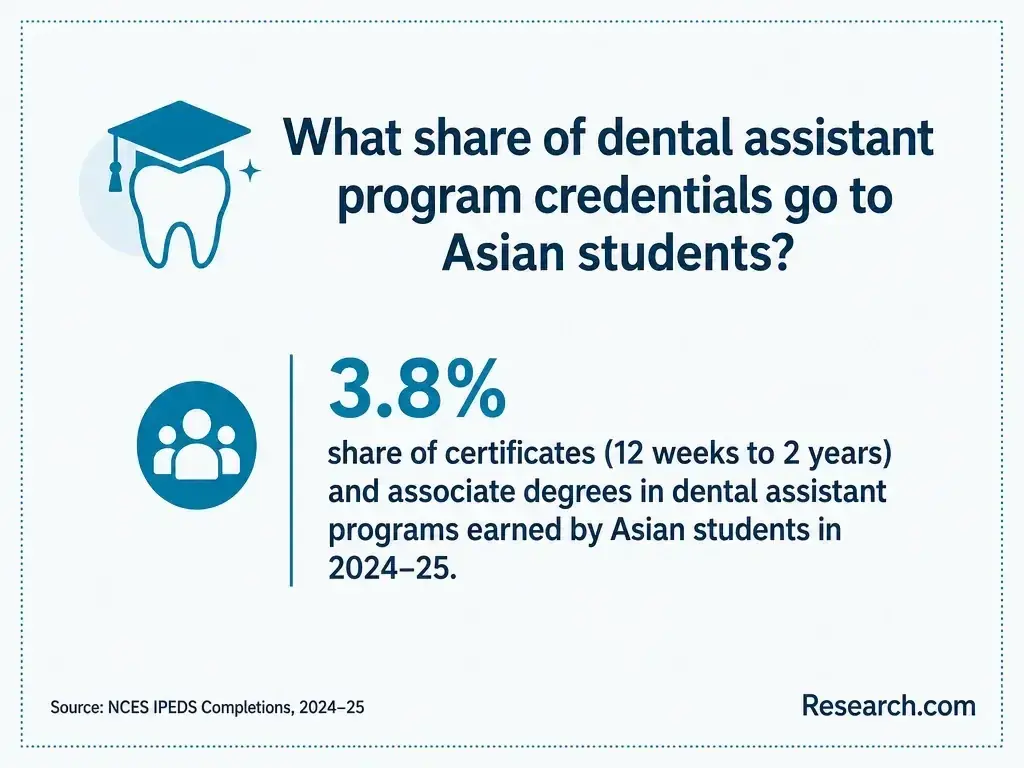
Do not assume that every entry-level dental assistant task requires the same credential. Pennsylvania distinguishes basic assisting from regulated expanded-function duties, according to the Pennsylvania State Board of Dentistry. Requirements for particular activities - including dental radiography - must be checked against current Pennsylvania rules before selecting training. A school certificate alone does not grant authority to perform every dental procedure.
Ask the Pennsylvania State Board of Dentistry which requirements apply to your intended duties and whether a proposed expanded-function program satisfies them. For radiography, confirm the applicable training and examination rules with the relevant Pennsylvania regulator and the employer. Dental Assisting National Board certification is a professional credential with its own eligibility rules; it should not be confused with a state-issued authorization or a substitute for one.
Start with the job you want, then compare programs on the training and eligibility needed for that job - not ranking position alone. These checks are especially useful when a low-priced course and a longer clinical program appear to offer similar credentials:
A major red flag is a promise that an online certificate alone qualifies you for every clinical duty. Another is a tuition quote that omits clinical travel or required supplies. The right investment is the route you can complete that provides usable practical experience and the eligibility your intended work actually requires.
Entry-level chairside assisting can lead to greater responsibility in general or specialty practices as experience grows. Assistants may pursue applicable radiography qualifications, Pennsylvania expanded-function eligibility, or voluntary professional certification, depending on their goals and the requirements for each. Experienced staff may also move toward scheduling, treatment coordination, or office supervision; those are possible paths, not automatic promotions.
If your main objective is the highest possible pay rather than work in a dental office, compare other high paying jobs from trade school before committing. A dental assistant program is most compelling when its patient contact, clinical environment, schedule, and realistic local offers fit what you want from work.
The Bureau of Labor Statistics projects 7.4% national growth in dental assistant employment from 2025 to 2035. That indicates expanding demand across the United States, but it does not measure openings in Youngwood or guarantee a job after training. Local hiring will depend on dental practices, turnover, commuting range, and the duties employers need covered.
Before enrolling, review current postings within a commute you would accept. Note whether they welcome trainees, request experience, or specify radiography or expanded-function qualifications. Compare those requirements with each program's actual training: this is a more useful test of local fit than national growth alone.
Investing in training is an important decision, particularly when a low advertised price may not reflect the full cost of becoming job-ready. Research.com compares programs with others in the same occupation and location, using multiple datasets and checks intended to improve the ranking's credibility and accuracy. Only programs with completions reported to IPEDS are eligible; a training provider's absence from the ranking does not mean it lacks approval or value.
This is a most-affordable ranking. Its score uses tuition, cost of attendance, median student debt, and federal loan default rate, with weights assigned through an entropy-based method. Accreditation and other quality indicators are not part of that score. Separately, Research.com's best-program rankings consider student outcomes, earnings and return on investment, costs and debt, and quality and recognition. Their current weights are 20% for relevant programmatic accreditation or industry recognition, 10% for institutional accreditation, 10% for student support, and 60% for outcomes, earnings, and costs, with entropy-based weighting within that last group. Readers should therefore use an affordability position as a starting point - not as proof of clinical quality or Pennsylvania credential eligibility.
The following sources inform the ranking and its occupation-specific context. Some cover broad college measures, while others help assess dental training or alternative work-based pathways:
These sources have different coverage: college-oriented datasets do not capture every short course, employer training arrangement, or work-based route. The ranking helps narrow a cost comparison; prospective students should still confirm current prices, hands-on training, and credential rules directly. Research.com explains its broader approach on its methodology page.
# 1 position
# 2 position
A paid, supervised employer-training position may reduce upfront school costs, if one is available and it supports your intended duties. Compare its wages and training with a school's complete cost and clinical experience before deciding.
Ask the college about current dental assisting offerings, the award granted, clinical arrangements, and the term you want to enter. Do not assume that a listed course covers Pennsylvania requirements for every dental duty.
Online coursework can cover some theory, but hands-on assisting skills require in-person practice and supervision. Verify the labs and clinical arrangements before paying for an online or hybrid course.
Do not treat professional certification as a universal entry requirement. Ask employers what they require, and check Pennsylvania's rules separately for any regulated duties you plan to perform.
Neither is automatically better. Compare total cost, time away from paid work, supervised clinical experience, credential eligibility, and the requirements in jobs you would actually apply for.