# 1 position
Unitech Training Academy-Lafayette - Dental Assisting/Assistant.
certificate or diploma

Audited and Verified:
Our Editorial and Data Verification Process
Research.com uses government datasets, official education statistics and primary institutional information to support its career and degree guides. Our review process checks factual accuracy, occupational definitions, source dates and the requirements associated with the credentials discussed.
How This Article Was Fact-Checked
Our editorial team verifies salary estimates, employment projections, education requirements and program information against original data providers and official organizations. Salary figures are checked against the relevant occupational definitions and reporting periods. Information about licensure, accreditation and required in-person training is reviewed separately.
Fact-checked and verified on:

Co-Founder and Chief Data Scientist

Reviewed by Karolina Broda
Fact-Checker and Data Verification
Choosing a dental assistant program in Lafayette means comparing more than tuition: hands-on practice, total cost, and eligibility for the duties you want to perform all matter. The U.S. Bureau of Labor Statistics reports a $48,070 national median annual wage for dental assistants in May 2025, making training costs worth examining carefully. This guide accompanies the Most Affordable Dental Assistant Trade Schools in Lafayette for 2027 ranking, created by the Research.com team of data scientists to help students identify programs worth considering. It explains how to compare pathways and make an informed choice.
A Lafayette dental assistant training program should prepare you for supervised chairside work: setting up treatment areas, assisting during procedures, following infection-control practices, handling instruments, and communicating with patients. Look for supervised lab practice and, where offered, an externship in a dental office. A certificate bearing the same title as another program's may involve substantially different practical experience.
These pathways differ most in how students gain hands-on skills and pay for training. Availability and eligibility should be confirmed with the provider or employer.
| Pathway | Training and credential | Best fit and key trade-off |
| Career-school program | Structured coursework and labs; typically a school certificate or diploma | Suited to someone seeking a scheduled route; verify externship access and full price. |
| Community or technical college program | Program-specific classroom and clinical training; credential varies | Worth comparing for eligible local options; confirm schedule and actual total cost. |
| Dental-office training | Employer-supervised learning; a school credential is not necessarily awarded | May reduce upfront spending or allow earnings while learning; formal instruction and access to advanced duties can be less predictable. |
For a working adult, the decisive question is often whether the schedule permits consistent clinical attendance. Someone exploring fastest degree college options for working adults should not assume that an accelerated academic schedule can replace dental assisting's in-person skill practice.
Most dental assistants work in dental offices, including general and specialty practices (U.S. Bureau of Labor Statistics). In Lafayette, ask a prospective program which local offices accept its externs and whether students must arrange their own placement. That answer affects both commuting costs and the chance to practice with patients before applying for jobs.
Expect close teamwork, patient contact, and infection-control responsibilities. If you are comparing dental assisting with best jobs for intoverts, consider the day-to-day work rather than the label: chairside assisting involves frequent conversation and coordinated work in a small clinical team.
The U.S. Bureau of Labor Statistics reports a $48,070 national median annual wage for dental assistants in May 2025. A median describes workers across experience levels and locations; it is not a promised first wage in Lafayette. Pay can differ by employer, duties, experience, and hours worked.
For a local decision, compare recent Lafayette-area job postings for entry-level roles with the debt and lost earnings your chosen schedule would entail. Do not use a national median as the sole basis for deciding how much to borrow.
Completion time depends on the provider's calendar, attendance requirements, and whether supervised workplace experience is included. There is no single program length or universal clock-hour figure that establishes readiness for every dental assistant duty in Louisiana. Obtain the current catalog's total hours, lab hours, externship requirements, and expected completion date in writing.
An accelerated schedule can get you to interviews sooner, but only if it leaves enough time to practice safely and complete any required placement. If speed is your main concern, compare the actual clinical timetable - not just the advertised finish date - with alternatives such as fastest highest paying degrees, which serve different career goals.
Online coursework can cover topics such as terminology, scheduling, and some infection-control concepts. Instrument handling, chairside coordination, and patient-care skills require supervised in-person practice. A hybrid program can work well for someone with a job if its labs and any externship are reachable from Lafayette; an online-only course should not be treated as equivalent without confirming what practical training it supplies.
Ask where skills are assessed, who arranges clinical placements, and whether travel is required. People comparing trade training with top online college degrees for seniors should recognize that dental assisting's hands-on requirements make remote convenience a different proposition.
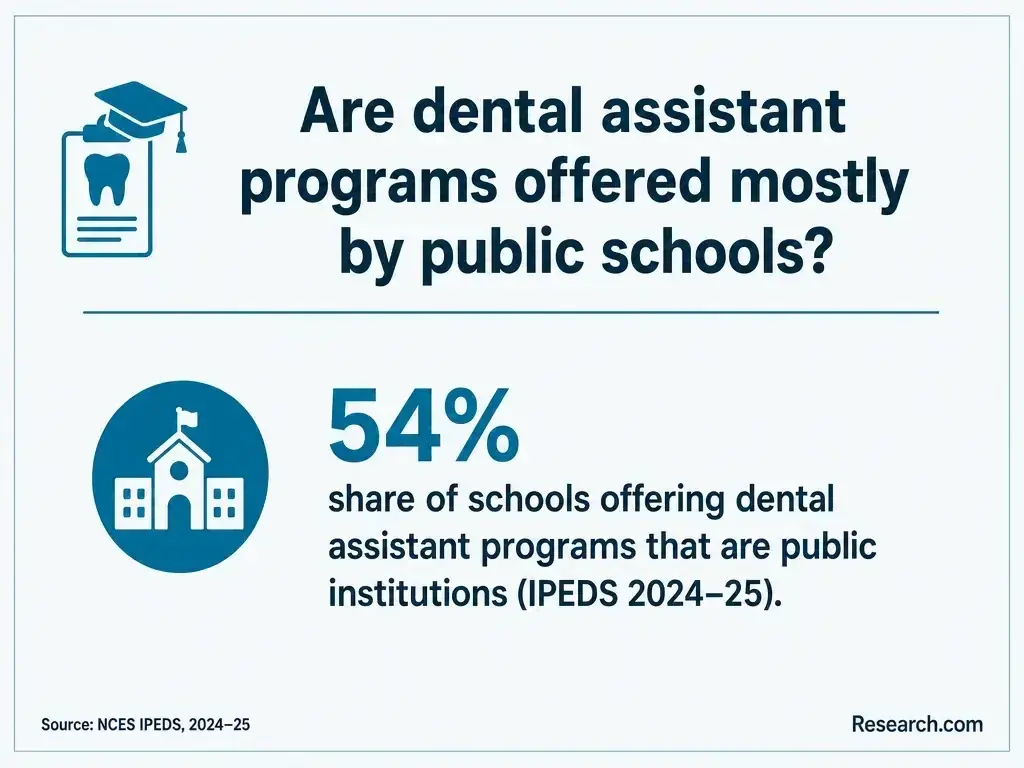
No single verified 2027 Lafayette program average can establish what you personally will pay. Request an itemized, current quote from each school and calculate the cost of reaching the point where you can apply for your intended role - not tuition alone. Compare Unitech Training Academy-Lafayette and Delta College of Arts & Technology-Lafayette Campus using the same cost categories, without assuming that either provider's price or aid eligibility is unchanged for 2027.
These categories show why a lower advertised tuition can still lead to a higher total bill.
| Cost category | What to verify |
| School charges | Tuition, mandatory fees, books, materials, and payment-plan charges |
| Clinical preparation | Uniforms, protective equipment, supplies, and any required health or background checks |
| Career entry | Applicable certification exams or state applications; do not assume every graduate needs the same credential |
| Time and travel | Commutes to labs or externships and earnings forgone while attending |
Subtract grants, scholarships, or verified employer support when comparing out-of-pocket costs; treat loans as financing, not a discount. Confirm both institutional and program eligibility before counting on federal aid (Federal Student Aid). An employer-trained route may allow you to earn while learning, but ask what instruction and supervision it actually provides.
A trade-school graduate may receive a certificate or diploma; the exact award depends on the program. That school credential is distinct from institutional accreditation, Commission on Dental Accreditation program accreditation, Dental Assisting National Board certification, and permission under Louisiana rules to perform particular duties. None automatically substitutes for the others.
Check the credential printed in the catalog and whether the program meets the eligibility pathway for any certification you intend to pursue. The Dental Assisting National Board describes routes that can differ by education and experience; graduation alone should not be presumed to qualify you for every exam.
Admission requirements vary by provider. Ask about prior schooling, placement assessments, required immunizations or health documentation, background checks for clinical sites, and whether an externship has separate eligibility conditions. An offer of admission is not the same as clearance to enter a patient-care placement.
If you already work in a dental office, ask whether prior learning changes your course load or whether employer supervision can be documented toward a relevant certification pathway. Get any credit or advanced-standing decision in writing before using it to estimate time or cost.
Useful training connects infection prevention and sterilization to repeated practice with instruments, patient positioning, procedure setup, records, and communication. Radiography and expanded duties need particular scrutiny: a class may introduce a skill without authorizing its performance under Louisiana rules (Louisiana State Board of Dentistry).
Ask to see the skills checklist and how students are assessed in labs and at clinical sites. A program with an externship should explain who supervises students, what they may do, and what happens if a placement falls through. That evidence is more informative than a course-title list alone.
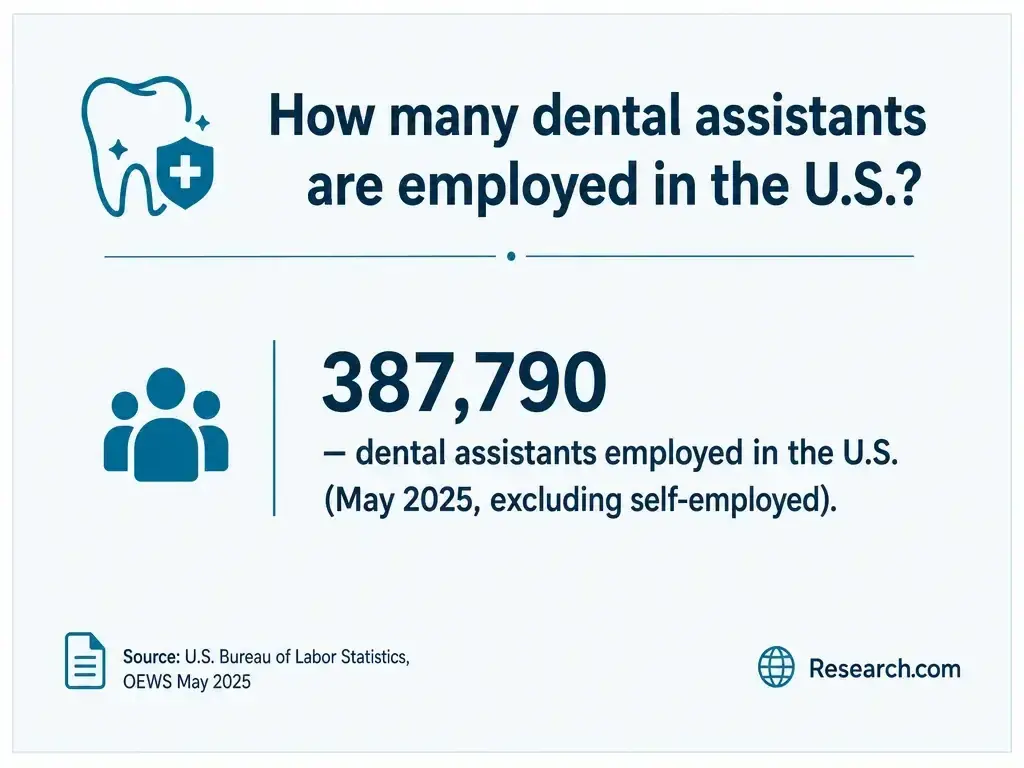
Do not assume that every entry-level dental assistant task requires an occupational license - or that a school certificate permits every advanced task. Louisiana distinguishes ordinary assisting from regulated duties; requirements for functions such as radiography or expanded duties must be checked against current Louisiana State Board of Dentistry rules. Professional certification through the Dental Assisting National Board is a separate credential, not a substitute for state requirements.
Before enrolling, name the duties you hope to perform and ask the Louisiana board and the program which training, examination, experience, or application steps apply. If you may move after training, check the destination state's rules independently rather than assuming Louisiana eligibility transfers.
The best investment is the program that you are likely to complete, can afford, and can use for your intended job - not necessarily the one with the lowest tuition or shortest advertised duration. Compare Unitech Training Academy-Lafayette and Delta College of Arts & Technology-Lafayette Campus on the same written evidence, while also considering a realistic employer-training route.
Use these checks before paying an enrollment deposit:
A red flag is a promise of certification or employment without a clear explanation of eligibility, practical training, and supporting outcomes. Accreditation can be valuable, but an affordability ranking does not score quality indicators and cannot replace these checks.
Training commonly leads first to supervised chairside work. With experience and any required additional authorization, an assistant may take on eligible expanded duties, develop specialty-office skills, or move toward office coordination. These are possibilities, not automatic promotions or permissions granted by a certificate (U.S. Bureau of Labor Statistics; Louisiana State Board of Dentistry).
If your goal is immediate patient-facing work, compare the cost and clinical experience of dental-assisting pathways rather than treating unrelated options such as affordable phd online as substitutes for occupation-specific training.
The U.S. Bureau of Labor Statistics projects 7.4% national employment growth for dental assistants from 2025 to 2035. This supports a favorable national outlook, but it does not measure openings in Lafayette or guarantee a local position.
Use current Lafayette-area vacancies to test demand for the duties and schedules you want. Notice whether employers request experience, radiography-related eligibility, or a particular credential; then check whether a prospective program provides a credible route to meet those expectations.
Education is a significant investment, so Research.com designed this ranking to help readers compare dental assistant programs against relevant local options - not against unrelated trades. The team reviewed multiple education and occupational data sources to support the ranking's quality, credibility, and accuracy. Only programs with completions reported to IPEDS are eligible; a provider's absence does not establish that its training is unavailable or inadequate.
The most affordable ranking scores tuition, cost of attendance, median student debt, and federal loan default rate. Its weights use an entropy-based method that gives more weight to measures that vary more across eligible programs. Accreditation and other quality measures do not contribute to this affordability score. Research.com's separate best programs rankings also consider completion and retention, earnings and return on investment, student support, and relevant recognition. For more detail, see Research.com's methodology.
The following sources inform the ranking and its review of providers. Some cover multiple occupations and should not be mistaken for dental-assisting approval or accreditation.
Use the affordability ranking to narrow a shortlist, then check each program's current price, practical training, and fit with Louisiana requirements before enrolling.
# 1 position
# 2 position
Compare current, itemized quotes and aid offers for the programs in the ranking. Its affordability score uses costs and debt, but your lowest out-of-pocket option may differ after supplies, travel, and aid.
Employer-supervised entry may be an option. Confirm what training the office provides and whether it supports the specific duties or later certification you want.
Online study can cover some classroom topics, but chairside and instrument skills need in-person practice. Verify the clinical arrangements before enrolling.
Not automatically. Check certification pathways with the Dental Assisting National Board and duty-specific requirements with the Louisiana State Board of Dentistry.
Request the full price, credential awarded, practical-training hours, externship arrangements, completion requirements, and evidence supporting any certification-eligibility or job-placement claim.