# 1 position
Most Affordable Dental Assistant Schools & Training in Montgomery for 2027
Audited and Verified:
Our Editorial and Data Verification Process
Research.com uses government datasets, official education statistics and primary institutional information to support its career and degree guides. Our review process checks factual accuracy, occupational definitions, source dates and the requirements associated with the credentials discussed.
How This Article Was Fact-Checked
Our editorial team verifies salary estimates, employment projections, education requirements and program information against original data providers and official organizations. Salary figures are checked against the relevant occupational definitions and reporting periods. Information about licensure, accreditation and required in-person training is reviewed separately.
Fact-checked and verified on:

Co-Founder and Chief Data Scientist

Reviewed by Karolina Broda
Fact-Checker and Data Verification
Choosing an affordable dental assistant program in Montgomery means looking beyond tuition: the credential, clinical practice, and Alabama's rules for assigned duties matter too. The Research.com team of data scientists created a Most Affordable Dental Assistant Trade Schools in Montgomery for 2027 ranking to help students identify programs worth considering. The U.S. Bureau of Labor Statistics projects 7.4% national growth in dental assistant employment from 2025 to 2035. This guide helps prospective students and career changers compare training routes, total costs, and realistic job prospects before enrolling.
Key findings about dental assistant degrees in Montgomery
- The least expensive listed program is not necessarily the cheapest route to employment: compare mandatory fees, clinical travel, supplies, aid, and potential lost earnings alongside tuition.
- Dental assisting is a practical occupation. Ask where supervised chairside and infection-control skills are taught, and verify Alabama's rules for duties such as dental radiography before paying for an online or accelerated program.
- The U.S. Bureau of Labor Statistics reports a $48,070 national median annual wage for dental assistants in May 2025 and projects 7.4% national employment growth for 2025-2035; neither figure predicts a new Montgomery graduate's pay or job offer.
Table of Contents
- Most Affordable Dental Assistant Schools & Training in Montgomery for 2027
- What can I expect from a dental assistant trade school program in Montgomery?
- Where can I work with a dental assistant trade school training in Montgomery?
What can I expect from a dental assistant trade school program in Montgomery?
Expect instruction that connects dental-office knowledge to supervised practice: preparing treatment rooms, assisting at chairside, processing instruments, documenting care, and communicating with patients. Labs or clinical placements matter because reading about instrument transfer and infection control is not the same as performing them safely. The U.S. Bureau of Labor Statistics describes both classroom-based preparation and on-the-job learning as routes into dental assisting.
Montgomery applicants can compare the dental assisting offerings, if currently available, at H Councill Trenholm State Community College and Fortis College-Montgomery. Request each program's current catalog rather than assuming similarly named credentials have the same clinical hours, schedule, or certification preparation. A dental office willing to train a new hire can be an alternative for someone who needs to start earning sooner, although the office must still follow Alabama's rules governing which tasks an assistant may perform.
Where can I work with a dental assistant trade school training in Montgomery?
General dental practices are the most direct employment target. Specialty practices, including orthodontic, pediatric, and oral-surgery offices, may also employ assistants, but their equipment, workflows, and expectations differ. The U.S. Bureau of Labor Statistics identifies dentists' offices as the principal national employer of dental assistants. In Montgomery, ask placement staff which types of local practices host students: a clinical site aligned with your preferred specialty can be more useful than a generic placement claim.
Entry-level work may mix chairside care with sterilization, scheduling, and records. If an employer offers paid training, compare its supervision and skill development with a school's clinical placement rather than assuming either route guarantees a permanent position.
A verified Montgomery-specific median is not established here, so the national figure is a benchmark, not a local pay quote. The U.S. Bureau of Labor Statistics reports a $48,070 median annual wage for U.S. dental assistants in May 2025. That midpoint includes experienced workers and different practice settings; it should not be treated as a likely starting salary.
For a useful local estimate, compare current Montgomery postings for entry-level roles and ask prospective employers whether pay changes after demonstrated chairside competence or certification. Compare offers on hours, benefits, commuting, and paid training as well as hourly pay. This is especially important when weighing a shorter, higher-cost program against one that allows you to keep working.
Length depends on the credential and schedule: a focused certificate or diploma generally has a different timetable from an associate degree, while employer training may begin with work and continue under supervision. No single clock-hour requirement should be assumed for every Montgomery program. Ask each school for its published total contact hours, lab hours, clinical hours, and calendar length, including any wait before a placement begins.
An accelerated schedule can reduce time away from work but may make clinical attendance harder to manage. If you are comparing a dental assisting credential with what is the easiest degree to get in 2 years?, judge the actual training and job target rather than the credential's advertised length. Before enrolling, ask whether prior coursework can reduce requirements and whether doing so would affect clinical preparation or certification eligibility.
Online coursework may cover terminology, records, or foundational theory. In-person training is the meaningful difference for chairside assistance, instrument handling, infection-control practice, and clinical work. A hybrid program can suit a working student if its required lab and placement times are feasible; an entirely remote course should not be assumed to provide equivalent practical preparation or certification eligibility.
Montgomery students considering a lower-priced online option should get the clinical-site agreement in writing: who arranges the site, where it is, when attendance is required, and whether it adds travel costs. Guides to low cost online universities for working students may help frame affordability questions, but they do not establish that remote dental assisting coursework replaces supervised hands-on training.
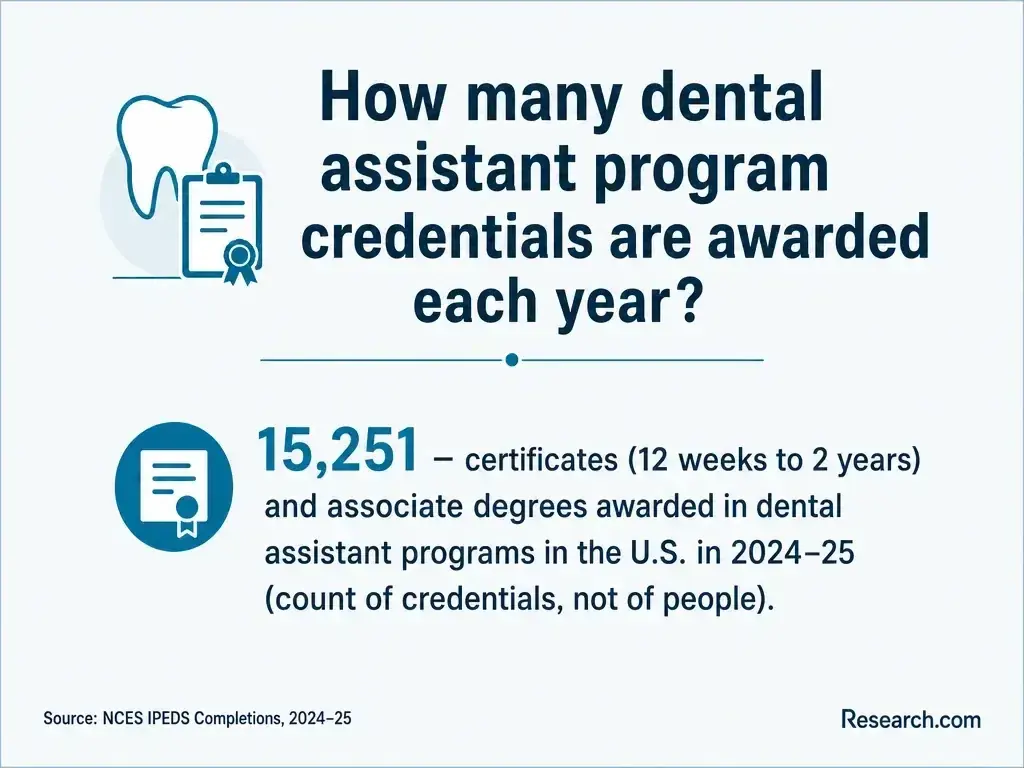
There is no defensible Montgomery program average without current, comparable prices for the same credential and included expenses. Instead, obtain an itemized, program-specific estimate from each school. A quoted tuition amount may exclude the expenses that determine what you must actually pay to become job-ready.
The following categories make public-college, career-school, and employer-training offers easier to compare on the same basis:
| Cost category | What to confirm | Why it changes the decision |
| School charges | Tuition, mandatory fees, and any applicable residency rate | The advertised price may not be the final school bill. |
| Training supplies | Books, uniforms, protective equipment, and consumable materials | Required purchases may differ between programs. |
| Clinical participation | Transportation, scheduling, health screening, or background-check costs where required | An inconvenient placement can add expense or reduce work hours. |
| Career entry | Optional certification examinations and any duty-specific training | These costs may fall after tuition is paid. |
| Offsets and earnings | Grants, eligible aid, employer payment, and wages retained or lost during training | The lowest sticker price may not produce the lowest net cost. |
Ask whether the specific program is eligible for federal student aid; institutional participation alone does not establish eligibility for every program. Federal Student Aid advises students to check program eligibility and submit the FAFSA for aid consideration. For return on investment, consider completion likelihood, debt, forgone wages, expected starting pay, and how long you expect to work in the occupation - not the national median wage alone.
The award depends on the program: it may be a certificate, diploma, or associate degree. An employer-training route may provide work experience without an academic award. Get the exact credential name and transcript or completion-document terms before enrolling; a certificate of course completion is not automatically a professional certification.
The Dental Assisting National Board administers the Certified Dental Assistant credential and sets eligibility and examination requirements. Its rules distinguish qualifying education routes from experience-based routes, so ask a school precisely which route its graduates may use. The Commission on Dental Accreditation's program accreditation is also distinct from an institution's accreditation and from Alabama's rules for clinical duties. Readers comparing certification programs that pay well should verify the certifying body and eligibility requirements rather than relying on a program's use of the word "certification."
Requirements vary by provider and by clinical site. Schools may request proof of prior education, an application, and placement or readiness information; clinical sites may impose separate health or background-screening conditions. Do not assume that admission means a student has cleared every condition for placement. Request the current written requirements and ask when any nonrefundable expenses become due.
For office-based training, ask whether the employer accepts applicants without dental experience, who supervises new assistants, and which duties are withheld until training is complete. This route can fit someone ready to learn while working, but its availability and training structure depend on the employer. It should not be confused with a registered apprenticeship unless the position is identified as one by a registered sponsor.
Relevant instruction includes dental terminology and anatomy, patient preparation, chairside instrument transfer, sterilization, infection prevention, records, and dental-office communication. Depending on the curriculum and permitted duties, students may also study dental materials and radiography. The U.S. Bureau of Labor Statistics describes these clinical and administrative functions as part of dental assisting, but the tasks an individual assistant may perform depend on applicable state rules and supervision.
Ask to see the skills checklist and where each skill is practiced. A program with observed lab performance and supervised clinical experience offers different evidence of readiness from a course assessed only through online quizzes. If radiography interests you, confirm the specific instruction and Alabama requirements before treating that topic in a course outline as permission to perform the duty at work.
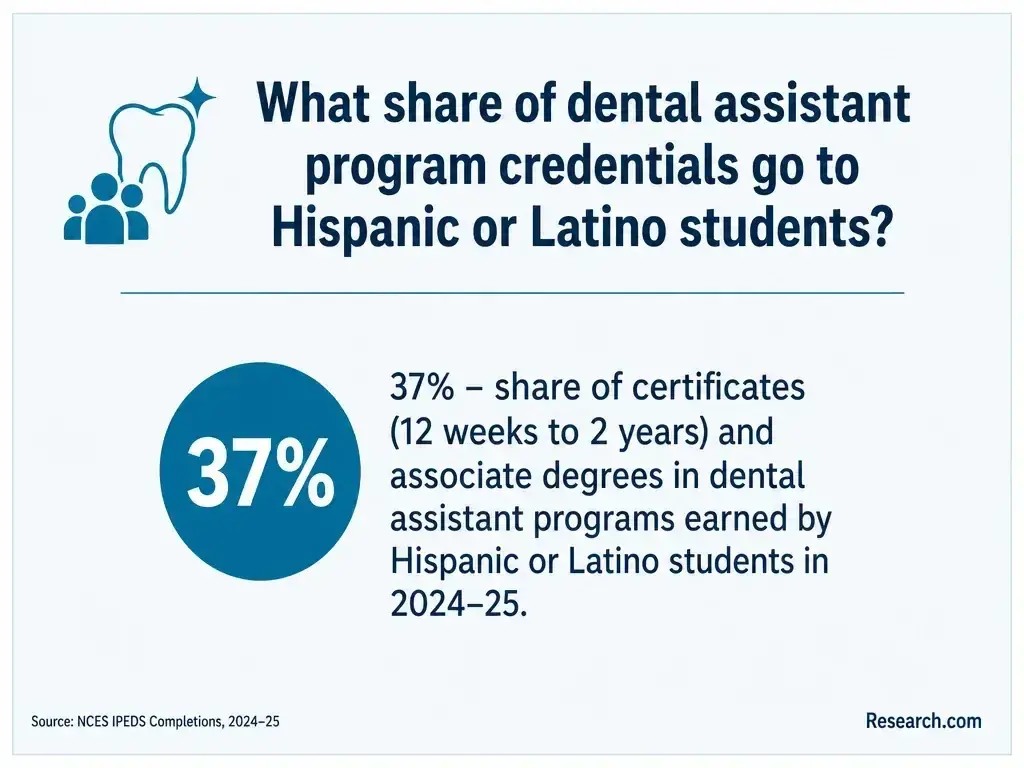
Do not assume a general dental assistant credential, national certification, and permission to perform a particular clinical duty are the same thing. The Alabama Board of Dental Examiners governs dental practice and the delegation and supervision of assistant duties in Montgomery. Its current rules - not a school advertisement - should determine what preparation is needed for a task such as exposing dental radiographs. Ask the board and prospective employer about the duties you intend to perform before choosing a program.
The Dental Assisting National Board's Certified Dental Assistant credential is a national professional certification with its own eligibility and examination process; it is not, by itself, an Alabama occupational license. Likewise, institutional accreditation, Commission on Dental Accreditation program accreditation, and state school authorization answer different questions. Verify each separately when it matters to your training, aid eligibility, or intended certification route.
Start with the job you want and compare programs against that goal. The affordability ranking narrows the cost search, but it does not score hands-on quality, accreditation, or job fit. These checks help prevent an inexpensive enrollment decision from becoming an expensive delay in entering the occupation:
- Ask each provider for the exact credential, current total charges, schedule, lab hours, clinical hours, and written placement arrangements.
- Verify institutional accreditation and, if your intended certification route depends on it, the program's status with the Commission on Dental Accreditation; check Alabama duty rules separately.
- Confirm whether graduates meet the Dental Assisting National Board eligibility route they expect to use rather than accepting a general claim of "certification preparation."
- Compare net cost after aid or employer payment, likely work hours lost, travel to clinical sites, completion support, and documented employment assistance.
A red flag is a provider that will not specify where practical training occurs or implies that accreditation alone authorizes every dental duty. A student who already has a viable, well-supervised paid office-training offer may find that route more suitable than paying for a program; someone seeking structured labs and a defined credential may prefer school-based training. Neither choice should rest on ranking position alone.
The most direct path is an entry-level assisting role in a general dental practice. With experience and appropriate task-specific preparation, an assistant may seek responsibilities in a specialty practice, patient coordination, or office operations. Ask employers what additional training they expect for each role; experience in one practice does not automatically qualify an assistant for every task in another.
Dental assisting training is an occupational entry route, not a shortcut into a different licensed dental profession. If your goal is chairside work soon, compare the supervised experience and cost of school with employer training. If your goal is chiefly office administration, ask whether the dental assisting program's clinical time is a worthwhile investment for the job you actually want.
The U.S. Bureau of Labor Statistics projects 7.4% growth in U.S. dental assistant employment from 2025 to 2035. That national projection suggests continuing demand for the occupation, but it is not a Montgomery forecast and does not establish how many local employers will hire new trainees.
Test the local market before paying a deposit: review current postings for experience, radiography, and certification preferences, then ask programs which Montgomery-area practices accept their clinical students. A placement network that matches those requirements may matter more than finishing a few weeks earlier. Recheck postings near graduation, because an employer's requirements can change during training.
Most Affordable Dental Assistant Schools & Training in Montgomery for 2027
Investing in training is an important decision, especially when a low advertised tuition price may not reflect the full cost of attendance. Research.com compares dental assistant programs with other programs in the same occupation and location, using reported data to make the ranking useful for a Montgomery-area search. Only programs with completions reported to IPEDS are eligible; the absence of an employer training route or other provider from the ranking does not mean it is unavailable or unsuitable.
The most affordable ranking evaluates tuition, cost of attendance, median student debt, and federal loan default rates. Indicator weights are assigned through an entropy-based method, which gives more weight to measures that vary more across eligible programs. Accreditation and other quality indicators do not contribute to this affordability score. That differs from Research.com's best-program rankings, which also consider student outcomes, earnings, support services, institutional accreditation, and occupation-relevant recognition. Readers should therefore use the affordability ranking as a cost-comparison starting point, not as proof that a program meets every training or employment goal.
To support data quality and verify relevant institutional and occupational information, the research team used the following sources in creating the ranking:
- IPEDS database - reported program completions and institutional data.
- National Center for Education Statistics - education data and institutional context.
- College Scorecard database - available cost, debt, and outcomes information.
- Peterson's database - supplementary institution and program information.
- Commission on Accreditation of Allied Health Education Programs - allied-health accreditation reference information.
- Accrediting Bureau of Health Education Schools - health-education accreditation reference information.
- Commission on Dental Accreditation - dental assisting program-accreditation information.
- Dental Assisting National Board - dental assisting certification information.
- National Center for Construction Education and Research - occupational-training reference information.
- Apprenticeship.gov Partner Finder - registered-apprenticeship provider information.
Readers can review Research.com's methodology for more detail. Before committing, confirm each school's current price, practical-training arrangements, and credential directly; historical reporting and a ranking score cannot replace a current enrollment agreement.
# 2 position
# 3 position
H Councill Trenholm State Community College - Dental Assisting/Assistant.
certificate or diploma Frequently asked questions about dental assistant programs in Montgomery
Which Montgomery dental assistant program is cheapest?
That depends on current tuition, required fees, supplies, clinical travel, and aid. Request itemized estimates from the programs you are considering; an affordability ranking is a starting point, not a final bill.
Can I become a dental assistant without attending trade school?
Some employers train assistants on the job, according to the U.S. Bureau of Labor Statistics. Confirm that an offer includes appropriate supervision and complies with Alabama's rules for the duties you will perform.
Can I complete dental assistant training entirely online?
Online study can cover some theory, but it does not replace hands-on chairside, infection-control, and clinical practice. Ask where and when a program assesses those skills in person.
Is certification required before applying for a job?
Do not assume every entry-level opening requires the same credential. Check Alabama Board of Dental Examiners rules for intended duties and each employer's requirements; national certification has a separate eligibility process.
Is a faster program a better investment?
Only if its schedule, practical training, total cost, and credential fit your goal. Include lost earnings and any wait for clinical placement when comparing completion dates.
- U.S. Bureau of Labor Statistics - Dental Assistants
Used to verify salary, employment outlook, and typical education requirements.
https://www.bls.gov/ooh/healthcare/dental-assistants.htm - CODA - Find a Dental Program
Used to verify programmatic accreditation or industry recognition of programs.
https://coda.ada.org/find-a-program - DANB - Certified Dental Assistant (CDA) exam
Professional certification reference for graduates of this occupation.
https://www.danb.org/exams/exam/cda-exam - Fortis College-Montgomery - official website
Official school website (programs, tuition, admissions).
https://www.fortis.edu/ - H Councill Trenholm State Community College - official website
Official school website (programs, tuition, admissions).
https://www.trenholmstate.edu/