# 1 position


Audited and Verified:
Our Editorial and Data Verification Process
Research.com uses government datasets, official education statistics and primary institutional information to support its career and degree guides. Our review process checks factual accuracy, occupational definitions, source dates and the requirements associated with the credentials discussed.
How This Article Was Fact-Checked
Our editorial team verifies salary estimates, employment projections, education requirements and program information against original data providers and official organizations. Salary figures are checked against the relevant occupational definitions and reporting periods. Information about licensure, accreditation and required in-person training is reviewed separately.
Fact-checked and verified on:

Co-Founder and Chief Data Scientist

Reviewed by Karolina Broda
Fact-Checker and Data Verification
Choosing an affordable dental assistant program near St. Louis Park means comparing more than tuition: hands-on training, commuting costs, and eligibility for Minnesota's licensed dental assistant pathway can change the value of a credential. The U.S. Bureau of Labor Statistics projects 7.4% national employment growth for dental assistants from 2025 to 2035. This guide explains costs, credentials, licensing, and career prospects. It also features a Most Affordable Dental Assistant Trade Schools in St. Louis Park for 2027 ranking created by the Research.com team of data scientists to help students identify programs worth considering.
Expect instruction in chairside procedures, infection control, dental materials, radiography, patient communication, and office records, followed by supervised practice. A campus lab lets students rehearse instrument transfer and safety procedures; a clinical placement shows whether they can perform permitted tasks in a working dental office. Ask for the actual lab and placement schedule rather than assuming a credential title proves practical readiness.
Programs near St. Louis Park may lead to a certificate, diploma, or associate degree. These credentials are not interchangeable with Minnesota occupational licensure. A shorter certificate may suit someone seeking entry-level, supervised work; a student aiming for licensed dental assistant duties should first verify that the specific program meets the Minnesota Board of Dentistry's education pathway and applicable examination requirements. An associate degree may add coursework, time, and cost without replacing those requirements. Readers comparing what's the easiest associate's degree to get should judge dental assisting by its clinical and licensing fit, not perceived academic ease.
Employer-provided training can be a lower-upfront-cost alternative for entry-level duties. It does not, by itself, establish eligibility for licensed duties. Formal registered apprenticeships are not the standard route to Minnesota dental assistant licensure; confirm any work-based option's registration, pay, supervision, and credential outcome rather than assuming it functions like a school program.
Dental offices are the principal workplace for dental assistants, according to the U.S. Bureau of Labor Statistics. Depending on training and authorized duties, opportunities can include general dentistry, pediatric or orthodontic practices, specialty clinics, and larger group practices. St. Louis Park's access to the wider Minneapolis-St. Paul area makes it practical to compare placements and jobs beyond city limits, but the commute can add materially to training costs.
Ask programs where recent students completed clinical placements and whether sites are reachable on the days and hours required. A placement in a specialty practice may be valuable if it matches your interests, but it should not substitute for the general chairside skills and supervised experience you need for your intended role.
The national median annual wage was $48,070 in May 2025 for dental assistants, meaning half of workers in the occupation earned more and half earned less (U.S. Bureau of Labor Statistics, Occupational Outlook Handbook). It describes employed workers across experience levels - not new graduates or St. Louis Park specifically. Do not use it as an expected first-year salary when calculating how much to borrow.
For a local decision, compare current dental assistant postings across St. Louis Park and commutable Minneapolis-St. Paul locations. Check whether a posted wage assumes a Minnesota license, radiography eligibility, specialty experience, or particular hours. Compare take-home gains against tuition, debt payments, commuting, and any earnings you would give up during training.
Many dental-assisting programs take about a year, while associate-degree routes generally take longer; actual schedules depend on the program and attendance pattern (U.S. Bureau of Labor Statistics, Occupational Outlook Handbook). A short calendar duration can also conceal a demanding daytime lab or clinical schedule. Ask each provider for its published credit or clock hours, lab hours, clinical hours, placement dates, and time to eligibility for any required examinations. Do not assume one statewide minimum number of school hours applies to every training route.
Accelerated study may reduce time away from paid work, but only if its lab access and clinical placement fit your schedule. If you are comparing accelerated associate degrees, check the dental-assisting program's actual clinical calendar; an advertised academic completion time does not necessarily mean you can begin licensed duties immediately.
Online coursework can be useful for terminology, anatomy, records, and other theory. Chairside technique, instrument handling, radiography practice, and supervised patient care require in-person instruction or assessment. A hybrid program therefore makes sense when its required lab and clinical sites are reachable from St. Louis Park; a fully online course should not be assumed to meet Minnesota licensure requirements.
Unlike a search for a fast bachelor's degree online, this decision turns on where and how dental-assisting competencies are practiced. Request written confirmation of the hands-on components, who arranges clinical placements, and whether the specific program supports your intended Minnesota credential before paying a deposit.
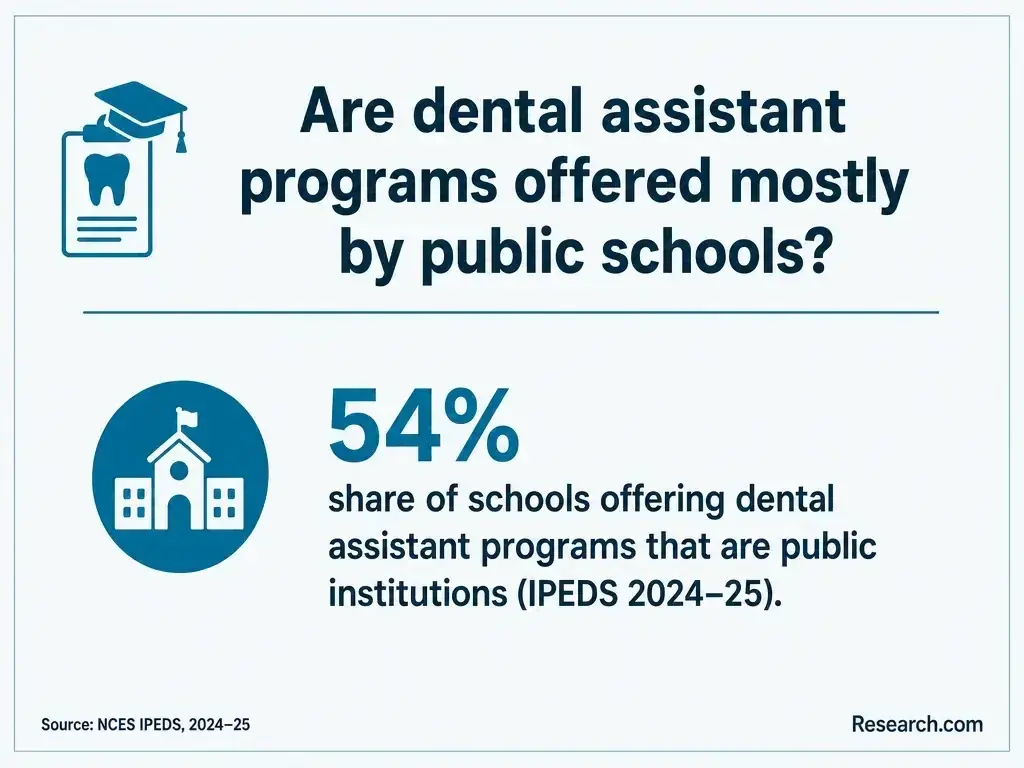
A reliable St. Louis Park-specific average program cost is not available here. Published tuition is only one part of the amount a student may need to spend, and prices vary by provider, credential, enrollment status, and aid eligibility. Compare each program using a written, current estimate of its total cost to become job-ready, not an unsupported local average.
The following cost categories show why two programs with different tuition prices can reverse order once required expenses are included.
| Cost or offset | What to verify |
| School charges | Tuition, mandatory fees, textbooks, software, supplies, and payment-plan charges |
| Practical training | Uniforms, protective equipment, instruments, clinical-placement fees, and travel |
| Career entry | Required examinations, license application, and any required health screening or background check |
| Time and assistance | Lost work hours, grants, scholarships, eligible aid, or wages from employer-sponsored training |
Ask about federal aid eligibility through the U.S. Department of Education's Federal Student Aid program and Minnesota aid or workforce assistance through the relevant state agencies; eligibility depends on the student and program. An employer-training offer may lower direct school costs but should be compared for paid hours, supervision, permitted duties, and whether further education is needed to reach your goal.
The school awards the credential named in its catalog - typically a certificate, diploma, or, where offered, an associate degree. A school credential, DANB certification, and a Minnesota dental assistant license are separate things. The Dental Assisting National Board administers professional certification; the Minnesota Board of Dentistry determines state licensure and permitted duties. CODA accredits qualifying dental-assisting programs, but institutional accreditation or state school authorization alone does not establish that a particular program is CODA-accredited (CODA; DANB; Minnesota Board of Dentistry).
If your goal is chairside employment, focus on the credential and clinical preparation the employer requires. If your goal is licensed duties, obtain written confirmation of the program's CODA status and how its graduates meet the board's current education and examination requirements. Comparisons with dual major programs are less useful than checking whether this particular occupational credential leads to the duties you want.
Requirements vary by provider. Applicants should check the current catalog for prior education, placement assessments, application deadlines, and any health, immunization, background-check, or CPR conditions imposed before clinical placement. Admission to a school does not mean admission to a placement site or eligibility for Minnesota licensure.
Before accepting an offer, ask when clinical clearance is due and what happens if a required placement cannot be secured. Working adults should also confirm whether labs and clinical shifts can be completed around employment; a nominally part-time program may still require weekday attendance.
Training typically covers dental anatomy and terminology, infection prevention, chairside assistance, instrument processing, dental materials, imaging, records, and patient communication (U.S. Bureau of Labor Statistics, Occupational Outlook Handbook). Students should practice these skills in labs and supervised clinical settings, not just describe them on a written test.
Compare curricula against the tasks you hope to perform in Minnesota. Ask how students are assessed on infection control and radiography, which procedures they may practice under supervision, and whether instruction covers digital imaging and electronic records used in contemporary dental offices. The Minnesota Board of Dentistry - not a school's course title - determines which duties require additional qualifications or licensure.
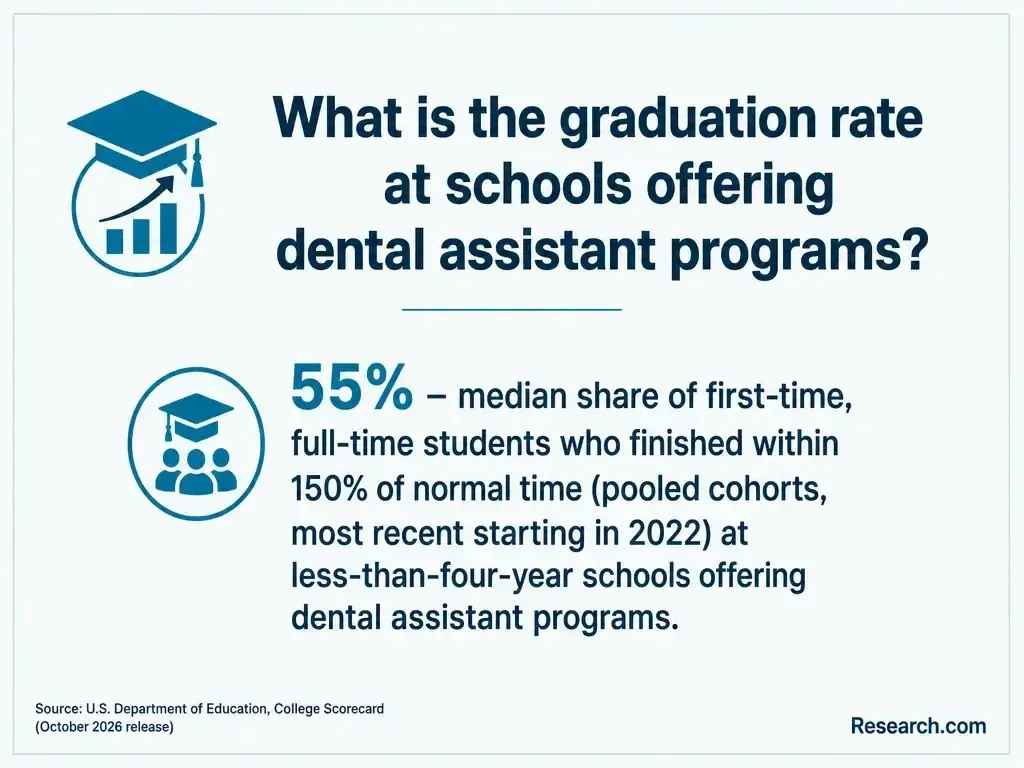
Not every dental assistant role in Minnesota requires the same credential. Minnesota distinguishes permitted duties for unlicensed assistants from those available to licensed dental assistants, and radiography and other duties have specific qualification rules (Minnesota Board of Dentistry). This distinction matters before enrollment: a short course may prepare you for some supervised work without providing the education needed for the licensed role you ultimately want.
For Minnesota's licensed dental assistant pathway, verify the board's current education, examination, and application requirements before choosing a program. CODA-accredited dental-assisting education and DANB examinations are important to check, but passing a course or holding a school certificate does not automatically grant a license (Minnesota Board of Dentistry; CODA; DANB). Ask the board or program to identify the exact route you would use, including any jurisprudence and radiography requirements applicable to that route.
Start with your intended job duties, then compare programs that can realistically prepare you for them. The affordability ranking is a useful shortlist, but its score does not include accreditation or other quality measures. A low price is poor value if you must later purchase additional training to pursue your intended Minnesota license.
Use these checks in order; each can change either your eligibility or your final cost.
Be wary of a "fully online" licensing claim, a placement that the student must find without support, or a tuition quote that excludes mandatory charges. If you examine Herzing University-Minneapolis or any other named provider, verify that it currently offers the specific dental-assisting program you want; an institution's name alone establishes neither availability nor licensing eligibility.
A realistic first step is supervised chairside or office work within the duties Minnesota permits for your qualifications. With the applicable education, examinations, and state license, an assistant may become eligible for additional duties. Experience can also support moves into specialty practices, scheduling, treatment coordination, or office leadership; each employer sets its own hiring expectations (Minnesota Board of Dentistry; U.S. Bureau of Labor Statistics).
These are different paths, not automatic promotions. If your interest is primarily patient care, prioritize clinical training and licensing eligibility. If you prefer administration, compare the added cost of a longer program with what local employers actually require. Pages about shortest doctorate programs address a different education decision and should not influence the return-on-investment calculation for dental assistant entry.
U.S. dental assistant employment is projected to grow 7.4% from 2025 to 2035 (U.S. Bureau of Labor Statistics, Employment Projections). That national projection indicates continuing opportunities, but it is not a St. Louis Park forecast and does not predict a job for any individual graduate.
Because St. Louis Park residents can consider employers throughout the Minneapolis-St. Paul area, evaluate the practical commuting radius for both clinical placement and work. Review current openings for the duties and credentials requested, and ask programs for verifiable placement support. Those checks are more useful for a near-term decision than applying a national growth rate directly to one city.
Education is a significant investment, so Research.com created this ranking to help readers compare affordable dental assistant programs against relevant local options. The team checks multiple education and occupational sources to improve the ranking's quality, credibility, and accuracy. Only programs reporting completions to the Integrated Postsecondary Education Data System (IPEDS) are eligible; an unlisted employer-training route or career school should not be assumed to be unavailable or inferior.
This is an affordability ranking, not an overall-quality ranking. Its score uses tuition, cost of attendance, median student debt, and federal loan default rate, with weights assigned through an entropy-based method that gives more weight to measures that differ more across programs. Accreditation and other quality indicators do not contribute to this score. By contrast, Research.com's best-program rankings consider student outcomes, earnings and return on investment, costs and debt, and quality and recognition. Their weights assign 20% to occupation-relevant programmatic accreditation or industry recognition, 10% to institutional accreditation, 10% to student support, and the remaining 60% across outcomes, earnings, and costs using the entropy-based method.
The following sources inform the ranking and its verification. Some cover education costs and outcomes directly; others help check occupation-specific recognition or training context and should not be mistaken for dental-assisting accreditors.
Use the ranking to narrow your search, then verify each program's current price, clinical training, CODA status, and Minnesota licensing pathway. More detail on Research.com's approach appears on its methodology page.
# 1 position
# 2 position
The lowest-cost choice depends on current tuition, mandatory charges, aid, travel, and whether the program supports your intended Minnesota duties. Use the ranking as a shortlist and request itemized prices before enrolling.
Some Minnesota dental assistant duties may be performed by people trained on the job under the applicable rules. That route should not be assumed to qualify you for licensed duties; check the Minnesota Board of Dentistry's requirements for your goal.
Do not assume so. Verify the program's education pathway and required in-person labs, clinical training, and examinations with the Minnesota Board of Dentistry before paying.
No. CODA accredits dental-assisting programs; Minnesota licenses individuals who meet its applicable requirements. Completing an accredited program does not itself issue a license (CODA; Minnesota Board of Dentistry).
It may be if the credential leads to the duties you want and its full cost is manageable relative to realistic entry-level earnings. Compare school and employer-training routes, account for lost work time, and avoid treating the national median wage as your expected starting pay.