# 1 position

Audited and Verified:
Our Editorial and Data Verification Process
Research.com uses government datasets, official education statistics and primary institutional information to support its career and degree guides. Our review process checks factual accuracy, occupational definitions, source dates and the requirements associated with the credentials discussed.
How This Article Was Fact-Checked
Our editorial team verifies salary estimates, employment projections, education requirements and program information against original data providers and official organizations. Salary figures are checked against the relevant occupational definitions and reporting periods. Information about licensure, accreditation and required in-person training is reviewed separately.
Fact-checked and verified on:

Co-Founder and Chief Data Scientist

Reviewed by Karolina Broda
Fact-Checker and Data Verification
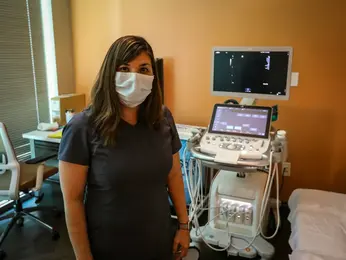
Choosing dental assistant training in Emporia means looking beyond the fastest or cheapest credential: you need practice with patients, a manageable total cost, and training that fits Kansas workplace requirements. The U.S. Bureau of Labor Statistics projects 7.4% national growth in dental assistant employment from 2025 to 2035. For prospective students and career changers, this guide explains the available pathways, costs, credentials, and career prospects. It also features a Best Dental Assistant Trade Schools in Emporia for 2027 ranking, created by the Research.com team of data scientists to help students make an informed choice about programs worth considering.
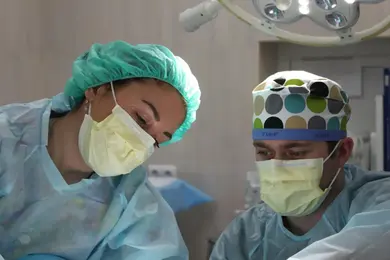
Expect instruction in chairside assistance, infection control, dental materials, patient communication, and practice operations, followed by supervised practice. Dental assisting is a hands-on occupation: a course covering terminology alone does not establish that you can safely support treatment. The U.S. Bureau of Labor Statistics identifies both clinical and administrative duties in the role.
Flint Hills Technical College is an Emporia-based provider to investigate for current dental assisting offerings. Confirm its current credential, schedule, clinical arrangements, and published costs directly before applying. A short occupational program may appeal to someone considering a fastest career to make money, but speed has value only if the training builds skills an employer will use.
Entry routes differ in how they deliver those skills:
| Pathway | What to expect | Best fit and key limitation |
| Technical-college certificate or diploma | Structured coursework and labs, with clinical experience where the program provides it | Fits students seeking guided practice; verify the clinical placement and credential. |
| Associate degree in dental assisting | Occupational training plus additional academic coursework, if offered | Fits students who value the broader credential; it may take longer and cost more without changing entry-level duties. |
| Employer-sponsored training | Paid or unpaid supervised learning in a dental office, depending on the employer | Fits someone with an available position; instruction and certification eligibility can vary substantially. |
General dental offices are the most direct employment target. Assistants can also work in specialty practices, such as orthodontic or oral-surgery offices, when their skills match the employer's procedures. The U.S. Bureau of Labor Statistics reports that dentists' offices employ most dental assistants nationally; that pattern makes local dental practices a sensible place to investigate openings, but it does not establish how many positions are available in Emporia.
Because Emporia is a smaller labor market, ask a program which practices host its students and where recent completers found work. If the local openings or desired specialty do not match your plans, consider your willingness and cost to commute before paying for training.
A reliable Emporia-specific dental assistant wage figure is not available here, so the national figure is a benchmark rather than a local pay quote. The U.S. Bureau of Labor Statistics reports a May 2025 national median annual wage of $48,070 for dental assistants. Half of workers nationally earned less and half earned more; the figure includes experienced workers and should not be treated as an offer to a new graduate.
For a useful local estimate, compare current Emporia job postings by required experience, hours, benefits, and radiography duties, then ask clinical-placement offices what they pay entry-level assistants. Evaluate an offer against commuting costs and the amount of debt needed to complete training, not against the national median alone.
Completion time depends on the credential, academic calendar, attendance schedule, and clinical requirements. A certificate or diploma can be shorter than an associate degree, while employer training may begin with a job and continue as duties expand. Do not assume that a short published course length includes a clinical placement or every requirement for a certification pathway.
Request the current program calendar from Flint Hills Technical College and ask for total instructional and clinical hours, the weekly time commitment, and the expected completion date if a placement is delayed. If speed is your main concern, compare time until you can perform the duties an employer needs, not just time until a certificate is issued. That occupational timeline is a different question from searching for a fastest masters degree.
Online delivery can work for terminology, anatomy, records, and some infection-control concepts. It cannot replace direct observation and practice of chairside procedures, instrument handling, and other physical skills. A hybrid program may combine remote coursework with scheduled labs and supervised experience; a fully online course needs especially careful scrutiny if it claims to prepare students for clinical work.
Before choosing a format, get written answers about where labs occur, who arranges any clinical placement, how competency is assessed, and whether travel outside Emporia is required. Check certification eligibility separately. An online option that looks convenient alongside best open enrollment colleges online may be a poor fit if its practical training depends on finding your own dental office.
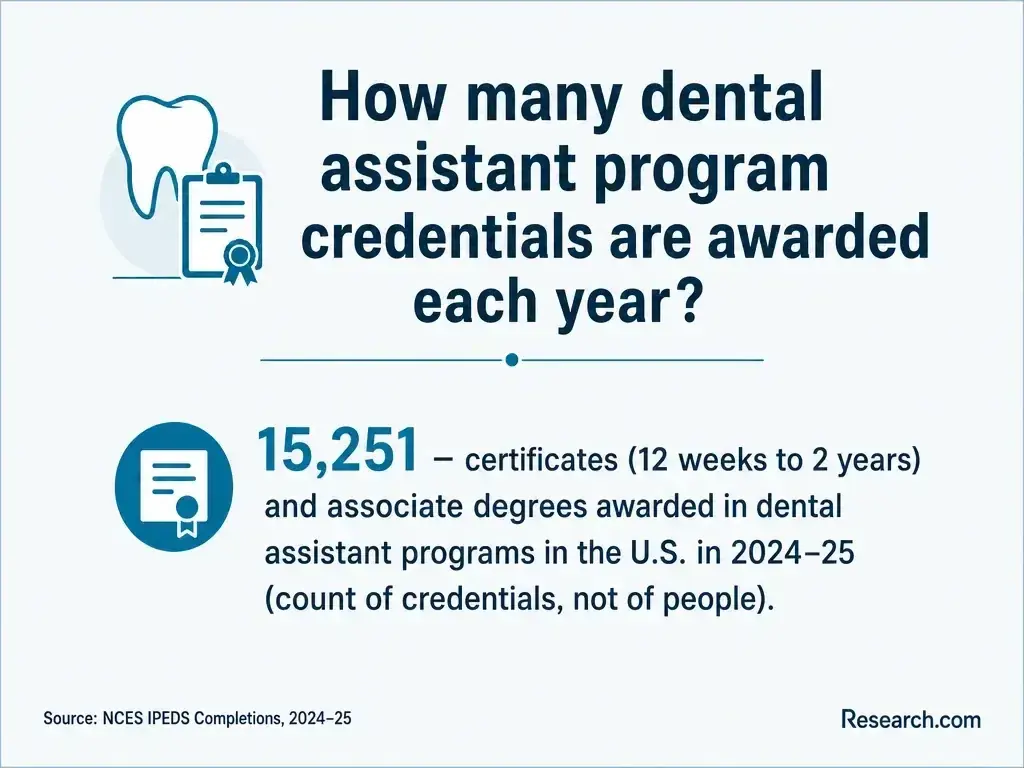
There is no defensible Emporia-wide average to quote from the information available: providers and employer-training routes do not necessarily report costs in comparable ways. Obtain a current, itemized estimate for each program instead. Tuition is only one part of what it costs to become job-ready.
Ask each provider which of these expenses are included and which you would pay separately:
Then subtract grants, scholarships, eligible aid, or employer contributions you can actually obtain. Confirm federal-aid eligibility for the specific program through Federal Student Aid and the institution; an institution's participation does not establish that every short course qualifies. Paid employer training may reduce immediate costs but should be compared with the structured practice and credential opportunities it offers. A useful investment calculation also considers completion likelihood, debt, current earnings, plausible post-training pay, and how long you expect to work in the field.
The award depends on the program: it may be a certificate, diploma, or - where offered - an associate degree. Employer training may instead document competencies without awarding an academic credential. Ask for the exact award title before enrolling; similarly named programs can provide different amounts of lab and clinical practice.
A school credential is also distinct from professional certification. The Dental Assisting National Board (DANB) administers Certified Dental Assistant certification and sets eligibility and examination requirements. Graduation alone does not mean you hold that certification. If it is your goal, ask the provider to identify the current DANB eligibility route its training supports and what, if anything, you must complete afterward.
Requirements vary by provider and clinical site. Ask Flint Hills Technical College for its current admissions criteria, prerequisites, deadlines, and any requirements that apply before clinical participation. A dental employer offering direct training will set its own hiring criteria. Do not assume that an open-admission policy, where available, guarantees access to a clinical placement.
If you are changing careers, also ask whether documented prior learning can reduce coursework and whether any credit would shorten the actual schedule or merely reduce the number of courses you take. Someone comparing 1 year online masters programs with a career change into dental assisting should assess these occupational entry requirements separately: previous education does not substitute for demonstrated clinical skills.
Training should connect dental terminology and anatomy to the work of preparing treatment areas, supporting a dentist during procedures, managing instruments, documenting care, and communicating with patients. Infection prevention and safety need more than a lecture: students should practice procedures and receive feedback. The U.S. Bureau of Labor Statistics describes these clinical and office responsibilities as part of dental assistants' work.
Compare curricula by asking to see the lab skills checklist and how competence is assessed. If radiography interests you, ask exactly what instruction and supervised practice are provided and confirm the applicable Kansas rules before assuming you will be able to perform that duty at work. Software and scheduling skills matter too, but they should complement - not displace - chairside practice.
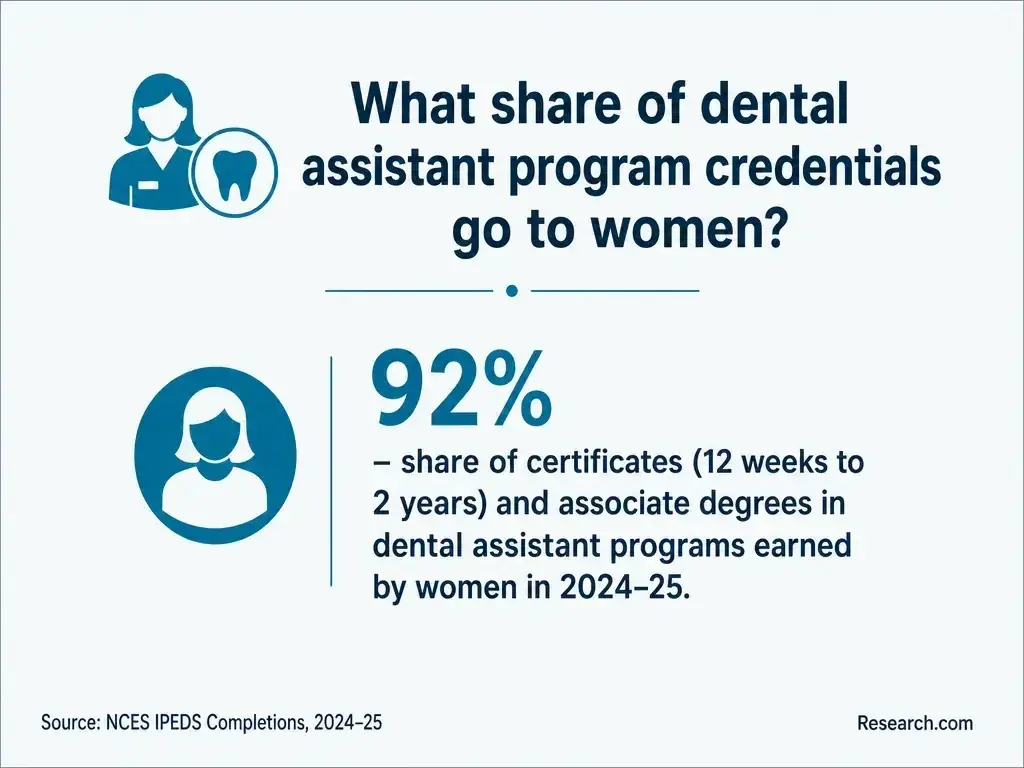
Do not treat a school certificate, DANB certification, and permission to perform particular dental-office duties as the same thing. The Kansas Dental Board is the authority to consult for current Kansas dental-assistant supervision and duty rules. Verify any requirements tied to the tasks you intend to perform - particularly radiography - with the board and a prospective employer before enrolling. A program's accreditation or a school's authorization does not, by itself, grant occupational permission.
DANB certification is a separate professional credential with its own eligibility and examination rules, according to the Dental Assisting National Board. It may be useful for an employer or future mobility, but ask whether a specific job requires or prefers it. For Emporia applicants, the practical question is whether a program prepares you for the duties local offices hire for and, if desired, a defined certification route.
Start with the job you want, then compare programs on verified training and net cost. The ranking can narrow the search, but an individual decision depends on clinical access, schedule, and what you can afford to finish. Institutional accreditation, state school authorization, and dental assisting program accreditation are different checks; verify each claim with the relevant institution, regulator, or accreditor rather than accepting a general statement that a school is "approved." The Commission on Dental Accreditation maintains information on dental program accreditation.
Use these questions when contacting a provider and, where possible, a potential clinical employer:
A red flag is an accelerated program that cannot explain how students practice and demonstrate clinical skills. Another is a salary claim presented as a likely starting wage. If you prefer independent, low-interaction work, examine the role's close patient contact before choosing it based on a list of best jobs for introverts that pay well.
The direct path is an entry-level assistant role in a general dental office. With relevant experience and employer training, an assistant may take on more complex permitted duties, work in a specialty practice, help coordinate patients or office operations, or mentor newer staff. Duties remain subject to Kansas rules and employer supervision; experience does not automatically authorize a regulated task.
Choose a program for the first role it can realistically help you enter, then evaluate advancement separately. Ask whether clinical experiences expose students to the type of practice that interests them. If long-term flexibility matters, compare a credential's cost and scope with the option of beginning in an office that provides supervised training and supports later certification.
The U.S. Bureau of Labor Statistics projects 7.4% national employment growth from 2025 to 2035 for dental assistants. That indicates demand across the U.S.; it does not predict an opening in Emporia when you finish training. A small local market can make the timing and location of vacancies especially important.
Before committing to a schedule or loan, review current openings in Emporia and any area you could realistically commute to. Note which duties, credentials, and experience employers request. Ask programs about recent clinical partners and employment outcomes, while recognizing that a small graduating group can make a single year's results unstable.
Education is a significant investment, so the Research.com team designed the ranking to compare dental assistant programs with other programs serving the same occupation and location - not with unrelated trades. To support quality, credibility, and accuracy, the team evaluates reported outcomes, costs, recognition, and student support. Only programs with completions reported to the Integrated Postsecondary Education Data System (IPEDS) are eligible; an unlisted employer-training or career-school option is not necessarily unapproved or ineffective.
Best-program scores cover student completion and full- and part-time retention; median earnings one year after completion and earnings relative to annual attendance cost; tuition, attendance cost, debt - including debt held by students who withdrew - and federal loan default rates; and relevant accreditation or industry recognition and student support. Programmatic recognition carries 20% of the score, institutional accreditation 10%, and student support 10%. Outcomes, earnings, and costs share the remaining 60%, with entropy-based weighting giving more weight to indicators that distinguish programs. Most-affordable rankings instead score only tuition, attendance cost, debt, and default rates using entropy-based weights; accreditation and other quality indicators are not part of that score.
The following sources inform the ranking. Some cover the broader provider landscape rather than establishing that a particular dental assisting program holds a particular approval.
The ranking is a starting point for a shortlist, not a substitute for checking current program details. Readers can use it to compare measurable differences, then confirm clinical access, Kansas-relevant training, and their own net costs. More information about the approach is available on Research.com's methodology page.
# 1 position
# 2 position
Not necessarily. A dental employer may offer supervised training. Compare that route with a structured program on clinical practice, cost, schedule, and any certification goal; confirm permitted duties with the Kansas Dental Board.
You can study some subjects remotely, but clinical skills require in-person practice and assessment. Ask any online provider how it arranges labs and supervised experience before enrolling.
No. A school award and DANB's Certified Dental Assistant credential are separate. Check DANB's current eligibility and examination requirements for your intended route.
Request the current dental assisting program's credential, calendar, lab and clinical hours, placement arrangements, total estimated cost, and available completion and employment outcomes.
It may be if you can complete it, gain usable clinical skills, and enter a role whose pay justifies your net cost and time away from work. Compare that calculation with supervised employer training rather than relying on tuition or a national median wage alone.