# 1 position

Audited and Verified:
Our Editorial and Data Verification Process
Research.com uses government datasets, official education statistics and primary institutional information to support its career and degree guides. Our review process checks factual accuracy, occupational definitions, source dates and the requirements associated with the credentials discussed.
How This Article Was Fact-Checked
Our editorial team verifies salary estimates, employment projections, education requirements and program information against original data providers and official organizations. Salary figures are checked against the relevant occupational definitions and reporting periods. Information about licensure, accreditation and required in-person training is reviewed separately.
Fact-checked and verified on:

Co-Founder and Chief Data Scientist

Reviewed by Karolina Broda
Fact-Checker and Data Verification
Choosing dental assistant training in Salina means checking more than a school's name: you need a credential, hands-on practice, and a realistic route into a Kansas dental office. The U.S. Bureau of Labor Statistics projects dental assistant employment to grow 7.4% nationally from 2025 to 2035. This guide explains training options, costs, credentials, and career prospects. It also accompanies the Best Dental Assistant Trade Schools in Salina for 2027 ranking, created by the Research.com team of data scientists to help students make an informed choice about programs worth considering.
Expect instruction that connects chairside procedures to actual patient care: infection control, instrument preparation, dental terminology, patient communication, and practice assisting a dentist. A stronger program lets you demonstrate these skills in a lab and supervised dental setting, not merely pass online quizzes. The U.S. Bureau of Labor Statistics identifies both formal programs and on-the-job training as routes into dental assisting.
Salina Area Technical College is a local public technical-college option to investigate, but confirm its current dental assisting offering, award, schedule, and clinical-site arrangements before treating it as an available choice. In a smaller labor market, the location of clinical placements matters: travel outside Salina could change both your weekly schedule and total cost.
The comparison below separates common entry routes. Availability, admission rules, and practical hours depend on the specific provider or employer.
| Route | Training and credential | Best fit and key limitation |
| Technical-college or career-school program | Classroom and lab instruction, often with supervised clinical practice; typically a certificate or diploma | Fits learners who want structured practice; confirm clinical access and whether the program supports their intended certification route. |
| Associate-degree dental assisting program | Dental assisting instruction plus additional college coursework; awards an associate degree | May fit learners who value broader coursework, but takes more time; the degree is not inherently required for entry-level assisting. |
| Employer-sponsored training | Office-based instruction while working; the employer may not award an academic credential | Can reduce upfront cost and provide earnings while learning; the scope of training and transferability to another employer may vary. |
For a prospective student, the deciding question is whether the route provides enough supervised practice for the work you want to do - and whether its credential has value beyond the first office that trains you.
Most dental assistants work in dentists' offices, according to the U.S. Bureau of Labor Statistics. In and around Salina, that can mean general dentistry or a specialty practice, with duties shaped by the dentist's services and Kansas rules. Assistants may prepare treatment rooms, support procedures, maintain instruments, update records, and help patients understand instructions.
Ask prospective clinical sites whether students rotate through different procedures and whether the office hires new assistants. A placement concentrated on front-desk work may be useful, but it is not equivalent to repeated chairside practice if chairside employment is your goal. Be prepared to consider nearby communities if a desired specialty has limited local openings.
The national median annual pay for dental assistants was $48,070 in May 2025, according to the U.S. Bureau of Labor Statistics. That is the midpoint for employed assistants across experience levels and locations - not a verified Salina wage or a likely offer to a new trainee. Without a comparably defined, current Salina estimate, a precise local-versus-national comparison would be misleading.
For a useful local estimate, compare current openings by required experience, schedule, benefits, and permitted duties. An offer with paid training may be financially preferable to a higher advertised wage that requires you to pay for training first. Calculate your likely take-home earnings and training costs before using the national median to judge a program's return.
Dental assisting programs commonly take about a year, according to the U.S. Bureau of Labor Statistics, but the calendar depends on the credential, course load, and clinical schedule. Employer training may begin with paid work sooner, while proficiency develops on the job. An associate-degree route generally takes longer because it includes additional coursework.
Do not compare programs by advertised months alone. Request each provider's total scheduled contact hours, lab hours, required clinical or externship hours, and the timetable for completing them. Ask whether missed clinical shifts delay completion: a short classroom schedule is less useful if placements are hard to reach or arrange around work.
If you are comparing schedules through a page on best accelerated online degree programs for working adults, treat it as a scheduling comparison, not evidence that online study can replace dental assisting lab or clinical practice.
Dental terminology, recordkeeping concepts, and some infection-control instruction can be taught remotely. Chairside positioning, instrument transfer, sterilization workflow, and patient-facing practice require in-person demonstration and feedback. A hybrid program can therefore be practical for a working adult only if its labs and supervised clinical work are accessible on a workable schedule.
Before choosing an online option, obtain written answers about where practical training occurs, who arranges the site, who supervises it, and whether completion supports the certification route you intend to pursue. Do not assume an online certificate alone establishes clinical competence or eligibility for a credential from the Dental Assisting National Board.
Resources comparing best affordable online schools for working adults may help you think about flexibility and price, but dental assisting requires a separate check of in-person training.
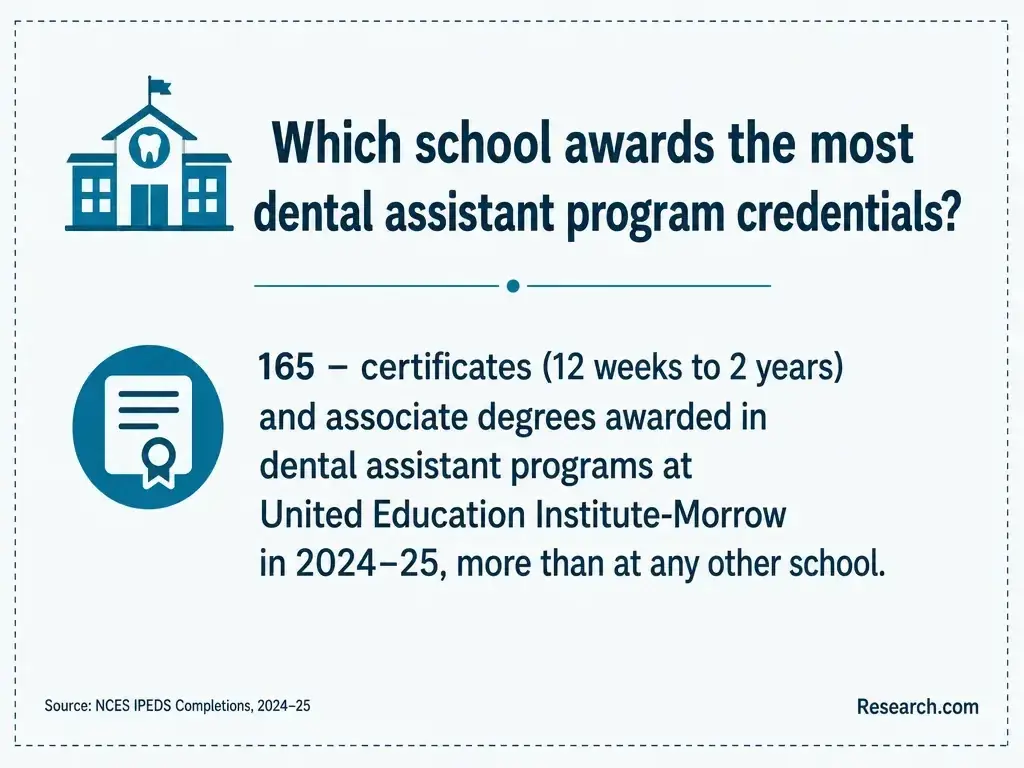
There is no reliable single Salina program average that covers formal training and employer-sponsored routes on the same basis. Published tuition may omit mandatory fees, textbooks, uniforms, protective equipment, supplies, background checks or health requirements imposed by a clinical site, certification exams, and travel. Lost earnings while attending daytime labs can also be substantial even when the tuition looks affordable.
Ask for a written, itemized cost of becoming job-ready - not just the per-course price - and distinguish required charges from optional purchases. Then compare grants, scholarships, eligible federal aid, and any workforce assistance with the amount you would borrow. Federal Student Aid notes that aid eligibility depends on the school and program; a paid employer-training position has a different cost structure and may not involve student aid.
A cheaper advertised program is not automatically the better investment. Compare debt and out-of-pocket cost with completion probability, time away from paid work, clinical access, and the earnings realistically available to a beginner. A guide to affordable accredited online colleges with no application fee can illustrate why application charges are only one cost; it cannot substitute for a dental assisting program's full clinical-training estimate.
A formal program may award a certificate, diploma, or, where offered, an associate degree. Those are education credentials, not the same thing as occupational certification. The Dental Assisting National Board's Certified Dental Assistant (CDA) designation is a separate professional credential with its own eligibility and examination requirements; graduating from a school does not automatically confer it.
Check the exact award on the program's current catalog. If CDA is a goal, compare that award and the program's accreditation status against the Dental Assisting National Board's current eligibility pathways before enrolling. CODA programmatic accreditation, institutional accreditation, state authorization to operate, and professional certification each answer a different question; none should be treated as interchangeable.
An easiest associates degrees to get comparison is not a useful shortcut here: choose an associate-degree dental assisting route, if available, for its specific training and added coursework rather than the perceived ease of its award.
Requirements vary by provider. A school may ask for a high school diploma or equivalent, an application, and readiness to meet clinical-site conditions. Those conditions can include health documentation, a background check, or a schedule that accommodates supervised practice. An employer-training position instead depends on the employer's hiring criteria and willingness to train a beginner.
Ask admissions staff which conditions apply before enrollment and which apply before clinical placement. That distinction matters if you could finish classroom work but be unable to enter a required placement. Also ask whether prior dental-office experience earns credit or changes your training plan; never assume that work experience automatically waives clinical requirements.
Core training links patient safety to efficient chairside work. Expect dental anatomy and terminology, infection prevention, instrument identification and transfer, treatment-room preparation, documentation, and communication with patients and the dental team. Depending on the program and applicable rules, instruction may also cover imaging procedures and other duties an assistant can perform under a dentist's supervision. The U.S. Bureau of Labor Statistics describes these clinical and administrative tasks as part of the occupation.
For 2027 enrollment, look closely at how the program assesses practical competence. Digital records and imaging make equipment familiarity valuable, but a software demonstration is not a substitute for performing a supervised procedure safely. Ask to see the lab competencies and clinical evaluation criteria, particularly for sterilization and chairside assisting.
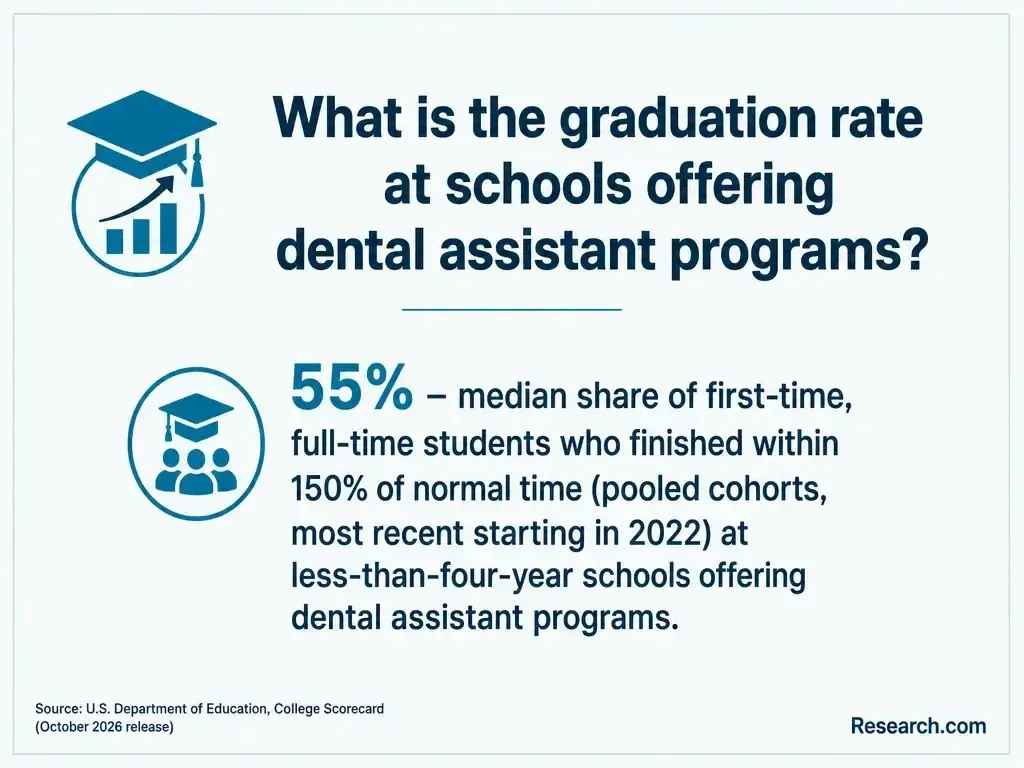
Do not confuse entry into dental assisting with qualifying for every possible duty. The Kansas Dental Board governs dental practice and the supervision and duties of dental assistants in Kansas. Before enrolling, check its current rules for the tasks you want to perform - particularly imaging or any expanded duties - and ask a prospective employer what training it requires. A school's certificate by itself does not authorize a task that state rules reserve or condition.
National professional certification is a separate decision. The Dental Assisting National Board sets eligibility and examinations for credentials such as CDA; a program can be useful for employment without automatically making every graduate eligible for that certification. Verify the board's current eligibility route and any required supporting credentials directly. Likewise, CODA accreditation concerns a program, not an individual occupational license.
Start with the work you want to do, then test whether each training route can get you there. A structured program can be worth paying for when it offers accessible labs, supervised clinical practice, and a credential aligned with your goals. If an office offers substantial paid training and you do not need a particular school-based certification pathway, compare that offer before committing to tuition.
Use these checks to uncover differences a ranking or advertised price may miss:
Red flags include a promise of certification without explaining eligibility, an "all-online" claim with no supervised practical component, or a low price that omits required supplies and placement travel. Salina Area Technical College is one provider to check directly; do not rely on a ranking alone to establish that its current offering matches your plans.
The direct path is an entry-level dental assisting role, with experience potentially leading to more responsibility in chairside coordination, patient scheduling, or practice operations. Some assistants seek optional national certification or additional training for duties permitted under Kansas rules. A move into a specialty office may offer different procedures, but it depends on available positions and employer expectations, not merely on the title of an initial certificate.
If your actual goal is a different dental occupation, do not assume a dental assisting credential qualifies you for it; check that occupation's distinct education and regulatory requirements first. Likewise, a page on affordable online masters programs is not an entry route into dental assisting. Keep the investment tied to the job you intend to seek next.
National dental assistant employment is projected to grow 7.4% from 2025 to 2035, according to the U.S. Bureau of Labor Statistics Employment Projections. That supports considering the occupation, but it does not forecast the number of openings in Salina or guarantee a job after training. Hiring in a smaller market can depend heavily on individual practices and staff turnover.
Before committing, review current Salina-area postings for requested experience, hours, and credentials, and ask programs where recent clinical placements occurred. If local openings do not match your target schedule or specialty, decide in advance whether commuting is realistic. That geographic flexibility may matter as much to your return on training as the national growth rate.
Investing in training is an important decision. Research.com created its ranking to help readers compare dental assisting programs against relevant local alternatives, using reported outcomes, costs, recognition, and student support rather than a school's reputation alone. Only programs with completions reported to the Integrated Postsecondary Education Data System (IPEDS) are eligible; an employer-training route or other provider absent from IPEDS should not be assumed to be poor quality.
Best-program rankings evaluate student outcomes, including completion and full-time and part-time retention; earnings one year after completion and earnings relative to annual attendance cost; tuition, attendance cost, median debt - including debt held by students who withdrew - and federal loan default rates; and institutional accreditation, relevant programmatic accreditation or industry recognition, and student support. Programmatic recognition carries 20% of the score, institutional accreditation 10%, and student support 10%. The remaining 60% is distributed across outcomes, earnings, and costs using an entropy-based method that gives more weight to indicators that distinguish programs. Most-affordable-program rankings instead score only tuition, attendance cost, median debt, and loan default rates, with entropy-based weights; accreditation and other quality measures are not part of that affordability score.
The team used the following sources to check education data and occupation-relevant recognition. Their inclusion as sources does not mean that every organization accredits dental assisting programs or that every listed provider appears in the ranking.
Use the ranking to narrow your choices, then verify current program availability, clinical arrangements, costs, and certification eligibility directly. More detail on the approach is available in Research.com's methodology.
# 1 position
# 2 position
It can be if it provides supervised practice, an appropriate credential, and a manageable total cost. Compare it with paid office training, especially if your goal is entry-level work rather than a specific certification pathway.
On-the-job training is a recognized route into dental assisting, according to the U.S. Bureau of Labor Statistics. Confirm the employer's training plan and whether it supports any later certification you want.
Some theory can be taught online, but chairside and other practical skills need in-person instruction and supervised assessment. Ask where and when those components take place.
No. A school certificate and the Dental Assisting National Board's CDA credential are different. Check the board's current eligibility and examination requirements.
Ask who finds the site, where it is, what duties students practice, what hours are required, and whether travel or site requirements add to your costs.