# 1 position
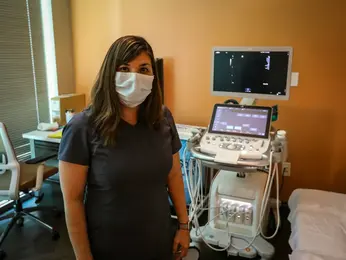
Ross Medical Education Center-Cincinnati - Dental Assisting/Assistant.
certificate or diploma

Audited and Verified:
Our Editorial and Data Verification Process
Research.com uses government datasets, official education statistics and primary institutional information to support its career and degree guides. Our review process checks factual accuracy, occupational definitions, source dates and the requirements associated with the credentials discussed.
How This Article Was Fact-Checked
Our editorial team verifies salary estimates, employment projections, education requirements and program information against original data providers and official organizations. Salary figures are checked against the relevant occupational definitions and reporting periods. Information about licensure, accreditation and required in-person training is reviewed separately.
Fact-checked and verified on:

Co-Founder and Chief Data Scientist

Reviewed by Karolina Broda
Fact-Checker and Data Verification
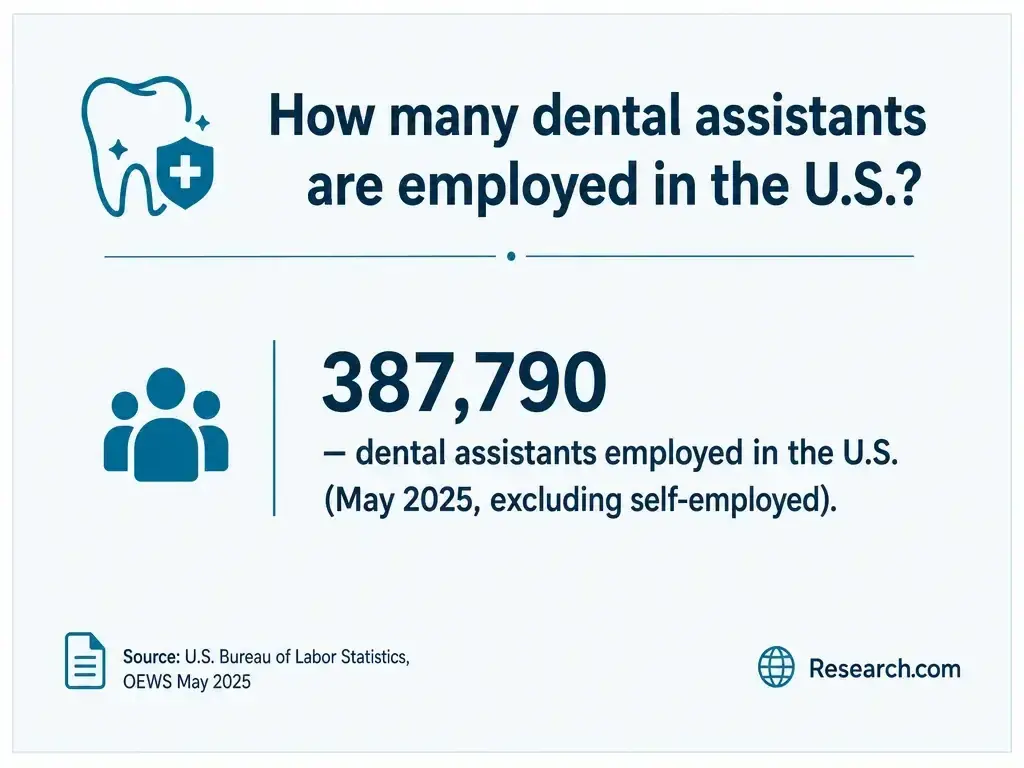
The cheapest dental assistant program is not necessarily the least expensive way to become job-ready. Clinical practice, radiography eligibility, fees, and time away from work can change the calculation. The Research.com team of data scientists created the Most Affordable Dental Assistant Trade Schools in Cincinnati for 2027 ranking to help students identify programs worth considering. With U.S. dental assistant employment projected to grow 7.4% from 2025 to 2035, according to the U.S. Bureau of Labor Statistics (BLS), this guide helps you compare training routes, total costs, and Ohio requirements before enrolling.
Expect instruction in chairside assistance, infection control, dental materials, patient communication, and office procedures, followed by supervised practice where the program provides it. Programs with similar credential names can differ substantially in clinical hours, radiography preparation, and access to externships. Those differences matter more than the name of the certificate.
The main entry routes have different cost and experience trade-offs. Confirm each provider's current curriculum and placement arrangements before treating the routes as interchangeable.
| Route | What it typically provides | Best fit and main limitation |
| Career-school certificate or diploma | Structured classroom and lab training; an externship may be included | Fits students seeking a defined schedule; compare hands-on time and full charges |
| Public-college certificate or associate degree | Occupational training, with an associate degree generally requiring more coursework | Fits students who want the offered credential; compare time and total cost, not just tuition |
| Employer-sponsored training | Practice-specific instruction while working | May reduce upfront expense; verify whether training supports radiography or later certification goals |
Dental assisting is not a trade in which a registered apprenticeship should be assumed to be locally available. If someone advertises an apprenticeship, verify its registration and training terms; otherwise, compare the actual employer-paid training offer with a school program.
Dental offices are the principal workplace for dental assistants, according to the BLS. Locally, that can mean general dentistry or specialty practices such as orthodontics and oral surgery. The employer's services affect the skills you will use: a practice that expects radiographs calls for different preparation than one hiring for sterilization and basic chairside support.
Cincinnati's labor market extends into Kentucky and Indiana. If you plan to commute across a state line, check the rules for the state where you will work, not just where you trained; Ohio eligibility does not automatically establish eligibility for duties regulated elsewhere.
The BLS reports a $48,070 national median annual wage for dental assistants in May 2025. That is the midpoint across experienced and new workers nationwide, not a Cincinnati wage or a predicted first offer. For a local comparison, consult the BLS Occupational Employment and Wage Statistics entry for dental assistants in the Cincinnati, OH-KY-IN metropolitan area and check its reference year before comparing it with a job offer.
Ask employers whether an offer includes paid training, benefits, and reimbursement for radiography-related requirements. Those details can change the value of an entry-level role. If patient-facing work is not appealing, explore good jobs for introvert before paying for training centered on chairside patient care.
Completion time depends on the credential, schedule, and required practical work. A short full-time certificate can lead to job applications sooner than a longer diploma or associate-degree route, but the fastest advertised finish date may exclude an externship or the steps needed for radiography duties. Employer training can begin with a job, while competency develops under supervision.
Request the current calendar, total classroom and lab hours, externship hours, and any wait time for a clinical site. Ask whether evenings or part-time attendance change the finish date. An accelerated schedule is worthwhile only if you can complete its hands-on requirements without giving up more income than the shorter timeline saves.
Online lessons can cover terminology, scheduling, and some theory. They cannot replace supervised chairside practice, infection-control technique, or hands-on radiography instruction. A hybrid program can be practical for a working student if its required labs and clinical site are accessible from Cincinnati and its training supports the duties the student wants to perform.
Compare formats by the work you must complete in person, not by the amount of material available on a screen.
| Format | Potential advantage | Point to verify |
| On-campus | Scheduled access to equipment and instructors | Clinical placement, commute, and lab hours |
| Hybrid | Less travel for theory coursework | Location and schedule of every required lab and externship |
| Fully online coursework | Flexible study of nonclinical subjects | How practical competencies are taught and whether the route meets the intended Ohio requirements |
Do not assume that a fully online certificate establishes radiography eligibility. Check the Ohio State Dental Board's applicable requirements and ask the provider to identify its in-person training arrangements in writing.

A reliable Cincinnati-wide average for comparable dental assistant programs is not available here. Published prices may cover different credentials, attendance periods, and supplies, so inventing a single average would make comparisons less useful. Request a written, itemized cost to become job-ready from each provider, including tuition, mandatory fees, textbooks, uniforms or protective equipment, lab materials, examination and application charges where applicable, and travel to any clinical site.
Compare the net cost after grants or employer assistance, then add income you expect to forgo while training. Federal aid depends on the student's and program's eligibility; institutional accreditation alone does not make every short program aid-eligible. Federal Student Aid is the source for eligibility rules. Students comparing low tuition online universities that accept fafsa should not assume the same aid or practical-training arrangements apply to a dental assisting certificate.
A lower-priced program is a better investment only if it supplies the practical training needed for your goal. For a return-on-investment comparison, consider completion probability, debt, lost wages, current earnings, plausible post-training earnings, and how long you expect to use the credential - not tuition alone.
Depending on the program, you may earn a certificate, diploma, or associate degree. These are school-awarded credentials, not the same as Dental Assisting National Board (DANB) certification or an Ohio authorization for regulated duties. Ask which credential appears on the transcript and which examinations or state applications graduates can pursue.
The Commission on Dental Accreditation (CODA) accredits qualifying dental assisting programs; institutional accreditation concerns the school and is a separate check. Neither label alone proves that every graduate may take dental radiographs or perform expanded functions in Ohio. If you are comparing certification programs that pay well, distinguish a course-completion certificate from a professional certification earned through a separate certifying body.
Requirements vary by provider and placement site. Ask about the school's educational prerequisite, application process, and any clinical-site conditions, such as health documentation or a background check. Also ask when each condition is due: discovering an externship barrier after paying tuition can delay completion.
Employer-sponsored entry may have different hiring requirements from school admission. If you already have relevant dental-office experience, ask whether a provider grants documented prior-learning credit and whether accepting that credit would affect clinical hours or certification eligibility. Get the answer in writing before shortening your training plan.
Core training commonly addresses dental anatomy and terminology, instrument transfer, sterilization, infection prevention, dental materials, patient records, and communication during treatment, according to the BLS occupational description. The strongest way to compare curricula is to inspect how those tasks are practiced: simulated lab work and supervised patient care develop different experience from watching demonstrations.
Ask for the current skills checklist and the number of supervised lab and clinical hours. If your goal includes radiography, have the school identify the applicable Ohio training pathway rather than assuming a general chairside course covers it. Digital records and imaging equipment also make software practice relevant, but no particular product should substitute for sound clinical instruction.
Ohio does not require a single occupational license for every basic dental assistant role. Specific duties are a separate question: dental radiography is subject to Ohio State Dental Board requirements, and expanded-function dental auxiliary duties have their own eligibility rules. DANB certification is a professional credential, not a blanket replacement for state authorization. Confirm the current pathway for the tasks in the jobs you want before selecting a program.
Ask admissions staff to show, in writing, how the curriculum supports the relevant Ohio Board requirements and any DANB examination goal. Then verify the answer directly with the Board or DANB. This is particularly important if the program is online or outside Ohio, or if you expect to work in the Kentucky or Indiana portion of the Cincinnati metro area.
Start with the job you want, then compare programs on eligibility, practical training, and net cost. An affordability ranking can identify candidates, but it does not score whether a particular program fits your intended Ohio duties. If considering Ross Medical Education Center-Cincinnati or Fortis College-Cincinnati, request each program's current documents rather than relying on an older advertised price or schedule.
Use these checks before paying an enrollment deposit:
Red flags include a promised salary, an unexplained externship, or a claim that accreditation alone grants permission for all clinical duties. Choose a different route if a program cannot document the training or eligibility your target role requires. A career changer considering a bachelor's degree online fast is weighing a different investment; it is not a substitute for the hands-on dental assisting preparation described here.
Entry roles can emphasize chairside care, sterilization, or patient coordination. With appropriate training and authorization, an assistant may take on radiography-related duties; additional experience can support work in a specialty practice or a lead-assistant role. Ohio's expanded-function pathway is an additional qualification, not an automatic promotion conferred by an entry certificate, according to the Ohio State Dental Board.
Before purchasing more training, compare the duties and pay offered by local employers with the added cost and time. An online phd cheap search concerns a wholly different educational goal and will not provide the supervised clinical preparation for these dental assisting paths.
The BLS projects 7.4% U.S. employment growth for dental assistants from 2025 to 2035. This is a national projection, not a Cincinnati hiring forecast or a guarantee of a local opening. It supports considering the occupation, but program choice should also reflect current local postings: note how often employers request radiography eligibility, experience, or a particular schedule.
Review openings on both sides of the state line if you can commute, while checking the duties permitted in the state of employment. A program with accessible clinical practice and the right regulatory preparation is more useful than a cheaper one that leaves you ineligible for the work local employers advertise.
Investing in training is an important decision. Research.com built this ranking to help readers compare dental assistant programs against other programs in the same occupation and location, rather than against unrelated schools. Only programs with completions reported to IPEDS are eligible; a provider's absence from the ranking does not establish that its training is unavailable or poor quality.
The most affordable ranking scores tuition, cost of attendance, median student debt, and federal loan default rate. Weights are assigned using an entropy-based method, which gives more weight to measures that vary more across eligible programs. Unlike Research.com's separate best-program rankings, affordability scores do not include accreditation or other quality indicators. Readers should therefore use the ranking as a cost-comparison starting point, then verify training and career-entry fit themselves.
The Research.com team draws on the following sources to check costs, institutional records, recognition, and training context. Some sources cover broader trade education and are not dental-assisting approval authorities.
This approach helps readers narrow their cost options without confusing a low score-based price with eligibility for a particular dental duty. Further details are available in Research.com's methodology.
# 1 position
# 2 position
Compare written, all-in school quotes with any genuine paid employer-training offer. The lowest tuition may cost more after fees, travel, and missed wages.
Basic entry through employer training may be possible in Ohio. Check the requirements separately if you want to take radiographs or perform expanded functions.
Do not assume so. Verify the current Ohio State Dental Board pathway and how the program provides any required practical instruction.
No. CODA accredits programs; DANB awards professional certifications through its own requirements. State rules for regulated duties are another separate check.
Choose the route that meets your target job's training requirements at the better total cost, including lost earnings. Confirm clinical hours and placement timing before treating a shorter advertised schedule as a savings.