# 1 position


Audited and Verified:
Our Editorial and Data Verification Process
Research.com uses government datasets, official education statistics and primary institutional information to support its career and degree guides. Our review process checks factual accuracy, occupational definitions, source dates and the requirements associated with the credentials discussed.
How This Article Was Fact-Checked
Our editorial team verifies salary estimates, employment projections, education requirements and program information against original data providers and official organizations. Salary figures are checked against the relevant occupational definitions and reporting periods. Information about licensure, accreditation and required in-person training is reviewed separately.
Fact-checked and verified on:

Co-Founder and Chief Data Scientist

Reviewed by Karolina Broda
Fact-Checker and Data Verification
Choosing an affordable dental assistant program means looking beyond tuition: the training must also prepare you for chairside work and any duties you want to perform in Indiana. The U.S. Bureau of Labor Statistics reports a $48,070 national median annual wage for dental assistants in May 2025, but that is not a starting-pay estimate. This guide explains costs, credentials, practical training, and career prospects. It accompanies the Most Affordable Dental Assistant Trade Schools in Evansville for 2027 ranking, created by the Research.com team of data scientists to help students identify programs worth considering.
Dental assistant training prepares students to support dentists during treatment, maintain infection-control procedures, prepare instruments and rooms, and handle patient and office tasks. The U.S. Bureau of Labor Statistics notes that duties vary by state and workplace. For an Evansville applicant, the crucial distinction is between learning a skill in class and being authorized to perform it in an Indiana dental office.
These pathways offer different combinations of cost, structure, and practical experience. Confirm the actual curriculum and placement arrangements rather than assuming similarly named credentials provide equivalent preparation.
| Pathway | Typical credential or outcome | Best fit and main trade-off |
| Career-school certificate or diploma | School-issued completion credential | Fits students seeking structured, occupation-focused training; compare lab access, externships, and the full price. |
| College-based occupational program | Certificate or, where offered, an associate degree | May suit students who value a broader course sequence; check whether extra coursework and time advance their dental assisting goal. |
| Dental-office training | Employer training and work experience, rather than necessarily a school credential | May reduce upfront school costs and allow earnings while learning; available duties, supervision, and later certification eligibility need separate checks. |
For example, ask Ross Medical Education Center-Evansville for its current dental assistant curriculum, supervised practice arrangements, and total charges. If considering the University of Southern Indiana, first confirm whether it offers a relevant dental assisting training option for your intended start date and what credential, if any, it awards. Neither a provider's name nor its inclusion in a ranking establishes that a particular offering is available in 2027.
Most dental assistants work in dentists' offices, according to the U.S. Bureau of Labor Statistics. In and around Evansville, prospective students should look at general dental and specialty practices when investigating jobs or externships. A specialty practice may require training beyond an introductory chairside curriculum, so ask whether the program's clinical exposure matches the offices where you hope to apply.
Travel matters in a smaller local training market: an affordable class schedule can become costly if practical sessions or a placement require repeated trips beyond your usual commute. Ask who arranges placements, whether a site is guaranteed, and whether you can decline a site that is impractical to reach.
A verified Evansville-specific wage figure is not established here. For a benchmark, the U.S. Bureau of Labor Statistics reports a $48,070 national median annual wage for dental assistants in May 2025. Half of employed dental assistants nationally earned less and half earned more; the figure is not a quote for Evansville or an estimate of what a new trainee will make.
Before borrowing for training, compare recent local job postings by required duties, experience, schedule, and offered pay. A position requiring radiography or substantial chairside experience is a poor proxy for a first job without those qualifications. Use the pay you could realistically obtain - not the national median alone - when assessing whether program costs are manageable.
Length depends on the specific offering and schedule. A focused certificate may take months, while a broader college-based pathway can take longer; office-based learning progresses according to an employer's training plan. There is no single clock-hour total that establishes readiness for every dental assistant duty in Indiana. Ask for the program's published calendar and a breakdown of classroom, lab, and supervised workplace hours rather than relying on an advertised completion date.
An accelerated schedule makes sense if it leaves enough time to practice instrument handling, infection control, and patient-facing work. For someone keeping a job while training, a slower schedule may be financially safer if it preserves earnings and allows reliable attendance at required in-person sessions. Speed comparisons from unrelated searches, such as the fastest way to get a master's degree, cannot establish how quickly someone becomes ready for chairside work.
Online lessons can cover dental terminology, anatomy, scheduling, and some infection-control concepts. They cannot replace supervised practice in preparing a treatment room, passing instruments, following sterilization procedures, or working with patients. A hybrid option can be useful for an Evansville student balancing work and study if its in-person labs and clinical arrangements are accessible.
Do not judge a dental assistant option by the criteria used to compare best ranked online universities. For this occupation, the decisive questions are where practical skills are assessed, who supervises them, and whether the training supports the Indiana duties you intend to perform. Get written confirmation of any required campus visits, placement locations, and responsibility for finding a clinical site.
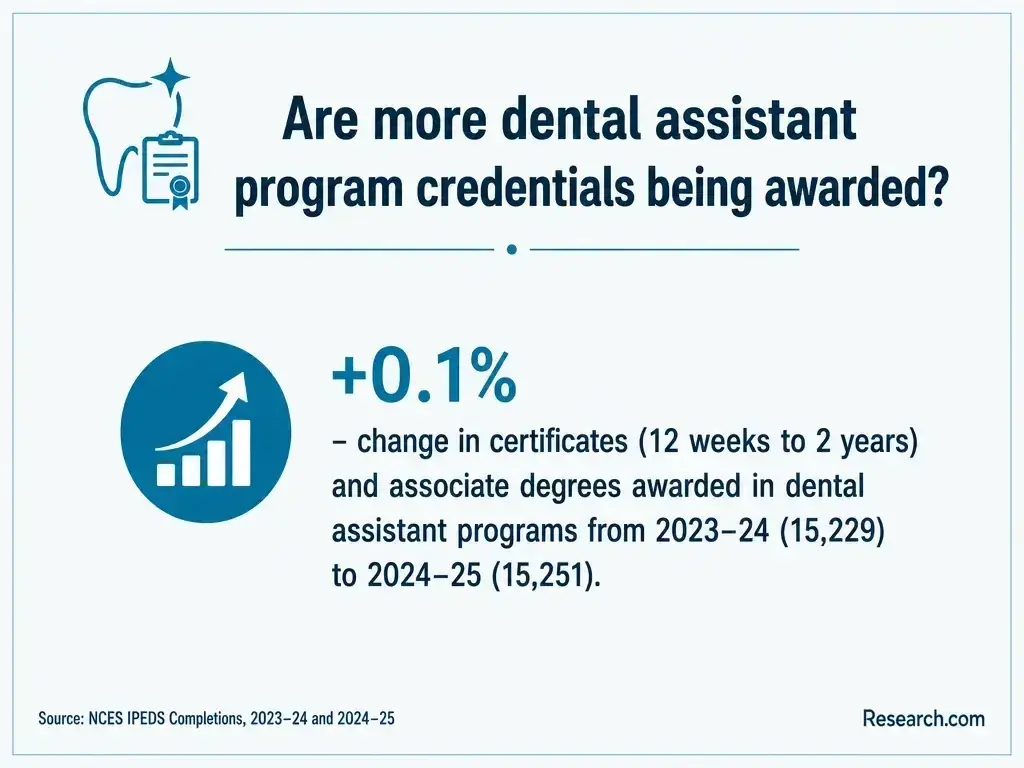
There is no defensible single Evansville average without a defined set of current, comparable program prices. A school's tuition may omit mandatory fees, books, uniforms, protective equipment, immunizations or background checks where required, certification examinations, and transportation to labs or clinical sites. Request an itemized total cost through job readiness from each provider for your intended 2027 start date.
Cost also includes time away from paid work. Compare the amount you must finance after confirmed grants or scholarships, not an advertised discount. Federal aid depends on the student and program's eligibility; a school's accreditation alone does not guarantee it. Federal Student Aid advises checking eligibility and completing the applicable aid process. Employer training may reduce tuition and provide pay while learning, but ask what instruction and supervised experience the employer will provide.
For a realistic return-on-investment comparison, consider your current earnings, likely pay after training, completion probability, debt and interest, time out of work, and how long you expect to remain in the occupation. A cheaper program is not a bargain if it omits practical training you must purchase or obtain elsewhere.
The answer depends on the provider: an occupational program may award a certificate or diploma, and some college-based pathways award an associate degree. These are education credentials, not automatically professional certification or permission to perform every dental task. Ask for the exact credential name and whether the transcript records the instruction needed for your intended duties.
The Dental Assisting National Board's Certified Dental Assistant credential is a separate professional certification with its own eligibility and examination requirements. Verify your route directly with DANB; finishing a program does not, by itself, prove you qualify. If you are comparing an occupational certificate with an associate pathway, broad advice about which associate degree is easiest is less useful than checking dental-specific lab time, cost, and career relevance.
Requirements vary by provider. Ask admissions whether applicants need a secondary-school credential, placement testing, prerequisite coursework, or a minimum age. Separately, ask which requirements apply before clinical placement, such as immunization records, a background check, or health documentation. Those placement conditions can affect both your start date and total cost even when they are not required for initial admission.
For an office-based route, ask the employer what it will teach, who supervises new assistants, and whether training time is paid. Do not assume work experience will later count toward a school credential or DANB eligibility; get the applicable credit or eligibility policy in writing before choosing the route.
A useful entry-level curriculum connects dental anatomy and terminology with infection prevention, instrument preparation, chairside procedures, patient communication, recordkeeping, and office workflow. The U.S. Bureau of Labor Statistics identifies both clinical and administrative tasks in the occupation. In Evansville, the most important curriculum question is whether instruction and supervised practice cover the work local offices expect a new hire to do.
Ask to see how students demonstrate competence: observation alone is different from repeated practice with feedback. Dental radiography and expanded functions deserve particular scrutiny because completing a general assisting course does not establish authorization to perform those duties under Indiana rules. Also ask how training addresses digital records and imaging systems used at clinical sites, without assuming every program teaches the same equipment.
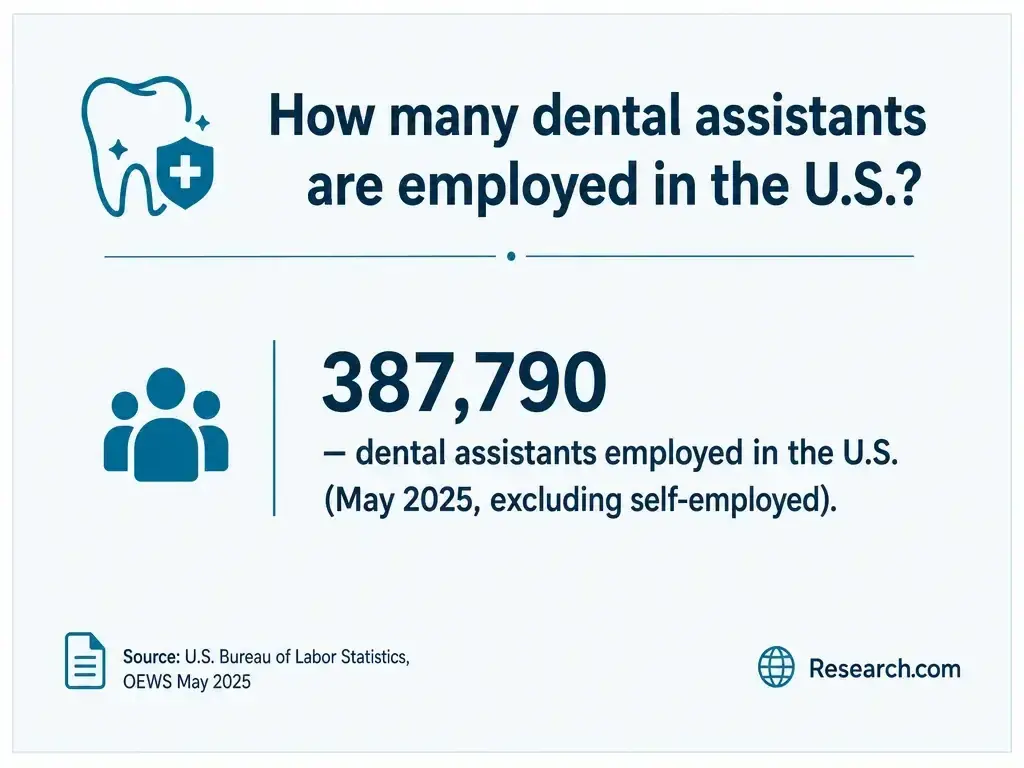
Do not assume one credential governs every dental assistant task. Indiana's rules distinguish general assisting from duties such as taking dental radiographs and certain expanded functions. The Indiana State Board of Dentistry and the Indiana Department of Health are the appropriate starting points for checking current state requirements relevant to your intended work. Confirm the rule for each duty before paying for training; requirements may involve particular instruction or authorization beyond a general school certificate.
DANB certification is a separate national professional credential, not an Indiana occupational license. Likewise, institutional accreditation concerns the school, CODA programmatic accreditation concerns a dental education program, and state authorization concerns a provider's permission to operate. None should be treated as interchangeable with certification eligibility or Indiana permission to perform a specific duty. Ask the provider to identify, in writing, which requirements its training satisfies and which steps remain after completion.
Start with the job you want, then compare programs on the evidence that affects entry into that job. An affordability ranking is a shortlist, not a substitute for checking supervised training, Indiana duty requirements, and the final bill. Comparisons involving dual graduate degrees do not answer whether a dental assisting program prepares someone for entry-level chairside work.
Use these questions when speaking with each provider; written answers make unlike program offers easier to compare:
Check accreditation claims with the named accreditor and certification claims with DANB rather than relying on a brochure. Be wary of guaranteed wages, an "entirely online" promise without practical training, or a price that omits required clinical costs. If an employer offers supervised paid training that fits your goal, compare that route as seriously as a school program.
The direct path is an entry-level role in a general dental office. With experience and training appropriate to the duties involved, an assistant may pursue work in a specialty practice, take on more office coordination, or seek additional permitted responsibilities. Those steps depend on employer needs and applicable Indiana requirements; a starting certificate does not automatically confer an advanced scope of work.
For someone seeking relatively direct entry into patient-facing dental work, focused assisting training may be more relevant than broad discussions of the best college majors for the future. Someone primarily interested in a different clinical occupation should check that occupation's separate education and regulatory pathway rather than assuming dental assisting is a shortcut into it.
The U.S. Bureau of Labor Statistics projects 7.4% national employment growth for dental assistants from 2025 to 2035. That supports considering the occupation, but it is not an Evansville forecast and cannot predict whether a particular graduate will find a job. Local openings can differ by practice specialty, required duties, and experience.
Before enrolling, review current openings within a commute you would accept and note how often they request radiography preparation, chairside experience, or a particular schedule. Then ask a prospective program how its recent clinical placements and employer contacts align with those requirements. This provides a more useful local demand check than applying a national growth rate directly to Evansville.
Investing in training is a consequential decision, especially when a low advertised price may leave out fees, supplies, or required practical experience. Research.com created this ranking to help readers compare affordable dental assistant programs against relevant local options, using published education and cost data rather than tuition claims alone. The team reviews source quality and occupation-specific information, but readers should confirm current prices and program details directly with each provider.
For most affordable rankings, programs are scored on tuition, cost of attendance, median student debt, and federal loan default rate. An entropy-based method assigns more weight to cost and debt indicators that distinguish programs. Accreditation, support services, completion, and earnings are not part of this affordability score; a favorable position is not proof that a program meets a particular career goal. Only programs with completions reported to IPEDS are eligible, so the ranking cannot capture every employer-run or other non-IPEDS training option.
The following sources inform the ranking or its occupation-specific checks. Their roles differ: a dental accreditor or certifying organization, for example, is not a substitute for a school's reported costs.
Use the ranking to narrow a cost comparison, then verify hands-on training, the credential awarded, Indiana duty requirements, and the amount you would actually pay. More detail about the ranking approach appears on Research.com's methodology page.
# 1 position
# 2 position
# 3 position

Compare itemized school costs with any available paid, supervised office training. The cheapest upfront route is not necessarily the best value if it leaves you without needed practical experience or preparation for your intended Indiana duties.
Online coursework can teach theory, but chairside competencies require in-person practice and assessment. Confirm where a program provides that training before enrolling.
No. A school certificate and DANB's Certified Dental Assistant certification are different credentials. Check DANB's current eligibility and examination requirements separately.
Not automatically. Check the current dental radiography requirements with the relevant Indiana authorities and ask the program to document exactly which requirements its instruction meets.
No. Compare your net cost and lost earnings with supervised training, completion prospects, and the duties the program prepares you to perform. Request current program-specific details before committing.