# 1 position
Best Dental Assistant Training Programs & Trade Schools in Fort Worth for 2027
Audited and Verified:
Our Editorial and Data Verification Process
Research.com uses government datasets, official education statistics and primary institutional information to support its career and degree guides. Our review process checks factual accuracy, occupational definitions, source dates and the requirements associated with the credentials discussed.
How This Article Was Fact-Checked
Our editorial team verifies salary estimates, employment projections, education requirements and program information against original data providers and official organizations. Salary figures are checked against the relevant occupational definitions and reporting periods. Information about licensure, accreditation and required in-person training is reviewed separately.
Fact-checked and verified on:

Co-Founder and Chief Data Scientist

Reviewed by Karolina Broda
Fact-Checker and Data Verification
Choosing dental assistant training in Fort Worth means comparing more than program length: hands-on practice, total cost, and eligibility for Texas dental assistant registration can change which option is worth your investment. The U.S. Bureau of Labor Statistics reports a $48,070 national median annual wage for dental assistants in May 2025, but that is not a starting-pay estimate. This guide explains the trade-offs for new students and career changers. It also features a Best Dental Assistant Trade Schools in Fort Worth for 2027 ranking created by the Research.com team of data scientists to help students identify programs worth considering.
Key findings about dental assistant degrees in Fort Worth
- Compare a public-college program, a private career-school program, and direct office training by total cost, clinical practice, and Texas registration preparation - not speed alone.
- Texas distinguishes general dental assisting from duties that require registration or additional qualifications. Ask how each program prepares you for the specific duties you want to perform, according to the Texas State Board of Dental Examiners.
- The national median annual wage was $48,070 in May 2025, and U.S. dental assistant employment is projected to grow 7.4% from 2025 to 2035, according to the U.S. Bureau of Labor Statistics. Neither figure predicts a new graduate's Fort Worth pay.
Table of Contents
- Best Dental Assistant Training Programs & Trade Schools in Fort Worth for 2027
- What can I expect from a dental assistant trade school program in Fort Worth?
- Where can I work with a dental assistant trade school training in Fort Worth?
What can I expect from a dental assistant trade school program in Fort Worth?
Expect instruction in chairside procedures, infection control, dental materials, patient communication, and office workflow, followed by supervised practice. The crucial question is where you will perform skills - not simply whether a brochure calls a program "hands-on." Dental radiography and other regulated duties require particular attention to Texas State Board of Dental Examiners rules.
The main entry routes differ in what you pay for and how you gain experience. This comparison is a starting point; confirm each provider's current curriculum and placement arrangements.
| Pathway | Typical credential or outcome | Best fit and main trade-off |
| Public community-college training | Program-specific certificate or other stated credential | Useful if scheduled labs and a structured curriculum fit your timetable; compare the full attendance cost and clinical availability. |
| Private career-school training | School-issued certificate or diploma, as specified by the program | Useful if its schedule and supervised practice meet your needs; accelerated pacing does not by itself establish Texas registration eligibility. |
| Direct office training | Employer training and experience; any state registration is separate | Useful if an office will train you while you earn; instruction may be less structured, so confirm how you will qualify for desired duties. |
Tarrant County College District and The College of Health Care Professions-Fort Worth are named local options to investigate. Request the exact program name, credential, current schedule, lab and externship hours, and written Texas registration preparation details before treating either as a match. If your primary aim is simply to enter a skilled occupation, compare the duties and training costs of good paying trade school jobs rather than assuming dental assisting is the best fit.
Where can I work with a dental assistant trade school training in Fort Worth?
Most dental assistants work in dentists' offices, where duties can include preparing patients and rooms, assisting at the chair, processing instruments, keeping records, and scheduling, according to the U.S. Bureau of Labor Statistics. Fort Worth applicants can also look across the wider Dallas-Fort Worth-Arlington area for general, pediatric, orthodontic, and other specialty practices. A wider search increases potential options but may add commuting costs - especially for an externship that requires repeated daytime attendance.
Ask prospective employers which duties an entry-level assistant performs, which require Texas registration or further qualifications, and whether they provide paid training or support for required coursework. An office willing to train a beginner can be an alternative to paying for a longer program, but employment alone should not be mistaken for authorization to perform every dental assisting duty.
A Fort Worth-specific wage should not be inferred from the national figure. The U.S. Bureau of Labor Statistics reports a $48,070 national median annual wage in May 2025 for dental assistants: half of workers in the occupation earned more and half earned less. It includes experienced workers and multiple practice settings, so use it as career context, not an expected first offer.
For a local comparison, use the latest BLS Occupational Employment and Wage Statistics estimate for the Dallas-Fort Worth-Arlington metropolitan area, which includes a broader labor market than the city. Check its reference year and whether the published measure is a mean or median before comparing it with the national median. When weighing an offer, account for hours, benefits, commuting, paid training, and whether the practice pays for registration-related expenses.
There is no single program length or universal school-hour requirement for every Fort Worth dental assistant. A shorter full-time course can lead to an earlier job search; a longer schedule may allow more lab practice or fit around paid work. Direct office training follows the employer's training plan rather than a school calendar. Texas duties and registration requirements are governed separately by the Texas State Board of Dental Examiners.
Ask each school for its published total clock or contact hours, the split between classroom, lab, and externship, and the earliest realistic completion date after required in-person sessions. Also ask what happens if an externship placement is delayed. A short calendar duration is less valuable if it leaves you unable to practice required skills or complete the steps needed for the duties you want.
Online coursework can be convenient for terminology, anatomy, records, and other theory. It cannot replace supervised practice with instruments, infection-control procedures, chairside workflows, and clinical patient interactions. A hybrid program may work well for a student balancing employment and training if its in-person labs and externship are accessible and sufficiently scheduled.
Before enrolling, obtain a calendar identifying every required campus and clinical visit, the location of each training site, and who arranges placements. Ask the Texas State Board of Dental Examiners or the program for the specific basis on which its training supports intended registration or duties. "Online" is a delivery format, not proof of clinical competency or state eligibility.
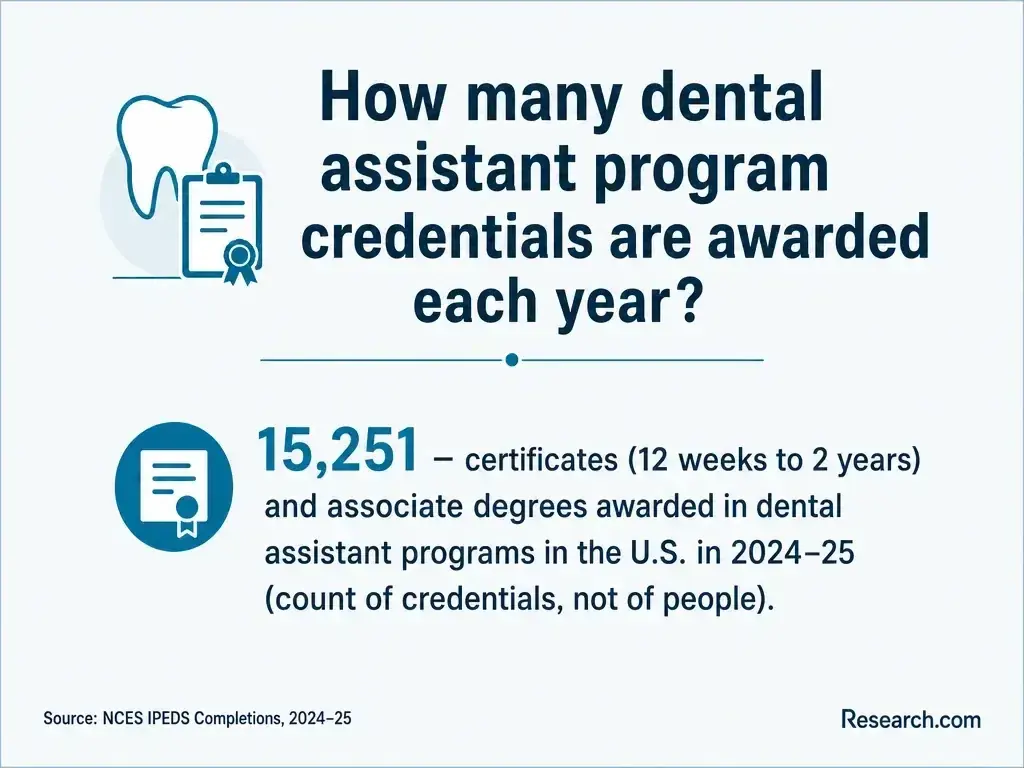
A reliable Fort Worth average cannot be stated without comparable, current prices for the same credential and included expenses. Instead, calculate the total cost to become job-ready for each option. Published tuition alone may omit charges that matter more to a student attending labs or an unpaid externship.
Use these categories when requesting a written, itemized estimate; their availability and amount vary by provider.
| Cost category | What to verify |
| School charges | Tuition, mandatory fees, books, materials, and any lab or externship charge. |
| Career-entry expenses | Uniforms, required equipment, immunizations or screening if required, and applicable registration, course, or examination fees. |
| Time and travel | Transportation to campus and assigned practice sites, childcare where needed, and earnings forgone during training. |
| Cost offsets | Grants, scholarships, eligible federal aid, workforce assistance, or wages from employer-sponsored training. |
Ask both Tarrant County College District and The College of Health Care Professions-Fort Worth for current program-specific charges and aid eligibility; do not assume institutional aid applies to every short program. Federal Student Aid notes that aid eligibility depends on both the student and the eligible institution and program. Compare any borrowing against a conservative entry-level pay estimate, your likelihood of completion, and how long you expect to work in the field - not the national median wage alone.
Your school may award a certificate or diploma; the exact award depends on the program. That school credential is different from Texas dental assistant registration and from a voluntary professional credential such as the Dental Assisting National Board's Certified Dental Assistant (CDA) credential. Confirm the award's name in writing and ask which examinations or state application steps, if any, remain after graduation (Texas State Board of Dental Examiners; Dental Assisting National Board).
Accreditation describes a different question. Institutional accreditation concerns the school; Commission on Dental Accreditation programmatic accreditation concerns a particular dental assisting program. Texas school authorization, accreditation, DANB certification, and state registration are not interchangeable. If a school advertises "accredited" training, ask who accredits which program and whether that status matters for your intended credential or future training (Commission on Dental Accreditation; U.S. Department of Education).
Students comparing the time commitment with an easiest associate degree to get should first check the actual credential offered: a dental assisting certificate is not an associate degree, and neither credential name alone establishes permission to perform regulated duties.
Admissions rules vary by provider. Ask whether applicants need a high school diploma or equivalent, an application assessment, health documentation, a background check, or immunizations before clinical placement. Confirm any age or work-authorization rules directly with the school and placement site rather than assuming admission means you can begin an externship immediately.
For an office-training route, ask what the employer will teach, whether training time is paid, who supervises patient-facing work, and which Texas registration steps remain your responsibility. For either route, disclose a possible placement obstacle early and request the school's written policy before paying a nonrefundable charge.
A useful curriculum connects dental anatomy and terminology to chairside assisting, instrument preparation, infection prevention, dental materials, records, and patient communication. Radiography instruction needs particular scrutiny because Texas regulates who may perform radiographic procedures; taking a class is not, by itself, authorization to do so (Texas State Board of Dental Examiners). The U.S. Bureau of Labor Statistics also identifies clinical and administrative tasks as core parts of dental assistants' work.
Ask to see a skills checklist showing which procedures students perform under supervision, not merely observe. Check who evaluates competency, whether students practice in a lab before a clinical placement, and how the school responds if a student needs more practice. Dental offices also use digital records and imaging workflows, making current equipment and accurate data entry relevant to job readiness.
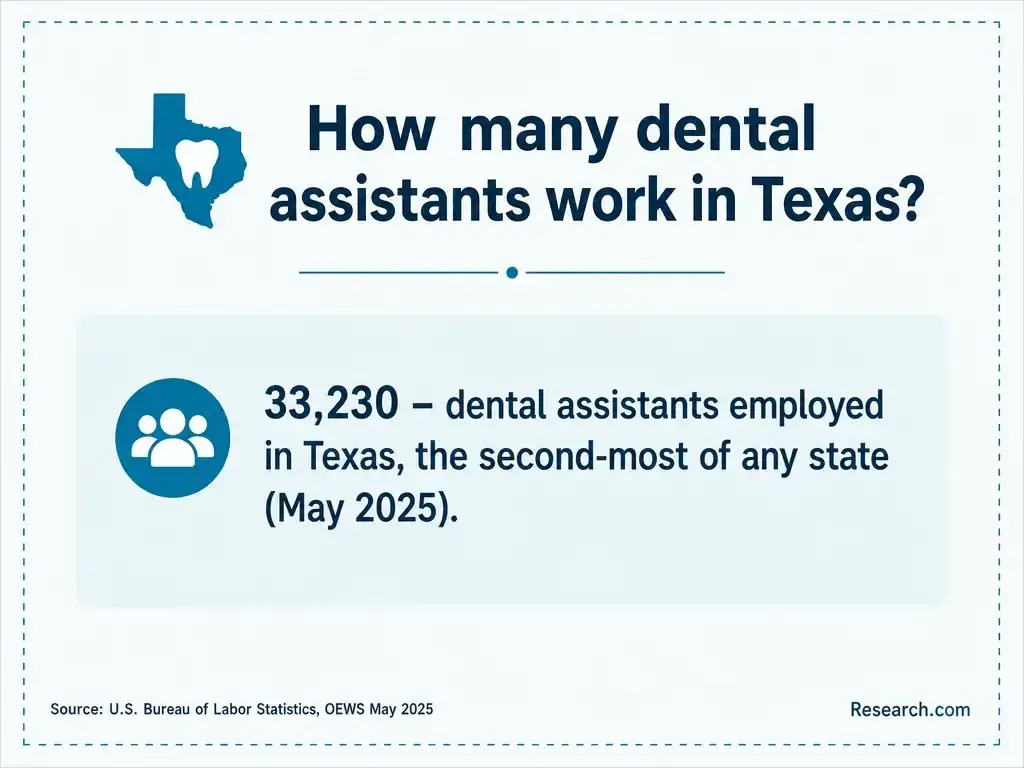
Texas does not treat every dental assisting task as one uniformly licensed occupation. The Texas State Board of Dental Examiners distinguishes duties an assistant may perform under a dentist's supervision from duties requiring registration or additional qualifications. In particular, do not assume that completing a program automatically authorizes dental radiography or expanded duties. Verify the board's current requirements for the tasks named in the jobs you want before choosing training.
DANB's CDA is a professional certification, not a substitute for Texas registration; CODA program accreditation and institutional accreditation are also separate from permission to perform regulated duties (Dental Assisting National Board; Commission on Dental Accreditation; Texas State Board of Dental Examiners). Ask the school to identify its Texas registration preparation, required coursework, assessments, application steps, and any fees. Then confirm those claims with the board, since rules and approved pathways can change.
The best investment is the route that gets you competent for your intended duties at a manageable total cost. Use the ranking to identify candidates, then check the details it cannot settle for you: clinical access, Texas eligibility, schedule, debt, and the cost of time away from work.
Request the same evidence from each program so that a fast or low-tuition option does not win by hiding a major trade-off:
- Ask for the exact credential, current program length, total contact hours, and supervised lab and externship hours.
- Request a written explanation of how the curriculum prepares students for intended Texas registration and duties; verify the answer with the state board.
- Check institutional and, where claimed, programmatic accreditation with the named accreditor, rather than relying on an advertisement.
- Get an itemized job-ready cost and a personalized aid estimate; include commuting and lost earnings.
- Ask for program-specific completion and placement definitions, reporting periods, and the share of students who obtained required clinical placements.
A red flag is a promise of immediate eligibility for every dental assisting duty without identifying Texas requirements. Another is a quoted "total" that excludes clinical travel or mandatory supplies. For return on investment, weigh completion probability, baseline earnings, likely post-training earnings, aid, debt, and the time needed to recover your costs. A paid office-training offer may beat a school route for one student; structured clinical instruction may be worth more to another.
The direct path is an entry-level dental assistant position, followed by greater responsibility as you develop chairside speed, patient communication, and familiarity with a practice's procedures. Assistants may move toward specialty-practice work, office coordination, or training newer staff. Duties involving additional Texas qualifications require the applicable steps; experience or a new job title alone does not confer authorization (Texas State Board of Dental Examiners).
This is occupational entry training, not a shortcut to every dental career. If your aim is a role with substantially different clinical duties, confirm that occupation's separate training and regulatory pathway before paying for dental assisting. The same principle applies when comparing short credentials with one year masters, quick masters programs, or a 1 year doctorate program: choose the credential required for the work you actually want, rather than a program based on its advertised speed.
The U.S. Bureau of Labor Statistics projects 7.4% U.S. employment growth for dental assistants from 2025 to 2035. That national projection suggests continued occupational demand, but it is not a Fort Worth hiring forecast or a promise of a job after graduation. Local openings also depend on practice hiring, turnover, the duties an applicant is qualified to perform, and willingness to commute across the metro area.
Before committing, sample current area job postings for requested registration, experience, schedule, and pay. Compare those requirements with each program's documented training and clinical opportunities. If most suitable openings call for experience, ask schools how their externship supports the transition to a first job - or consider an office offering supervised entry-level training.
Best Dental Assistant Training Programs & Trade Schools in Fort Worth for 2027
Investing in training is an important decision, so Research.com's ranking is designed to compare dental assistant programs against other programs in the same occupation and location - not against unrelated schools. The team evaluates reported outcomes, costs, debt, recognition, and student support to help readers build a shortlist. Only programs with completions reported to the Integrated Postsecondary Education Data System (IPEDS) are included; an unlisted employer-training route or school is not necessarily unsuitable.
For the best-programs ranking, student outcomes include completion and full-time and part-time retention. Earnings and return on investment include median earnings one year after completion and earnings relative to annual attendance cost. Cost and debt measures include resident and nonresident tuition, attendance cost, median debt - including debt held by students who withdrew - and federal loan default rates. Quality measures include institutional accreditation, relevant programmatic accreditation or industry recognition, and student support. Relevant programmatic accreditation or industry recognition receives 20% of the score; institutional accreditation and student support receive 10% each. The remaining 60% covers outcomes, earnings, and costs, with weights distributed using an entropy-based method that gives more weight to indicators that vary more across programs.
The separate most-affordable-programs methodology scores tuition, attendance cost, median debt, and federal loan default rate using entropy-based weights; accreditation and other quality measures are not part of that affordability score. Neither ranking replaces a check of current Texas requirements, clinical access, or a personalized financial-aid offer. Research.com used the following sources to create the ranking:
- IPEDS database - program completions and institutional reporting.
- National Center for Education Statistics - federal education data and definitions.
- College Scorecard database - available cost, debt, and earnings measures.
- Peterson's database - institutional and program information.
- Commission on Accreditation of Allied Health Education Programs (CAAHEP) - allied-health accreditation information.
- Accrediting Bureau of Health Education Schools (ABHES) - health-education accreditation information.
- Commission on Dental Accreditation (CODA) - dental assisting program accreditation information.
- Dental Assisting National Board (DANB) - professional credential information.
- National Center for Construction Education and Research (NCCER) - occupational-training recognition information in the ranking's broader trade-school source set.
- Apprenticeship.gov Partner Finder - registered-apprenticeship information in that broader source set.
Readers can find further details on Research.com's methodology page. For this occupation, give particular attention to dental-specific evidence: a general trade-training source does not establish that a dental assisting program meets Texas requirements.
# 2 position
Tarrant County College District - Dental Assisting/Assistant.
certificate or diplomaFrequently asked questions about dental assistant programs in Fort Worth
Is dental assistant school required to start working in Texas?
Not necessarily for every assisting task; supervised office training can be a route into the field. Texas regulates particular duties, so check the Texas State Board of Dental Examiners' current requirements before relying on either office training or a school program.
Does a certificate automatically make me a registered dental assistant?
No. A school-issued certificate and Texas registration are separate. Ask the school which registration requirements its training addresses and which application steps you must complete yourself (Texas State Board of Dental Examiners).
Can I complete dental assistant training entirely online?
Theory may be available online, but chairside and clinical skills require in-person practice. Confirm required labs, placements, and Texas eligibility before enrolling in an online or hybrid option.
Is a faster dental assistant program worth it?
It can be if you can attend the required practice sessions and its training supports your intended duties. Compare total cost, supervised experience, and realistic completion time - not advertised weeks alone.
Should I choose school or paid office training?
Choose structured school training if you need its instruction, practice, and schedule. Consider paid office training if an employer offers meaningful supervision and a clear plan for any required Texas qualifications. Compare both routes' full costs and likely job readiness.
- U.S. Bureau of Labor Statistics - Dental Assistants
Used to verify salary, employment outlook, and typical education requirements.
https://www.bls.gov/ooh/healthcare/dental-assistants.htm - CODA - Find a Dental Program
Used to verify programmatic accreditation or industry recognition of programs.
https://coda.ada.org/find-a-program - DANB - Certified Dental Assistant (CDA) exam
Professional certification reference for graduates of this occupation.
https://www.danb.org/exams/exam/cda-exam - The College of Health Care Professions-Fort Worth - official website
Official school website (programs, tuition, admissions).
https://www.chcp.edu/ - Tarrant County College District - official website
Official school website (programs, tuition, admissions).
https://www.tccd.edu/