# 1 position

Audited and Verified:
Our Editorial and Data Verification Process
Research.com uses government datasets, official education statistics and primary institutional information to support its career and degree guides. Our review process checks factual accuracy, occupational definitions, source dates and the requirements associated with the credentials discussed.
How This Article Was Fact-Checked
Our editorial team verifies salary estimates, employment projections, education requirements and program information against original data providers and official organizations. Salary figures are checked against the relevant occupational definitions and reporting periods. Information about licensure, accreditation and required in-person training is reviewed separately.
Fact-checked and verified on:

Co-Founder and Chief Data Scientist

Reviewed by Karolina Broda
Fact-Checker and Data Verification
Choosing an affordable dental assistant program near Bedford, Massachusetts, means looking beyond tuition: the training must also fit the work you want to do and Massachusetts licensing rules. The Research.com team of data scientists created the Most Affordable Dental Assistant Trade Schools in Bedford for 2027 ranking to help students make an informed choice about programs worth considering. Dental assistants had a $48,070 national median annual wage in May 2025, according to the U.S. Bureau of Labor Statistics. This guide explains how to compare costs, practical training, credentials, and career-entry requirements before enrolling.
Expect a combination of dental science, infection-control instruction, chairside practice, and preparation for patient-facing work. A useful program lets you practice such tasks as preparing an operatory, assisting during procedures, handling instruments, and documenting care - not merely watch demonstrations. Ask where practice occurs, who supervises it, and whether an outside dental-office placement is included.
Bedford students can compare a college-based certificate, a career-school program, and a dental practice willing to train a new assistant on the job. Middlesex Community College is one local institution to investigate, but confirm the current dental assisting offering and the location of every lab or placement before planning a commute. Employer training may reduce upfront school costs; the trade-off is that you must check how its experience supports the Massachusetts license category and duties you want.
A short online course can help you explore terminology, but online courses for jobs that pay well should not be mistaken for supervised dental assisting practice or a Massachusetts licensing pathway.
Dental offices are the principal setting for dental assistants, according to the U.S. Bureau of Labor Statistics. Depending on an employer's needs and the duties permitted under Massachusetts rules, work can include general dentistry, specialty practices, and clinics. Bedford-area students should search beyond the town itself when assessing openings: a placement or job elsewhere in the surrounding Middlesex County labor market may change commuting costs and the value of a particular program schedule.
Ask programs whether their clinical partners include the type of practice you hope to enter. Experience in a general office may suit someone seeking broad chairside skills; a specialty placement can be useful if that is your target, but it does not by itself confer authorization for additional duties.
There is no Bedford-specific wage figure in the national occupational median. The U.S. Bureau of Labor Statistics reports that dental assistants earned a $48,070 national median annual wage in May 2025. Half of workers nationally earned less and half earned more; the figure includes experienced assistants and should not be used as a new graduate's expected offer.
To estimate a realistic return, compare current Bedford-area job postings for the license category and experience level you could actually meet. Check hourly pay alongside benefits, weekly hours, travel expense, and whether an employer pays for continuing training. A higher advertised rate farther from Bedford may be less valuable after a longer commute.
Length depends on the pathway. An accelerated certificate may run for weeks or months; a college-based option may follow an academic-term schedule; employer training develops around supervised work. These are formats, not a standard Massachusetts training-hour requirement. Request each provider's current calendar, total instructional and clinical hours, and the earliest date at which you could meet the intended licensing requirements.
Fast completion is useful only if it includes enough in-person practice and fits your work schedule. A part-time route may delay entry but preserve earnings, while an accelerated daytime route can impose a larger opportunity cost. Search results for a quick online master's degree address a different educational goal; speed alone is not a sensible measure of dental assisting readiness.
Online delivery can work for lectures, terminology, and some written assignments. Chairside technique, instrument handling, infection-control practice, and any required clinical experience need an in-person setting. A hybrid program can be convenient for a Bedford resident, but only if its lab and placement locations are reachable and its schedule fits other obligations.
The comparison below shows what each format can - and cannot - solve. Verify the actual hands-on component rather than assuming programs with the same certificate name provide equivalent preparation.
| Format | Potential advantage | Question to resolve |
| On-campus | Regular access to instructors and dental labs | Where are labs and clinical placements held? |
| Hybrid | Less travel for coursework completed remotely | How often must students attend in person? |
| Online coursework only | Flexible study of theory | Who provides supervised practical training, and does the route meet Massachusetts requirements? |
General guides to accredited online colleges free to apply for can help with broader school searches, but an application policy or institutional accreditation does not establish dental assisting clinical or licensing eligibility.
A reliable Bedford-wide average is not available from the cited program data: the ranking includes only programs reporting completions to IPEDS, while employer training and some other providers may fall outside that coverage. Treat any advertised tuition as one component of the cost to become job-ready, not as the market average.
Request a written, itemized estimate from each provider. The comparison should include:
Ask Middlesex Community College and any other provider you are considering about program-specific aid eligibility, scholarships, and payment arrangements; federal aid is not automatic for every short program. Massachusetts workforce assistance may also depend on individual eligibility and an approved training option. Paid employer training can lower upfront expense, but compare its supervision and licensing pathway before choosing it solely on price. A sound return-on-investment estimate also considers your likelihood of finishing, borrowing costs, expected change in earnings over time, and how long you expect to work in the occupation.
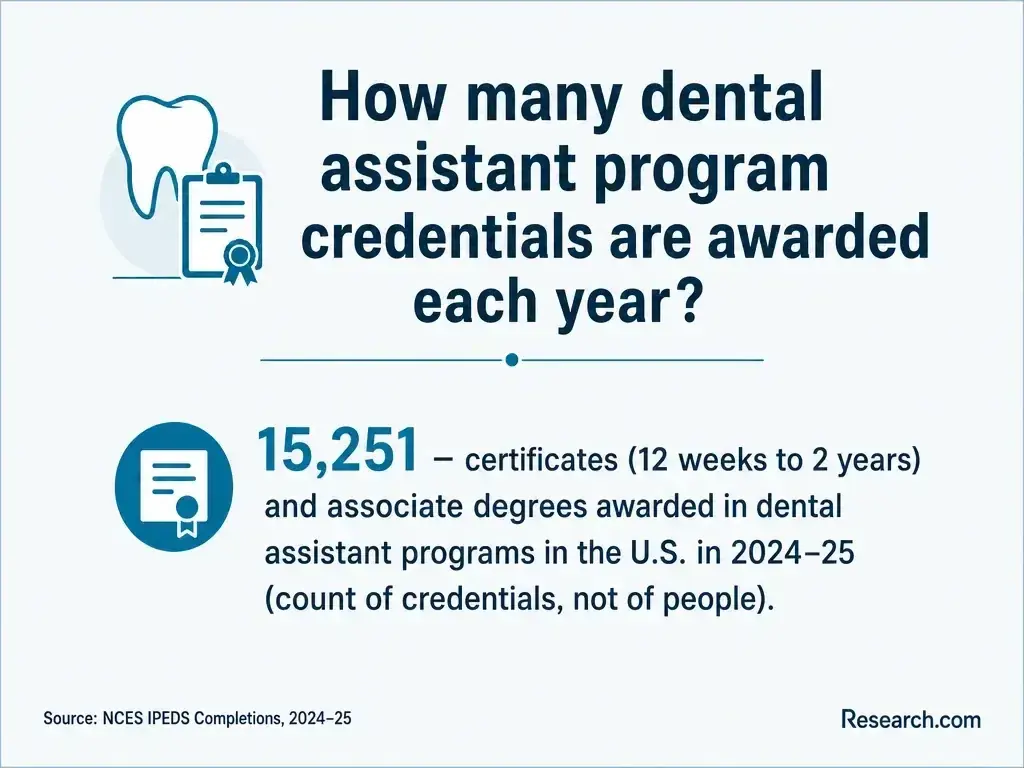
A school may award a certificate or diploma, while an eligible college program may award an associate degree. Those are educational credentials, not the same thing as a Massachusetts dental assistant license or a professional certification. Employer-sponsored training may produce documented experience rather than a school credential.
These pathways serve different goals. Compare the credential with the work and regulatory outcome you need, not its name alone.
| Pathway | Typical outcome | Best fit when |
| Certificate or diploma program | School credential and documented training | You want structured preparation and a defined completion point. |
| Associate degree program, if offered | Academic degree with occupational coursework | You value a broader college program and can justify its additional time and cost. |
| Employer-sponsored training | Supervised experience and employer documentation | You have a suitable job offer and understand the applicable Massachusetts licensing route. |
Ask whether the specific dental assisting program holds Commission on Dental Accreditation accreditation and whether its graduates meet the education route for any Dental Assisting National Board examination they intend to take. Institutional accreditation, programmatic accreditation, certification, and state licensure answer different questions; none automatically substitutes for another.
Admissions requirements vary by provider. Ask about prior education, application deadlines, placement assessments, health documentation, background checks, and any prerequisites for clinical participation. A practice hiring trainees will instead set employment requirements and decide what supervision it can provide. Do not assume that meeting a school's admissions rules also meets Massachusetts licensing rules.
Before accepting a place, request written confirmation of the program's clinical-placement conditions and whether you must arrange your own site. For a working adult, a placement offered only during weekday office hours can be a more consequential entry barrier than the application itself.
Core preparation covers dental anatomy and terminology, infection prevention, patient communication, chairside assisting, instrument processing, records, and the boundaries of an assistant's role. Programs may also teach radiography and expanded functions, but instruction in a skill does not alone authorize its performance in Massachusetts. Confirm the separate training, examination, and license conditions for any duty you expect to perform with the Massachusetts Board of Registration in Dentistry.
For Bedford applicants, the strongest curriculum comparison is practical: find out how students practice with equipment, receive feedback, and demonstrate competency before entering a dental office. Digital records and imaging are relevant workplace skills, but an online simulation cannot replace supervised patient-care practice.
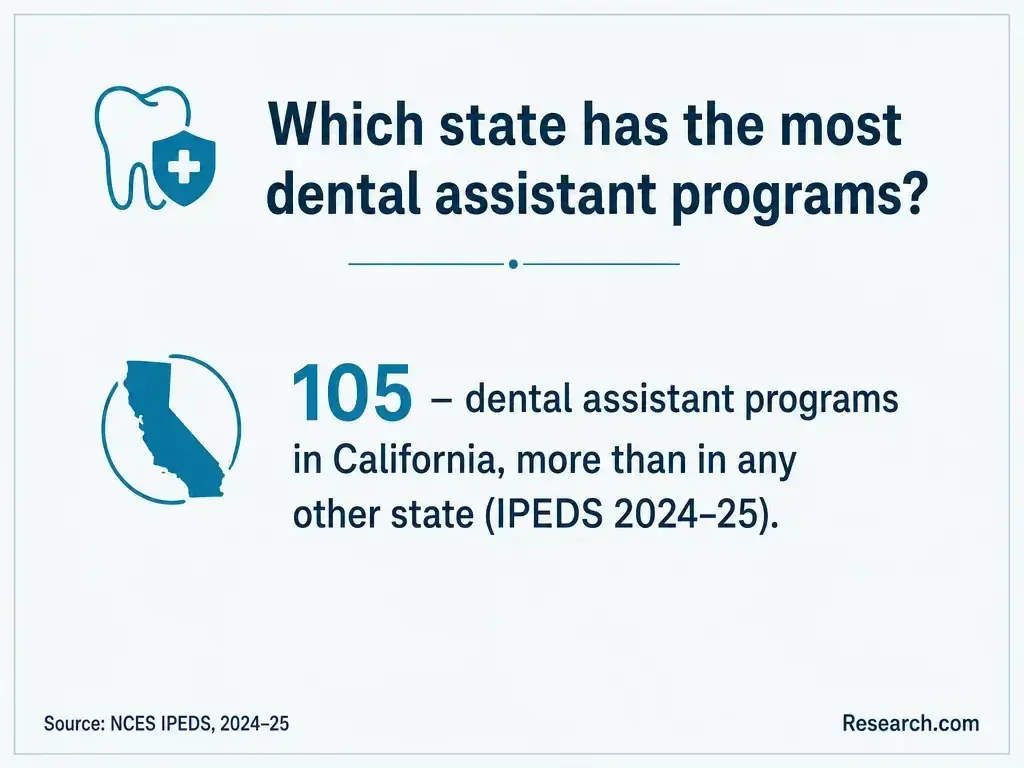
Massachusetts licenses dental assistants. The Massachusetts Board of Registration in Dentistry distinguishes qualification categories, including on-the-job trained, formally trained, certified, and expanded-function dental assistants. The category and permitted duties matter when choosing training: a certificate from a school is not itself a state license. Check the board's current application and duty requirements before enrolling, especially if you intend to take radiographs or perform expanded functions.
Dental Assisting National Board certification is a professional credential, not the Massachusetts license. Likewise, Commission on Dental Accreditation program accreditation concerns a specific educational program; it is distinct from a school's institutional accreditation and from state school authorization. Ask a provider to identify precisely which requirements its graduates can satisfy, which examinations or additional experience remain, and which licensing category it is preparing students to seek. If you plan to work across a state line, check that state's rules separately.
Start with the job you want and its Massachusetts license category, then compare programs on total cost and evidence of practical preparation. An affordability ranking is a useful shortlist, but a lower price is not a bargain if required clinical experience is unavailable or the schedule prevents you from finishing.
Use these checks when speaking with an admissions adviser or employer; ask for written answers where eligibility or cost is at stake:
For someone seeking an occupation that can be entered through practical training, searches for one year masters degrees address a different goal and should not distract from dental assisting licensing and hands-on requirements. Be wary of promises of guaranteed jobs, automatic certification, or a fully online route to clinical competence.
A new assistant can build broad chairside experience in general dentistry and later seek work in a specialty practice or take on more administrative responsibility. Additional duties or expanded-function roles depend on the applicable Massachusetts requirements; experience or a school credential alone should not be treated as authorization. Some assistants pursue further certification as their experience and eligibility develop.
If your primary aim is higher pay rather than dental patient care, compare the full cost and entry requirements of other best paying trade jobs. Dental assisting is a better fit for someone who wants close patient contact, precise clinical routines, and employment in a dental practice - not someone choosing solely by a national wage figure.
The U.S. Bureau of Labor Statistics projects 7.4% national employment growth for dental assistants from 2025 to 2035. That signals national demand but is not a Bedford hiring forecast or a promise of a local opening. For a near-term decision, review current vacancies within a commute you can sustain and note which license categories, clinical skills, and experience employers request.
A program with dependable office placements can help you test that local market before graduation. Compare its placement arrangements with employer-sponsored training: the latter puts you in a workplace sooner, while a structured program may offer broader practice before you apply for jobs. Neither route removes the need to meet Massachusetts rules.
Investing in training is an important decision, so Research.com compares dental assisting programs with others serving the same occupation and location. Only programs with completions reported to IPEDS are eligible; a provider's absence does not mean its training is unavailable or unsuitable.
The most affordable ranking evaluates tuition, cost of attendance, median student debt, and federal loan default rate. Indicator weights are assigned using an entropy-based method, which gives more weight to measures that vary more across programs. Accreditation and other quality indicators do not enter the affordability score. Research.com also produces separate best programs rankings that consider outcomes, earnings, costs, accreditation or relevant industry recognition, and student support. Readers should therefore use the affordability ranking as a cost comparison, not as proof of Massachusetts licensing eligibility or superior clinical training.
The team uses the following data sources and reference organizations to check program information and the relevance of occupational credentials. Some cover other trades or allied-health fields; they are not substitutes for dental-specific requirements:
These sources help readers compare reported costs while identifying questions that require a direct answer from a school or regulator. See Research.com's methodology for more information about how its rankings are created.
# 1 position
# 2 position
Not necessarily. Compare total job-ready cost with supervised practice, schedule, completion prospects, and the Massachusetts licensing category the training supports.
Employer-sponsored, on-the-job training is a potential route in Massachusetts. Confirm the relevant licensing category, required documentation, supervision, and permitted duties with the Massachusetts Board of Registration in Dentistry before relying on it.
Online coursework can cover theory, but chairside and other practical competencies need in-person training. Check how a hybrid provider arranges labs and supervised experience.
No. A school credential, professional certification, and Massachusetts license are distinct. Verify the specific board requirements and any remaining steps for your intended duties.