# 1 position


Audited and Verified:
Our Editorial and Data Verification Process
Research.com uses government datasets, official education statistics and primary institutional information to support its career and degree guides. Our review process checks factual accuracy, occupational definitions, source dates and the requirements associated with the credentials discussed.
How This Article Was Fact-Checked
Our editorial team verifies salary estimates, employment projections, education requirements and program information against original data providers and official organizations. Salary figures are checked against the relevant occupational definitions and reporting periods. Information about licensure, accreditation and required in-person training is reviewed separately.
Fact-checked and verified on:

Co-Founder and Chief Data Scientist

Reviewed by Karolina Broda
Fact-Checker and Data Verification
Choosing the lowest-priced dental assistant program can be costly if it does not prepare you for the work you want to do in Minnesota. The U.S. Bureau of Labor Statistics projects 7.4% national employment growth for dental assistants from 2025 to 2035, making training choices timely. This guide explains Saint Cloud pathways, full costs, hands-on requirements, and state credentials. It accompanies the Most Affordable Dental Assistant Trade Schools in Saint Cloud for 2027 ranking, created by the Research.com team of data scientists to help students make an informed choice about programs worth considering.
Expect instruction in chairside procedures, infection prevention, dental materials, patient communication, and office workflows, paired with supervised practice. A program may award a certificate, diploma, or associate degree; the award's name alone does not establish which Minnesota duties you can perform. St Cloud Technical and Community College is a local option to investigate, but confirm its current catalog, clinical arrangements, and credential outcome directly before comparing it with a shorter training route.
The central choice is between a structured program designed around clinical competencies and a direct-entry job with employer training. Direct entry may let you earn sooner, but an employer's training is not automatically equivalent to education that meets the Minnesota Board of Dentistry's licensed dental assistant requirements. Ask what tasks you could perform initially and what additional steps would be needed for your intended role.
Dental assistants work primarily in dental offices, including general and specialty practices; duties can combine patient preparation, chairside assistance, instrument processing, records, and scheduling (U.S. Bureau of Labor Statistics). In Saint Cloud, a clinical placement can also help you assess the commute and working hours of a prospective employer before accepting a job.
Ask programs where students complete supervised clinical work and whether you must arrange your own placement. A nearby classroom is less convenient - and potentially more expensive - if required clinical sessions take place beyond your workable commuting area.
A verified Saint Cloud-specific wage figure is not established here. For a benchmark, the U.S. Bureau of Labor Statistics reports a May 2025 national median annual wage of $48,070 for dental assistants. Half of workers nationally earned more and half earned less; the figure includes experienced workers and should not be treated as a new graduate's expected offer.
Compare actual local offers by hourly pay, scheduled hours, benefits, commute, and the duties you will be eligible to perform. If earnings are your overriding goal, best majors to make money offers broader career context, but it is not a wage forecast for dental assisting or a substitute for comparing local offers.
Length depends on the credential, course schedule, and required clinical experience; there is no single Saint Cloud training-hour requirement that describes every route into dental assisting. A shorter entry-level course may get you into an office sooner but may not provide the education needed for the licensed dental assistant pathway. An associate-degree route generally involves more coursework than a certificate or diploma, so compare the additional time with the credential and duties it actually supports.
Request the current program map showing credits or clock hours, lab sessions, clinical hours, and when placements occur. For an accelerated associate-level option, verify those practical requirements rather than relying on its advertised completion time; the same caution applies when considering best accelerated associate degree programs.
Online delivery can be useful for theory, terminology, and some administrative coursework. It cannot replace supervised chairside practice, instrument handling, radiography training, or other in-person competencies when these are required by a program or credential pathway. A hybrid option is practical only if its lab and clinical locations fit your schedule and its training aligns with your Minnesota goal.
Working adults comparing most affordable online schools for working adults should distinguish flexible coursework from an entirely remote dental-assisting credential. Before enrolling, obtain written answers about where practical training occurs, who arranges it, and whether the program's education satisfies the Minnesota Board of Dentistry route you intend to pursue.
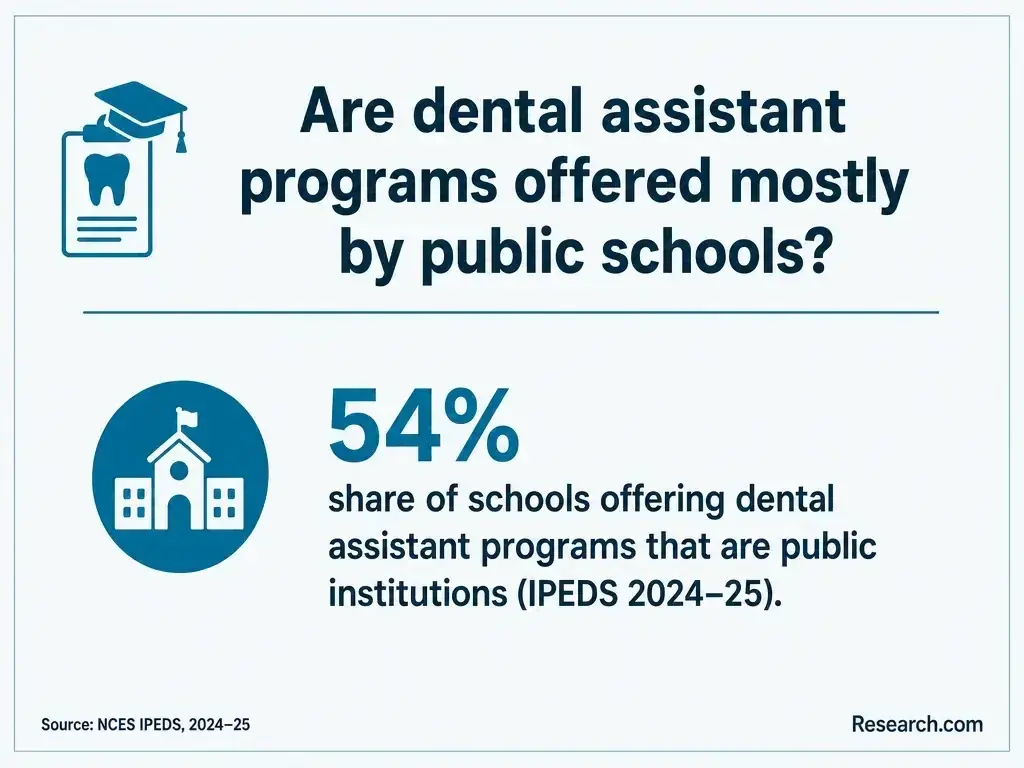
There is no defensible single average for all Saint Cloud dental assistant training routes: published college costs, short courses, and employer-sponsored training do not measure the same things. Instead, compare the total cost to become job-ready. Request an itemized estimate that includes tuition, mandatory fees, books and supplies, uniforms and protective equipment, screening requirements if applicable, examination and application fees, and travel to labs or clinical sites.
Also account for wages you might forgo while studying and wages you could earn through an employer-training route. Ask whether the specific program is eligible for federal aid, Minnesota aid, scholarships, or workforce funding; eligibility is not guaranteed by the school's name. Lists of schools that accept FAFSA can help frame aid questions, but the school must confirm eligibility for the particular credential. A lower price is a poor bargain if the route does not support the duties you want.
The school award might be a certificate, diploma, or associate degree. That award is distinct from CODA programmatic accreditation, a DANB certification, and a Minnesota dental assistant license. Institutional accreditation and school authorization answer different questions; neither alone establishes eligibility for the licensed role (Commission on Dental Accreditation; Dental Assisting National Board; Minnesota Board of Dentistry).
Ask admissions staff to name the exact award and provide a written explanation of the Minnesota credential pathway it supports. If a shorter credential is appealing, certifications that pay well without a degree offers comparison context - but do not assume a general certificate or an online course grants dental-assisting certification or licensed duties.
Requirements vary by provider and placement site. A program may require a secondary-school credential, application materials, prerequisite courses, health documentation, or screening before clinical participation; obtain the current requirements from the provider rather than assuming admission means you can begin clinical work immediately.
If your goal is Minnesota licensure, check requirements in two stages: what the school requires to enroll, and what the Minnesota Board of Dentistry requires to qualify for the license. A direct-entry office job has different hiring requirements and should not be mistaken for admission to an approved education pathway.
Dental-assisting training commonly covers infection control, dental anatomy and terminology, chairside procedures, materials, imaging procedures, documentation, and patient interaction (U.S. Bureau of Labor Statistics). The practical question is how students demonstrate those skills: observe a lab if possible, and ask how many supervised clinical sessions are required and how performance is assessed.
Compare curricula against the duties you hope to perform in a Minnesota office. Two programs with similarly named awards may differ substantially in radiography instruction, supervised practice, and preparation for credential examinations.
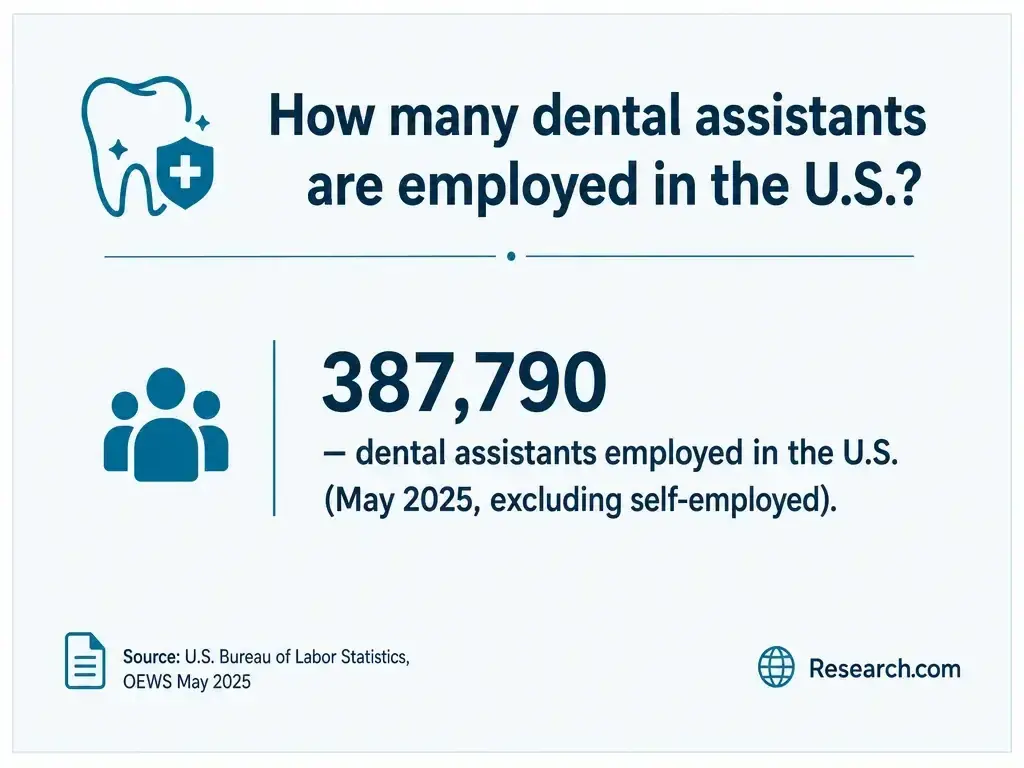
Not every dental-assisting position requires the same credential or permits the same duties. Minnesota distinguishes unlicensed assisting from licensed dental assisting and regulates which tasks may be performed under applicable supervision. For the licensed dental assistant pathway, check the Minnesota Board of Dentistry's current education, examination, and application requirements; CODA-accredited education and DANB examinations are important elements to verify, but completing a program does not itself issue a license (Minnesota Board of Dentistry; CODA; DANB).
Before paying for training, tell the school which duties you want to perform - particularly radiography or expanded functions - and ask it to identify the applicable board rule and the steps its graduates must still complete. Verify the answer with the board. An optional employer-preferred credential should not be confused with legal permission to perform a regulated duty.
Start with your target role, not the ranking position. The most affordable suitable program is one that fits your budget and provides the training and eligibility your intended duties require. Use the following checks before committing:
Red flags include an "online-only" claim without a practical-training plan, an unclear answer about Minnesota licensed duties, or a price that omits required clinical and examination costs. These checks matter more than whether a provider is public or private.
An entry-level assistant may begin with permitted chairside, sterilization, or administrative tasks and take on additional duties only after meeting applicable Minnesota requirements. With experience, assistants may move toward specialty practices, lead-assistant responsibilities, patient coordination, or office operations. Those are possible paths, not automatic promotions or guaranteed pay increases (U.S. Bureau of Labor Statistics; Minnesota Board of Dentistry).
Choose training for the job you want next: a brief employer-trained route may suit someone testing the field, while a program aligned with Minnesota licensed dental assistant requirements better fits someone seeking that credential and its permitted scope. Ask prospective employers which credentials they recognize for the roles you are considering.
The U.S. Bureau of Labor Statistics projects 7.4% national employment growth from 2025 to 2035 for dental assistants. That supports considering the occupation, but it is not a forecast of Saint Cloud openings or a promise of employment after training.
Use the national projection as background, then review current local postings for required credentials, duties, schedules, and pay. If listings for your preferred role consistently request a Minnesota license, a cheaper program that does not support that pathway may narrow your options.
Education is a significant investment, so the Research.com team uses documented education and cost data to help readers compare programs with their local options. The most-affordable ranking evaluates programs in the same occupation and geography using tuition, cost of attendance, median student debt, and federal loan default rate. Indicator weights are assigned through an entropy-based method. Only programs with completions reported to IPEDS are eligible; a provider's absence does not establish that it is unavailable or unsuitable.
The team draws on the following sources to check program, institutional, and occupational information. Some cover training models outside dental assisting and should not be read as dental-assisting approvals.
Affordability is not a quality score. Accreditation, student support, and other quality measures are not included in this most-affordable score. Use the ranking to shortlist options, then independently confirm current prices, clinical training, and Minnesota credential eligibility. More detail about Research.com's approach is available on its methodology page.
# 1 position
# 2 position
Employer training may reduce upfront school costs and let you earn sooner, but confirm which Minnesota duties the position permits. If you want a licensed dental assistant role, compare the full cost of a qualifying education pathway instead.
It can be if its credential, clinical experience, and Minnesota eligibility match your goal at a manageable total cost. Compare aid, debt, time away from work, and realistic local job requirements - not tuition alone.
Some coursework may be remote, but practical skills require an in-person plan. Confirm lab and clinical arrangements and do not assume an online credential qualifies you for Minnesota licensure.
No. A school award, professional certification, and Minnesota licensure are separate. Check the Minnesota Board of Dentistry's current requirements for the duties you intend to perform.
Ask where it occurs, who arranges it, whether supervision is provided, what skills you will practice, and what travel or screening costs you must cover.