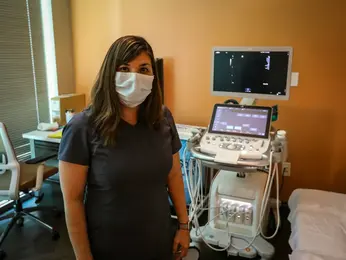
# 1 position

Audited and Verified:
Our Editorial and Data Verification Process
Research.com uses government datasets, official education statistics and primary institutional information to support its career and degree guides. Our review process checks factual accuracy, occupational definitions, source dates and the requirements associated with the credentials discussed.
How This Article Was Fact-Checked
Our editorial team verifies salary estimates, employment projections, education requirements and program information against original data providers and official organizations. Salary figures are checked against the relevant occupational definitions and reporting periods. Information about licensure, accreditation and required in-person training is reviewed separately.
Fact-checked and verified on:

Co-Founder and Chief Data Scientist

Reviewed by Karolina Broda
Fact-Checker and Data Verification
Choosing an affordable dental assistant program near Blountville means looking beyond tuition: the training must also prepare you for hands-on work and the duties you want to perform in Tennessee. The U.S. Bureau of Labor Statistics projects 7.4% national employment growth for dental assistants from 2025 to 2035. This guide explains local training choices, costs, credentials, and career prospects. It also features a Most Affordable Dental Assistant Trade Schools in Blountville for 2027 ranking, created by the Research.com team of data scientists to help students make an informed choice about programs worth considering.
Expect a combination of classroom instruction, skills-lab practice, and, where the program offers it, supervised experience in a dental office. Training typically addresses infection prevention, instrument preparation, chairside assistance, dental materials, patient communication, and records. Radiography and expanded functions require particular scrutiny because Tennessee rules govern who may perform specific duties (Tennessee Board of Dentistry).
A short certificate can suit someone seeking a focused route to an entry-level opening; a longer diploma or associate-degree pathway may offer more structured coursework and clinical practice but requires more time and money. An employer willing to train a new hire may offer another route into basic assisting. That option can reduce upfront school costs, but the worker should confirm who teaches required skills and whether the training supports any later board-regulated duties. Neither a similarly named credential nor a shorter schedule proves that two programs provide equivalent practical preparation.
Check Northeast State Community College's current offerings and ask whether a dental-assisting program is available for your intended start date; availability, credential, and clinical placement should be confirmed rather than assumed. If an associate-degree route is under consideration, a general guide to the easiest way to get associate's degree cannot replace checking that route's dental-specific clinical requirements.
Dental offices are the primary setting for dental assistants nationally (U.S. Bureau of Labor Statistics, Occupational Outlook Handbook). Blountville applicants should also search across nearby Sullivan County communities and the wider Kingsport-Bristol area rather than limiting themselves to jobs within the town. A wider search may improve access to openings, but commuting time and reliable transportation become part of the investment decision.
General dentistry offices are the clearest starting point. Specialty practices may have different workflows and prefer applicants with relevant chairside experience. Ask prospective employers which duties they expect on day one and which they will teach under supervision; a job title alone does not establish that every advertised function is permitted for every applicant in Tennessee.
The U.S. Bureau of Labor Statistics reports a May 2025 national median annual wage of $48,070 for dental assistants. That is the midpoint for employed assistants nationwide, not a verified Blountville wage or a likely first-job offer. Experience, employer, schedule, and permitted duties can affect an individual offer.
For a local estimate, compare current offers from offices within a commute you would actually make. Ask whether the quoted amount assumes full-time hours and whether benefits, paid training, or reimbursement for required courses are included. If considering a longer program, compare its added cost with a realistic entry-level offer - not the national median alone.
There is no single program length that applies to every Blountville applicant. Short courses, certificate or diploma programs, and associate-degree pathways differ in classroom time, lab practice, and worksite experience. Employer-sponsored entry training follows the employer's schedule rather than a common school calendar.
Ask each provider for its published total clock or credit hours, separately identified clinical hours, weekly schedule, and expected completion date. Also ask whether clinical placement is guaranteed or must be found by the student. An accelerated course makes sense if its practical training and Tennessee duty eligibility match your goal; it is a poor shortcut if you must later pay for missing training. Working students should compare part-time availability with the earnings they would give up to attend full time. Broad comparisons of college majors ranked do not answer those dental-assisting scheduling questions.
Online delivery can make terminology, records, and some theory easier to study around work. It cannot substitute for physically practicing instrument handling, infection-control procedures, patient positioning, and chairside assistance. A hybrid option is useful only if its required labs and supervised practice are accessible from Blountville.
Before paying for an online program, obtain a written breakdown of remote coursework, in-person lab sessions, clinical placement responsibilities, and any travel required for assessments. Ask the Tennessee Board of Dentistry about the requirements for the specific duties you hope to perform; do not assume an online completion certificate meets them. Even when comparing flexible education through resources such as cheapest bachelor degree online, dental assisting must be judged on its in-person competencies, not online convenience alone.
A defensible Blountville average cannot be stated without a comparable, current set of local program prices. Published tuition may omit mandatory fees and expenses necessary to reach a clinical site. For a 2027 start, request a dated, itemized quote rather than relying on an earlier advertised price.
Use the same cost categories for each option so a low tuition figure does not conceal a higher job-entry cost:
Subtract confirmed grants, scholarships, or employer payments from costs you must fund yourself; keep loans separate because they must be repaid. Ask the provider whether its specific program is eligible for federal aid, and check Tennessee workforce-training assistance through the appropriate workforce office. A paid training offer may have lower upfront cost, but compare its training scope and time to independent work. For someone considering entirely different career investments, highest paying 4 year degree comparisons are not a substitute for a dental-assisting cost quote.
The award depends on the provider: it may be a course-completion certificate, an occupational certificate or diploma, or an associate degree. These are school credentials, not interchangeable claims about state-authorized duties. A separately administered professional certification, such as one offered by the Dental Assisting National Board, has its own eligibility and examination rules (Dental Assisting National Board).
Ask for the exact credential name and whether the curriculum is designed to meet any particular certification prerequisite or Tennessee Board of Dentistry requirement. Confirm the claim with the certifying organization or board before enrolling. Institutional accreditation, Commission on Dental Accreditation programmatic accreditation, state school authorization, professional certification, and permission to perform regulated duties are distinct checks; none should be inferred solely from the school's name or credential title (U.S. Department of Education; Commission on Dental Accreditation; Tennessee Board of Dentistry).
Requirements vary by provider and clinical site. Ask whether entry requires a high school credential, placement assessment, immunization documentation, background check, or other clearance, and identify which items are admissions conditions versus prerequisites for clinical participation. Employer-sponsored training may instead begin with a hiring process and workplace onboarding.
Request the program's current admissions checklist and refund policy before submitting a deposit. If you already have relevant coursework or office experience, ask whether prior-learning or transfer credit is accepted - and whether receiving it would remove any lab or clinical practice you still need. Credit for prior learning should not be mistaken for permission to perform a Tennessee-regulated duty.
A useful curriculum connects theory to repeatable workplace skills: preventing cross-contamination, preparing treatment rooms, identifying instruments, assisting during procedures, handling dental materials, communicating with patients, and maintaining accurate records. The U.S. Bureau of Labor Statistics identifies patient care, instrument preparation, and recordkeeping among common dental-assistant duties.
Look for supervised opportunities to demonstrate those tasks, not just videos or written quizzes. Ask to see the skills checklist and the number and setting of practical sessions. If radiography or another expanded function matters to your career plan, identify the exact course, assessment, and Tennessee board requirements tied to it rather than assuming that the topic's appearance in a syllabus establishes eligibility.
Do not treat "dental assistant" as one uniform license category. Tennessee distinguishes basic assisting from duties subject to additional board rules, including radiography and expanded functions (Tennessee Board of Dentistry). Whether you need a particular registration, approved course, examination, or other board credential depends on the duties you intend to perform - not merely on graduating from a trade program.
Before choosing a school, list the tasks in local job postings that interest you and check the Tennessee Board of Dentistry's current requirements for each regulated task. Then ask the program to identify, in writing, which requirements it prepares students to meet. A national voluntary certification may signal knowledge to an employer, but it does not replace Tennessee authorization where the board requires it (Dental Assisting National Board; Tennessee Board of Dentistry). If you may work across the nearby Virginia state line, verify Virginia's rules separately rather than assuming Tennessee training confers identical privileges there.
Start with your intended duties and a feasible commute, then compare programs on the same terms. The affordability ranking can narrow a search, but its score does not evaluate clinical quality or Tennessee duty eligibility. Use these checks before accepting an offer:
A red flag is a promise of certification or unrestricted duties without naming the issuing organization, required assessment, or governing rule. Another is an attractive tuition figure with no itemized clinical or supply costs. If your goal remains dental assisting, unrelated comparisons such as what is the shortest phd program should not displace verification of practical training and job-entry requirements.
A realistic starting path is chairside assisting or a combined clinical-and-front-office role. With experience and any training Tennessee requires for additional duties, an assistant may take on more specialized responsibilities or move toward lead-assistant, training, scheduling, or office-management work. Those later roles depend on employer needs and demonstrated ability; a completion certificate does not automatically confer a promotion.
Consider your preferred workday when choosing training. Someone who wants direct patient care should prioritize substantial supervised chairside practice. Someone primarily interested in scheduling or insurance administration might compare an employer-trained front-office entry route before paying for extensive clinical instruction. Training as a dental assistant is not a substitute for the separate education required for other licensed dental occupations.
The U.S. Bureau of Labor Statistics projects 7.4% growth in dental-assistant employment nationwide from 2025 to 2035. That supports considering the occupation, but it does not predict the number of vacancies in Blountville or guarantee work after training. Local opportunity depends on practices hiring within your commuting area and the duties for which you are qualified.
To test demand before enrolling, review recent postings across Sullivan County and the Kingsport-Bristol area. Note whether employers request experience, radiography-related eligibility, or a particular certification, and ask a provider how its clinical placements address those expectations. A program is more likely to be worth its cost when its schedule, practical training, and credential match openings you could realistically accept.
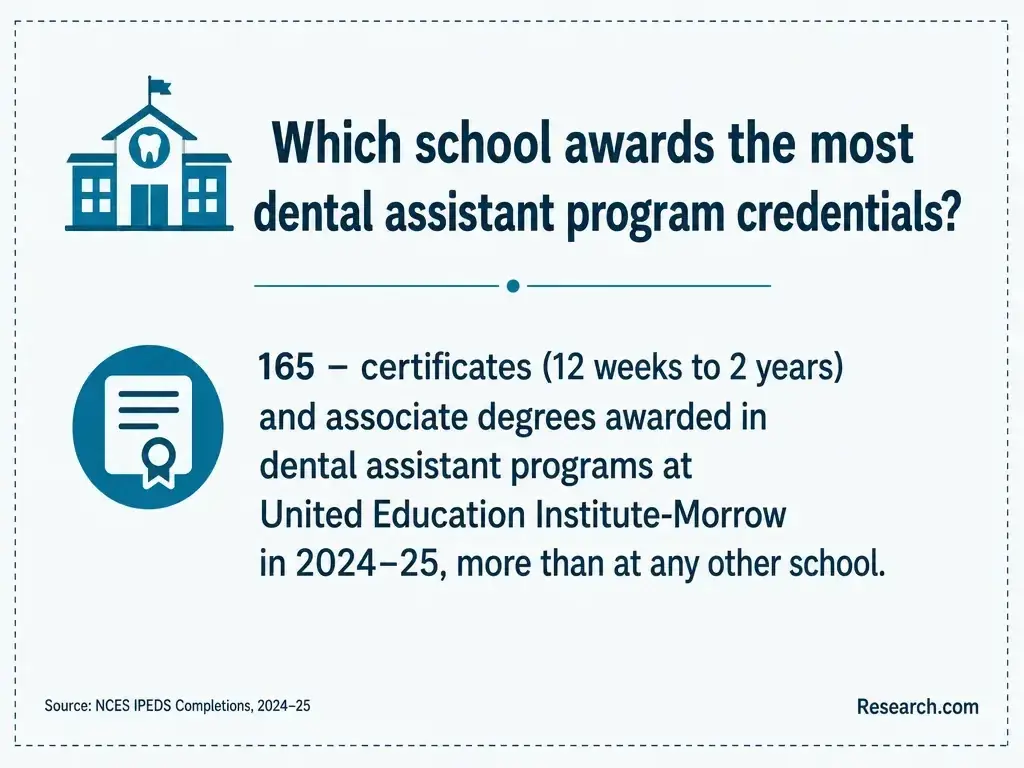
Investing in training is an important decision, especially when the lowest advertised tuition may not be the lowest cost of becoming job-ready. Research.com's team uses comparable program-level measures and multiple education and occupation sources to make its ranking more useful and credible. Programs are compared with others in the same occupation and location; only programs with completions reported to IPEDS are eligible.
The most affordable ranking scores tuition, cost of attendance, median student debt, and federal loan default rate. Indicator weights are assigned using an entropy-based method, which gives more weight to measures that differ more across programs. Accreditation and other quality indicators are not part of this affordability score. Research.com's separate best programs rankings also consider outcomes, earnings, student support, accreditation, and occupation-specific recognition; readers should not mistake those broader criteria for the affordability formula.
The team draws on the following sources to assess education data and relevant recognition. Their inclusion does not mean every organization accredits dental assisting programs or that every source contributes a scored affordability measure:
Not every source applies equally to dental assisting: for example, NCCER focuses on construction training. IPEDS-based eligibility also excludes training without reported completions, which can include employer-sponsored options. Use the ranking to shortlist programs, then verify current prices, clinical arrangements, and Tennessee eligibility directly. Research.com explains its broader approach on its methodology page.
# 1 position
# 2 position
Not necessarily. Compare the full cost to become job-ready, supervised practice, completion prospects, and preparation for your intended Tennessee duties. Low tuition can be offset by extra courses or travel.
An employer may train someone for basic assisting work. Ask what training is paid, what duties you can perform, and whether later board-regulated tasks require separate coursework or credentials.
Some theory may be online, but chairside skills require in-person practice. Verify lab and clinical requirements and any Tennessee board rules before purchasing an online course.
No. A school certificate alone does not establish eligibility for a regulated duty. Check the Tennessee Board of Dentistry's current radiography requirements and ask the program precisely how it addresses them.
No. Compare reachable training and clinical sites across the surrounding area. Include commuting expenses and scheduling in the same cost comparison as tuition.