# 1 position
Pima Medical Institute-Chula Vista - Dental Assisting/Assistant.
certificate or diploma

Audited and Verified:
Our Editorial and Data Verification Process
Research.com uses government datasets, official education statistics and primary institutional information to support its career and degree guides. Our review process checks factual accuracy, occupational definitions, source dates and the requirements associated with the credentials discussed.
How This Article Was Fact-Checked
Our editorial team verifies salary estimates, employment projections, education requirements and program information against original data providers and official organizations. Salary figures are checked against the relevant occupational definitions and reporting periods. Information about licensure, accreditation and required in-person training is reviewed separately.
Fact-checked and verified on:

Co-Founder and Chief Data Scientist

Reviewed by Karolina Broda
Fact-Checker and Data Verification
Choosing dental assistant training in Chula Vista means looking beyond the shortest program or lowest advertised tuition: you need clinical practice and a pathway that fits California's rules. The U.S. Bureau of Labor Statistics reports a $48,070 national median annual wage for dental assistants in May 2025, but that is not a starting-pay promise. This guide compares training, costs, credentials, and career options. It also features a Best Dental Assistant Trade Schools in Chula Vista for 2027 ranking created by the Research.com team of data scientists to help you identify programs worth considering.
Expect instruction in chairside assistance, patient preparation, instrument processing, dental materials, records, and office workflow, followed by supervised practice. A lab lets you rehearse procedures; an externship or other clinical placement tests whether you can perform them safely with patients and a dental team. Ask for the scheduled lab and clinical hours separately - two programs awarding a certificate need not provide equivalent practice.
The main pathways differ in cost, structure, and how quickly you can begin working. This comparison identifies what to verify before treating any pathway as a route to RDA licensure.
| Pathway | Typical credential or outcome | Best fit and key limitation |
| Career-school certificate or diploma | School-issued completion credential | Fits students seeking structured, hands-on preparation; confirm California-specific coursework, clinical hours, and credential eligibility. |
| Community-college dental assisting program | Certificate or, where offered, associate degree | Worth comparing for public tuition and broader coursework; schedules and admission requirements may differ. |
| Employer-sponsored, on-the-job training | Work experience rather than a school credential | May reduce upfront cost and provide earnings while learning; duties and progression depend on California rules and the employer's supervision. |
Chula Vista students can compare local career-school schedules with training and clinical opportunities across the wider San Diego area. A program farther away is not necessarily cheaper once commuting and placement travel are included. Dental assisting is generally not a trade in which you must first secure a registered apprenticeship; if an employer advertises one, verify its registration and exactly what credential it leads to.
Dental assistants primarily work in dental offices, supporting general dentists or specialists. In and around Chula Vista, that may mean a general practice, pediatric or orthodontic office, oral-surgery practice, or a community clinic serving South Bay patients. The setting matters: orthodontic and surgical teams may use different instruments and workflows, so ask whether a program's clinical placement matches your intended role.
Chairside work involves close patient contact, frequent coordination with coworkers, and switching between clinical and administrative tasks. If you are exploring what are the best paying jobs for introverts, observe a dental office before enrolling rather than assuming the role is mostly independent work. The U.S. Bureau of Labor Statistics describes dental assistants as working under dentists' supervision; California rules determine which procedures an assistant may perform.
A reliable city-specific median is not established here. The U.S. Bureau of Labor Statistics reports a $48,070 national median annual wage for dental assistants in May 2025. That figure covers experienced and newer workers across the United States; it should not be treated as a Chula Vista offer or as the wage a new graduate will receive.
When assessing a local offer, compare hourly pay, benefits, schedule, commute, and whether the employer will pay for required courses or support RDA progression. Ask programs for recent, occupation-specific placement and wage information, including how many graduates supplied it. Unlike lists of highest paying college majors, an occupation-wide wage figure cannot by itself show the return on a particular dental assisting certificate.
Dental assistant certificates and diplomas are generally measured in months, but there is no single Chula Vista completion time. The answer depends on scheduled class and lab hours, full- or part-time attendance, and when a clinical placement is available. Request a calendar showing the first class, last required clinical day, and any separate California coursework or examination steps needed for your goal.
An accelerated schedule can get you to an entry-level job sooner, but fewer calendar months do not prove that it includes enough supervised practice. Readers comparing fast paced degree programs should evaluate dental assistant training by its actual clock hours and clinical requirements instead of its marketing label. Employer training may let you earn wages sooner, but it does not automatically shorten the path to RDA eligibility.
Online delivery can work for terminology, anatomy, records, and some safety theory. Instrument handling, infection-control practice, chairside procedures, and clinical patient care require in-person instruction or supervised work. A hybrid program is useful if its local labs and placements fit your schedule; a fully online course should not be assumed to satisfy California requirements for specific duties or RDA licensure.
Ask where every practical session occurs, who arranges the clinical site, and what happens if a placement is delayed. General lists of accredited online universities free to apply are not a substitute for checking the hands-on and regulatory requirements of a dental assisting program. Institutional accreditation, online convenience, and California occupational eligibility answer different questions.
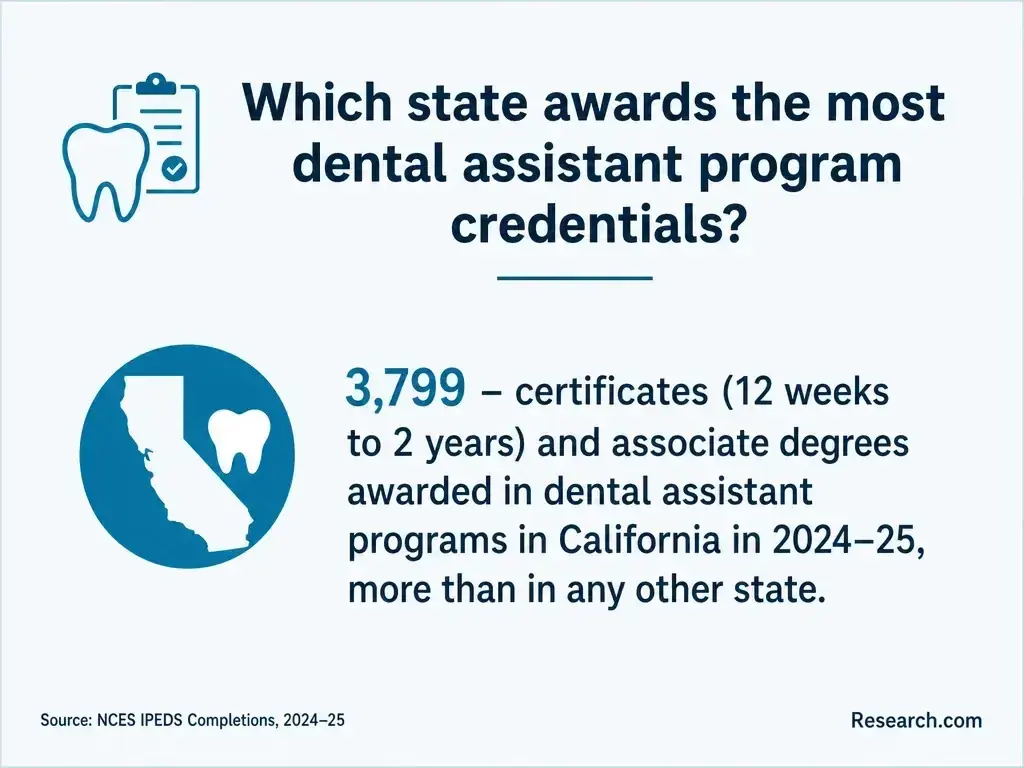
There is no defensible single average for every Chula Vista dental assisting pathway: prices, included supplies, and program lengths vary, and employer training may have little school tuition. Obtain an itemized, current quote from each provider. The comparison below separates charges you may pay to a school from costs of becoming job-ready.
| Cost category | What to confirm |
| School charges | Tuition, registration and lab fees, books, materials, uniforms, and required equipment. |
| Career-entry charges | Any separately required California courses, examinations or applications, CPR training, and screening or health requirements. |
| Attendance and opportunity costs | Travel to campus and clinical sites, childcare if needed, and earnings forgone while attending. |
| Potential offsets | Grants, scholarships, eligible federal or state aid, workforce assistance, and employer-paid training. |
Compare the net amount you must pay, not the sticker price. Federal aid eligibility depends on the institution and program, among other conditions, according to Federal Student Aid; do not assume every short course qualifies. For a realistic return-on-investment estimate, consider completion likelihood, likely starting pay versus your current earnings, debt payments, training time, and how long you expect to work in the occupation. A higher-priced program is not automatically a worse investment, nor is a lower-priced one automatically better.
Most trade-school routes award a certificate or diploma of completion. That school credential documents training; it is not the same as California's Registered Dental Assistant license or a professional certification. Some community-college routes may award an associate degree. Ask for the exact credential name on the transcript and whether the curriculum is designed around a particular California licensing pathway.
Institutional accreditation concerns the school, while programmatic accreditation concerns a specific program. State school authorization addresses permission to operate. None alone proves that you may perform an expanded duty, take an examination, or receive a license. Verify any claim of Commission on Dental Accreditation recognition with CODA and any RDA-eligibility claim with the Dental Board of California. The Dental Assisting National Board's certifications are separate credentials; ask employers whether a specific one is useful for your intended job.
Requirements vary by provider and placement site. Ask whether admission requires a high school diploma or equivalent, an assessment or interview, immunization documentation, a background check, or CPR training - and which items must be completed before clinical work rather than before enrollment. Confirm the physical demands of standing, handling instruments, and working closely with patients if accommodations are important to you.
If you already have dental-office experience, ask whether the program grants documented prior-learning credit or advanced standing and whether doing so changes your California eligibility. Do not assume a shortcut preserves required coursework or practical training. Searches for the easiest bachelor's degrees to get address a different educational decision; for this occupation, the useful entry question is whether the training prepares you for the duties and credential you actually want.
Core instruction typically covers dental terminology and anatomy, patient communication, chairside setup, suction and instrument transfer, sterilization and infection control, dental materials, charting, and scheduling. Radiography and expanded functions require particular attention: California regulates who may perform certain duties and what training is needed, according to the Dental Board of California. Ask the school to identify which procedures you will practice, which you may perform after completion, and which require additional authorization.
Strong clinical training also teaches the pace of a real appointment: preparing a room, protecting patients and coworkers, anticipating the dentist's next step, documenting accurately, and resetting safely. Request the lab-hour and externship-hour breakdown, the clinical supervisor's role, and the process for making up missed practice. A syllabus alone does not show how much supervised repetition you will receive.
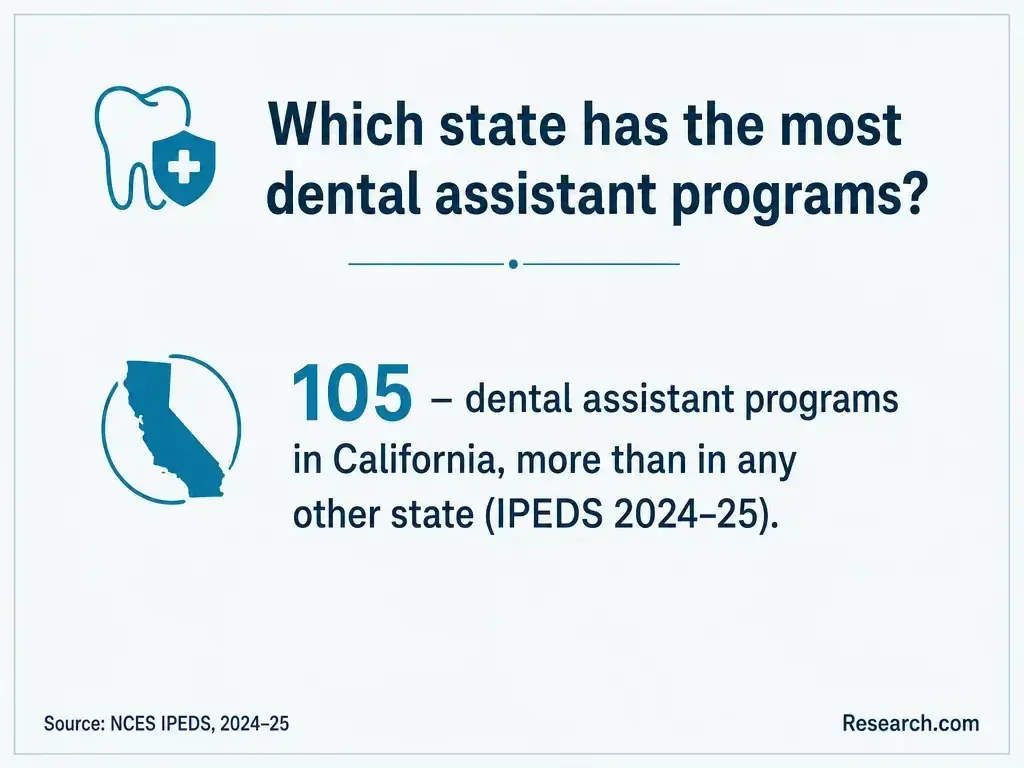
Not for every dental assistant role. California permits entry-level dental assisting under applicable supervision and duty restrictions, while Registered Dental Assistant is a distinct state-licensed role, according to the Dental Board of California. Certain procedures also have their own training or authorization rules. A school certificate does not, by itself, grant permission to perform every dental assisting duty.
If RDA is your goal, check the Dental Board's current eligibility routes before paying a deposit. Ask the program to document how its coursework and practical training fit the applicable route, what examinations or additional courses remain, and whether graduates must first gain work experience. Board approval, CODA accreditation, DANB certification, and a California license are distinct; do not accept one as proof of another.
Start with your intended first job and decide whether you want entry-level chairside work or a program designed to support later RDA licensure. Then compare programs on documented practical training, California alignment, total net cost, schedule, and credible graduate outcomes - not ranking position alone.
Before enrolling, put these questions to each admissions team and request written answers where possible:
Verify accreditation with the named accreditor, school authorization with California's relevant regulator, and occupational requirements with the Dental Board. Treat vague claims that a certificate "makes you licensed," an online-only promise of clinical readiness, or a price that excludes essential training as red flags. A working student may reasonably favor a slower, dependable schedule over an accelerated one that risks missed clinical days.
An entry-level assistant may move from general chairside work into a specialty practice, take on scheduling or treatment-coordination responsibilities, or pursue California RDA licensure after meeting the applicable requirements. Experience and additional authorized training can broaden duties, but advancement is not automatic. Ask prospective employers which credentials they recognize and whether they fund continuing training.
Choose the path that matches the work you want: a structured program may be valuable if you need supervised practice and a clear California-aligned curriculum; employer training may make more sense if you have a suitable offer, need income immediately, and understand its limits. Neither route should be judged by credential name alone. Compare the procedures you can legally perform, the experience you will gain, and the cost of reaching your next step.
The U.S. Bureau of Labor Statistics projects 7.4% national employment growth for dental assistants from 2025 to 2035. That supports considering the occupation, but it is a national projection - not a forecast of openings in Chula Vista or a guarantee that a graduate will be hired.
For a local decision, examine current dental-office and clinic vacancies across Chula Vista and the broader San Diego commute area. Note which require experience, radiography-related training, or RDA status, and compare those requirements with each program's curriculum. The most useful sign of program fit is not a broad growth projection; it is whether its supervised training and credential align with jobs you could realistically reach.
Investing in training is a consequential decision. Research.com created its ranking to help readers compare dental assistant programs against other programs serving the same occupation and location, rather than against unrelated schools. The team evaluates reported outcomes, costs, recognition, and support, and checks multiple data sources to strengthen the ranking's credibility and accuracy.
Only programs with completions reported to IPEDS are eligible. Best-program scores cover student completion and full- and part-time retention; earnings one year after completion and earnings relative to annual attendance cost; tuition, attendance cost, debt - including debt held by students who withdrew - and federal loan default rates; and accreditation, occupation-relevant recognition, and student support. Programmatic accreditation or industry recognition accounts for 20% of the score, institutional accreditation 10%, and support services 10%. Outcomes, earnings, and costs make up the remaining 60%, weighted by an entropy-based method that assigns more weight to indicators that distinguish programs more strongly.
Most-affordable-program rankings use only tuition, attendance cost, median student debt, and federal loan default rate, with entropy-based weights; accreditation and other quality indicators do not enter that score. The team used the following sources to develop the ranking:
The ranking is a starting point, not a finding that every listed program meets California Registered Dental Assistant requirements. IPEDS-based eligibility also means employer training and programs without reported IPEDS completions may be absent. Use the ranking to narrow your choices, then verify each program's current cost, clinical arrangements, and credential eligibility. More detail appears on Research.com's methodology page.
# 1 position
# 2 position
California has entry-level dental assisting roles that can involve employer training, subject to supervision and limits on duties. Ask the employer what training it provides and check Dental Board of California rules before assuming the experience qualifies you for additional duties or RDA licensure.
No. A school certificate and California RDA licensure are different credentials. Confirm the current RDA eligibility, training, and examination requirements with the Dental Board before choosing a program.
Theory may be online, but instrument handling and patient-care skills need in-person practice. Check where a hybrid program's labs and supervised clinical work occur and whether its training meets your California career goal.
Not necessarily. Compare its complete cost, lab and clinical practice, completion schedule, and any additional training you would need afterward. Time saved is valuable only if the program still prepares you for the job and duties you want.
Compare both options using clinical-site locations as well as classroom travel. A longer commute may be worthwhile for a better-fitting schedule or training pathway, but include transportation time and costs in your decision.