# 1 position
Most Affordable Dental Assistant Schools & Training in Raleigh for 2027
Audited and Verified:
Our Editorial and Data Verification Process
Research.com uses government datasets, official education statistics and primary institutional information to support its career and degree guides. Our review process checks factual accuracy, occupational definitions, source dates and the requirements associated with the credentials discussed.
How This Article Was Fact-Checked
Our editorial team verifies salary estimates, employment projections, education requirements and program information against original data providers and official organizations. Salary figures are checked against the relevant occupational definitions and reporting periods. Information about licensure, accreditation and required in-person training is reviewed separately.
Fact-checked and verified on:

Co-Founder and Chief Data Scientist

Reviewed by Karolina Broda
Fact-Checker and Data Verification
Choosing an affordable dental assistant program in Raleigh means looking beyond tuition: the training must also prepare you for hands-on work and the duties you want to perform in North Carolina. The U.S. Bureau of Labor Statistics reports a $48,070 national median annual wage for dental assistants in May 2025. This guide explains costs, credentials, state requirements, and career prospects alongside the Most Affordable Dental Assistant Trade Schools in Raleigh for 2027 ranking, created by the Research.com team of data scientists to help students make an informed choice about programs worth considering.
Key findings about dental assistant degrees in Raleigh
- The lowest reported program cost is not necessarily the lowest cost to become job-ready: compare required supplies, clinical travel, aid, debt, and time away from work.
- North Carolina distinguishes Dental Assistant I and Dental Assistant II duties. Before paying for training, confirm which pathway a program supports with the North Carolina State Board of Dental Examiners.
- The U.S. Bureau of Labor Statistics reports a $48,070 national median annual wage in May 2025 and projects 7.4% growth in dental assistant employment from 2025 to 2035; neither figure predicts a Raleigh beginner's pay or chances of being hired.
Table of Contents
- Most Affordable Dental Assistant Schools & Training in Raleigh for 2027
- What can I expect from a dental assistant trade school program in Raleigh?
- Where can I work with a dental assistant trade school training in Raleigh?
What can I expect from a dental assistant trade school program in Raleigh?
Expect instruction in chairside assisting, infection prevention, instrument processing, dental materials, patient communication, and office procedures, followed by supervised practice. A useful program makes clear how much practice takes place in a simulated lab and how much involves patients at a dental office. Those experiences are not interchangeable when you are learning to work safely and efficiently beside a dentist.
Raleigh-area students can compare a public community-college route, such as Wake Technical Community College, with any currently offered career-school option, including one advertised by Miller-Motte College-Raleigh. Confirm the current campus, program, format, clinical arrangements, and credential directly before applying; offerings can change. A shorter course may suit someone seeking an entry-level role, while a more extensive program may better fit someone targeting Dental Assistant II eligibility. The North Carolina State Board of Dental Examiners - not a school's marketing description - determines which duties a person may perform.
Where can I work with a dental assistant trade school training in Raleigh?
Most dental assistants work in dentists' offices, according to the U.S. Bureau of Labor Statistics. In the Raleigh area, that can mean general dentistry or practices focused on orthodontics, oral surgery, or pediatric dentistry. Duties differ by office and by what North Carolina permits an assistant with your training and qualifications to do.
Ask a program where its students complete clinical experience and whether those placements require travel beyond Raleigh. A placement that fits your commute can make training easier to finish and may help you understand local employers' expectations. Employer-based, supervised training may also be an alternative to school for some entry-level duties; it should not be assumed to provide the same preparation or eligibility as a formal program.
A verified Raleigh-specific wage should be the basis for a local pay comparison; the national figure is a benchmark, not a local offer. The U.S. Bureau of Labor Statistics reports a $48,070 median annual wage nationally in May 2025 for dental assistants. A median describes workers across experience levels and settings, so a newly trained applicant should not use it as an expected starting salary.
For an investment decision, compare actual Raleigh job postings that match your intended duties and schedule. Consider hourly pay, benefits, and whether an employer pays for additional training. If a program requires you to reduce work hours, include those lost earnings when weighing its cost against the pay you could reasonably seek afterward.
Dental-assisting programs commonly take about a year, but the calendar depends on the credential, schedule, and clinical requirements; the U.S. Bureau of Labor Statistics describes postsecondary programs as typically taking about a year. Ask each Raleigh provider for its current start-to-finish calendar and required classroom, lab, and clinical hours. Do not compare an accelerated course with a longer program on duration alone if they prepare students for different duties.
A fast associate degree may appeal to someone prioritizing an academic credential, but speed is useful here only if the dental-assisting curriculum and practical training fit the intended role. Part-time study can preserve income while extending the time before you can seek work with your new training.
Online coursework can cover topics such as dental terminology and office procedures. It cannot replace chairside practice, instrument handling, or supervised patient care. A hybrid program can be workable if it clearly identifies where students attend labs and clinical training, who arranges placements, and how performance is assessed.
Accreditation of nationally accredited online colleges is not the same thing as CODA accreditation of a dental-assisting program, and neither label alone establishes eligibility for North Carolina duties. Before enrolling remotely, get written confirmation of required in-person activities and check the proposed qualification route with the North Carolina State Board of Dental Examiners.
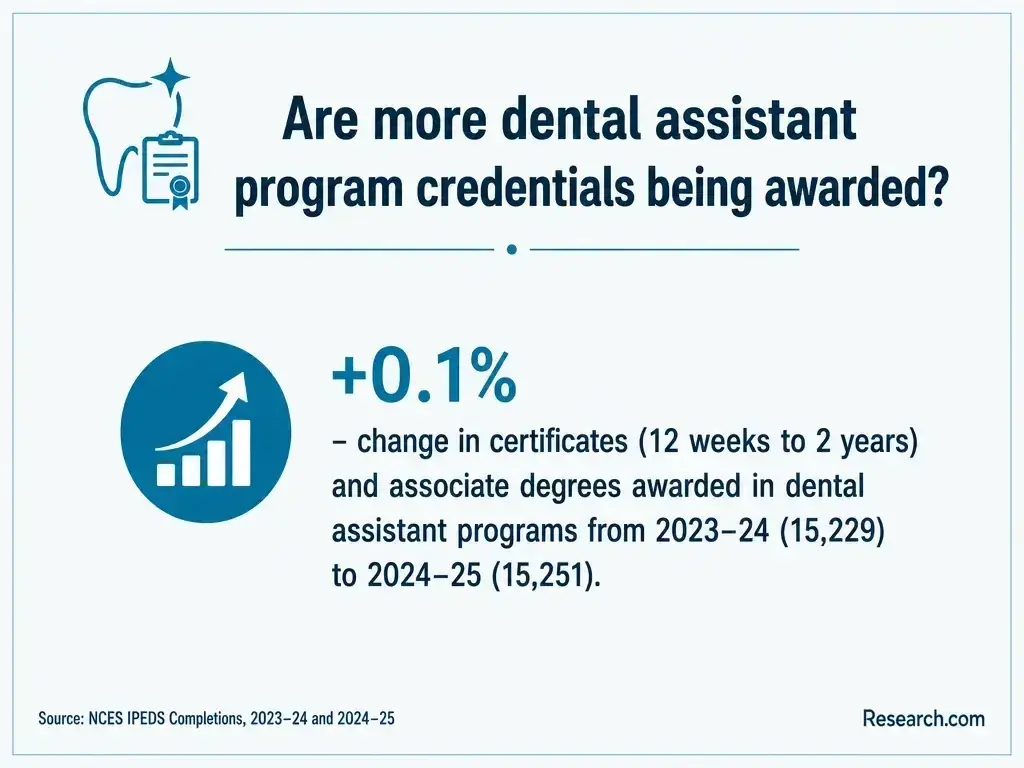
There is no reliable single Raleigh program-cost average to use in place of current quotes. Prices vary by provider, credential, residency rules where applicable, and what is included. A search for a quick degree can also miss shorter occupational credentials; compare the total price of the dental-assisting pathway you actually need.
Request an itemized, written estimate from each provider. These costs and offsets can change which option is truly more affordable:
- Tuition, mandatory fees, textbooks, uniforms, protective equipment, and other required supplies.
- Clinical-placement travel, required health or background checks, and any certification examination fees.
- Grants, scholarships, eligible federal or state aid, employer-paid training, and earnings you would give up while studying.
Federal student aid depends on both the student's and the program's eligibility; ask the school's aid office rather than assuming every short course qualifies, according to Federal Student Aid. Compare the amount you would pay or borrow after confirmed aid, not an advertised tuition figure. A low-cost course that does not support your intended duties can be an expensive detour.
The award may be a certificate, diploma, or associate degree, depending on the specific program. An academic award, CODA program accreditation, a Dental Assisting National Board certification, and qualification to perform North Carolina Dental Assistant II duties are distinct things. Ask the provider to name the exact credential on your completion record and explain, in writing, which further steps remain.
Even a program advertised as the easiest degree to get would not be a sound choice on that basis alone: for dental assisting, the decisive question is whether its supervised training and credential align with your intended duties. Check CODA's program information and the North Carolina State Board of Dental Examiners' rules rather than inferring eligibility from an award's title.
Requirements vary by provider and clinical site. Ask about the required prior schooling, application steps, placement or prerequisite courses, immunization documentation, background checks, and any health or safety requirements before paying a deposit. A program may admit you even if a clinical site has separate participation requirements, so obtain both sets of conditions early.
If you already have dental-office experience, ask whether the program grants credit or advanced standing and what evidence it requires. Do not assume prior work replaces the practical instruction or qualifications North Carolina requires for particular duties.
Core skills include preparing treatment rooms, applying infection-control procedures, transferring instruments, assisting with dental materials, documenting care, and communicating with patients. Programs may also teach imaging concepts and office workflows. Which procedures a graduate may perform depends on North Carolina's rules and the person's qualifications, not simply on whether a topic appeared in class, according to the North Carolina State Board of Dental Examiners.
Look for assessed practice rather than a course catalog alone: ask to see the lab competencies, clinical expectations, and how instructors respond when a student needs more practice. Digital records and imaging workflows make computer confidence useful, but they do not reduce the need for safe in-person skills.
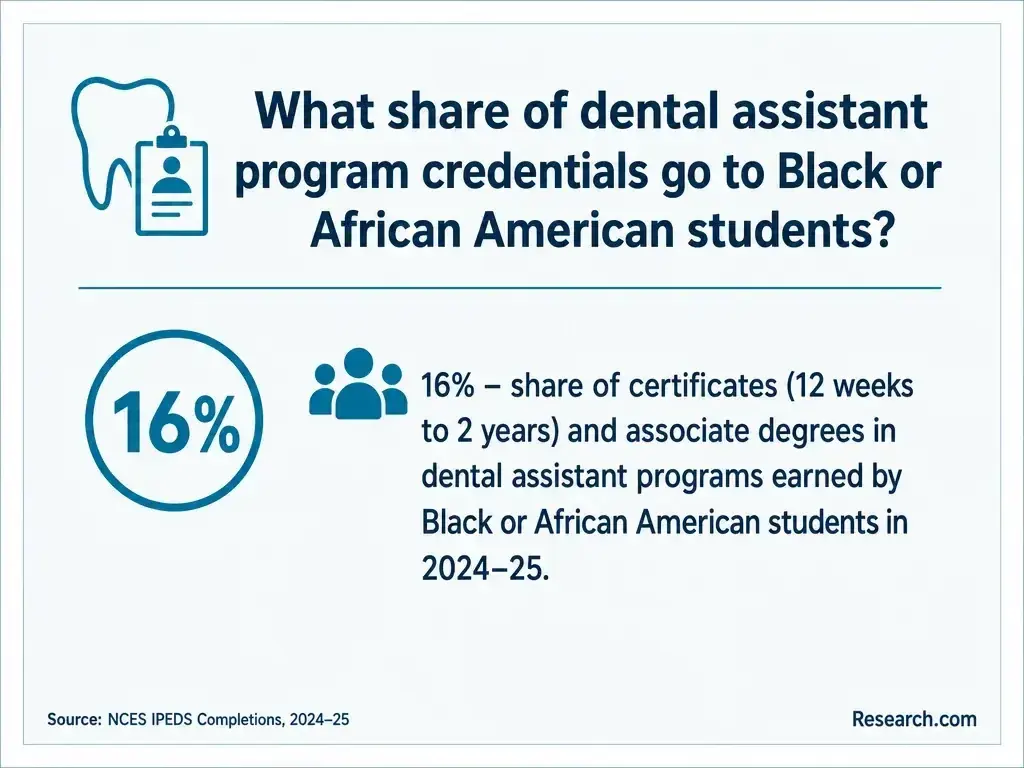
North Carolina regulates dental-assisting duties through the Dental Assistant I and Dental Assistant II categories; do not assume that every assistant needs the same credential or that graduation grants permission to perform every procedure. The North Carolina State Board of Dental Examiners sets the applicable qualifications and supervision rules, including requirements relevant to duties such as dental radiography. Verify the current rule for the work you intend to do before selecting a program.
DANB certification is a professional credential, not a substitute for checking North Carolina requirements. Likewise, institutional accreditation concerns a school, while CODA accreditation concerns a dental education program; neither is itself an occupational license. Ask a prospective school to identify the precise qualification route its graduates can pursue and what additional examinations, courses, or experience that route requires.
Start with the duties you want, then compare programs on eligibility, practical experience, and total cost. The affordability ranking can narrow the field, but its score does not assess accreditation or training quality. A lower price is worthwhile only if the pathway gets you closer to the work you intend to seek.
Use these questions with each admissions office, then verify regulatory answers with the North Carolina State Board of Dental Examiners:
- What exact award will I receive, and which North Carolina dental-assisting qualification route does the program support?
- Is the dental-assisting program CODA-accredited, and what is the institution's separate accreditation or authorization status?
- How many lab and supervised clinical hours are required, where do they take place, and who secures the placement?
- What is the itemized cost to finish, what aid is confirmed, and what happens financially if I withdraw?
- What completion and employment information can you document for this specific program and campus?
A red flag is a promise that "online completion" or accreditation automatically confers Dental Assistant II eligibility. Another is a price quote that omits clinical travel or required supplies. If you can enter a suitable role through supervised employer training, compare that route's pay, structure, and limits against the school option before borrowing.
An entry-level assistant can build experience in general dentistry and may later seek roles in specialty practices, patient coordination, or office operations. Additional training or qualifying experience may expand the duties an assistant can perform under North Carolina rules; job tenure alone should not be treated as automatic authorization, according to the North Carolina State Board of Dental Examiners.
Choose training for the next role you actually want. If your goal is chairside work, a hands-on dental-assisting pathway is more relevant than an unrelated academic shortcut such as a 1 year doctorate program. If your goal is primarily scheduling or billing, ask employers whether supervised office training would be a less costly entry route.
The U.S. Bureau of Labor Statistics projects 7.4% national employment growth for dental assistants from 2025 to 2035. That indicates demand across the occupation, not a forecast of Raleigh openings or a guarantee that a graduate will find work. For a local decision, review current Raleigh-area postings and note which duties, schedules, and qualifications employers request.
Clinical experience can matter when applying because it gives an employer more evidence of chairside readiness. Compare a program's placement arrangements with the locations where you could realistically work: a clinical site or first job that requires an impractical commute can change the value of an otherwise affordable course.
Most Affordable Dental Assistant Schools & Training in Raleigh for 2027
Investing in training is an important decision, so Research.com compares programs with others in the same occupation and location rather than with unrelated schools. The Most Affordable ranking evaluates tuition, cost of attendance, median student debt, and federal loan default rate. Indicator weights are assigned through an entropy-based method, which gives more weight to measures that differ more across programs. Accreditation and other quality measures are not part of this affordability score; readers should check them separately.
Only programs with completions reported to the Integrated Postsecondary Education Data System (IPEDS) are eligible. That makes the comparison more consistent, but it can leave out employer training and other providers that do not report completions to IPEDS. To assess the ranking and its underlying records, the Research.com team uses the following sources:
- IPEDS database - reported program completions and institutional data.
- National Center for Education Statistics - federal education data and definitions.
- College Scorecard database - available cost, debt, and outcome measures.
- Peterson's database - supplementary institutional information.
- Commission on Accreditation of Allied Health Education Programs (CAAHEP) - accreditation information where relevant.
- Accrediting Bureau of Health Education Schools (ABHES) - accreditation information where relevant.
- Commission on Dental Accreditation (CODA) - dental-assisting program accreditation information.
- Dental Assisting National Board (DANB) - dental-assisting certification information.
- National Center for Construction Education and Research (NCCER) - industry-recognition reference used across trade-school rankings, though not a dental-assisting credentialing authority.
- Apprenticeship.gov Partner Finder - information on registered-apprenticeship alternatives where applicable.
The ranking gives readers a starting point for comparing reported costs and debt, not a determination that a program meets North Carolina's requirements for particular dental-assisting duties. Research.com explains its broader approach on its methodology page.
# 2 position
Frequently asked questions about dental assistant programs in Raleigh
What is the cheapest dental assistant program in Raleigh?
The answer depends on current tuition, required supplies, clinical travel, aid, and the credential you need. Use the affordability ranking to identify candidates, then request itemized quotes; the lowest advertised tuition may not be the lowest total cost.
Can I become a dental assistant without trade school in North Carolina?
Supervised employer training may be an entry route for some duties. Check the North Carolina State Board of Dental Examiners' rules before assuming it prepares you for Dental Assistant II duties or dental radiography.
Can I complete dental assistant training entirely online?
Online lessons may cover theory, but chairside and other practical competencies require in-person training. Ask where labs and clinical experience occur before enrolling.
Does a certificate automatically qualify me as a Dental Assistant II?
No. The award's name alone does not establish eligibility. Confirm the program's accreditation status and the applicable qualification route with the North Carolina State Board of Dental Examiners.
Is dental assistant school worth the cost?
It may be if the program supports your intended duties and its total cost is reasonable relative to your likely employment options. Compare it with supervised employer training, and include debt, lost earnings, and your ability to finish in the calculation.
- U.S. Bureau of Labor Statistics - Dental Assistants
Used to verify salary, employment outlook, and typical education requirements.
https://www.bls.gov/ooh/healthcare/dental-assistants.htm - CODA - Find a Dental Program
Used to verify programmatic accreditation or industry recognition of programs.
https://coda.ada.org/find-a-program - DANB - Certified Dental Assistant (CDA) exam
Professional certification reference for graduates of this occupation.
https://www.danb.org/exams/exam/cda-exam - Wake Technical Community College - official website
Official school website (programs, tuition, admissions).
https://www.waketech.edu/ - Miller-Motte College-Raleigh - official website
Official school website (programs, tuition, admissions).
https://www.miller-motte.edu/