2027 Most Valuable Psychology Degree Programs Ranking in the USA

Co-Founder and Chief Data Scientist
Choosing the right psychology degree program can shape your future in meaningful ways. This article introduces the 2027 Most Valuable Psychology Degree Programs Ranking in the USA, developed by the Research.com team of data scientists.
It offers clear insights to help you find programs that provide strong value and career opportunities. Whether you're passionate about understanding human behavior or aiming for a rewarding career, this ranking supports your decision-making.
Explore options that align with your goals and feel confident in pursuing a psychology degree that truly matters.
Key benefits of getting psychology degree in America
- Psychology degree graduates often step into rewarding jobs like Human Resources Specialist earning around $76,060 annually or Marketing Research Analysts with an average wage of $83,190, showcasing strong salary potential.
- Career paths are diverse, ranging from Clinical Research Associate positions, earning about $62,370 yearly, to opportunities in survey research or child care, offering meaningful work that impacts lives.
- Obtaining a psychology degree online, such as through a well-known university, provides flexibility and accessibility, allowing graduates to balance studies with personal commitments while gaining competitive skills for the job market.
- 2027 Most Valuable Psychology Degree Programs Ranking in the USA
- What can I expect from psychology degree in America?
- Where can I work with psychology degree in America?
What can I expect from psychology degree in America?
The average cost of a psychology degree in America often dances between $30,000 and $120,000 for undergraduate programs, depending on whether you're studying at a public university like the University of Michigan or a private institution such as New York University. Imagine a graduate walking the sunny campus of UCLA, feeling the thrill of learning advanced research methods and cognitive psychology while juggling the weight of tuition fees and the quest for scholarships.
Graduate degrees, especially the doctoral ones from renowned schools like Harvard or UC Berkeley, can tip the scales higher, sometimes reaching upwards of $200,000. Yet, graduates often recall how the investment unlocked doors to specialized clinical internships and vibrant research labs, transforming theory into life-changing practice.
Beyond numbers, many students find their spending a heartfelt journey - blooming as they merge psychology with neuroscience or business, preparing for jobs that stir joy and purpose. This cost, though steep, is a ticket to joining a community passionate about peeling back the layers of the human mind in America's diverse academic landscapes.
Where can I work with psychology degree in America?
Graduates with a psychology degree from vibrant campuses like UCLA or the University of Michigan often find themselves stepping into a kaleidoscope of career vistas. Imagine a master's holder from Michigan counseling teenagers in bustling Detroit schools, or a UCLA doctoral grad interpreting the mysteries of the mind in a busy hospital ward. The journey from lecture halls to real-world impact feels electric.
Bachelor's degree holders weave into roles where empathy meets action: behavioral health techs in Chicago or HR assistants shaping corporate culture in Dallas. Across America, psychology grads pivot into marriage and family therapy, school counseling, or behavioral analysis for federal agencies like the FBI, often citing that thrilling moment of truly helping someone navigate life's storm.
Others turn their sharp analytical skills toward neuroscience labs or user experience design firms in tech hubs like Silicon Valley, blending science with creativity. The tapestry of employment paths unfolds endlessly-whether through private practices, community centers, or research labs-each graduate's story pulses with purpose and potential.
Imagine graduating from a well-regarded psychology program at an American university, like UCLA or the University of Michigan, and stepping into your first role. If you become a Human Resources Specialist, you could expect a mean annual wage around $76,060, turning your understanding of human behavior into workplace harmony and a solid paycheck. Graduates who dive into marketing research might enjoy earning an average of $83,190 per year, applying psychological insights to consumer trends-a thrilling intersection of mind and market.
For those who love the scientific side, roles such as Clinical Research Associate or Survey Researcher offer mean salaries near $62,370. Picture working with diverse populations while contributing to groundbreaking mental health studies, all while earning a respectable income. Even entry-level jobs like childcare worker, often filled by psychology grads passionate about early development, bring in about $32,070 annually, blending purpose with pay.
These figures show that a psychology degree in America can lead to vibrant job prospects, balancing passion with promising earnings.
- About 100,000 bachelor's degrees in psychology are awarded annually in the United States.
- Public in-state universities charge around $10,000 per year for tuition, while private universities may exceed $35,000 annually.
- Master's degrees in psychology cost between $30,000 and $50,000 total, and doctoral programs can surpass $100,000.
- Entry-level psychology graduates with a bachelor's degree earn between $35,000 and $45,000 per year.
- Licensed clinical psychologists have a median annual salary around $80,000, with some earning $100,000 or more.
- Psychology-related jobs are projected to grow 6-8% through 2031, matching the national average for all occupations.
Imagine diving into the vibrant world of psychology at a bustling university like UCLA or the University of Michigan. For many students, the journey begins with about four years of full-time study to earn a Bachelor of Arts or Science, packed with engaging courses and eye-opening experiments. Graduates often recall the excitement of their senior year, balancing research papers and internships that shape their passion.
Then comes the next chapter: a master's degree, typically two additional years, where deeper exploration into cognitive or clinical psychology unfolds. Students at schools like Boston University treasure this time as a thrilling blend of rigorous coursework and meaningful thesis projects that challenge their thinking.
The ultimate quest for many is the doctorate-a 5 to 7-year odyssey at prestigious places like Stanford or Yale, weaving through intense research, clinical practice, and groundbreaking dissertations. Graduates vividly remember the blend of fatigue and exhilaration as they conquer exams and defend their work, emerging ready to transform minds and lives.
Factors like part-time enrollment or financial choices often stretch this timeline, but they also teach resilience and adaptability, hallmarks of successful psychologists.
When considering a psychology degree program in America, one of the crucial factors to evaluate is the affordability and cost of the program. Understanding the financial implications of pursuing a psychology degree is essential for making informed decisions. For instance, students can explore options for the cheapest psychology school to minimize their educational expenses. The cost of tuition, fees, and living expenses can vary significantly across different institutions and locations. Additionally, the availability of financial aid, scholarships, and grant opportunities can also impact the overall cost of the program. By carefully assessing these factors, prospective students can choose a psychology degree program that aligns with their financial situation and career goals, ultimately leading to a more sustainable and successful educational journey.
Imagine the bustling halls of a university like the University of Michigan, where on-campus psychology students gather for spontaneous debates after class, their notebooks full of observations from hands-on lab experiments. These graduates cherish face-to-face moments with professors and peers, feeling the electric buzz of collaboration that fuels their passion for understanding the human mind.
Meanwhile, afar in quiet homes across California or Texas, online psychology students from places like Arizona State University embrace a different rhythm. They carve out flexible hours between work shifts or parenting duties, diving into asynchronous lectures when their minds are freshest. These graduates often celebrate the sweet freedom of designing their own study pace without sacrificing the rigor and accreditation that anchors their degree's value.
On-campus programs often come with sticker prices hitting up to $40,000 a year at private schools, reflecting the immersive experiences and campus perks they provide. Online options, by contrast, trim costs with fewer physical overheads, allowing curious minds to reach for their dreams without uprooting their lives.
Both paths offer unique flavors of growth: the electric pulse of campus life or the personalized cadence of online learning, each crafting psychology graduates ready to unlock human potential across America.
Pursuing an online doctorate in psychology offers advanced expertise, flexible learning arrangements, and the opportunity to specialize in areas that align with today’s dynamic workforce trends. With an online doctorate, students can deepen their research skills, refine clinical practice techniques, and expand their professional networks without disrupting their current career paths. This advanced degree not only builds on foundational knowledge but also positions graduates for leadership roles in academia, clinical settings, and industry research. Many professionals consider this path when evaluating what are some jobs you can get with online doctorate degree in psychology that combine rigorous scientific inquiry with real-world application. As institutions continue to innovate delivery methods and curricula, online doctorate programs are increasingly recognized for their quality, accessibility, and tangible career benefits in the competitive job market.
The average cost of a psychology degree in America often feels like navigating a complex labyrinth, but the numbers give some solid ground: median total tuition clocks in around $44,334. For in-state students carving their path through renowned public universities-think the University of Michigan or UCLA-the journey is lighter, with median costs near $18,161. Out-of-state adventurers, however, prepare for the higher toll as their contributions match or exceed the median total cost.
Imagine the experience of graduates from campuses buzzing with psychological discovery, where late-night study sessions blend with the thrill of understanding the human mind. While some recall balancing hefty tuition with part-time work and scholarships, others celebrate the relief of assistantships easing financial burdens. As future psychologists embrace this investment, they navigate not just tuition but also the price of books, materials, and life itself, all part of weaving their passion into reality.
Those curious about the total tuition fees for psychology degree in the USA should also peek at specific school options. Public universities offer a practical balance, but private colleges push the boundary with higher costs balanced by prestigious programs and research opportunities. Budgeting, financial aid, and smart choices shape each story uniquely. For students hunting for the most accessible routes to this career, exploring the cheapest psychology school may reveal unexpected treasures.

Choosing a psychology program with proper accreditation is crucial for both academic integrity and professional licensure. Regional accreditation-such as that granted by the Middle States Commission on Higher Education or the Western Association of Schools and Colleges-ensures that an institution meets rigorous quality standards. In addition, for graduate and doctoral training in psychology, American Psychological Association (APA) accreditation is often required by state licensing boards. Graduates from APA-accredited programs are typically eligible to sit for the Examination for Professional Practice in Psychology (EPPP), a standard requirement for licensure as a clinical or counseling psychologist. Before enrolling, verify that your chosen school holds regional accreditation and, if applicable, APA accreditation for its psychology programs. State requirements can vary: some states mandate supervised clinical hours, while others have additional jurisprudence exams or continuing education credits. Early consultation with your state licensing board can clarify prerequisites and prevent delays in your career path. Online psychology degrees can offer both flexibility and cost savings, but accreditation remains non-negotiable. For those seeking an online doctorate with rigorous accreditation standards and affordability, explore our Affordable Online Doctorate in Psychology Degree Programs Ranking in the South. This resource highlights programs recognized for both their academic excellence and value, helping you align your education with licensure goals. In sum, accreditation is your guarantee of transferable credits, eligibility for federal financial aid, and compliance with licensure requirements. Prioritizing accredited programs not only safeguards your investment but also paves a clear path to professional practice and long-term career success.
Imagine a student at UCLA juggling textbooks on cognitive psychology while the Pell Grant quietly cushions their financial worries with up to $7,395 a year-money that doesn't need to be paid back. At the University of Michigan, a graduate psychology student smiles, knowing the Direct Subsidized Loan covers their interest as long as they're enrolled, making those long nights studying neuroscience a bit less stressful.
Across states like New York and Texas, residents tap into government grants tailored just for them, slashing tuition costs and lighting a path toward their clinical psychology dreams. Meanwhile, at Harvard or Stanford, competitive scholarships from the APA ignite hope and enable aspiring psychologists to pursue research without drowning in debt.
Many psychology majors also dive into work-study jobs or assistantships-think teaching undergrads or lending a hand in labs-earning money while gaining priceless experience. These layered financial aids transform the daunting cost of a psychology degree in America into an achievable quest filled with opportunity and growth.
Accreditation is the cornerstone of a credible psychology degree program, ensuring that institutions meet rigorous academic and professional standards. In the United States, prospective psychology students should verify both regional accreditation-granted by agencies such as the Middle States Commission on Higher Education (MSCHE) or the Western Association of Schools and Colleges (WASC)-and discipline-specific accreditation from the American Psychological Association (APA). Regional accreditation validates overall institutional quality, while APA accreditation confirms that a program’s curriculum, faculty, and clinical training meet requirements for licensure as a psychologist. State licensure boards typically require graduation from an APA-accredited doctoral program, completion of a specified number of supervised practicum hours, and passing the Examination for Professional Practice in Psychology (EPPP). Students pursuing an online path should be especially diligent: not all distance learning offerings fulfill state licensure prerequisites. For example, those looking for flexible formats often choose a psyd online accredited program that combines rigorous coursework with clinical internships, ensuring a seamless transition to licensure eligibility. When evaluating programs, confirm that practicum and internship placements align with your state’s board requirements-some states mandate supervised hours within their jurisdiction. Additionally, inquire about post-doctoral supervision options if your chosen state requires extended mentorship. By prioritizing accreditation and licensing alignment early in your search, you can avoid unexpected delays in your career path and ensure your psychology degree opens doors to recognized clinical and research opportunities across America.
Diving into a psychology degree in America begins with showing you've conquered high school or its equivalent-your passport to exploring the mind. Picture a hopeful student at the University of Michigan, gathering transcripts, SAT scores, and a heartfelt personal statement, hoping to unlock the door to undergraduate psychology.
While no universal "must-take" classes exist before college, many thriving students share a solid foundation in biology and statistics, the twin pillars that support understanding human behavior. Graduates from UCLA often recall the spark that courses like developmental psychology lit in their academic journey, bridging abstract theory with real-world empathy.
At the graduate level-say, the corridors of Columbia University-requirements sharpen. A bachelor's in psychology or a related field is the baseline, alongside a GPA dancing around 3.0 or higher. GRE scores may still lurk in applications, but fading fast, replaced by evidence of research prowess and passion projects that fueled their curiosity.
Doctoral seekers, perhaps at Stanford, walk a narrower path, showcasing research papers, glowing recommendation letters, and sometimes prior master's degrees. The APA accreditation marks these programs as beacons of quality, ensuring students gain more than just credentials-they gain transformative experiences.
Before practicing independently, most psychology graduates must secure state licensure or certification. Requirements vary by role-clinical, school or industrial-organizational-but typically include:
- Graduation from an APA-accredited doctoral program or a master’s from a regionally accredited university (consider a cheap online masters in psychology for cost savings)
- Completion of 1,500–3,000 supervised clinical hours under a licensed psychologist
- Passing the Examination for Professional Practice in Psychology (EPPP) and any additional state jurisprudence exams
- For school psychologists: earning Nationally Certified School Psychologist (NCSP) status or meeting state board criteria
- Ongoing continuing education (CE) credits-often 20–40 hours every 1–2 years-to maintain licensure
Understanding these steps early helps you plan your education, practicum placements and exam preparation for a smooth transition into professional practice.
Imagine walking through the bustling hallways of a top psychology program at an American university-perhaps at UCLA or the University of Michigan-where classrooms buzz with curiosity about the mind. Here, the curriculum typically kicks off with Introduction to Psychology, a gateway course that paints a vivid picture of human behavior, as students eagerly share stories about everyday quirks and social puzzles.
Students dive into Research Methods and Statistics, where they sharpen skills to decode data and test hypotheses, often recalling late-night study groups debating experiment designs. Biological Psychology opens a window into the brain's mysterious wiring, bringing to life how neurons and chemicals choreograph emotions and actions.
Courses like Developmental and Social Psychology help students connect theory with real-world experiences-observing children's growth or untangling the invisible threads of social influence in college clubs. Exploring Abnormal and Cognitive Psychology not only demystifies disorders and thinking processes but fuels hopeful ambitions to help others someday.
Diving into psychology degree specializations in the USA feels like stepping into a vibrant kaleidoscope of human mind explorations. Imagine a graduate from the University of Michigan immersing themselves in Clinical Psychology, navigating the delicate art of diagnosing and treating mental health, energized by the real stories behind each patient encounter. Meanwhile, a student at UCLA thrives in Industrial-Organizational Psychology, creatively reshaping the rhythms of workplace life to boost morale and productivity. These are just glimpses of how types of psychology majors in America broaden your worldview, from the emotionally rich realms of Counseling Psychology to the cerebral intrigue of Neuropsychology at institutions like the University of Pennsylvania.
Picture yourself juggling coursework and internship hours at renowned colleges, feeling both challenged and fulfilled. The path even twists into forensic corridors or schools' hallways where future School Psychologists craft supportive communities. Such diversity in psychology degree specializations in America invites you to tailor your journey, whether you crave hands-on healing or analytical breakthroughs. To explore further into what possible careers lie ahead, check out what are some jobs you can get with online doctorate degree in psychology.
Choosing a psychology degree in America feels like navigating a vibrant tapestry of options, where each thread represents a unique blend of cost, curriculum, and culture. Imagine a graduate from a renowned university in the Midwest, glowing with pride after practical sessions at a local hospital, having tapped into the power of internships to fuel their clinical skills. Their story underscores the importance of programs with strong practicum placements-an essential piece in the puzzle for those chasing licensure.
Beyond the clinical glow, another graduate from a top coastal college highlights the thrill of cutting-edge research, thriving in small classes where faculty mentorship sparks innovation. This mirrors what many seek in the best psychology degree programs USA consistently offer-personalized instruction that primes you for breakthroughs in cognitive or industrial-organizational psychology.
Financial whispers echo through these halls too; affordable psychology colleges in America often attract hopeful minds balancing dreams and dollars. Exploring funding options is key, especially with graduate tuition often soaring. For those eyeing flexible paths, considering psyd online accredited programs can be a game-changer, blending accessibility with respected credentials.
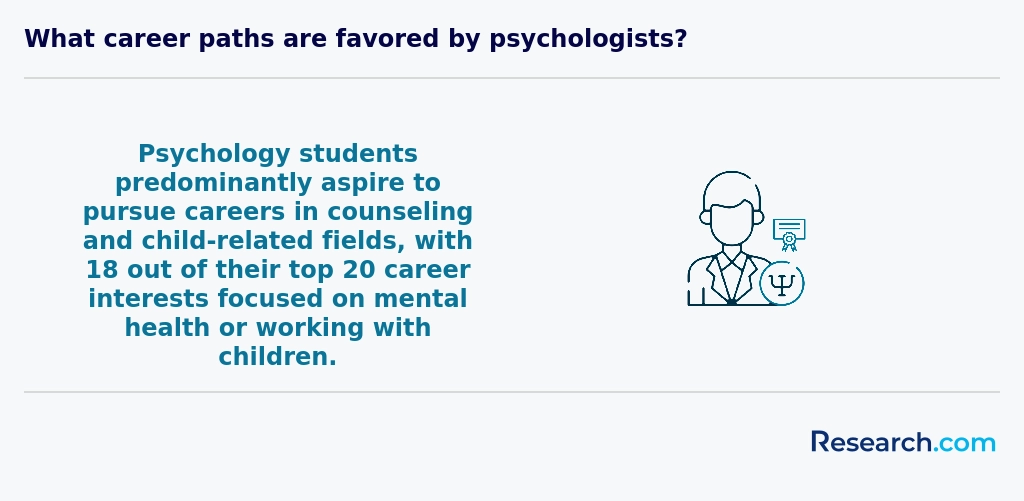
Graduates with a psychology degree in America find themselves woven into a vibrant tapestry of careers, each thread pulsing with unique possibilities. Picture a graduate from a top-notch psychology program at a university like UCLA, stepping confidently into mental health counseling-where empathy meets opportunity in a booming job market growing by 22% over the next decade. Or imagine another graduate diving into clinical psychology, pursuing a PhD to unlock doors in hospitals and private practice, empowered by a rewarding median salary of around $81,000. These career paths, grounded in real-life impact, transform passion into purpose.
Beyond the clinic, many choose research careers, exploring human behavior through work at government agencies or universities, driven by curiosity and funded in part by giants like the NIH. Others gravitate towards industrial-organizational psychology, improving workplace dynamics with a salary exceeding $100,000, proving the diverse job opportunities with psychology degree in America. Graduates also find fulfillment as school psychologists or in emerging fields like forensic and human factors psychology, all nurturing hopes of changing lives.
For those weighing the financial side of psychology education, recent graduates from renowned colleges often share how scholarships and aid transformed their journey, making degrees accessible. Exploring options through an Affordable Online Doctorate in Psychology Degree Programs Ranking in the South is a wise step toward balancing dreams with costs.
The job market for psychology degree holders in America moves like a winding path through varied landscapes. Graduates with a bachelor's degree often find themselves navigating roles beyond clinical walls, stepping into social services, marketing, or human resources, where their understanding of human behavior adds unexpected value. Many stories from psychology students at prominent institutions like UCLA or the University of Michigan reveal entry-level jobs that, while not their dream clinical role, offer rewarding hands-on experience and steady growth. This dynamic illustrates the reality of the psychology degree job outlook in the USA, where persistence and versatility open doors.
For those dreaming bigger, advanced degrees elevate opportunities dramatically. Doctoral students from universities such as Harvard or Stanford often mention the rigorous journey toward licensure and clinical work, yet they also celebrate the financial and professional gains awaiting licensed psychologists. Employment opportunities for psychology graduates in America are strongest in clinical, counseling, and school psychology, with median salaries around $82,000, showcasing the payoff of dedicated study.
Choosing to study psychology means weighing cost and career path carefully. Graduate programs span years and costs, but many students find internships and certifications crucial. Prospective students exploring college majors ranked on college majors ranked sites can see psychology as a gateway to a meaningful, evolving career where science meets personal impact.
2027 Most Valuable Psychology Degree Programs Ranking in the USA
Investing in your education is a significant decision that can profoundly impact your career and personal growth. The Research.com team recognizes the importance of providing reliable information to support this choice. To assist prospective students, we have carefully developed the "2027 Most Valuable Psychology Degree Programs Ranking in the USA." Our dedication to quality, credibility, and accuracy is demonstrated through thorough research and data analysis.
We utilized the following reputable data sources to ensure a comprehensive evaluation of psychology degree programs:
Readers will find valuable insights into the most worthwhile programs, enabling informed and confident educational decisions. For more details on how this ranking was created, please visit our Research.com methodology page.

# 2 position
Capella University
Master of Science in Clinical Psychology


# 14 position
Arizona State University Digital Immersion
Bachelor of Science in Psychology


# 18 position
Capella University
Bachelor of Science in Psychology

# 20 position
Arizona State University Digital Immersion
Master of Science in Psychology
Frequently Asked Questions About psychology
Psychology degree students in America can maximize their learning by actively engaging in both academic and practical experiences. Taking advantage of research opportunities is crucial, as the American Psychological Association notes that students involved in research develop stronger critical thinking skills. Internships and practicum placements offer hands-on experience, improving job readiness upon graduation. Joining psychology clubs and professional organizations like Psi Chi provides valuable networking and mentorship connections.
Additionally, selecting accredited programs ensures students receive education that meets industry standards set by the APA. Utilizing campus resources such as tutoring and counseling centers supports academic success. Staying current with psychological research through journals strengthens theoretical understanding and application.
Emerging niches within the psychology field in America reflect growing societal and technological changes. One rapidly expanding area is neuropsychology, focusing on brain-behavior relationships, especially relevant as the US population ages. According to the Bureau of Labor Statistics, employment for clinical neuropsychologists is expected to grow 11% from 2022 to 2032.
Another key niche is health psychology, which emphasizes mental and behavioral aspects of physical health, increasingly vital given rising chronic illnesses. Additionally, forensic psychology blends clinical skills with criminal justice, with an estimated 14% job growth over the next decade.
Technology-assisted therapy, including telepsychology and digital interventions, is also gaining traction, driven by increased demand for remote mental health services.
Preparing for the job market after earning a psychology degree in America involves several key steps. Graduates should gain relevant experience through internships or volunteer work, which enhances employability in competitive fields. According to the American Psychological Association (APA), about 61% of psychology bachelor's degree holders enter the workforce immediately, often in roles like case management or human resources.
Networking is crucial; joining organizations such as the APA or local psychology associations can provide job leads and mentorship opportunities. Additionally, developing strong research and data analysis skills is beneficial, given the increasing demand for evidence-based practice in psychology-related careers.
Many positions require advanced degrees or certifications, so graduates should consider pursuing a master's or doctoral program for clinical or counseling roles. Salary and job growth in psychology-related fields are projected to increase by 8% from 2020 to 2030, per the U.S. Bureau of Labor Statistics, highlighting the importance of strategic career preparation.
Employers in America highly value certain skills in psychology degree graduates. According to the Bureau of Labor Statistics, strong communication skills top the list, as psychologists must effectively convey complex concepts to clients and colleagues. Critical thinking and problem-solving abilities are also essential, enabling graduates to analyze data and develop treatment plans.
Research skills remain crucial, with many employers expecting familiarity with statistical software and experimental design. Emotional intelligence and empathy are important for building rapport with clients, particularly in clinical and counseling roles.
Lastly, graduates with proficiency in ethical decision-making and cultural competence are preferred, reflecting the diverse populations served in the U.S. mental health sector.
Finding internships relevant to a psychology degree in America begins with exploring opportunities through your university's career services or psychology department. Many U.S. colleges maintain partnerships with local clinics, research centers, and mental health organizations, offering exclusive internship positions. According to the American Psychological Association, internships provide essential hands-on experience and often require that students complete at least 300-500 hours.
Students should also utilize national platforms such as the APA's internship database and organizations like Psi Chi, which regularly post internship listings. Networking via faculty and professional associations can increase access to competitive placements. Early application is crucial, as many internships have strict deadlines aligned with academic calendars.
In America, a psychology degree can significantly enhance career mobility and advancement opportunities. According to the U.S. Bureau of Labor Statistics, employment for psychologists is projected to grow 8% from 2022 to 2032, faster than the average for all occupations. This demand creates openings in diverse fields such as healthcare, education, and business.
Psychology graduates often begin in entry-level roles but can advance into specialized positions with experience and further education, such as clinical psychologist, counselor, or industrial-organizational psychologist.
Additionally, skills gained through psychology programs-like critical thinking and data analysis-are valued in non-traditional roles, enhancing career flexibility.
Studying for a psychology degree in America equips students to work across multiple disciplines by combining theoretical knowledge with practical skills. Psychology programs often integrate coursework in biology, sociology, statistics, and neuroscience, encouraging a broad understanding of human behavior.
According to the American Psychological Association (APA), over 60% of psychology graduates pursue careers in healthcare, education, business, or technology, reflecting the field's interdisciplinary nature. Training typically includes research methods and data analysis, skills valuable in fields such as marketing, human resources, and healthcare administration.
Additionally, internships and collaborative projects foster teamwork skills with professionals from various fields, preparing graduates for diverse roles in the evolving job market.
When choosing between a thesis and a non-thesis psychology degree program in America, consider your career goals carefully. A thesis program requires original research and prepares students for doctoral studies or research positions. According to the American Psychological Association, about 60% of graduate psychology students opt for thesis tracks to strengthen their research skills.
Non-thesis programs typically focus on practical coursework and professional development, suitable for those aiming for applied roles in counseling or industry. These programs often require additional internships or projects instead of research.
Cost, time commitment, and faculty mentorship are also important factors to evaluate when making this decision.
American students seeking to study psychology abroad have several pathways available. Many US universities offer study abroad programs in partnership with institutions in Europe, Asia, and Australia, allowing students to earn credits that transfer toward their psychology degrees.
According to the Institute of International Education, approximately 10% of US psychology undergraduates participate in such programs annually. Popular destinations include the United Kingdom, the Netherlands, and Germany, known for strong psychology research traditions.
Additionally, some US students pursue full degrees abroad, often in countries where tuition fees may be lower, such as Canada or certain European nations. However, students must ensure their credentials will be recognized by licensing boards in the US if they plan to practice psychology domestically.
Exchange programs, internships, and summer schools also provide opportunities to gain international experience and broaden cultural understanding, which are valuable in psychological research and practice.
Students pursuing psychology degrees in America often seek part-time jobs that enhance their academic experience. Common roles include research assistant positions at university labs, where students contribute to data collection and analysis. The American Psychological Association notes that these positions improve understanding of experimental methods and statistics.
Another opportunity is working as a behavioral health technician or aide in clinics or hospitals. Such roles provide practical exposure to patient care and psychological assessments. According to the Bureau of Labor Statistics, these positions offer valuable experience and often flexible hours.
Additionally, tutoring psychology or related subjects is popular, helping to solidify knowledge while earning income. Campus counseling centers may offer peer support roles, enabling students to develop communication skills vital in psychology careers.
Psychology students in America have numerous networking opportunities that enhance their academic and professional growth. Many universities host chapters of national organizations such as the American Psychological Association (APA) and Psi Chi, the International Honor Society in Psychology, which provide access to conferences, workshops, and mentorship programs. These events connect students with experienced professionals and peers across the country.
Internships and research assistant roles, often facilitated by university career centers, offer practical experience and valuable contacts. Additionally, regional psychology conferences, such as those organized by APA divisions, allow students to present research and build professional relationships. According to the APA, nearly 70% of students who engage in such activities report improved employment outcomes.
Alumni networks provide valuable support to psychology degree students in America by connecting them with graduates who have navigated similar academic and career paths. According to the American Psychological Association, networking through alumni can increase job placement rates by offering mentorship and professional guidance. These connections often lead to internship opportunities, research collaborations, and access to exclusive job openings in fields such as clinical, counseling, and industrial-organizational psychology.
Many universities maintain active alumni databases, enabling students to engage with experienced professionals nationwide. This interaction helps students understand real-world applications of psychology and build relationships that enhance career prospects.
Strong alumni networks also foster community involvement, providing emotional and academic support during rigorous psychology programs. They often host events, workshops, and webinars tailored to current students, enhancing learning beyond the classroom.
Customizing your psychology degree in America allows you to align your education closely with your career ambitions. Many universities offer concentrations or specializations, such as clinical, cognitive, or industrial-organizational psychology. Choosing relevant electives and research opportunities is key to building expertise in your area of interest.
The American Psychological Association notes that approximately 70% of psychology programs offer practical internships or practicum placements, which can be tailored to specific career goals. Additionally, engaging in cross-disciplinary studies, like neuroscience or business, can enhance your skill set.
Finally, consider graduate certification options or dual-degree programs to further specialize your qualifications.
Psychology students in America face several common challenges during their studies. One key difficulty is managing the heavy coursework and research demands. According to the American Psychological Association (APA), many students report stress linked to balancing classes, lab work, and internships.
Another challenge is the competitive nature of graduate school admissions. Only about 30% of applicants to doctoral psychology programs are accepted, making entry highly selective (APA, 2023).
Financial strain also affects students; the average debt for psychology graduates can exceed $40,000, creating pressure to find well-paid employment after graduation (National Center for Education Statistics, 2022).
Mental health concerns are notably prevalent, with surveys showing up to 40% of psychology students experiencing anxiety or depression during their degree (APA, 2023).
With a psychology degree in America, several professional certifications become accessible, enhancing career opportunities. For those interested in clinical work, pursuing licensure as a Licensed Professional Counselor (LPC) or Licensed Clinical Social Worker (LCSW) often requires additional graduate study and supervised experience. The American Board of Professional Psychology (ABPP) certifies specialists in areas like clinical neuropsychology and forensic psychology, representing advanced expertise.
Other popular certifications include Certified Alcohol and Drug Counselor (CADC) and Certified Rehabilitation Counselor (CRC), which support roles in counseling and rehabilitation services. Since about 50% of psychology graduates work in counseling or social services (Bureau of Labor Statistics, 2023), such certifications substantially boost employability.
For research-focused careers, credentials like the Certified Clinical Research Professional (CCRP) are valuable. Certifications require meeting education, experience, and exam criteria, reflecting professional commitment and competence.
Writing a successful application for a psychology program in America requires clear demonstration of both academic ability and genuine interest. Most psychology programs look for a strong GPA, typically above 3.0, especially in relevant courses like biology, statistics, and social sciences. According to the American Psychological Association, research experience and internships can significantly boost your chances, as they show practical engagement with the field.
Crafting a compelling personal statement is crucial. Focus on your motivation for studying psychology, relevant experiences, and career goals. Admissions committees value clarity and reflection on how the program aligns with your aspirations.
Letters of recommendation from professors or supervisors familiar with your research or academic skills strengthen your application. Finally, be mindful of each program's specific requirements and deadlines, as they can vary widely across US institutions.
Psychology careers in the United States are increasingly viewed within a global context, reflecting international collaboration and diverse career opportunities. According to the American Psychological Association (APA), the U.S. hosts one of the largest populations of licensed psychologists worldwide, with over 106,000 professionals as of 2023.
Globally, psychology professionals often engage in research, clinical work, and applied settings, but the U.S. emphasizes specialized education and rigorous credentialing. Many American psychology graduates work in multinational organizations or contribute to international studies on mental health.
Furthermore, U.S. psychology programs often incorporate global mental health issues in their curricula, preparing students to address diverse populations. This approach aligns with international standards set by bodies like the International Union of Psychological Science.
Career prospects in the U.S. remain strong, with the U.S. Bureau of Labor Statistics projecting a 6% growth in psychologist employment from 2022 to 2032, reflecting global demand for psychological expertise.
Gaining practical experience while studying psychology in America is essential for career development. Many universities offer internships or practicum placements in clinical settings, research labs, or community organizations. According to the American Psychological Association (APA), about 70% of accredited programs require supervised practical training before graduation.
Students can also work as research assistants, helping faculty with ongoing studies. This hands-on work builds valuable skills in data collection and analysis.
Volunteering at mental health clinics or social services agencies provides direct experience with diverse populations, complementing academic knowledge.
Additionally, joining psychology clubs or honor societies can create networking opportunities and exposure to professional events.
Choosing the right concentration within a psychology degree program in America begins with understanding your career goals and interests. Psychology offers various specializations, including clinical, counseling, industrial-organizational, developmental, and forensic psychology. According to the Bureau of Labor Statistics, clinical and counseling psychology remain the most popular fields, reflecting a 3% growth rate through 2031.
Review the curriculum of each concentration to see which aligns with your strengths and preferred topics. Consider the licensing requirements for your chosen field, as clinical psychologists often need a doctorate and state licensure.
Research universities' program reputations and internship opportunities, which are critical for practical experience and employment.
See What Experts Have To Say About Studying Psychology
Read our interview with Psychology experts

Robin M. Kowalski. Ph.D.
Psychology Expert
Professor of Psychology
Clemson University

Elizabeth L. Jeglic Ph.D.
Psychology Expert
Professor of Psychology
City University of New York

Joann Farrell Quinn, Ph.D., MBA
Psychology Expert
Director at the College of Medicine Department of Medical Education
Morsani College of Medicine

- Browse Specializations https://mastersinpsychologyguide.com/specializations/
- Know more about thesis vs non- thesis: what is the difference? https://studyfans.com/en/blogs/816
- Social Psychology Network https://www.socialpsychology.org/gunder.htm
- A Guide to Psychology Internships | Psychology Degree Guide https://psychologydegreeguide.org/resources/internships/
- How Psychology Students Can Get Clinical Experience Before Graduating | The Playful Psychologist https://www.theplayfulpsychologist.com/post/students-experience-how-to-get-the-experience-you-need-before-you-graduate
- Jobs With A Bachelor's Degree In Psychology https://www.psychology.org/resources/jobs-with-a-bachelor-of-arts-in-psychology/
- Mental Health Challenges Faced by Psychology Students | The Healthcare Guys https://healthcareguys.com/2023/11/23/mental-health-challenges-faced-by-psychology-students/
- Community Psychology in Global Perspective http://siba-ese.unisalento.it/index.php/cpgp
- How to help students cope with mental health challenges https://www.eaie.org/resource/help-students-cope-mental-health-challenges.html
- Society for the Teaching of Psychology https://teachpsych.org/page-1784686/8675326