2027 Most Affordable Psychology Degree Programs Ranking in Grand Forks

Co-Founder and Chief Data Scientist
Choosing the right psychology degree program in Grand Forks can feel overwhelming. This article introduces the 2027 Most Affordable Psychology Degree Programs Ranking in Grand Forks, created by the Research.com team of data scientists. Their careful analysis helps students like you find programs that balance quality and cost.
By reading this ranking, you'll gain clear insights to make an informed decision that fits your goals and budget. Pursuing a psychology degree opens doors to meaningful careers that positively impact lives, making this guide a valuable first step.
Key benefits of getting psychology degree in Grand Forks
- Salary for psychology degree graduates: Jobs like Human Resources Specialists earn a mean annual wage of $76,060, while Marketing Research Analysts make about $83,190 per year, showing strong earning potential.
- Career paths: A psychology graduate from a popular Grand Forks college may pursue roles in research, counseling, or human resources, reflecting the diversity and growth of opportunities available locally.
- Online degree benefits: Completing a psychology degree online from a well-known Grand Forks university offers flexible scheduling and personalized learning, allowing students to balance life and studies more easily than traditional programs.
- 2027 Most Affordable Psychology Degree Programs Ranking in Grand Forks
- What can I expect from psychology degree in Grand Forks?
- Where can I work with psychology degree in Grand Forks?
What can I expect from psychology degree in Grand Forks?
Imagine stepping onto the University of North Dakota campus, where a psychology degree feels like an investment not just in education but in your future self. For many Grand Forks students, the average cost is surprisingly accessible, especially with in-state tuition rates that keep dreams within reach. While exact numbers can vary, scholarships, grants, and assistantships often soften the financial load, making the journey less daunting and more inspiring.
Graduates recall balancing late-night study sessions with hands-on internships at local counseling centers-opportunities made possible because UND's pricing structure leaves room for these vital experiences. It's not just a number; it's about affordability enabling real-world practice, like participating in research projects or community outreach that transform textbook theories into impactful skills.
For those considering advanced degrees, the investment heightens but remains manageable through targeted financial aid. This balance lets you focus on mastering clinical psychology rather than stressing over tuition bills, a feeling echoed by those who've walked these halls and thrived in Grand Forks' supportive academic ecosystem.
Where can I work with psychology degree in Grand Forks?
Step off the University of North Dakota campus, psychology degree in hand, and the doors of Grand Forks swing wide open. Imagine walking into Altru Health System, where recent graduates find themselves counseling patients, untangling emotional knots as mental health counselors or behavioral therapists. It's a place where your classroom theories come alive in real human stories, each session a step toward healing.
Picture working in bustling Grand Forks Public Schools, where educational psychology grads become the trusted guides for children navigating learning hurdles or emotional storms. These roles transform daily interactions into powerful acts of support and growth, turning passion into purpose.
Or see yourself connecting with social service agencies-a space brimming with heart and urgency-where psychology professionals weave programs that brighten the lives of vulnerable families and youth. Many graduates describe this as the most fulfilling work, where tangible change meets deep empathy.
Research labs at North Dakota's universities hum with curiosity, offering roles where your psychology background fuels discoveries about the human mind. Meanwhile, local businesses embrace grads in human resources, where behavioral insights drive better teams and workplaces. In Grand Forks, a psychology degree is not just a credential-it's a key to diverse, deeply human careers.
Imagine landing your first job after graduating from a psychology program at the University of North Dakota in Grand Forks and realizing your paycheck reflects more than just passion-it's real money. Entry-level roles such as clinical research associates or survey researchers offer mean annual wages around $62,370, enough to savor local flavors without stress.
Graduates stepping into HR specialist positions often enjoy salaries near $76,060 per year, blending human insight with organizational flow. Aspiring marketing research analysts, some carving unique paths from campus projects, can anticipate even higher paychecks averaging $83,190, reflecting the value of psychological expertise in decoding consumer behavior.
Picture yourself balancing studies and vibrant Grand Forks life, knowing these salary stats anchor your future. Local economics stretch these earnings further here, where moderate living costs can brighten your financial outlook. Fellow grads from UND often share excitement about blending psychology theory with practical roles that pay well and fulfill their calling.
- The University of North Dakota in Grand Forks offers bachelor's and graduate psychology programs with in-state tuition around $9,500 and out-of-state about $20,000 per year.
- Entry-level salaries for psychology graduates in Grand Forks start near $40,000 annually, with experienced professionals earning between $60,000 and $75,000 or more.
- Job opportunities exist in mental health counseling, social services, and education, though the local market is smaller compared to larger cities.
- Licensure, such as becoming a licensed counselor or psychologist, can enhance job prospects and income potential in both public and private sectors.
- Psychology programs emphasize practical experience through internships or supervised training to improve job readiness.
In Grand Forks, diving into a psychology degree feels like embarking on a carefully timed journey where each stage reveals a new layer of understanding. Picture a bachelor's student at the University of North Dakota juggling lively lectures on cognitive processes with late-night study sessions-this chapter typically unfolds over four vibrant years. Graduates describe it as a thrilling blend of challenge and discovery, where foundational knowledge builds like a sturdy bridge to future adventures.
Those craving deeper immersion often step into the realm of a master's degree, adding two more years of focused exploration. Here, graduate students savor specialized coursework and hands-on research, often at UND's welcoming campus, where the buzz of innovation and mentorship fuels their growth.
For the truly dedicated, doctoral programs stretch from five to seven years, weaving rich tapestries of clinical practice and intense research. Alumni reflect warmly on their time, recalling how this extended period not only sharpened their expertise but also cultivated resilience and a profound sense of purpose in the heart of Grand Forks.
- Bachelor's degree: 4 years
- Master's degree: 2 years
- Doctoral degree: 5 to 7 years
After earning a psychology degree in Grand Forks, ND, graduates must secure the appropriate licensure or certification to practice professionally. In North Dakota, the Board of Psychology oversees licensure for psychologists, requiring applicants to hold a minimum of a master’s degree from an APA-accredited program, complete 3,000 hours of supervised experience, and pass the Examination for Professional Practice in Psychology (EPPP). Those pursuing counseling roles should consult the North Dakota Board of Counseling, which mandates a master’s in counseling or related field, 2,000–3,000 supervision hours, and successful completion of the National Counselor Examination (NCE). Aspiring school psychologists follow guidelines set by the North Dakota Department of Public Instruction, including a specialist-level degree, practicum hours, and the Praxis School Psychologist Assessment. It’s crucial for students to verify that their undergraduate and graduate programs align with state requirements; prospective master’s candidates can explore cost-effective options via our Most Affordable Online Master’s in Psychology Degree Programs Ranking in the South to ensure eligibility for licensure. After passing exams, candidates submit official transcripts, supervision verification forms, and background checks. Upon approval, they receive a provisional license, allowing independent practice under supervision until full licensure is granted. Maintaining certification requires ongoing continuing education-typically 20–40 hours biennially-through workshops, conferences, or accredited online courses. Understanding these pathways early helps students map their educational journey, avoid delays, and confidently transition from graduation to a licensed psychology career in North Dakota.
Imagine walking through the vibrant halls of the University of North Dakota, where on-campus psychology students gather for lively debates and spontaneous study sessions. The energy of face-to-face classes creates a rhythm, a pulse that fuels deeper connections and hands-on experiences-from late-night lab work to cozy group discussions. Graduates often recall this immersive environment as a catalyst for their growth, where every interaction sparked new insights and friendships.
Now picture the flexibility of an online psychology program, where a working parent in Grand Forks can dive into lectures at midnight after the kids are asleep, tailoring their studies around life's unpredictable waves. This path offers freedom without sacrificing rigor, but it leans on self-discipline and digital camaraderie through virtual forums instead of hallway chatter. Online graduates appreciate the autonomy but often mention missing the tangible buzz of campus life.
Both paths converge in practical demands too-internships near Grand Forks become a tangible waypoint; on-campus students find easier local placements, while online learners become adept navigators, orchestrating their real-world experiences independently yet confidently.
Choosing a psychology program with proper accreditation and clear licensure pathways ensures your degree meets professional standards and qualifies you for state licensure.
- Regional Accreditation: Confirm the institution is accredited by the Higher Learning Commission (HLC) to transfer credits smoothly and access federal financial aid.
- APA Accreditation: For doctoral (and select master’s) programs, American Psychological Association (APA) accreditation is required for many clinical and counseling licensure tracks.
- ND Licensure Standards: The North Dakota Board of Psychology mandates a degree from an APA‐accredited (or equivalent) program, completion of supervised practicum hours, and passing the Examination for Professional Practice in Psychology (EPPP).
Verify each program’s accreditation status on the school’s website and choose a curriculum aligned with licensure requirements. Many accredited institutions also offer flexible learning formats, such as online degrees in counseling.
Embarking on a psychology degree journey in Grand Forks means stepping into a world where the average cost hovers around $27,760, blending tuition and essential fees into one figure that paints a clear financial picture. For an in-state student, the investment narrows down to about $10,951, making it a notably affordable psychology degree program Grand Forks locals value deeply. Imagine a graduate who recalls juggling textbooks, lab fees, and coffee-fueled nights in glow-lit libraries at the University of North Dakota, where the warmth of community meets a tuition schedule that doesn't crush dreams.
Out-of-state students face the full spectrum, but the payoff often outweighs the sticker shock. Graduates from this path speak of the dynamic learning environments and inspiring faculty that multiply the degree's true worth beyond dollars. The costs, though tangible, are cushioned by scholarships and financial aid that UND and nearby institutions frequently offer, easing the journey toward a fulfilling career in psychology.
Consider the scenario where a hopeful student combines on-campus studies with exploring online social science degree programs, diversifying learning modes while managing expenses creatively. This practical approach illustrates why the average cost of psychology degree in Grand Forks is more accessible than many expect, offering opportunities to engage deeply with the field without unbearable financial strain.
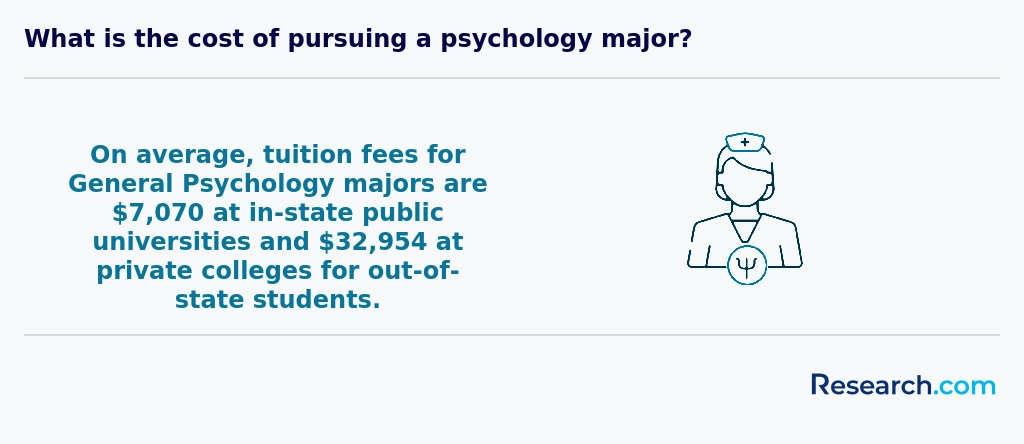
To make informed decisions about their educational investments, prospective students should research and understand the various affordable options available for psychology education in Grand Forks, ND. One crucial step in this process is comparing the costs and benefits of different programs, considering factors such as tuition, program length, and potential career outcomes. For instance, students can explore affordable psychology schools in North Dakota to find the best fit for their academic and financial goals. By doing so, they can navigate the complexities of psychology education and make choices that align with their aspirations and budget, ultimately paving the way for a fulfilling career in psychology.
Imagine walking the halls of the University of North Dakota, clutching a Pell Grant worth up to $7,395-an invisible lifeline that lifts the financial weight as you dive into cognitive psychology textbooks. This federal aid doesn't need paying back, freeing graduates to focus on unwrapping the mysteries of the human mind rather than stress over bills. Others tap into the safety net of Direct Subsidized Loans, where interest takes a respectful pause while classes are in session, letting students breathe easier during long study nights and lively research discussions.
State-backed scholarships, like the North Dakota Academic Scholarship, reward top-performing locals with renewable funds, turning strong GPAs into golden tickets to deeper psychological insights. For psychology majors at Grand Forks institutions, departmental scholarships feel personal-as if professors themselves are cheering you on to explore neural pathways and behavioral theories.
Work-study jobs, nestled near campus, blend paycheck and purpose, offering hands-on experience in labs or counseling centers without sacrificing study time. Meanwhile, local organizations and psychological associations quietly extend private scholarships, a secret treasure trove waiting for students brave enough to seek them out. The result? Financial aid in Grand Forks isn't just support-it's a community rallying behind your curiosity and drive.
Graduates seeking clinical practice in North Dakota must obtain state licensure, which involves accredited education, supervised experience, and examination.
- Licensed Psychologist
- Earn a doctoral degree (PhD or PsyD) from an APA-accredited program.
- Complete a minimum of 2,000 hours of supervised postdoctoral experience.
- Pass the Examination for Professional Practice in Psychology (EPPP).
- Licensed Professional Counselor (LPC)
- Hold a master’s degree in counseling or a closely related field.
- Accumulate at least 3,000 hours of supervised clinical work.
- Pass the National Counselor Examination (NCE) or a state-specific exam.
- Those pursuing counseling licensure can compare accredited online counseling degrees for flexibility and cost savings.
Ongoing Requirements
- Complete continuing education (CE) credits every renewal period to maintain licensure and stay current with best practices.
Imagine stepping onto the leafy campus of the University of North Dakota, excitement bubbling as you clutch your high school diploma-your golden ticket to a psychology journey. Here in Grand Forks, that diploma or equivalent is non-negotiable, often paired with transcripts boasting a GPA around 2.5 to 3.0. One graduate recalls that meeting this bar unlocked doors to courses where neurons and emotions collide.
Standardized tests like the SAT or ACT might feel like ancient hurdles, but many programs now toss them aside, embracing more holistic views of potential. Picture your application glowing with strong recommendations and a passion-filled statement of purpose, especially if you're eyeing a Master's or PhD track. That 3.0-plus GPA in undergraduate psychology classes becomes your launchpad.
Prerequisites sometimes stretch into biology or social sciences, grounding you for the mental adventures ahead. Residency here can sway tuition costs, a joyous relief for local dreamers eager to unlock minds without unlocking massive debt. In Grand Forks, readiness meets opportunity with a welcome smile.

Evaluating the long-term benefits of a psychology degree is essential for students looking to balance affordability with career success. When considering a program, it is important to look beyond tuition costs and analyze how the degree translates into future earning potential, professional growth, and skill development. Many graduates report that their investment in a psychology program not only opened doors to diverse career paths but also built a foundation for continued advancement in fields such as mental health, education, and corporate roles. This section highlights how assessing return on investment (ROI) can help students make more informed decisions about their education, taking into account factors such as salary progression, networking opportunities, and practical experiences gained during internships and applied projects. Additionally, prospective students may benefit from exploring innovative options that combine rigorous academics with flexibility. For instance, some professionals have found that enrolling in a fast online masters in applied behavior analysis program complements their career objectives by providing specialized training and faster pathways to licensure. By examining both quantitative and qualitative outcomes, students in Grand Forks can fully appreciate the long-term value of their psychology degree and how it supports a sustainable career trajectory.
Diving into a psychology degree in Grand Forks feels like unlocking the secrets of the mind in real time. Imagine sitting in a lively University of North Dakota lecture on General Psychology, where theories practically leap off the page into everyday moments-like understanding why your friend reacts differently to stress than you do. Graduates often mention how Research Methods in Psychology transformed their perspective, turning abstract data into compelling stories about human behavior by practicing hands-on experiments that feel both challenging and rewarding.
Courses like Biopsychology bridge science and wonder, showing how neural circuits spark emotion and decision-making. Picture tracing your own brain's responses as you explore this at Grand Forks labs. Developmental Psychology tugs at the heartstrings by illustrating human growth stages, making you see family dynamics in a new light.
Many students rave about Abnormal Psychology, where they decode the puzzles of mental health, gaining empathy and insight. Social and cognitive psychology courses turn your routine social chats into fascinating experiments on influence and memory. In Grand Forks, electives let you tailor your journey-perhaps preparing for clinical work or organizational roles-infusing your learning with personal passion.

In Grand Forks, psychology degree specializations unfold like a vibrant tapestry woven through the University of North Dakota's corridors. Graduates often recall diving into clinical psychology, where understanding mental health becomes a mission, inspired by real local stories and community needs. They cherish the practical edge this brings, especially with pathways leading toward licensed practice-some even explore clinical psychology colorado for extended licensure insights.
Others find solace in counseling psychology, learning to navigate life's brief storms alongside peers and neighbors. This specialization feels intensely human, shaping graduates ready to offer empathy and guidance in everyday Grand Forks settings. Meanwhile, the curious gravitate toward experimental psychology, unraveling cognition and behavior with methods that feel like unlocking secrets of the mind in UND's labs.
Equally compelling are the psychology concentration options Grand Forks offers, like educational psychology for those passionate about empowering students through tailored learning strategies, or industrial-organizational psychology, which transforms workplace dynamics into thriving, motivated communities.
Choosing an affordable psychology degree program in Grand Forks means diving into the unique mix of hands-on learning and rigorous academics at the University of North Dakota, where alumni recall late-night study sessions mingling with real-world internships that shaped their careers. Picture yourself navigating through APA-accredited clinical PhD programs, aligning your path with professors whose expertise turns abstract theories into vivid, practical skills.
Graduates often share how selecting between applied psychology and experimental tracks felt like choosing between two powerful lenses to explore human behavior-each opening doors to different futures. Tuition here balances ambition with accessibility, offering a competitive edge compared to national averages, which resonates with students mindful of investment versus opportunity.
Embrace flexibility by investigating class formats: some find evening lectures critical to juggling work-life commitments, while others seize the rare local chance for hybrid learning. And if you crave a future among high-paying industrial-organizational psychologist jobs, uncover the rich research and internship networks that Grand Forks programs uniquely offer to boost your resume and real-world readiness.

In Grand Forks, psychology degree graduates unlock a spectrum of career paths that pulse with real-world impact. Picture a graduate stepping into a hospital hallway after studying at the University of North Dakota, counseling patients with empathy or diving into clinical psychology roles that demand licensed expertise. The city's rich tapestry of medical and educational institutions serves as home base for these aspiring healers in the mental health realm. This terrain reflects the vibrant psychology career opportunities in Grand Forks, where graduates also find themselves as school counselors guiding youths through academic and emotional challenges, especially within Grand Forks Public Schools. Another graduate might join the pulse of industrial-organizational psychology, sparking workplace transformations in local businesses and government offices valued nationwide for their $97,000 median salary potential.
Social services stand as a stronghold for graduates who want direct community impact, offering roles that blend passion with purpose. Amid this dynamic landscape, some psychology students at local colleges have embraced professional sports psychology jobs, marrying mental resilience with athletic performance. These vivid career pathways show the diverse job prospects for psychology graduates Grand Forks, inviting a future shaped by compassion, innovation, and steady growth.

The job market for psychology degree holders in Grand Forks brims with vibrant possibilities. Graduates from the University of North Dakota often discover doors opening in healthcare, schools, and social services, where their training transforms into meaningful careers-as counselors, school psychologists, or behavioral health specialists. These roles ripple through the community, weaving psychology knowledge into everyday human connection and care. For anyone wondering about psychology degree job opportunities in Grand Forks, this local scene blends academic rigor with practical, rewarding employment.
Many recent psychology graduates share stories of internships turning into lasting positions within hospitals and clinics, where their skills meet genuine needs. The region's economic pulse, aligned with national trends, supports steady growth, and salary prospects roughly match national averages near $77,000. Psychology degree holders also branch into related fields like market research or human resources, expanding horizons beyond traditional paths.
If you're navigating licensure or clinical pathways, exploring resources such as the Wyoming counselor licensing board can inspire and guide your next moves within or beyond Grand Forks.
2027 Most Affordable Psychology Degree Programs Ranking in Grand Forks
Investing in your education is a significant decision that can shape your future, and the Research.com team understands the importance of making informed choices. To assist prospective students in Grand Forks, we have meticulously crafted the "2027 Most Affordable Psychology Degree Programs Ranking in Grand Forks." Our commitment to quality, credibility, and accuracy is reflected in the extensive research and analysis conducted to compile this ranking.
We utilized the following reputable data sources to ensure a comprehensive evaluation of psychology programs:
By exploring this ranking, readers will gain valuable insights into the most affordable psychology degree programs available in Grand Forks, empowering them to make well-informed decisions about their educational investments. For more details on our methodology, please visit our Research.com methodology page.

Frequently Asked Questions About psychology
Psychology degree students in Grand Forks can maximize their learning experience by engaging actively in both coursework and practical opportunities. The University of North Dakota, a leading institution in the area, offers hands-on research projects where students collaborate directly with faculty on topics such as cognitive psychology and behavioral studies. According to the American Psychological Association, practical experience through internships and lab work significantly enhances understanding and employability.
Joining psychology clubs or honor societies can also provide networking opportunities and access to guest lectures. Additionally, students should seek internships in local mental health clinics, which are abundant in Grand Forks, helping to apply theoretical knowledge in real-world settings.
Emerging niches within the psychology field reflect the growing complexity of human behavior and societal needs. One significant area is neuropsychology, which focuses on understanding brain-behavior relationships. This specialty is gaining traction as technology improves brain imaging and diagnostic tools. Another promising niche is health psychology, addressing how psychological factors influence physical health and chronic illness management. Additionally, forensic psychology, which applies psychological principles in legal contexts, shows steady growth.
In Grand Forks, the University of North Dakota offers courses aligned with these specialties, helping students prepare for evolving careers. Nationally, the U.S. Bureau of Labor Statistics projects a 13% growth in psychology jobs from 2021 to 2031, highlighting increasing demand in these areas (bls.gov).
After completing a psychology degree in Grand Forks, preparing for the job market involves several key steps. First, gaining practical experience through internships or research positions can enhance your resume and improve job prospects. Local opportunities with organizations such as Altru Health System or University of North Dakota's psychology labs offer valuable hands-on learning.
Networking is also crucial. Attending regional psychology conferences or joining professional groups like the North Dakota Psychological Association can connect graduates with potential employers.
Understanding licensure requirements is important for those seeking clinical roles, as North Dakota requires specific supervised hours and passing the Examination for Professional Practice in Psychology (EPPP).
Finally, tailoring your job search to align with Grand Forks' growing healthcare and education sectors can improve employment chances, supported by labor market data from the Bureau of Labor Statistics and local job boards.
Employers in Grand Forks seeking psychology degree graduates prioritize a combination of interpersonal and analytical skills. Strong communication abilities are essential, as professionals must interact effectively with clients and colleagues. Critical thinking and problem-solving skills enable graduates to assess complex psychological data and create actionable treatment plans.
Research skills are also highly valued, reflecting the importance of evidence-based practice in the region. According to the Bureau of Labor Statistics, therapists and counselors in North Dakota, including Grand Forks, often require proficiency in program evaluation and data interpretation.
Additionally, cultural competence is gaining emphasis due to the region's growing diversity. Employers look for graduates who demonstrate empathy and adaptability, ensuring inclusive and effective care for varied populations.
Finding internships relevant to a psychology degree in Grand Forks involves tapping into both university resources and local organizations. The University of North Dakota, a key institution in the area, offers a psychology internship program where students collaborate with mental health clinics, schools, and non-profits. According to UND's psychology department, about 65% of psychology undergraduates secure internships through these partnerships.
Beyond campus, local healthcare providers like Altru Health System and community mental health centers offer internships or volunteer opportunities related to psychology. Exploring Grand Forks nonprofit organizations, such as youth counseling programs, can also help build practical experience.
Networking through university career fairs and joining psychology student organizations further increases internship prospects.
A psychology degree in Grand Forks can significantly enhance career mobility and advancement opportunities, particularly within North Dakota's expanding mental health sector. Graduates are qualified for a range of roles, from counseling and social services to research and human resources. According to the U.S. Bureau of Labor Statistics, employment for psychologists is projected to grow 8% nationally through 2031, slightly faster than average. In Grand Forks, local healthcare organizations and educational institutions often prioritize candidates with advanced psychology degrees for leadership and specialized positions.
Further education, such as master's or doctoral degrees, commonly leads to increased earning potential and job stability in the region. Networking through University of North Dakota programs also supports professional growth.
Studying for a psychology degree in Grand Forks offers strong preparation for interdisciplinary roles by emphasizing collaboration across multiple fields. Programs often integrate coursework in biology, social sciences, and statistics, which equips students with versatile analytical and research skills.
Grand Forks universities maintain partnerships with local healthcare and counseling centers, providing experiential learning opportunities. These connections help students apply psychological theories in real-world settings alongside professionals from medicine, education, and social work.
The US Bureau of Labor Statistics highlights that many psychology-related jobs require knowledge beyond psychology, such as data interpretation and interdisciplinary communication. Grand Forks colleges respond by including such competencies in their curricula.
Choosing between a thesis and a non-thesis psychology degree program in Grand Forks depends on your academic and career goals. Thesis programs generally require original research and are ideal for students aiming for doctoral studies or research careers. In contrast, non-thesis tracks focus more on practical skills and coursework, suited for those pursuing professional roles or licensure in counseling or clinical psychology.
At institutions in Grand Forks, such as the University of North Dakota, thesis options often extend program duration by several months due to research commitments. Recent data from the National Center for Education Statistics shows that about 60% of psychology graduates in the area pursue non-thesis degrees, reflecting local demand for applied psychology roles.
Consider your interest in research, time availability, and long-term plans before deciding. Consulting academic advisors and reviewing program curricula helps make an informed choice.
Students based in Grand Forks interested in studying psychology abroad have several pathways through U.S. higher education programs that offer international study options. Many universities in North Dakota, including the University of North Dakota, provide study abroad programs or partnerships with institutions overseas, allowing psychology students to earn credits while experiencing different cultural contexts.
Programs may vary from summer research projects to semester-long exchanges, often focused on Europe or Asia, regions with strong psychology research traditions. According to the Institute of International Education's 2023 data, nearly 10% of U.S. psychology majors participate in study abroad activities, enhancing their global perspective.
Additionally, online or hybrid degree options sometimes include international collaborations, enabling Grand Forks students to engage with global psychology communities without relocating permanently. These options support diverse learning experiences aligned with career goals in psychology.
Students pursuing psychology degrees in Grand Forks can benefit from several part-time job opportunities that align with their academic goals. Common positions include research assistants at the University of North Dakota's Psychology Department, where students gain hands-on experience with experimental methods and data analysis. Local mental health clinics often hire interns or aides, providing direct exposure to clinical practice and patient interaction. Additionally, school-based paraprofessional roles enable students to support special education programs, complementing psychology coursework on developmental and behavioral disorders. These jobs not only enhance practical skills but also strengthen graduate school applications and future employment prospects in psychology-related fields.
Psychology students in Grand Forks benefit from various valuable networking opportunities. The University of North Dakota (UND), the primary institution offering psychology degrees locally, hosts events such as seminars, workshops, and guest lectures. These gatherings connect students with faculty, researchers, and psychology professionals.
Additionally, students can engage with the UND Psychology Club, which promotes professional development and community involvement. Local internships and volunteer placements with healthcare providers, nonprofits, and research centers allow practical experience and networking with practitioners.
Statewide organizations like the North Dakota Psychological Association also support student membership, offering access to conferences and networking events within the region.
Alumni networks play a crucial role for psychology degree students in Grand Forks by providing valuable connections in the local and regional mental health community. Graduates from universities such as the University of North Dakota often stay active in these networks, sharing job leads, internship opportunities, and advice specific to psychology careers.
Strong alumni engagement can enhance mentorship possibilities, helping current students navigate licensure requirements and specialized certifications needed in psychology fields. According to the National Association of Colleges and Employers, students with access to alumni networks are 30% more likely to secure relevant internships before graduation.
In Grand Forks, where mental health services continue to grow, alumni networks help students build professional relationships that can lead to employment in clinics, schools, and research centers. These connections provide both guidance and support as students transition from academia to practice.
Customizing a psychology degree program in Grand Forks to fit your career goals involves selecting specific coursework and practical experiences relevant to your interests. Many programs offer concentrations such as clinical psychology, counseling, or industrial-organizational psychology, allowing you to focus on areas that align with your career path.
Additionally, you can often tailor your studies through electives and research projects. For example, the University of North Dakota, a key institution in Grand Forks, provides students opportunities to engage in applied psychology labs and internships, enhancing practical skills.
Networking with faculty and utilizing career services can further guide your specialization choices. According to the North Dakota Department of Commerce, tailored academic experiences improve employability in the regional job market.
Psychology students in Grand Forks often face academic challenges common to many U.S. programs, such as managing heavy coursework and mastering complex theories. The rigor of research methods and statistical analysis is frequently highlighted as a major hurdle, requiring strong quantitative skills and critical thinking.
Additionally, students must complete internships or practicums, which can be difficult to arrange due to limited local opportunities in mental health settings relative to larger metropolitan areas. According to the North Dakota University System, around 30% of psychology undergraduates report stress balancing fieldwork with academic demands.
Financial pressures are also notable, with some students relying on financial aid and part-time jobs to cover costs, which can impact study time and focus.
With a psychology degree in Grand Forks, graduates can pursue several professional certifications that enhance career opportunities. One popular option is becoming a Licensed Professional Counselor (LPC), which requires a master's degree, supervised clinical experience, and passing a state exam. In North Dakota, LPC licensure is overseen by the North Dakota Board of Counselor Examiners.
Another certification is the Board Certified Behavior Analyst (BCBA), ideal for those interested in applied behavior analysis. This credential demands a graduate degree, specific coursework, and passing the BCBA exam.
Graduates with a doctoral degree can pursue licensure as a Licensed Psychologist, allowing independent clinical practice. Certifications such as Certified Addiction Counselor (CAC) are also available and can be pursued with relevant experience and additional training.
To write a winning application for a psychology program in Grand Forks, start by thoroughly researching local institutions such as the University of North Dakota, which offers accredited psychology degrees with strong faculty support. Highlight your academic achievements, particularly in relevant coursework like biology and statistics, since competitive programs often expect a GPA above 3.0. Include clear, thoughtful personal statements that explain your motivation and goals in psychology. Strong letters of recommendation from professors or professionals familiar with your work are essential. Additionally, demonstrate any research experience or volunteer work related to mental health to strengthen your candidacy. According to UND's admissions office, these factors greatly improve acceptance chances.
The global perspective on a psychology career highlights growing demand for mental health professionals worldwide. In the United States, including Grand Forks, the Bureau of Labor Statistics projects a 8% job growth for psychologists from 2022 to 2032, faster than the average for all occupations.
Internationally, psychology careers expand beyond clinical roles to areas like organizational behavior, education, and research. US degrees are widely recognized, allowing graduates mobility across global markets. Programs in Grand Forks often emphasize cultural competence, preparing students for diverse populations.
The increasing focus on mental wellness worldwide suggests sustained opportunities for psychology professionals familiar with evidence-based practices common in American education systems. Students from Grand Forks benefit from local access to internships and research that connect to broader trends in psychology careers.
Gaining practical experience while studying psychology in Grand Forks is essential for building career-ready skills. Students can seek internships at local healthcare facilities, such as Altru Health System, which often partners with universities for clinical placements. Volunteering at community mental health centers provides hands-on exposure to client interactions and case management.
Many universities in Grand Forks encourage participation in research projects under faculty supervision, offering opportunities to develop experimental design and data analysis skills. According to the National Center for Education Statistics, about 60% of psychology students nationwide engage in internships before graduating, which employers highly value.
Joining psychology clubs or organizations also helps build networks and practical knowledge through workshops and seminars.
Choosing the right concentration within a psychology degree program in Grand Forks involves evaluating your career goals and academic interests. Psychology offers diverse fields like clinical, counseling, developmental, and industrial-organizational psychology. Consider local employment trends; for example, healthcare and social services in Grand Forks have steady growth, suggesting demand for clinical and counseling specializations (U.S. Bureau of Labor Statistics, 2023).
Research specific concentrations offered by universities in Grand Forks, such as the University of North Dakota, which provides opportunities for hands-on experience and faculty mentorship. Align your choice with practical aspects like internship availability and licensing requirements in North Dakota. Gathering this information will help integrate your academic path with regional job markets.
- 2027 Most Affordable Psychology Degree Programs Ranking in Minneapolis
- 2027 Most Affordable Psychology Degree Programs Ranking in Saint Paul
- 2027 Most Affordable Psychology Degree Programs Ranking in Lincoln
- 2027 Most Affordable Psychology Degree Programs Ranking in Chicago
- 2027 Most Affordable Psychology Degree Programs Ranking in Kansas City
- 2027 Most Affordable Psychology Degree Programs Ranking in Notre Dame
- 2027 Most Affordable Psychology Degree Programs Ranking in Boulder
- 2027 Most Affordable Psychology Degree Programs Ranking in Denver
- 2027 Most Affordable Psychology Degree Programs Ranking in Wichita
- 2027 Most Affordable Psychology Degree Programs Ranking in Saint Louis
See What Experts Have To Say About Studying Psychology
Read our interview with Psychology experts

Robin M. Kowalski. Ph.D.
Psychology Expert
Professor of Psychology
Clemson University

Elizabeth L. Jeglic Ph.D.
Psychology Expert
Professor of Psychology
City University of New York

Joann Farrell Quinn, Ph.D., MBA
Psychology Expert
Director at the College of Medicine Department of Medical Education
Morsani College of Medicine

- Mental Health Challenges Faced by Psychology Students | The Healthcare Guys https://healthcareguys.com/2023/11/23/mental-health-challenges-faced-by-psychology-students/
- Alumni Perspectives - Meet Our FPN Alumni https://www.aanmelder.nl/alumni-perspectives-june-2023
- Financial Aid | Josef's School of Hair, Skin & Body https://josefsschoolofhairdesign.com/financial-aid/
- Best Types Of Online Psychology Degrees 2025 https://www.psychology.org/degrees/
- Financial Aid for Psychology Students https://www.onlinepsychologydegrees.com/financial-aid/
- North Dakota Psychology Schools and Degree Programs https://www.psychologycareercenter.org/north-dakota-psychology-schools.html
- Study Psychology Abroad | Go Overseas https://www.gooverseas.com/study-abroad/psychology
- North Dakota Psychology Doctorate Programs 2025 Guide https://psydprograms.org/north-dakota-psychology-doctorate/
- Have You Found a Niche? https://www.apaservices.org/practice/business/marketing/building/niche
- North Dakota Psychology Schools | Psychology Degree Guide https://psychologydegreeguide.org/state/north-dakota/